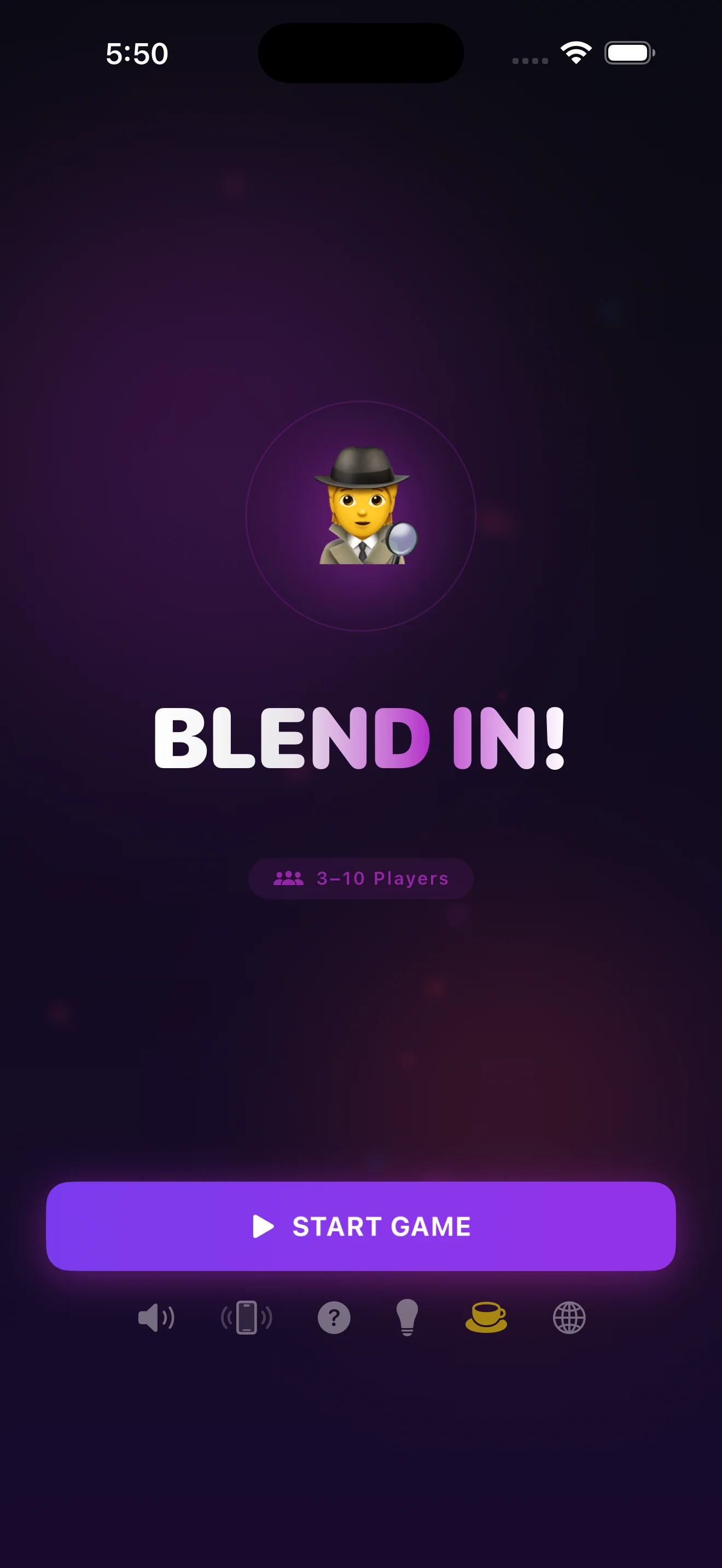
Blend In is elegantly simple on the surface: one player gets a secret word, one gets nothing, and everyone else tries to figure out who the imposter is. But simplicity is the point. By removing the need for accounts, internet, or extra devices, Blend In strips the party game down to its core tension—the battle between deception and detection. Pass the phone around your group, and what emerges is pure social chaos: accusations, doubt, and the nagging feeling that your best friend just lied to your face.
The Secret Role Mechanic
Every round, Blend In assigns three roles: the Safe Player, the Imposter, and the Guess Players. The Safe Player sees a secret word on the screen—say, "pizza." The Imposter sees nothing. Everyone else is trying to figure out who doesn't know the word. Before the round even starts, suspicion blooms. That pause, that hesitation—it's the first tell.
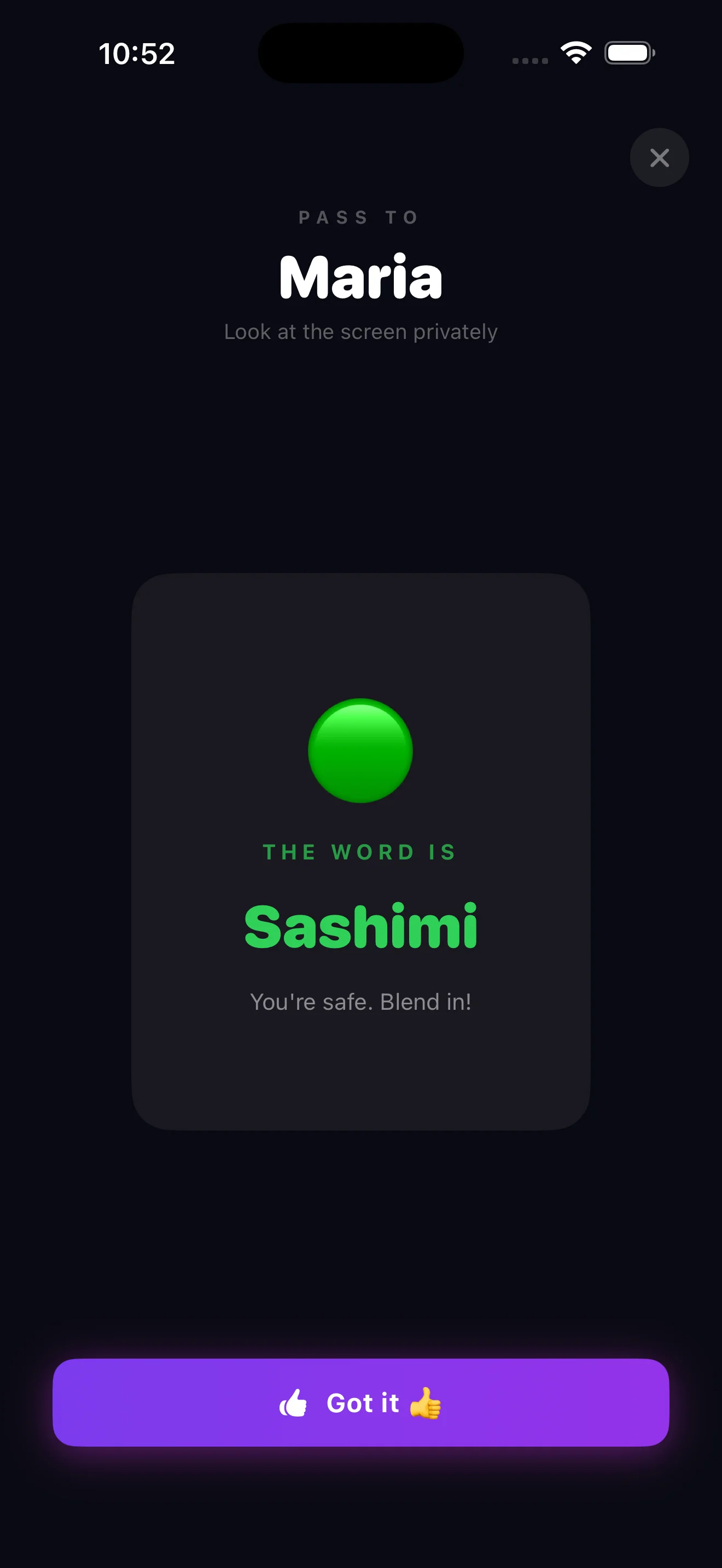
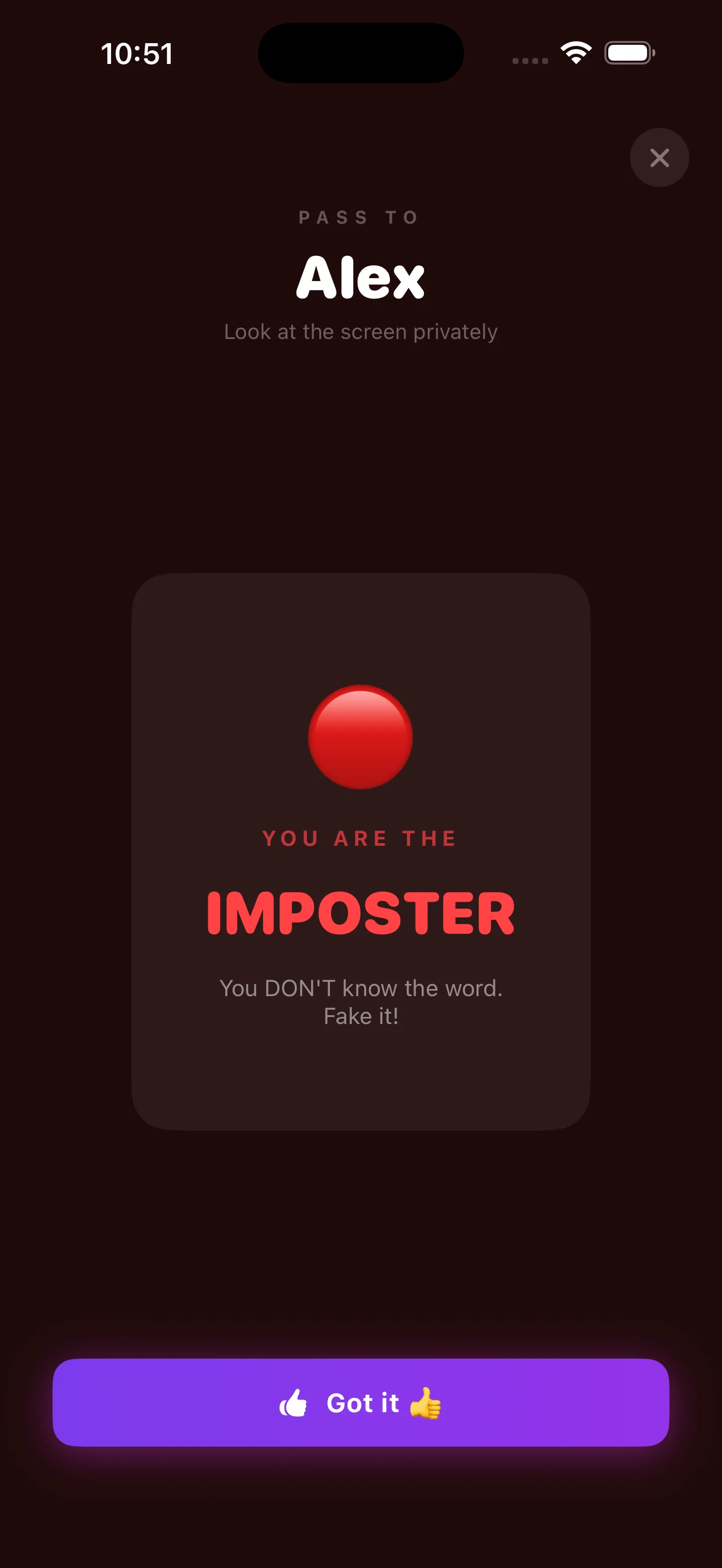
The imposter has to fake it. The safe players have to spot the faker. Everyone else just wants to survive until voting.
Timed Clue Rounds
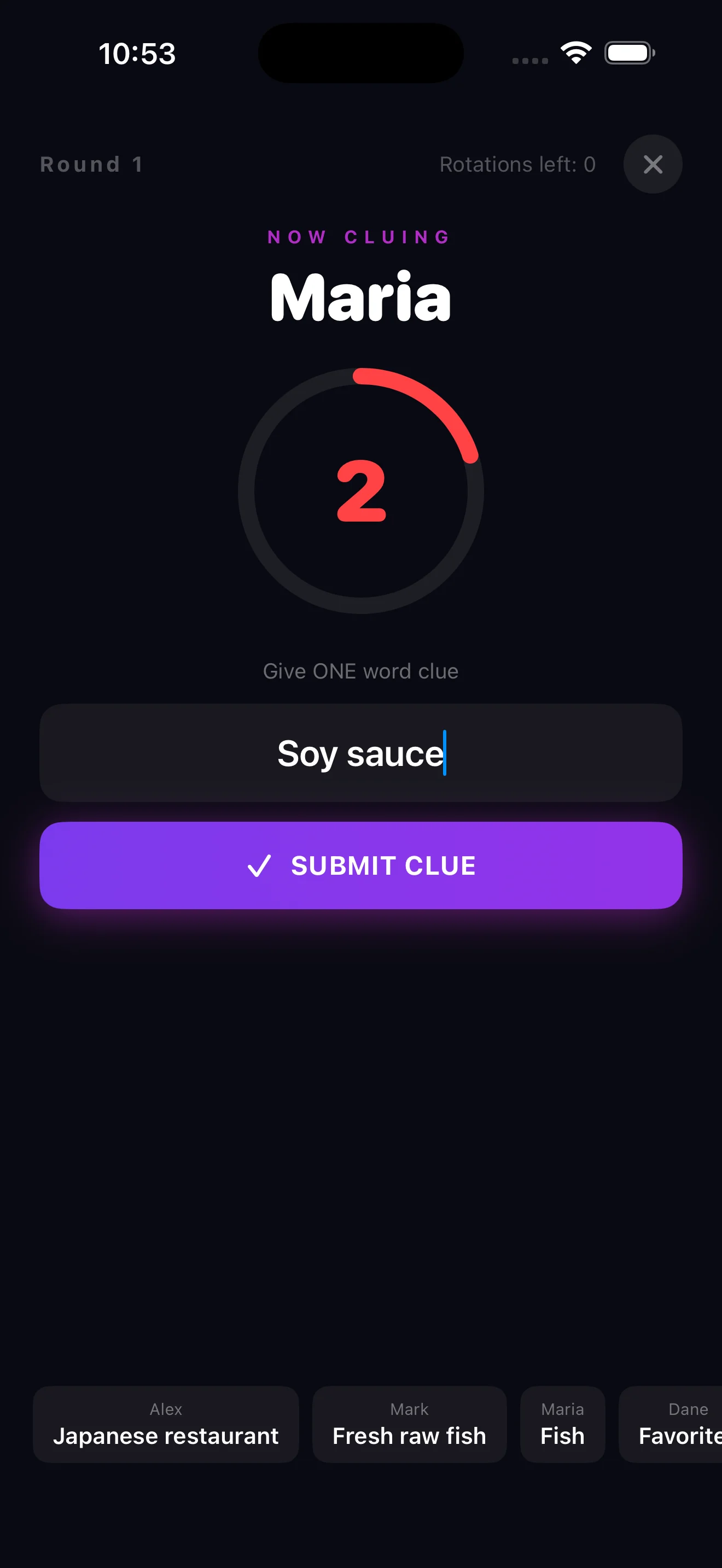
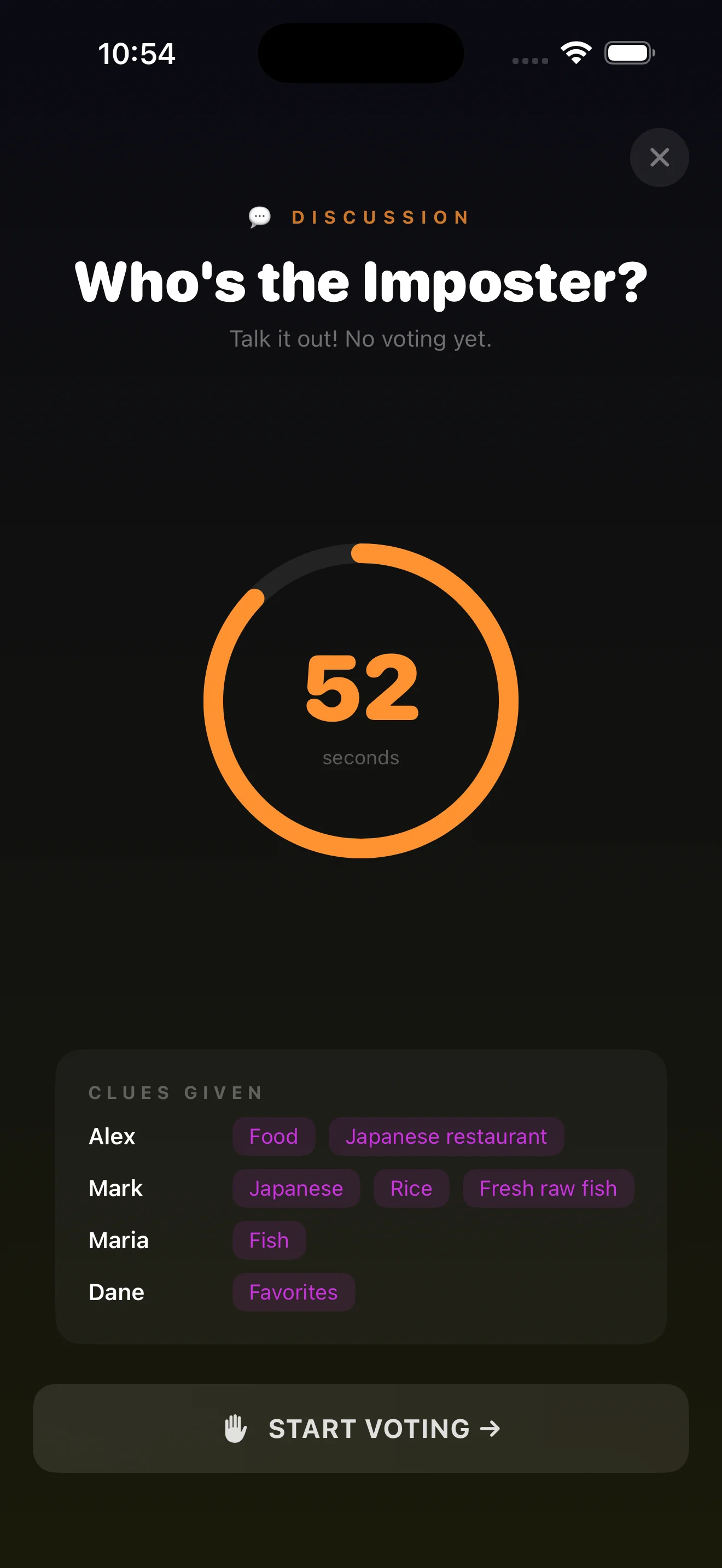
Once roles are locked in, a countdown timer begins. Each player gets seconds to deliver one clue about the secret word. The catch: the imposter has to sound convincing without actually knowing what they're defending. A vague clue could work ("It's round"), or it could expose them instantly. The timer pressure forces quick thinking and spontaneous honesty—or brilliant lying. Most people aren't practiced liars under 30 seconds.
Discussion and Voting
After clues are delivered, the discussion phase opens up. This is where Blend In becomes a social game in the truest sense. Players argue, defend themselves, call out suspicious behavior, and try to build consensus around who they think the imposter is. Someone always says, "That clue made no sense." Someone else insists they were just being creative. The imposter sits there hoping nobody notices they repeated a clue from earlier.
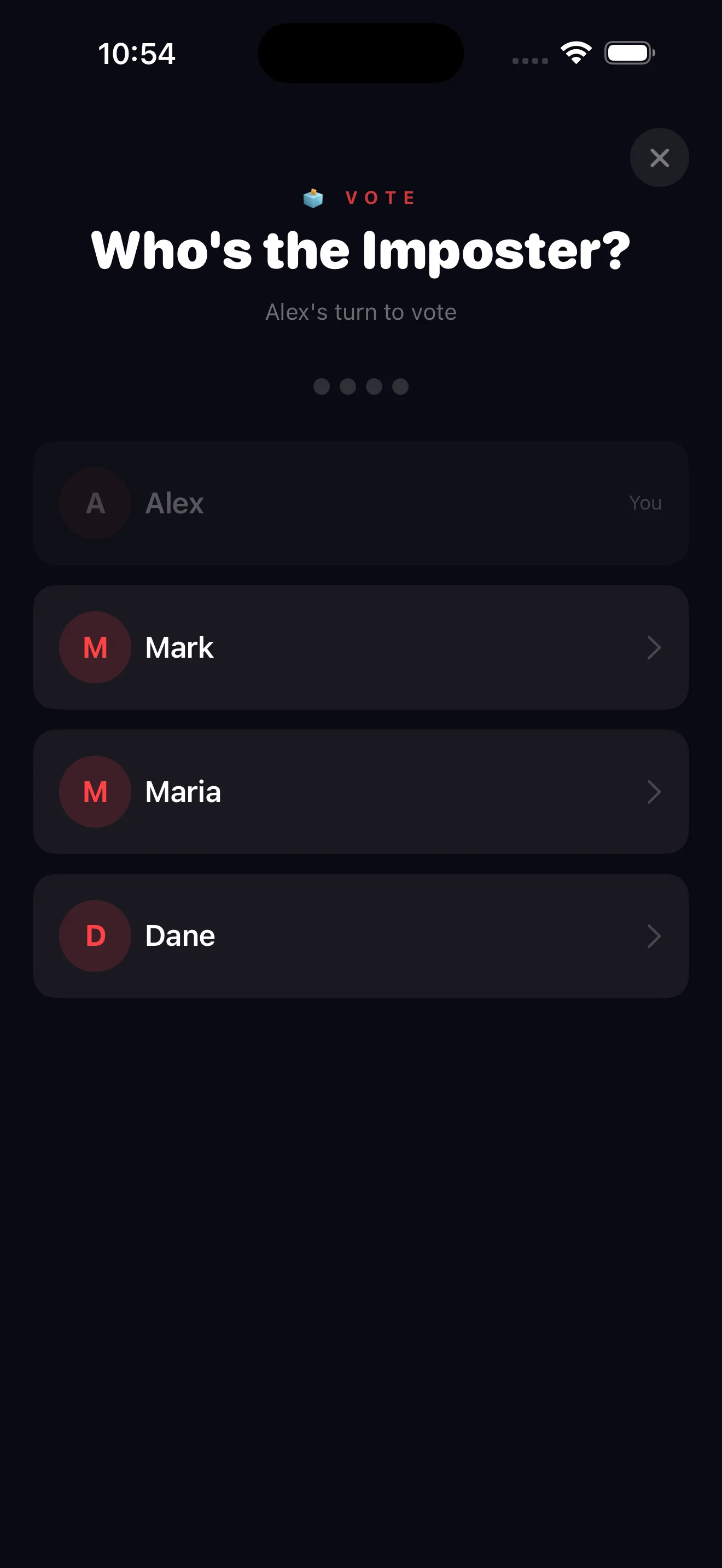
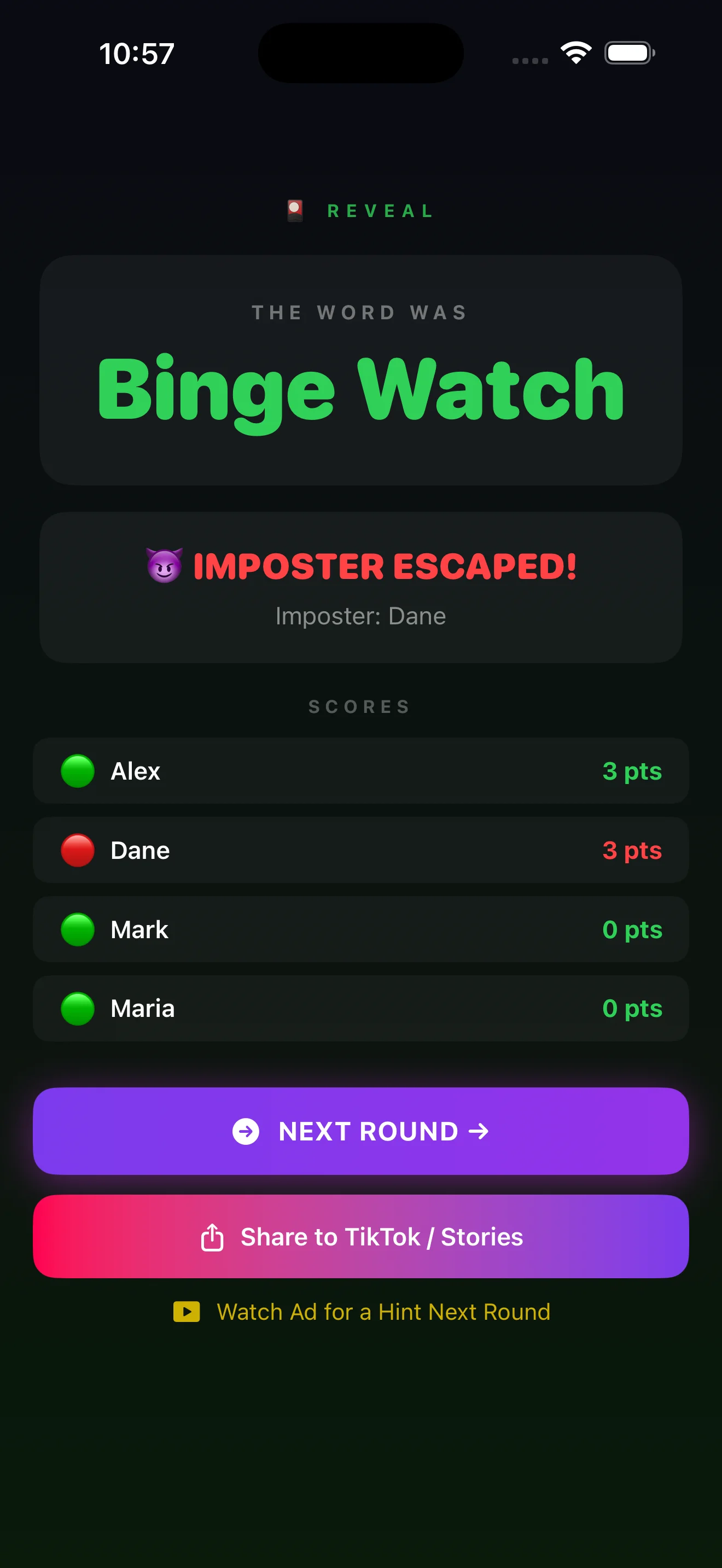
Then comes the vote. Everyone points to who they think is the imposter. The reveal is instant. If you caught the imposter, you score points. If the imposter fooled everyone, they score. If you voted out a Safe Player, you just shot your own teammate.
Why One Phone Changes Everything
Many party games demand multiple devices, apps, or an active internet connection. Blend In demands none of it. By keeping the game on a single iPhone, you eliminate friction and distractions. There's no tabletop app to set up, no game board to shuffle, no wifi trouble mid-round. The phone is the arbiter. You pass it, you trust it, and you play. That constraint actually strengthens the social experience—everyone stays present, everyone stays at the table, and the tension stays in the room.
Built for Real Gatherings
Blend In works for 3 to 10 players, which means it scales from a small couch hangout to a full house party. Five free word packs cover Food & Drinks, Movies & TV, Countries & Cities, Animals, and Sports—each with 100+ words. That's hundreds of rounds before you see a repeat. The game also includes Chaos Modes, variants that twist the rules and keep veterans from getting too comfortable. Learn more in our guide on spotting fakers and winning, or read the full Blend In review.
- Setup Time
- Tap Start Game. Done.
- Internet Required
- No. 100% offline.
- Player Accounts
- None. Just names.
- Devices Needed
- One iPhone.
- Players Supported
- 3–10.
- Setup Friction
- None.
This article was drafted with AI assistance and reviewed by a human editor before publishing.