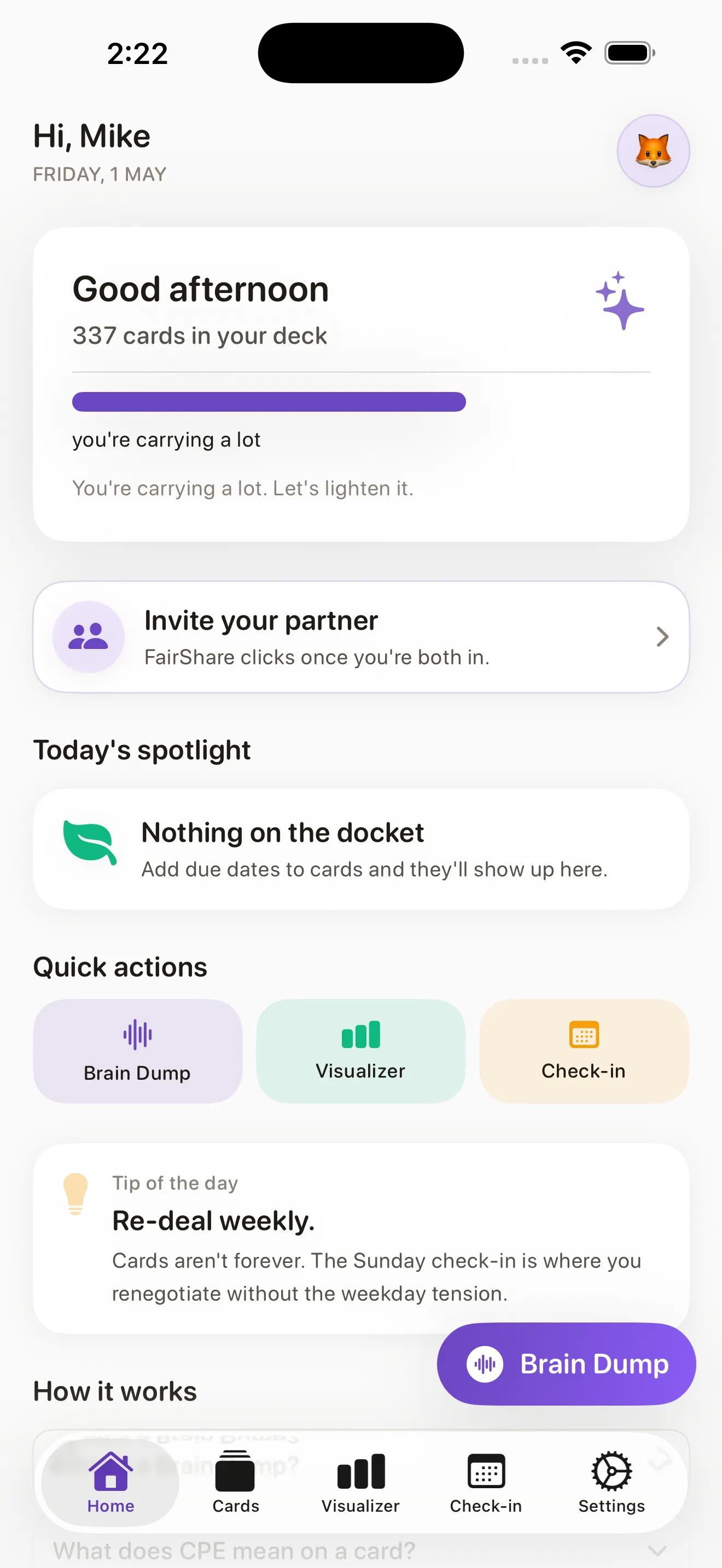
Most couples fight about chores without realizing they're fighting about something deeper: who owns the mental load. One person thinks about dentist appointments. Another remembers to replace the HVAC filter. A third carries the emotional weight of planning family dinner. That invisible work—the conception, planning, and execution of household needs—doesn't show up on any chore chart. It just accumulates, unevenly, until someone breaks. FairShare flips the script. Instead of task lists, you split responsibility using Fair Play-style cards that make ownership explicit: one person owns a need from conception through completion. Brain Dump intercepts ad-hoc thoughts before they become resentment. Weekly check-ins create a rhythm for renegotiating without crisis. And a Visualizer shows you exactly where the imbalance lives.
The Card: Ownership from Start to Finish
A traditional chore chart splits tasks. FairShare cards split ownership. Each card represents a household need—groceries, car maintenance, kids' schedules, tax prep—and assigns it to one person, who owns all three phases: Conceive (spotting the need), Plan (deciding what to do), and Execute (doing it). This clarity prevents the silent resentment that builds when one person thinks they're "just helping" with a task while the other person is carrying the entire mental load. You see it in the card composer: name the need, assign an owner, optionally set a cadence or notes. Done.
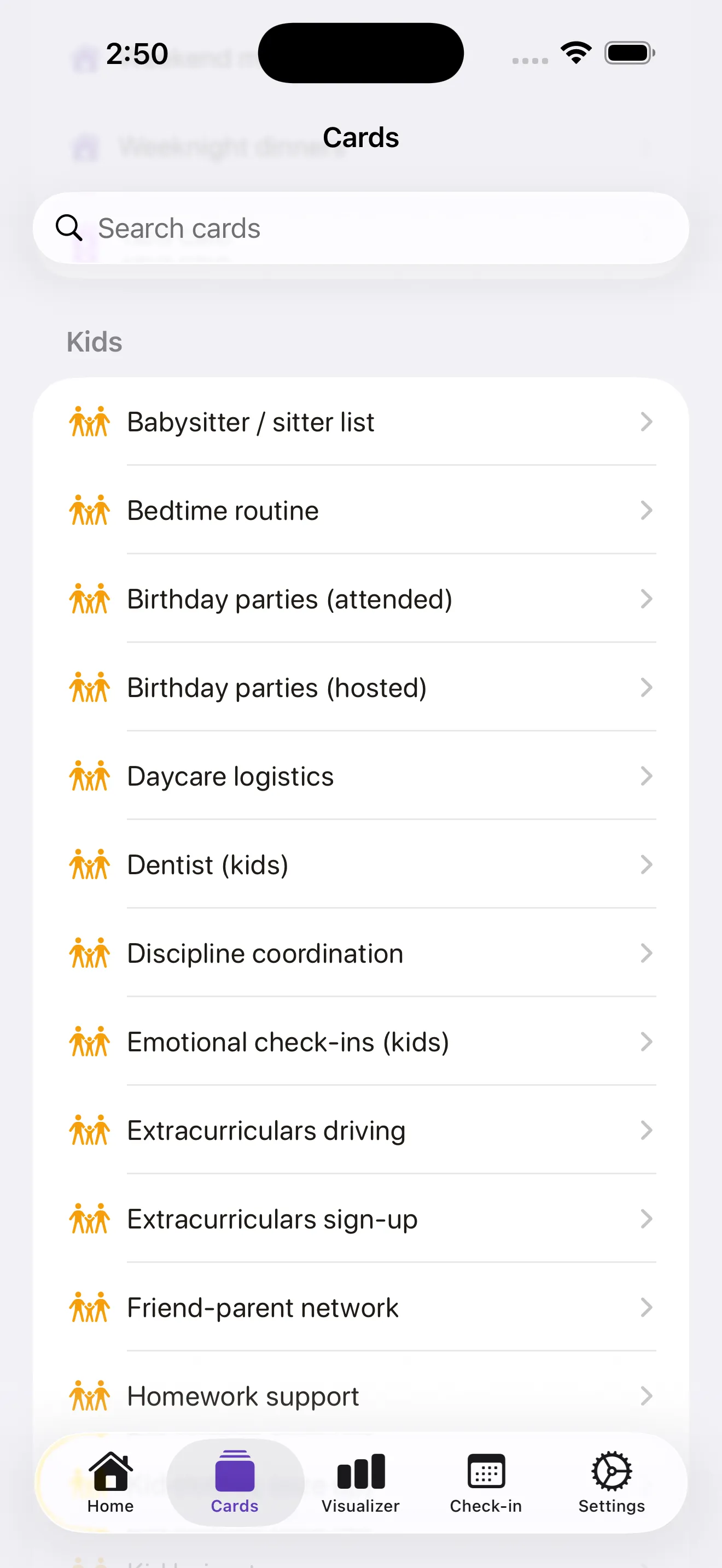
One person owns a need from conception through completion. That's the whole point.
Brain Dump: Catch Stray Thoughts Before They Pile Up
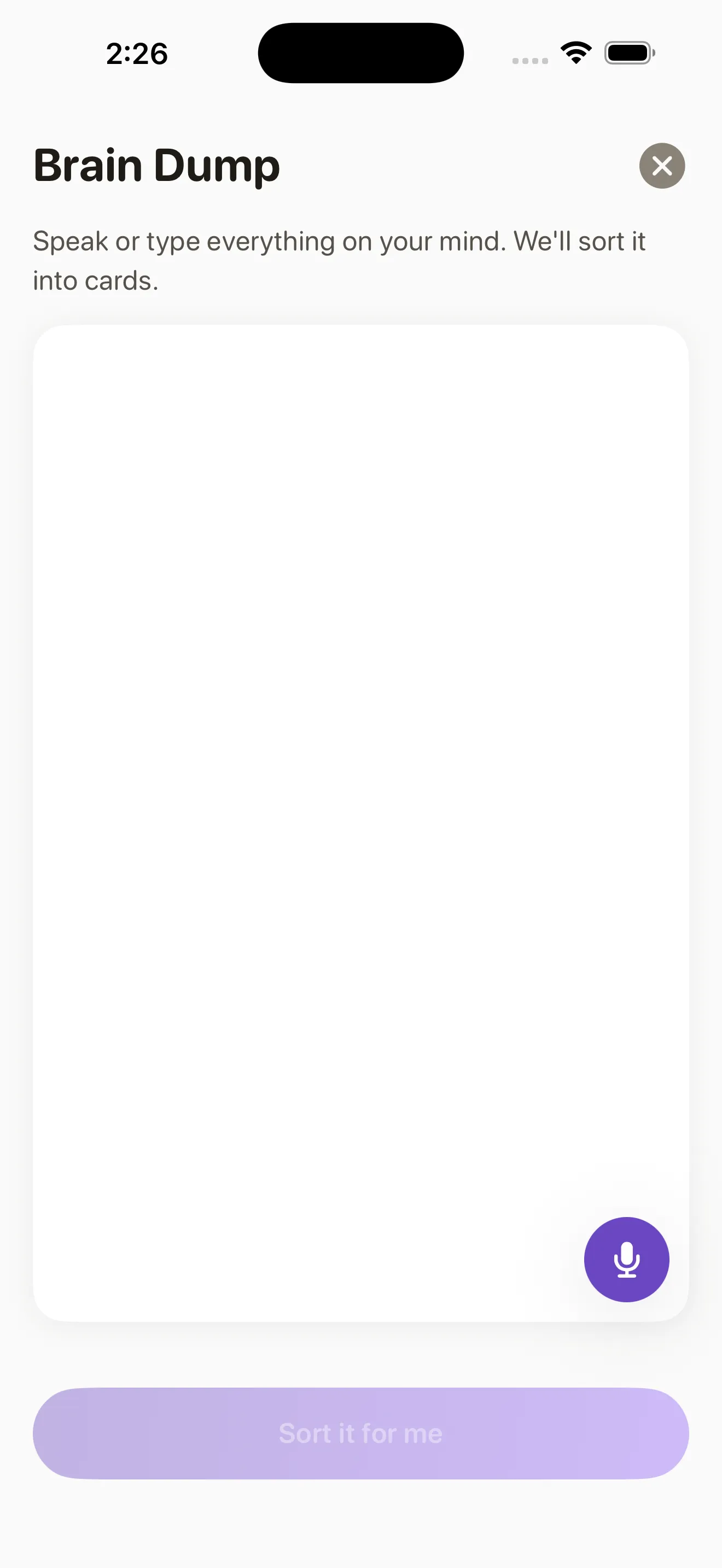
Mental load is partly structural (who owns what) and partly chaotic (the random thought about replacing batteries at 11 PM). Brain Dump is FairShare's AI-powered interceptor. When a thought hits—something someone needs to do, buy, remember, or delegate—you capture it instantly without deciding where it lives. The app sorts it: is this a new card? A task for an existing card? A one-off to-do? Or does it belong to your partner? You don't argue about it later because it doesn't pile up as invisible anxiety. It gets surfaced, categorized, and either added to a card or handled immediately.
The Weekly Check-In: Renegotiate Before You Explode
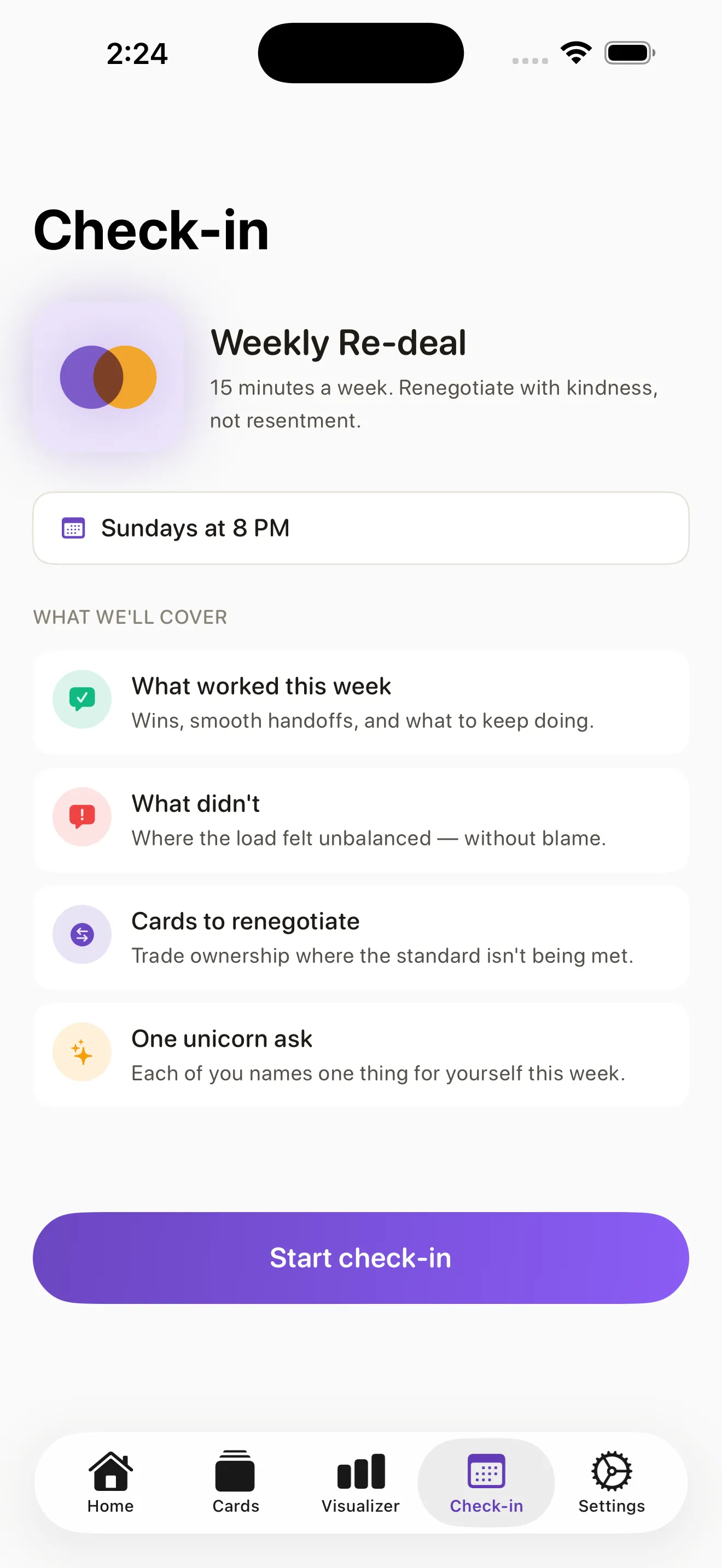
Couples usually talk about mental load only when someone breaks. FairShare builds in a weekly rhythm. Check-ins are short, structured prompts: What shifted this week? Do you want to swap anything? Does someone need support (MSC updates)? Any renegotiations? It's the conversation you should be having anyway, but scheduled and guided so it doesn't feel like a fight. Over time, weekly check-ins catch imbalance early and normalize the conversation around who owns what.
The Visualizer: Making Imbalance Visible
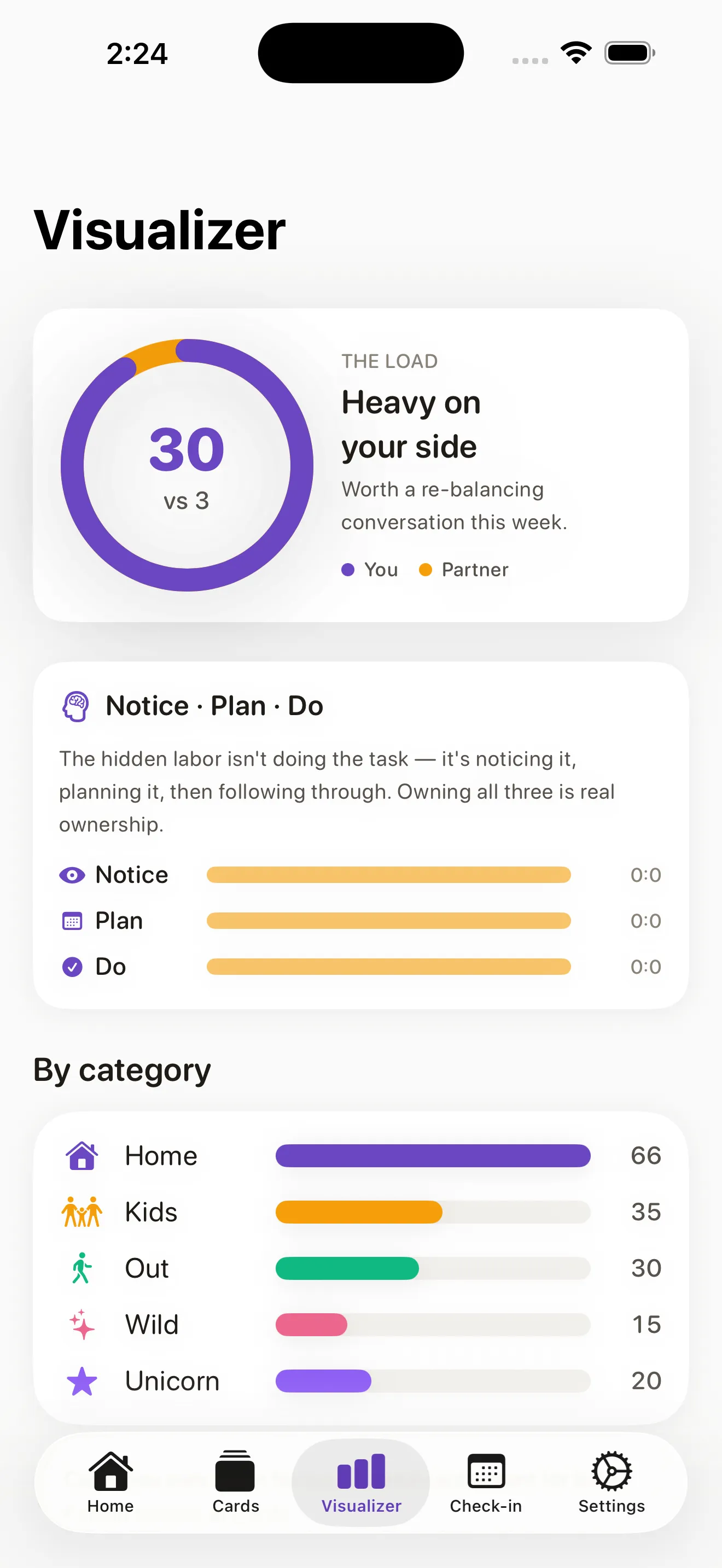
Data is powerful when it names what you feel. The Visualizer breaks down who owns how much mental load across your household cards. See it all at once: your partner owns 70% of the household coordination. You own 80% of financial planning. Neither of you owns car maintenance, so it drifts. A visualization can't resolve a disagreement, but it stops couples from arguing about opinions. You're looking at facts.
Built on Fair Play Principles
FairShare adapts the Fair Play system created by Eve Rodsky, a conflict resolution mediator and organizational management consultant. The core insight: couples don't split household work fairly because they don't split the ownership fairly. Most systems—chore charts, dividing tasks, "helping" your partner—leave one person still holding the mental load. Fair Play flips it: one person owns each domain from conception through completion. FairShare brings that principle into an app designed for modern couples who want fairness but need a practical tool to get there.
- Traditional Chore Chart
- Task-based: Who does laundry this week? Mental load stays hidden.
- FairShare Card
- Ownership-based: Who owns the laundry domain? Includes conceiving (spotting it's needed), planning (deciding how), and executing.
- Check-In Rhythm
- Weekly guided conversation instead of crisis-mode fights.
- Visualizer
- Data-driven snapshot of who carries what mental load, removing opinion-based arguments.
Onboarding and Setup
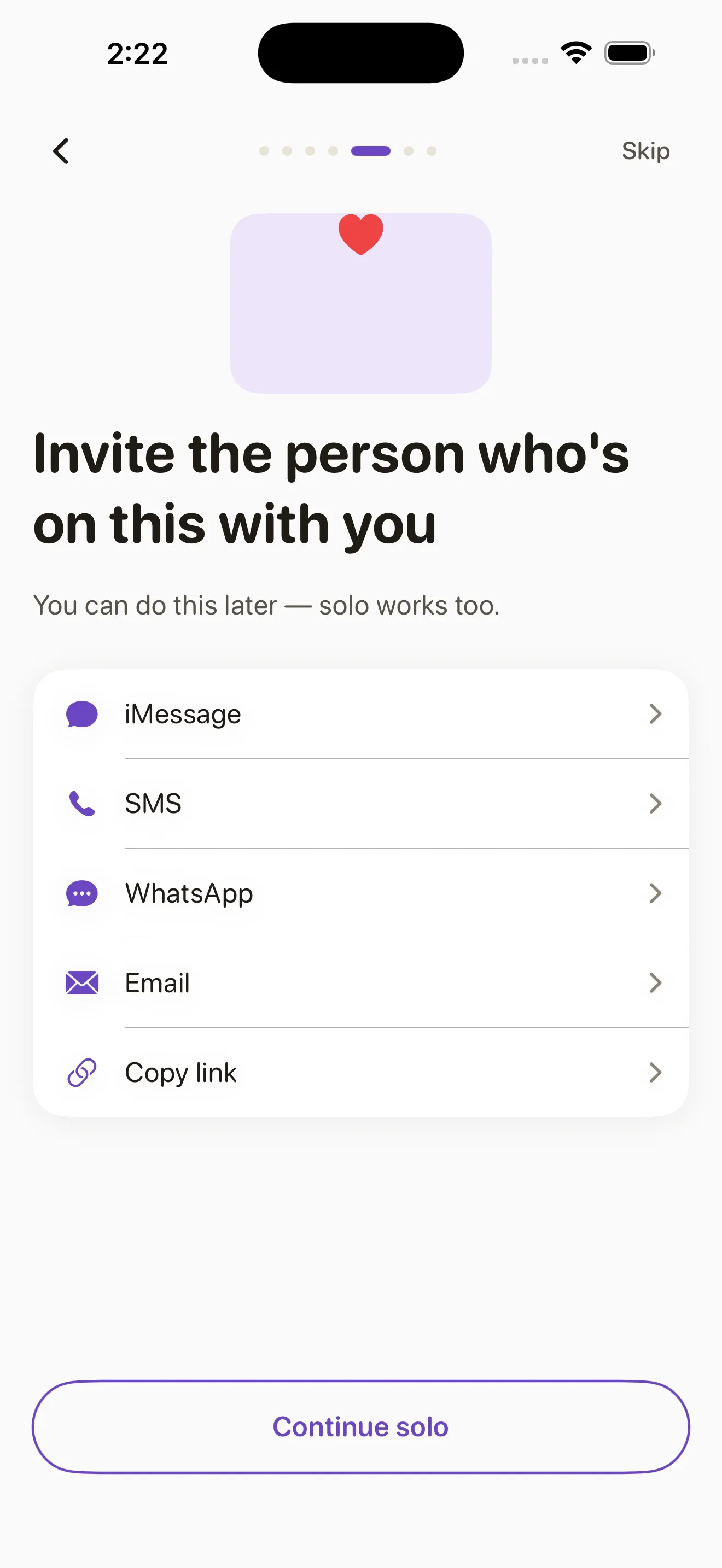
FairShare starts with context: it asks about your household type (couples, unmarried partners, etc.) and life situation so it can suggest cards that matter to you. You name the needs you actually manage, assign owners, and then invite your partner via a universal link. No passwords, no friction. Once you're both in, you see the same dashboard, the same cards, and the same Visualizer. From there, Brain Dump and weekly check-ins guide the ongoing conversation.
This article was drafted with AI assistance and reviewed by a human editor before publishing.