You open a mood app and face a familiar friction: a slider from 1 to 10, or a color wheel with too many options, or a clinical questionnaire that feels more like a diagnostic than a moment of honesty. Most mood trackers treat your emotions like data points to be scored. MoodLight treats them like states to be noticed. It's the difference between measuring your mood and acknowledging it.
The problem with scales and scoring
Numerical scales dominate mood tracking for a reason: they're easy to graph, easy to quantify, easy to show progress. But they're terrible at capturing how you actually feel. Is today a 6 or a 7? The question itself creates anxiety. You start comparing today to yesterday, or yesterday to last week, and suddenly the check-in becomes less about honesty and more about maintaining a narrative. Clinical wheels fare no better—they promise precision but deliver decision paralysis. Too many shades, too many labels borrowed from therapy speak. Most people skip them or fill them out on autopilot.
The best mood tracker is the one you actually use, and the one you use is the one that doesn't make you think too hard.
What MoodLight does differently
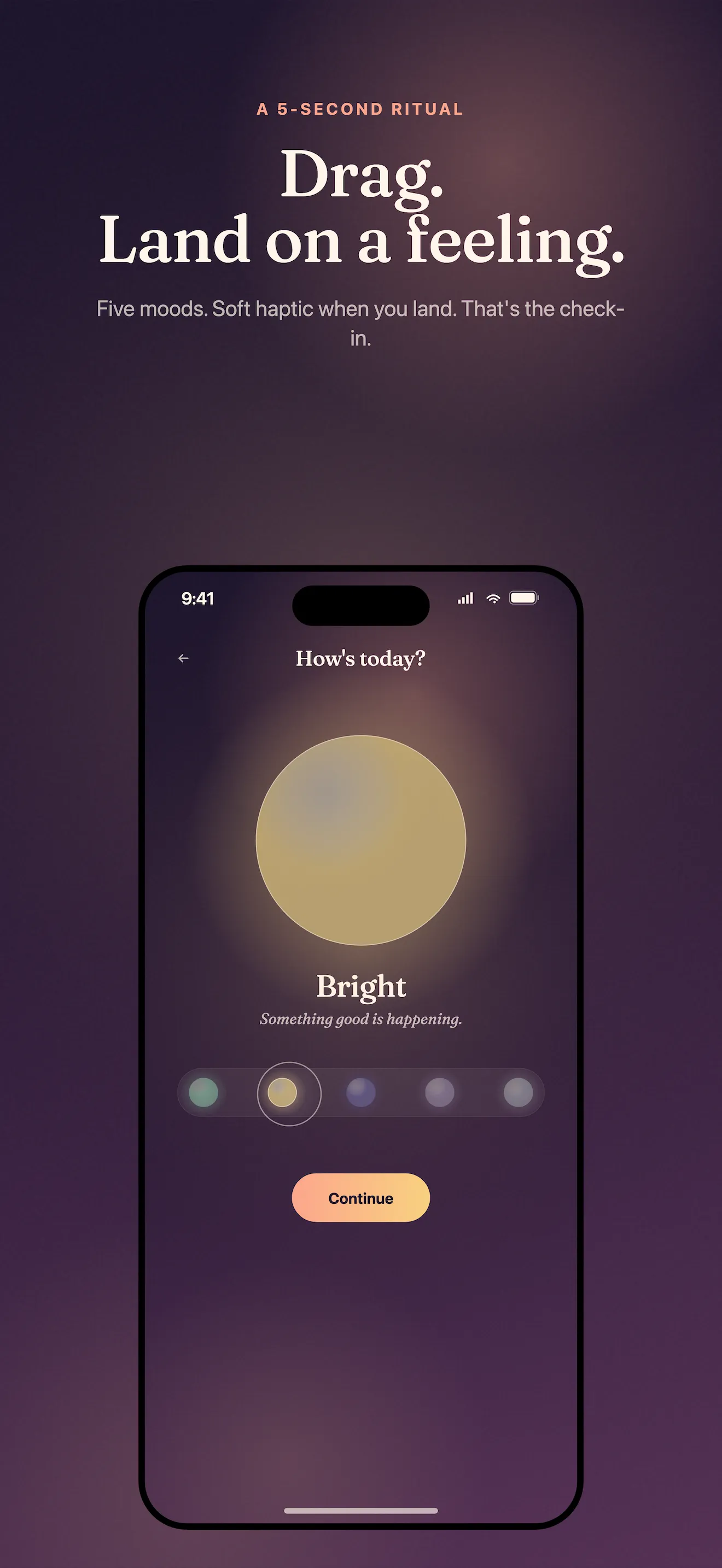
Instead of scales or wheels, MoodLight offers five orbs: calm, bright, heavy, off, numb. These aren't clinical categories or mood spectrum shades. They're the five states that most people actually experience but most mood apps skip over. Calm is different from happy. Heavy is different from sad. Off and numb capture the emotional flatness that scales can't touch. Tap one orb, optionally add a note, and you're done. Thirty seconds.
How the data actually looks
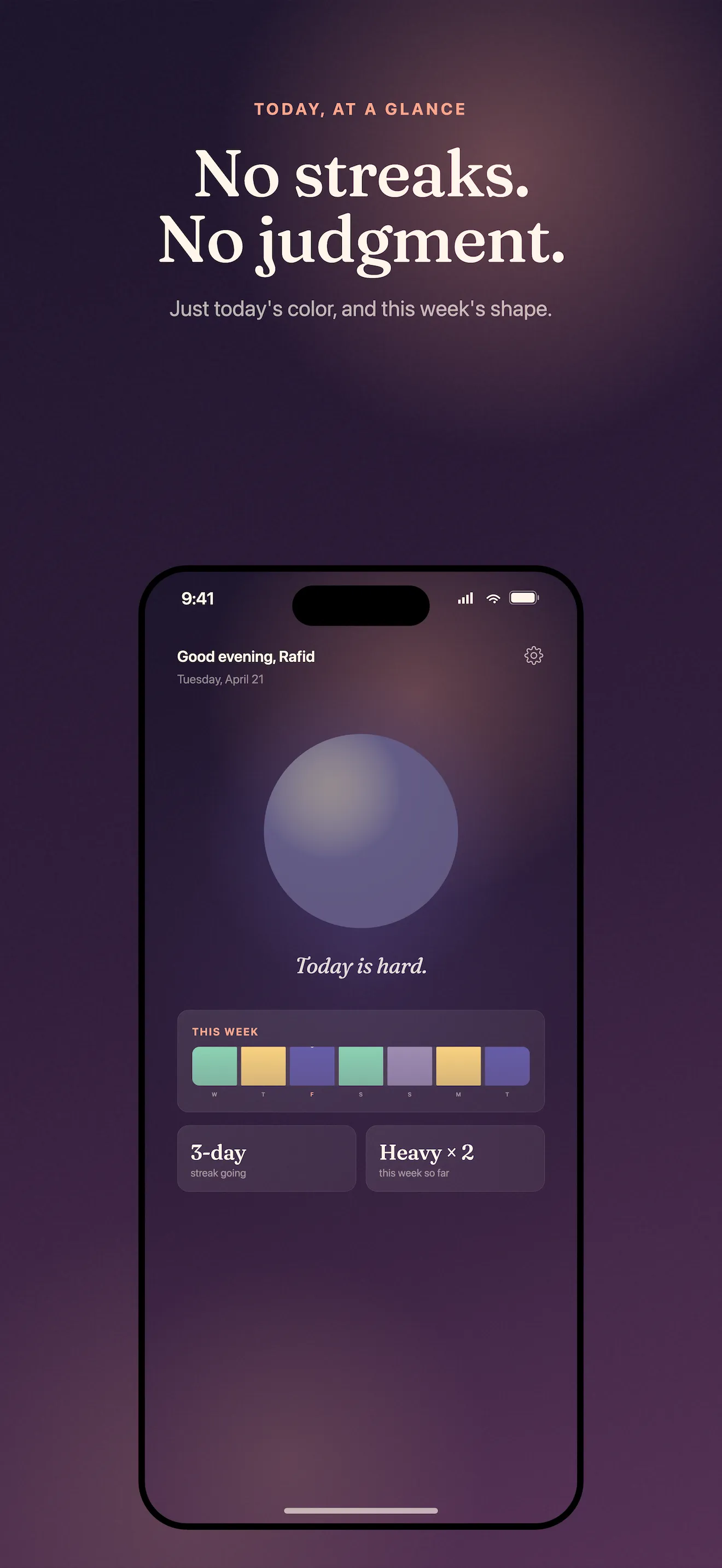
Without scores, how do you see your week? MoodLight turns your check-ins into a colored gradient—a mood map you actually want to look at. Instead of a line graph of numbers, you see a visual story. The pattern emerges naturally: which days were calm, which ones were heavy, when did numb show up. You can see mood trends without the pressure of optimization. The data is yours to understand, not yours to improve for the app.
Privacy and no streaks
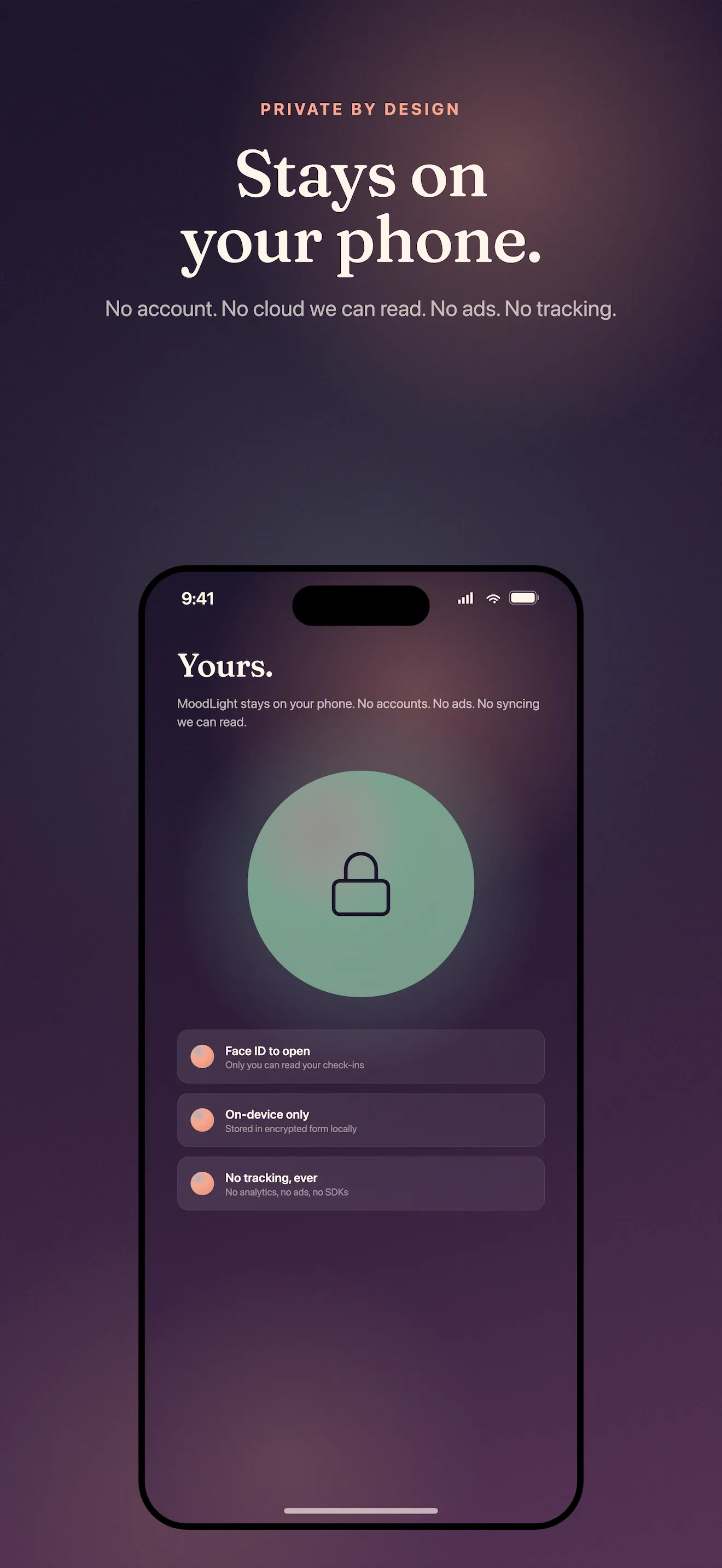
Many mood apps train you to log in daily by gamifying consistency—streaks, achievements, unlock rewards for perfect attendance. MoodLight rejects that entire model. There's no account to create, no cloud sync to lock you in, no streak to break if you skip a day. Your check-ins live only on your device. You're not building a number or maintaining a habit to please an algorithm. You're checking in with yourself when it matters, free from guilt. Learn more about how to make your daily check-in a real practice in our guide to making daily check-ins a habit.
Where MoodLight fits
There's a spectrum of mood tracking approaches. On one end sit simple habit trackers—minimal, checkbox-based, no reflection. On the other sit clinical tools designed to mimic therapy worksheets, heavy and formal. MoodLight sits in the middle: thoughtful but light, private but shareable, honest but not judgmental. If you've tried journaling apps that feel like data entry, or mood wheels that feel like guesswork, or streaks that feel like pressure, this is the alternative. For first-time users, the MoodLight setup checklist walks you through everything in under a minute.
When to share, when to keep private
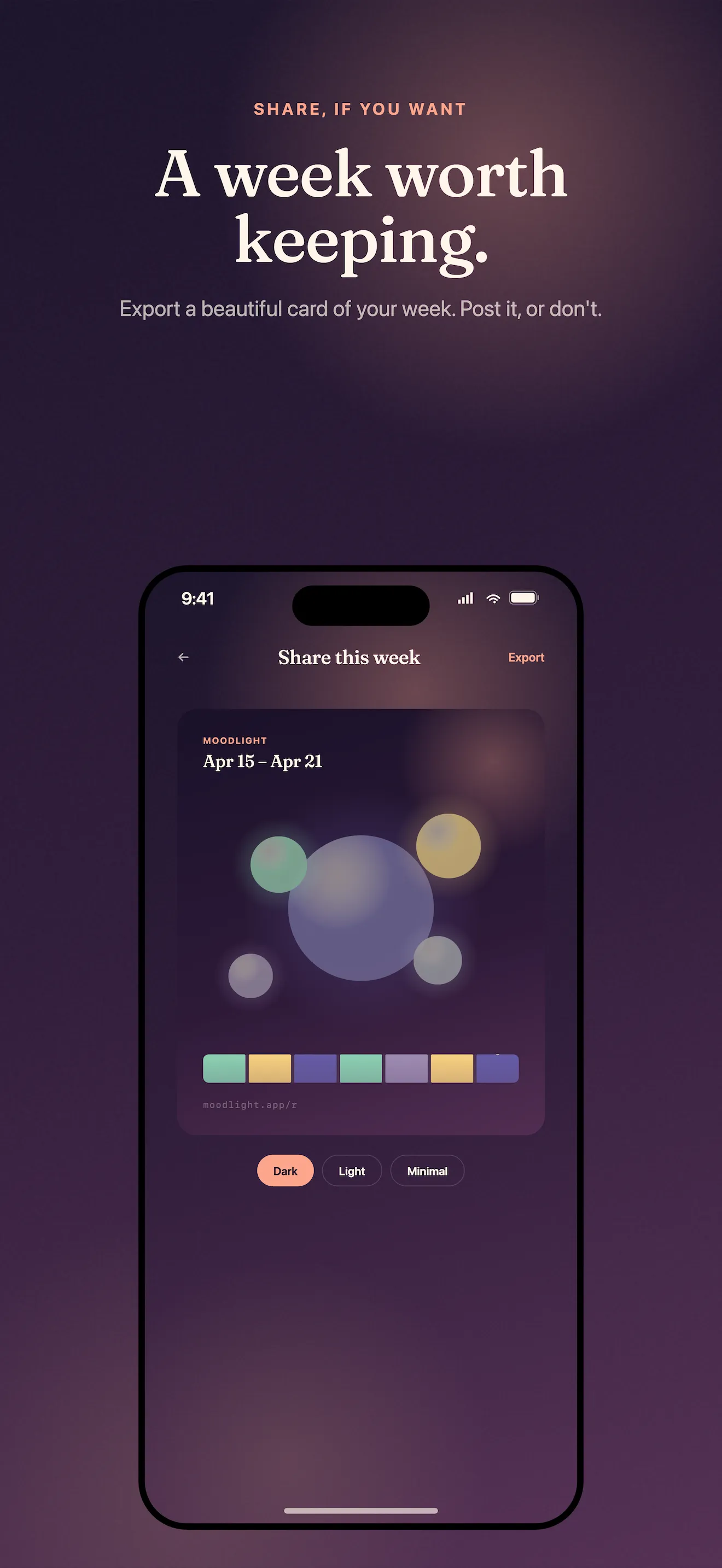
MoodLight understands that sometimes you want to bring your mood data somewhere. You can generate soft, shareable mood cards—visuals of your week that you can show a therapist, send to a friend, or just keep for yourself. They're designed to open conversations, not end them. The data stays on your device by default, but when you decide to share, you're in full control.
This article was drafted with AI assistance and reviewed by a human editor before publishing.