OrbTap's one-tap simplicity is deceptive. On the surface, you're just tapping a screen when a dot orbits into alignment. But between that first run and your best score lies a world of timing precision, rhythm reading, and power-up strategy. We've spent enough time chasing high scores to know what separates a quick distraction from a legitimate leaderboard climb. Here's what works.
Feel the rhythm, not the clock
The biggest mistake new players make is trying to visually calculate alignment. You'll watch the dot orbit, predict where it should meet the target, and tap a frame too early or too late. Instead, let your thumb learn the rhythm. After three or four runs, your body develops a sense of the orbit's cadence. The dot doesn't move randomly—it has a consistent, almost musical tempo. Once you internalize that beat, your taps snap into place without conscious thought.
Practice in your first two runs of a session by focusing on feeling when to tap rather than seeing when it's right. You'll miss more, but those losses teach your instincts faster than wins do. By your third run, you'll notice your success rate jumping.
Position for power-ups, not just points
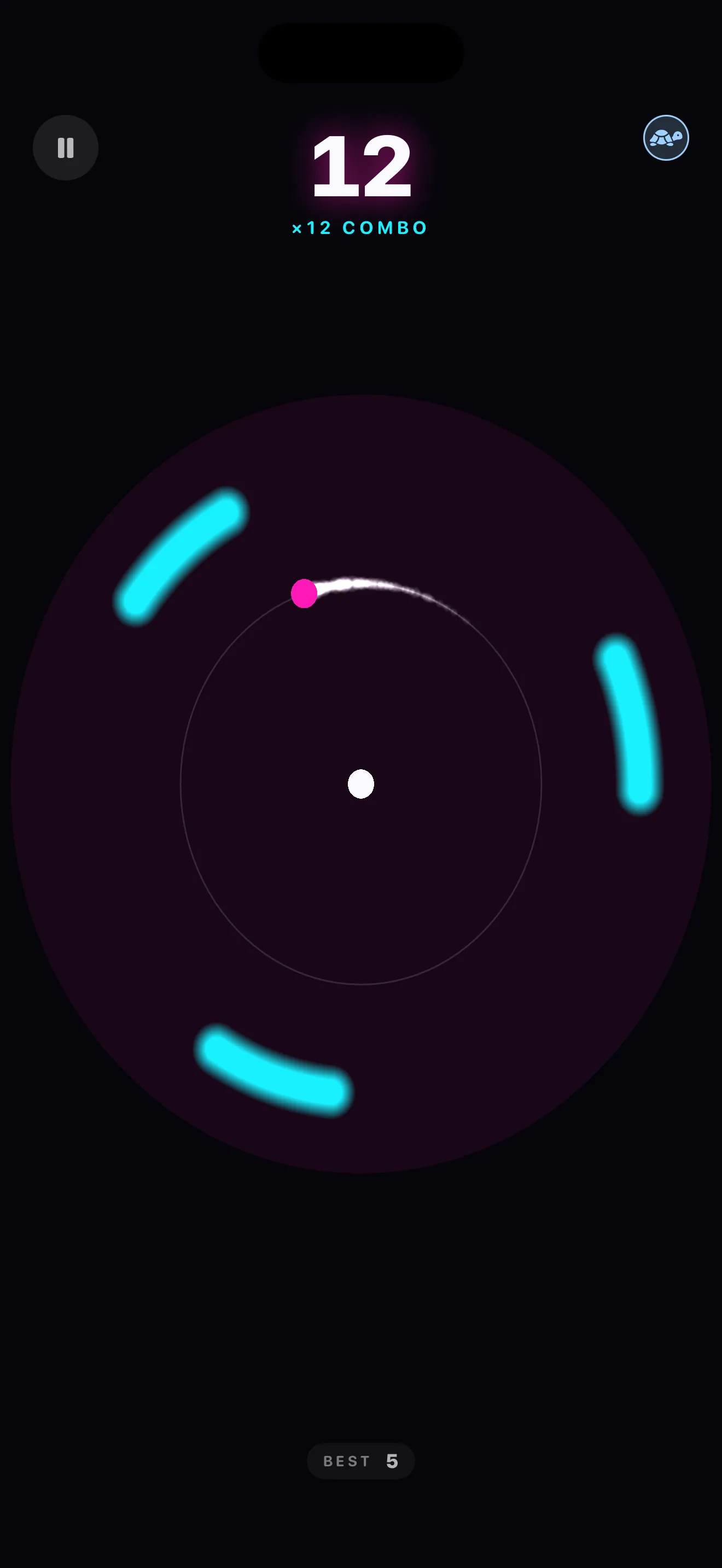
Power-ups—Slow-Mo, Double-Score, and Shield—are the difference between a 15-hit streak and a 40-hit chain. But most players treat them as happy accidents. The secret is that power-ups spawn at specific orbital positions, and you can steer your runs to collect them strategically.
Watch your orbit path. When Slow-Mo appears, grab it early in a run to extend your reaction window for the next five to ten taps. Double-Score shines best mid-streak when you've already proven you can hit consistently—those doubled points stack. Shield is your safety net for that critical moment when speed has ramped up and you're one miss away from game over. The players topping the leaderboards aren't just faster; they're collecting power-ups at the moments those power-ups matter most.
Know when speed kills your streak
Every successful tap speeds up the orbit slightly. It's the game's built-in difficulty curve, and it's relentless. New players get excited about hitting streaks and don't notice the orbit accelerating beneath them. By hit twenty, your margin for error shrinks. By hit thirty, a single lapse ends everything.
Here's the trick: monitor your mental state as speed increases. If you feel your rhythm cracking—if you're guessing instead of feeling—use a Slow-Mo power-up immediately. A three-second slowdown isn't just breathing room; it's a rhythm reset. Your next taps will align with the slower tempo, and when speed ramps again, you'll be ahead of it instead of chasing it.
The best players lose just as often as beginners. The difference is they've learned to extend their streaks before the speed takes them out.

Treat close misses as data
Every miss teaches something. A close miss—where you tapped a frame too early—tells you the orbit is slightly faster than your rhythm registered. Instead of dismissing the loss, carry that information into your next run. Adjust your timing slightly forward. Conversely, a miss where you tapped late means next time, hit the rhythm just a hair earlier.
This iterative approach compounds across sessions. Week one, you're hitting 10-tap streaks. Week two, you're pushing 25. By week three, you're chasing the leaderboard because you've micro-calibrated your timing across dozens of runs. Each miss wasn't a failure; it was calibration.
Choose your theme for focus, not just aesthetics
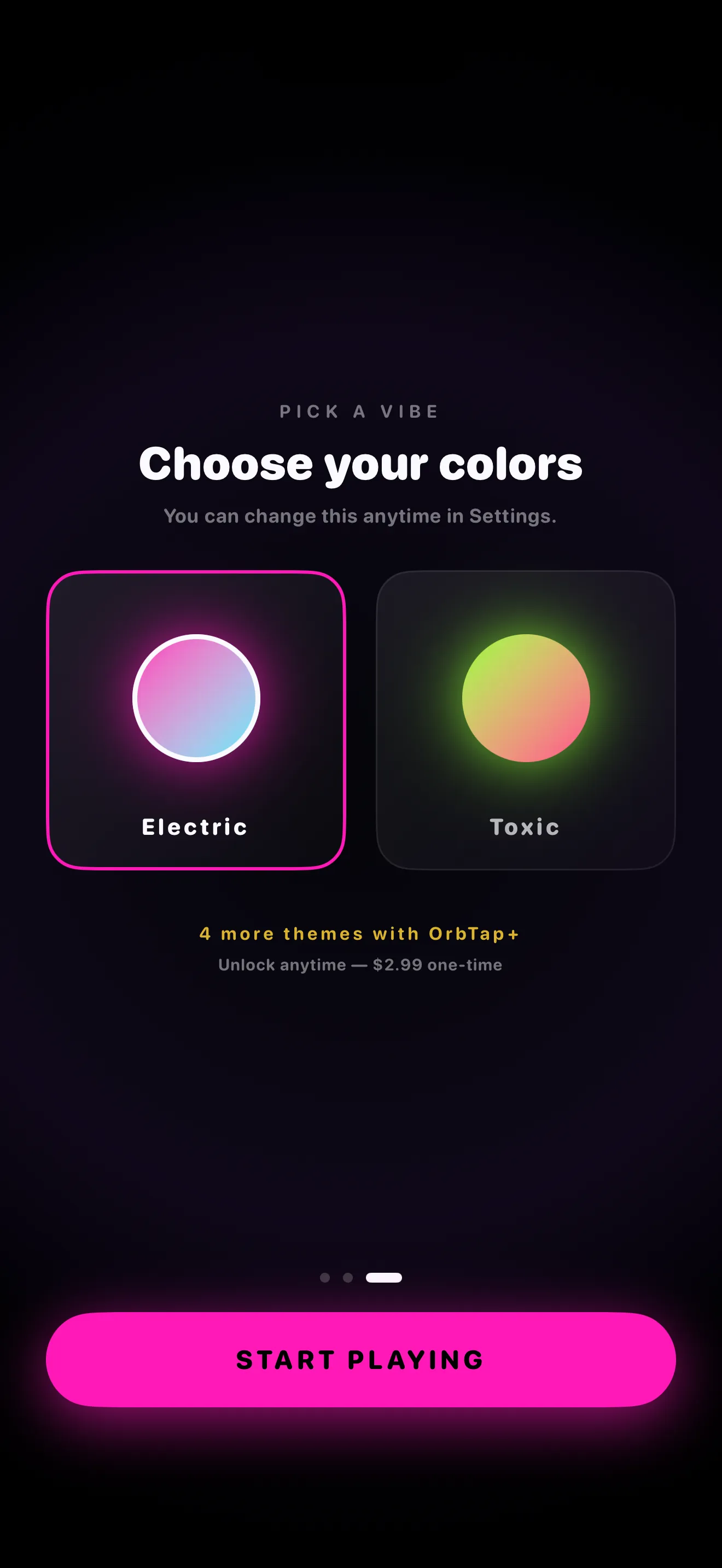
OrbTap's five neon themes are gorgeous, but they're not just visual. Different color palettes affect visibility and contrast. If you're struggling to track the orbiting dot's path, switch to a theme with higher contrast between the dot and background. Some players swear by the cyan-on-black theme for tracking; others prefer magenta for reduced eye strain during long sessions.
Spend ten minutes testing all five themes. Pick the one where your eyes naturally track the dot without strain. That small friction reduction compounds into better focus and longer, more successful runs. It's a subtle edge that pros use.
Tap anywhere. Consistency is the only rule
OrbTap accepts a tap anywhere on the screen. Some players tap the center. Others tap the corners. The position doesn't matter—only consistency does. Pick a tap location and stick with it across all your runs. Your thumb develops muscle memory for that spot, and muscle memory accelerates reflexes better than conscious aiming ever will.
- Bottom-center taps minimize hand movement and eye travel
- Corner taps work well if you're playing while doing other things (true bathroom-break gaming)
- Mid-screen taps offer a balance between focus and comfort
- Whatever you choose, repeat it until it's automatic
If you're bouncing between tap locations, you're fighting your own reflexes. Lock in a spot and forget about it.
Use the GameCenter leaderboards as your training ground
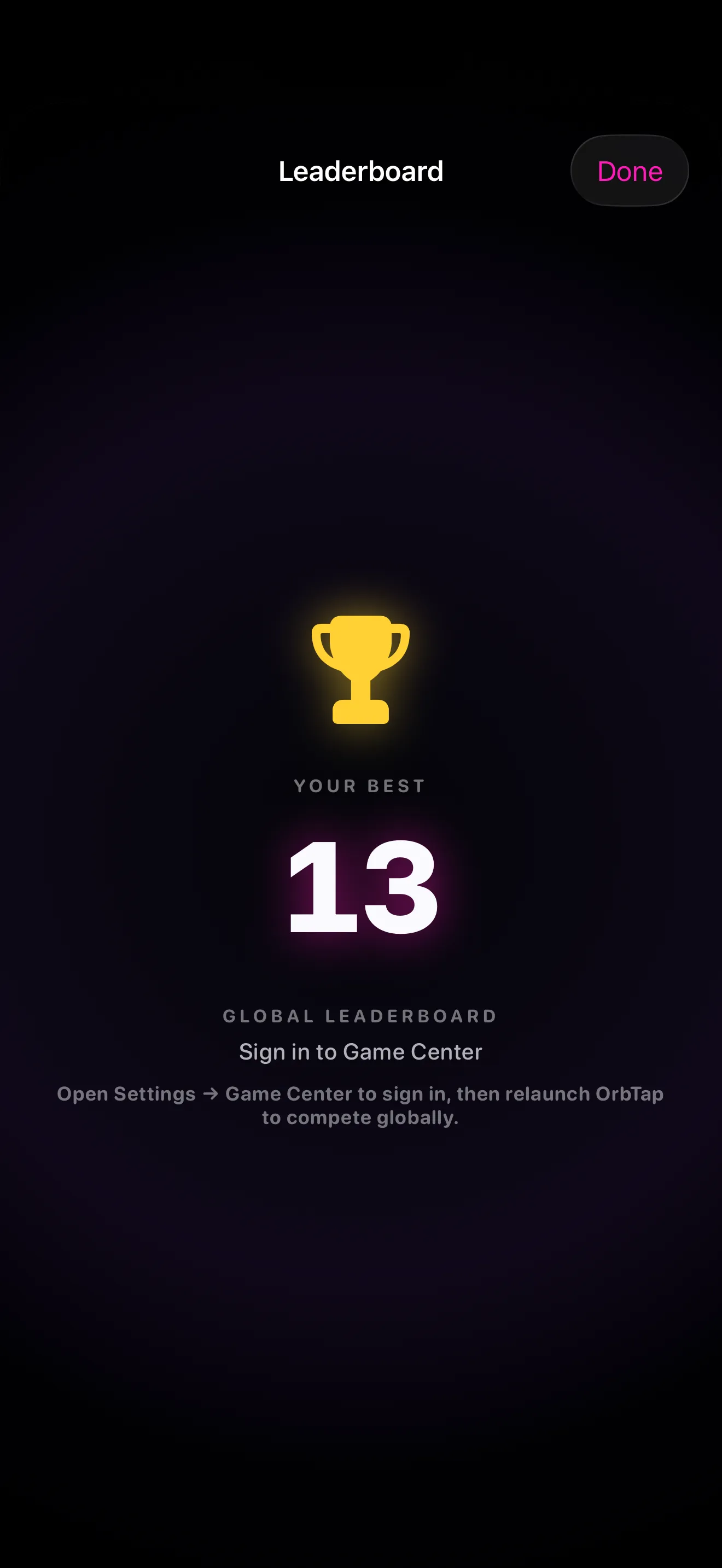
GameCenter leaderboards show the global best scores, and yes, some are intimidating. But they're also proof that the score you're chasing is possible. When you see someone hit 89 taps in a chain, you know the game mechanics allow it. You're not chasing a myth; you're chasing proof of what's achievable.
Review your own leaderboard history weekly. Track your personal best and your average top-three scores. If your best is 35 taps but your average is 18, you have untapped potential—you've proven it once. The goal is narrowing that gap. Your best score isn't luck; it's a roadmap. Study it.
If you want to unlock the full suite of themes and features while you practice, OrbTap+ offers everything for a one-time unlock. Or explore our full review of OrbTap's arcade design to understand why the mechanics feel so good.
This article was drafted with AI assistance and reviewed by a human editor before publishing.