OrbTap looks simple: tap when the dot aligns with a target, chain your hits, climb the leaderboard. But that first miss comes fast, and suddenly you're chasing your best score again. The gap between a casual run and a sustained chain isn't luck — it's rhythm, positioning, and knowing when to play aggressive versus patient. We've learned what works, and we're sharing it here.
Find Your Rhythm, Not Your Eyes
New players often stare intensely at the orbiting dot, trying to catch it with their eyes. That works for the first few taps. But as the game speeds up, your reflexes can't keep pace with your conscious mind. Instead, let your hand develop a muscle-memory pulse. Tap in time with the orbit's natural rotation, not when you see the alignment. The targets are stationary; the dot is orbiting. After three or four hits, your finger should sync with the dot's path, and you'll feel the alignment before you consciously register it.
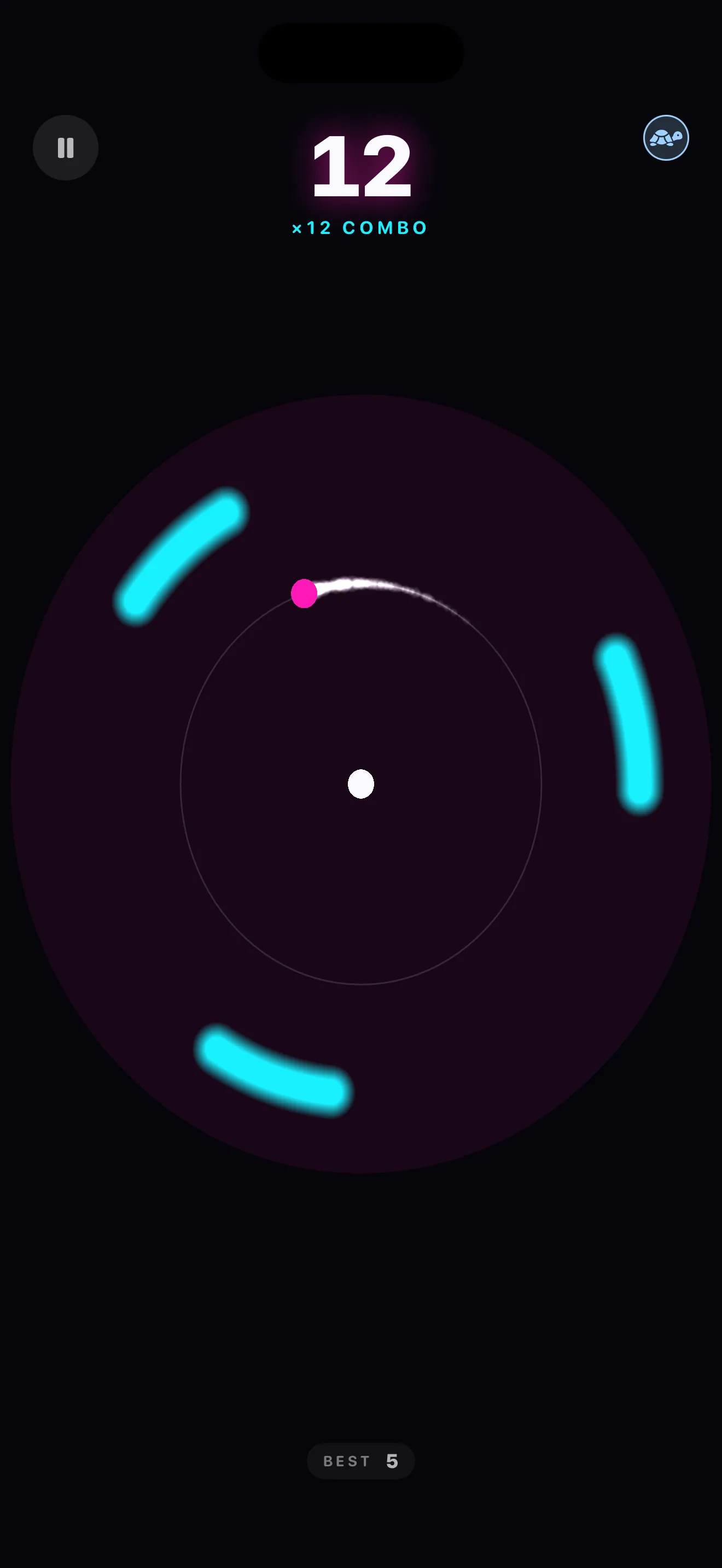
Tap in time with the orbit's natural rotation, not when you see the alignment.
Master Power-Up Positioning
Power-ups aren't rewards for speed — they're gifts from positioning. Slow-Mo, Double-Score, and Shield appear on the orbit path itself. To claim them, you don't tap faster or harder; you tap at the exact moment the dot aligns with the power-up's location. This means you need to plan one or two moves ahead. If you see a Shield appearing on the left side of the orbit, position yourself to grab it before you need it. Slow-Mo is your safety net when the speed is climbing fast. Double-Score is your score multiplier for a hot streak. Learn where each power-up sits on the path, and you'll turn defensive moments into scoring opportunities.
- Slow-Mo halves the orbit speed for three seconds—grab it when the pace is accelerating
- Double-Score doubles every hit for ten seconds—use it to extend a winning streak
- Shield absorbs one miss—collect it early, before you need it
Aggressive Play During Early Speed
The first ten seconds of a run are forgiving. The orbit is slow, your reflexes are sharp, and mistakes feel avoidable. Use this window to be aggressive. Tap quickly, build confidence, and grab any power-ups that cross your path. Once you've got three or four hits, the speed ramps noticeably. That's when your patience matters more than your speed. Don't panic-tap. Return to your rhythm. Let the orbit come to you.
Tap Anywhere on the Screen
OrbTap doesn't care where your finger lands—there's no zone, no target button, no multi-touch requirement. A tap anywhere on the screen counts. This simplicity is both liberation and trap. New players often assume they need precision positioning, so they hover their finger near the alignment point. Instead, rest your thumb in one comfortable spot and tap from there. Your muscle memory will strengthen faster if your tapping location is consistent. Pick a spot, own it, and let the rhythm take over.
Use Theme Changes as Mental Resets
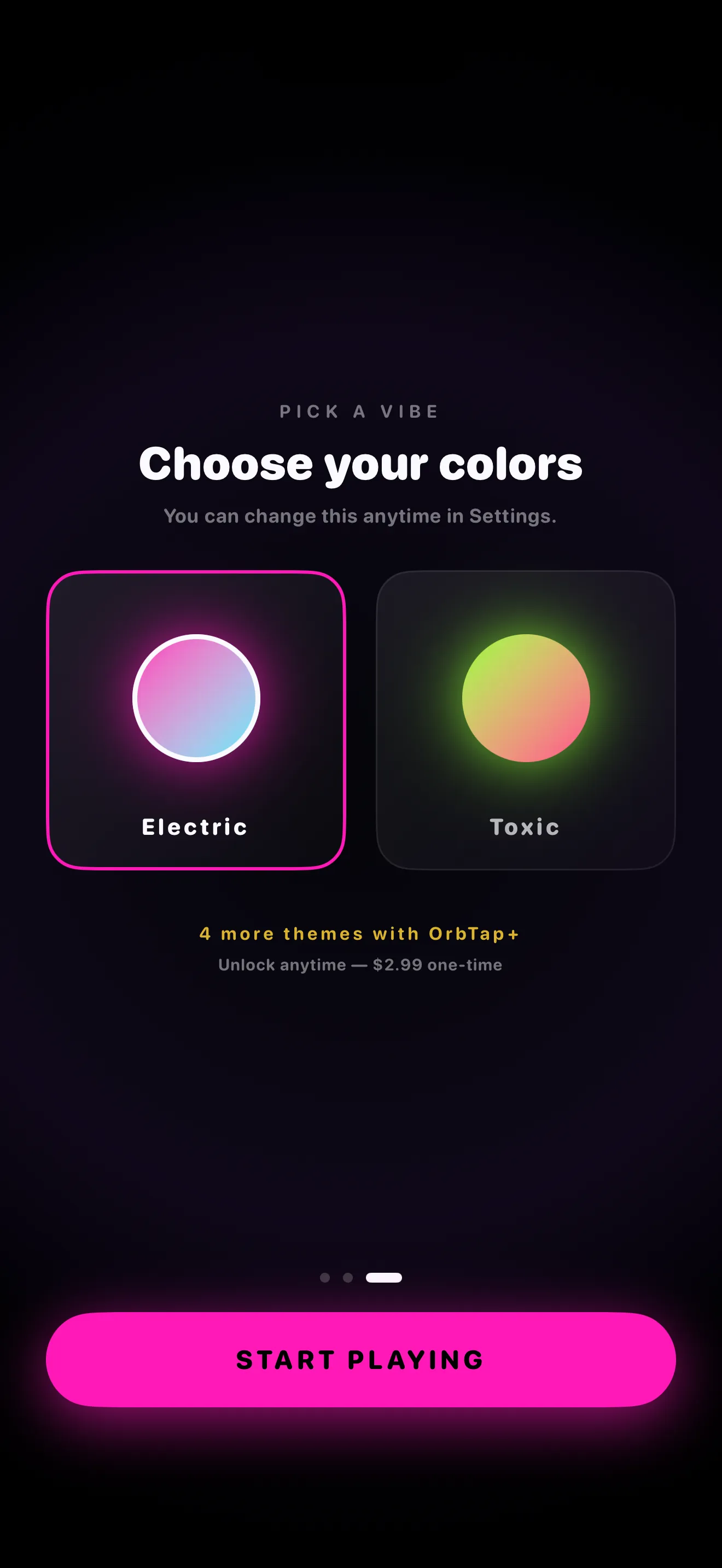
OrbTap ships with five distinct neon themes, each with its own color palette and visual personality. After a frustrating run or a close miss, switching themes can break the mental loop. A fresh visual context—cyan over pink, or magenta over green—tricks your brain into resetting your expectations. You're not starting over; you're just seeing the same game with new eyes. This small shift often leads to calmer taps and longer chains. If you've hit a plateau on one theme, try another. The gameplay is identical, but your performance might surprise you.
Study the Leaderboard, Then Ignore It
GameCenter leaderboards are built into OrbTap, and they're motivating—right up until they're demoralizing. A quick glance at global rankings shows you where you stand and what score to chase. That's useful. But obsessing over the leaderboard mid-session will kill your rhythm. Play three or four runs without checking. Build your muscle memory. When you're confident in your timing, then look at the leaderboard to set a concrete target. The best arcade reflex games balance competition with accessibility, and OrbTap does this well by keeping leaderboards visible but optional.
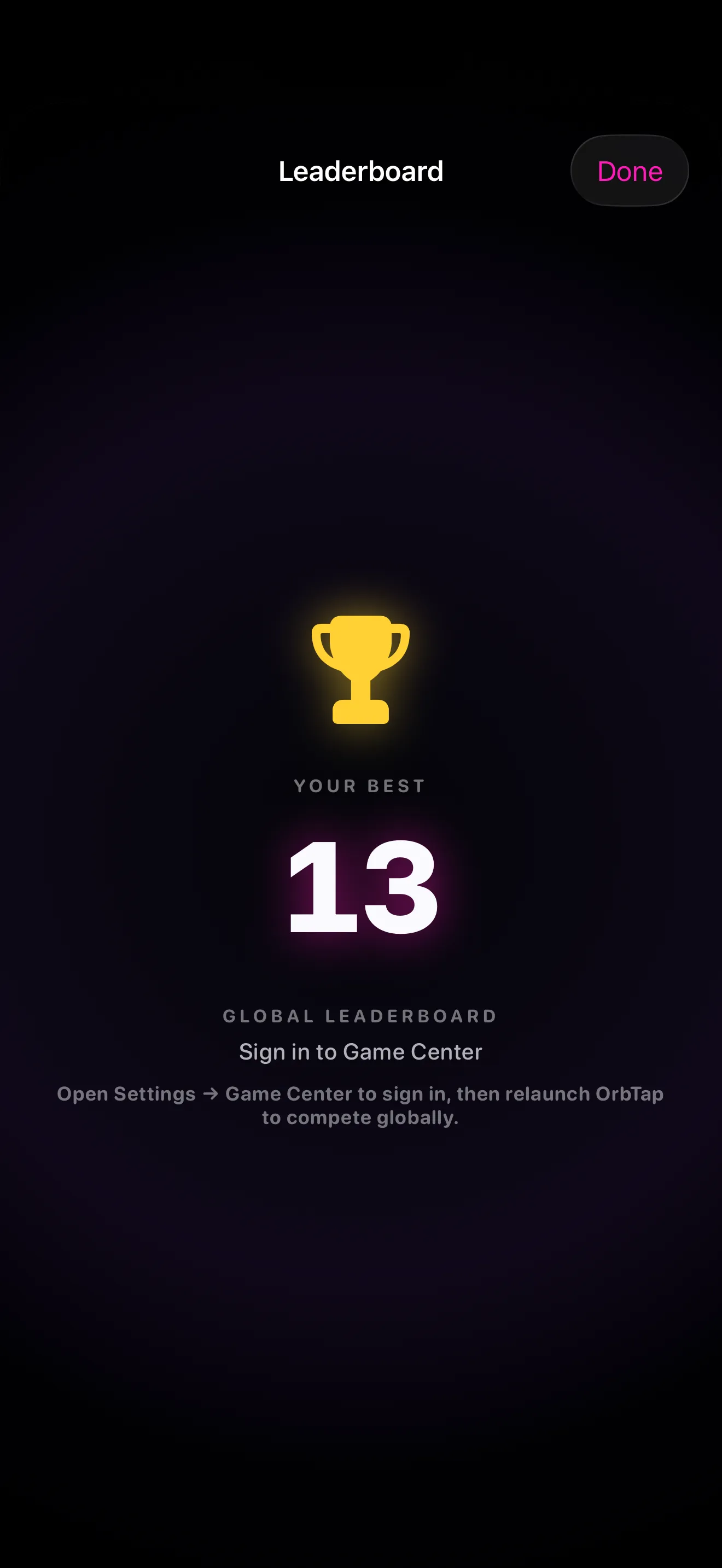
Play three or four runs without checking the leaderboard. Build your muscle memory first, then set a target.
Close Misses Are Data, Not Failure
Every miss teaches you something. A close miss—when the tap is a fraction of a second too early or too late—is calibration data. Your rhythm was almost right; you just need a tiny adjustment. Instead of restarting immediately, pause for a moment. Did you tap early or late? Adjust your timing by maybe a tenth of a second on your next run. The game resets you on the first miss, but your muscle memory carries forward. Treat each session as an iteration, not a fresh start. If you're curious about the finer points of timing and design, OrbTap's one-tap design rewards timing precision in ways that surprise most players.
Unlock OrbTap+ When You're Ready to Go Deeper
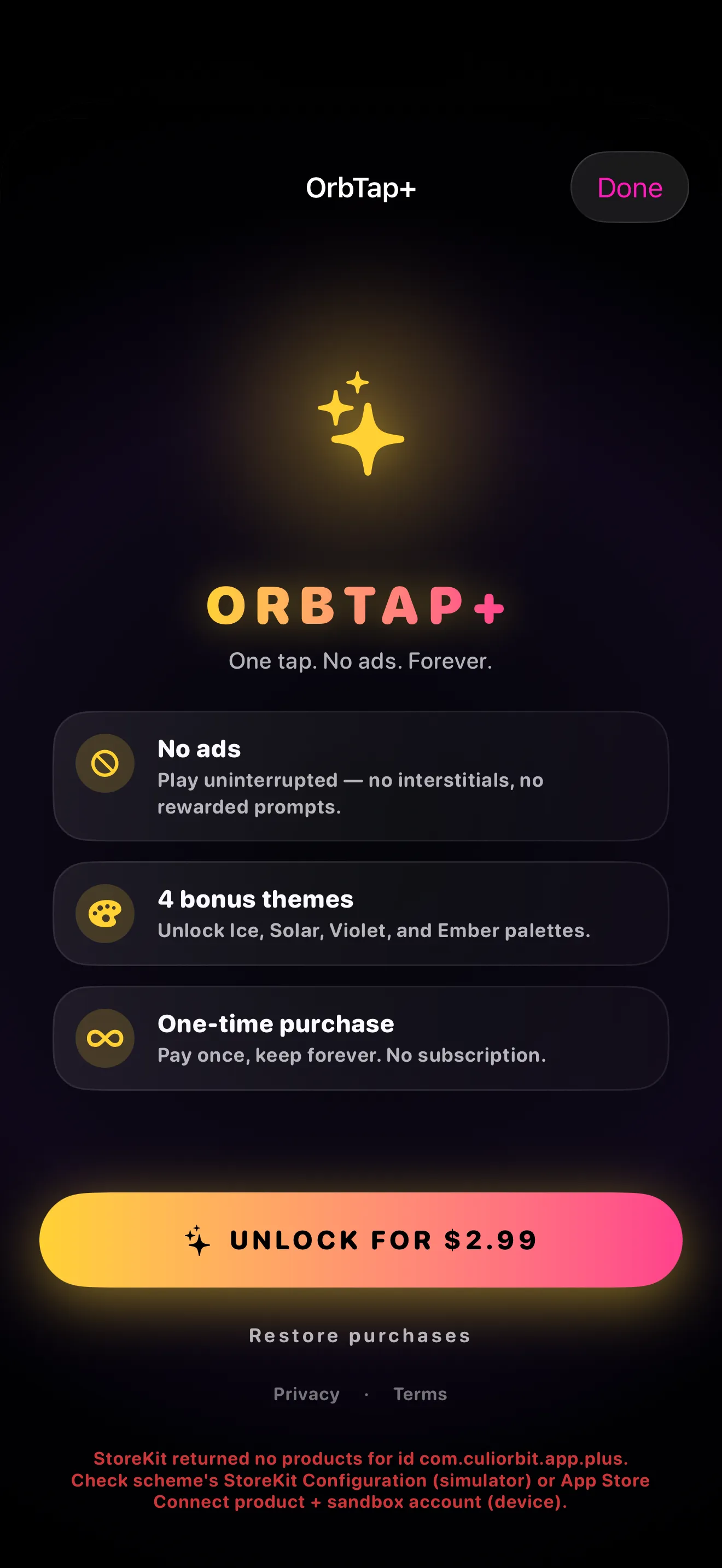
OrbTap is free and fully playable. But if you find yourself coming back daily, chasing higher scores, and pushing toward the leaderboard, OrbTap+ might be worth it. The unlock removes any friction and gives you everything the game has to offer. It's a one-time purchase, not a subscription, so there's no ongoing cost. Try the free version first, build your skills, and unlock only when you're confident you'll stick with it.
This article was drafted with AI assistance and reviewed by a human editor before publishing.