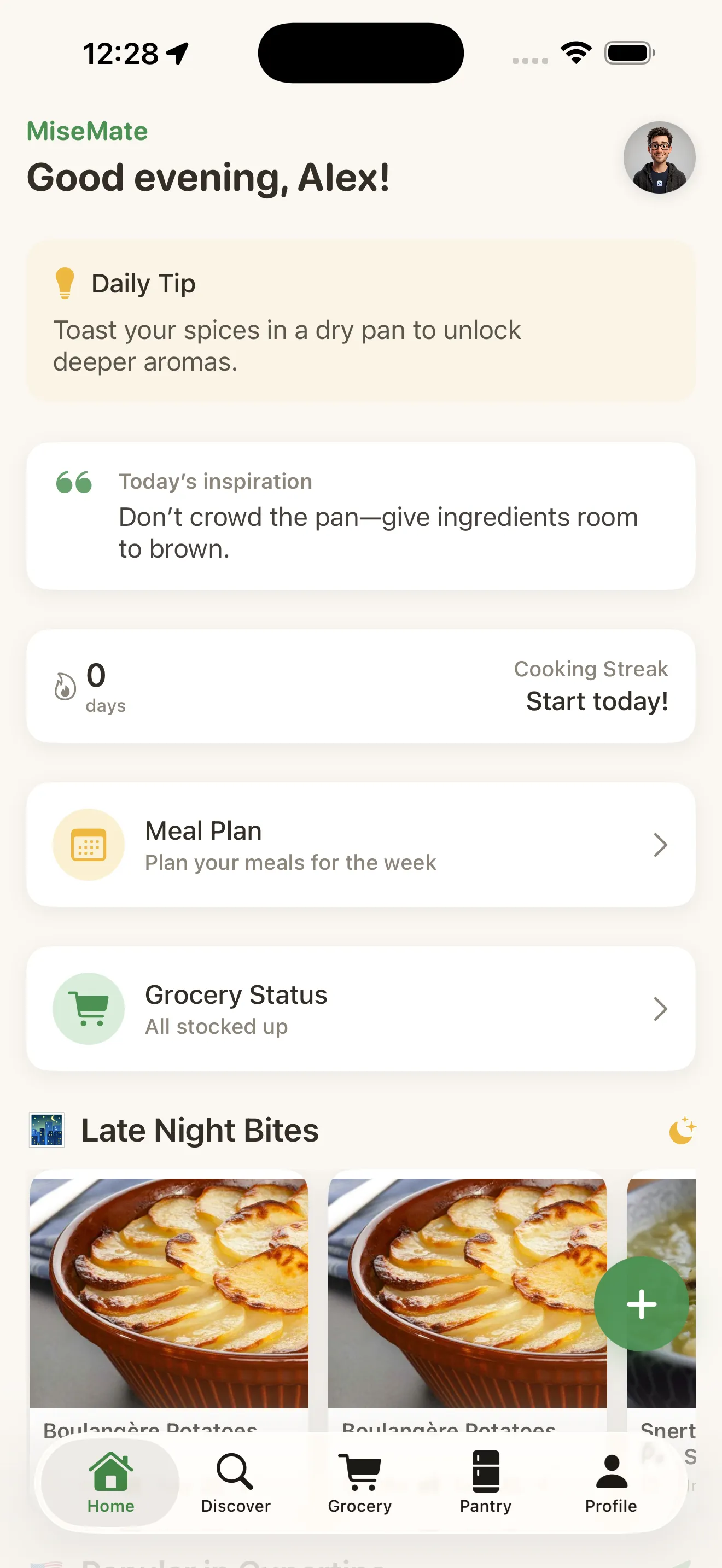
If you cook at home, you've probably noticed recipe apps fall into a few distinct camps. Some are deep archives of curated recipes. Others focus narrowly on meal planning. A few try to do everything but do nothing particularly well. The question isn't which app is best — it's which approach matches how you actually cook and shop.
The recipe-first approach
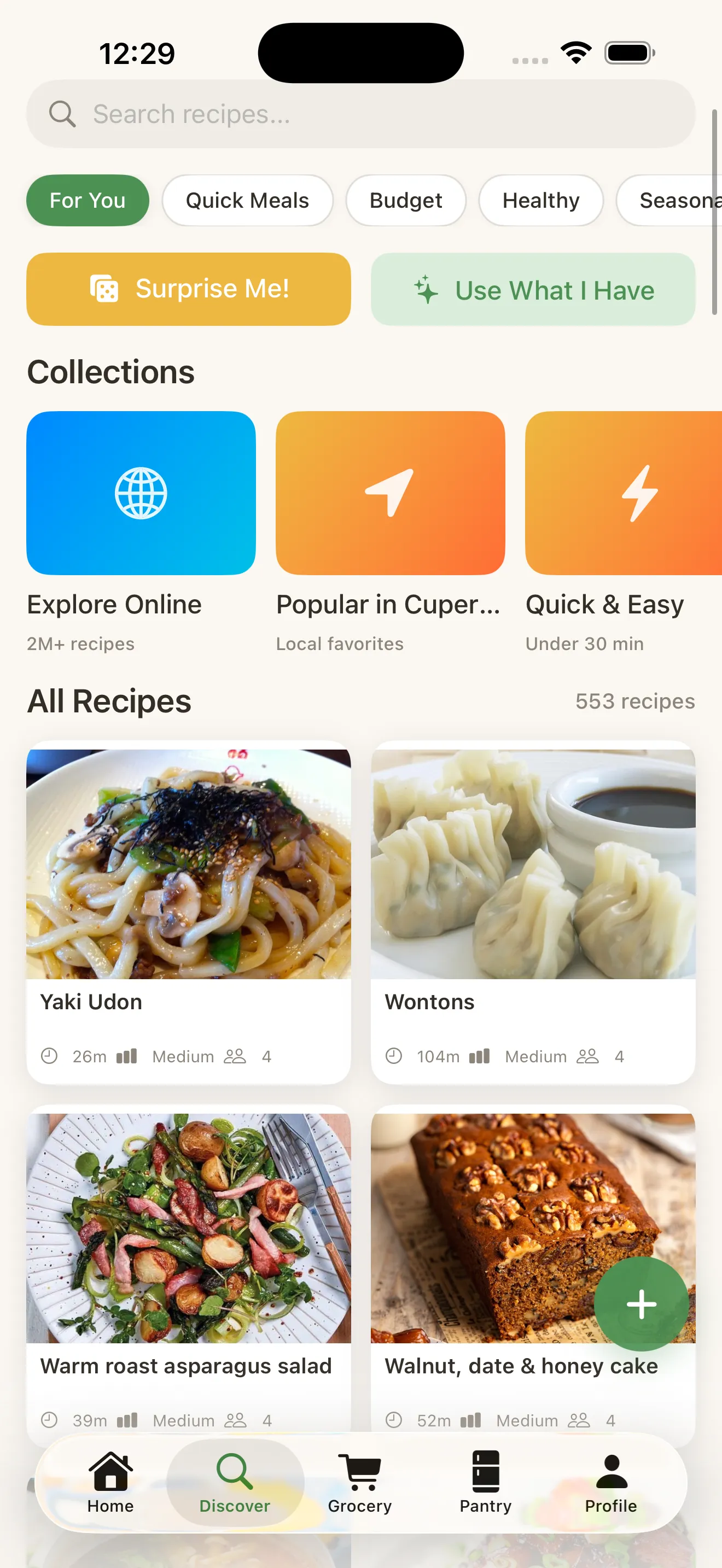
The traditional recipe app is essentially a searchable cookbook. You browse, you find something that looks good, you cook it. These apps excel at curation — thoughtfully selected recipes, often from well-known food writers or publications. The downside is straightforward: they're mostly read-only. You discover recipes, but the app doesn't help much once you're actually in the kitchen or planning what to buy.
The meal-planning specialist
On the other end, some apps lead with weekly meal planning. Pick your meals for the week, the app generates a shopping list, you're done. These work beautifully if you like structure and predictability. But if you cook more spontaneously — opening your fridge and deciding based on what you have — they feel prescriptive.
The all-in-one kitchen companion
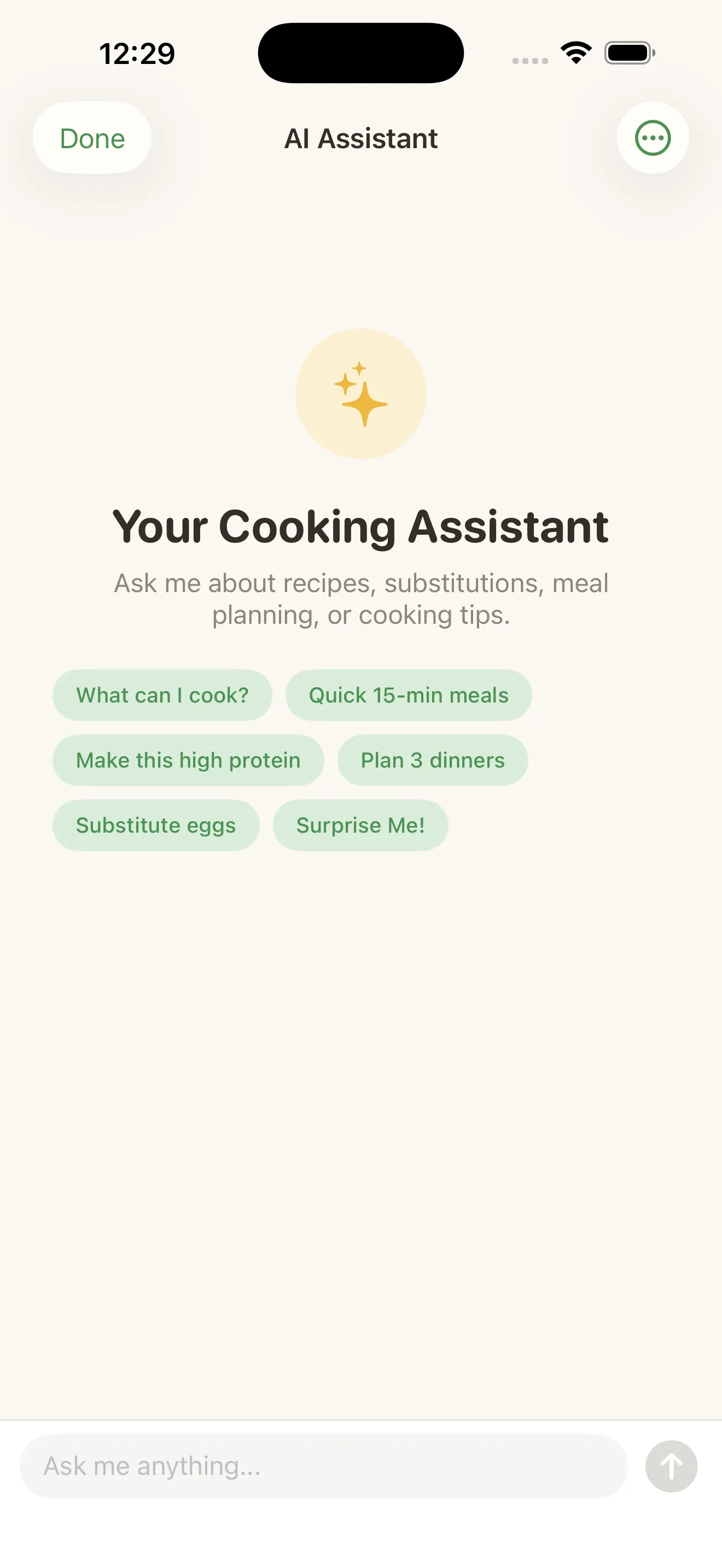
A third approach tries to live with you throughout the entire cooking lifecycle. Discovery, ingredient scaling, step-by-step guidance, smart grocery lists, AI suggestions based on what's in your pantry. The idea is to meet you wherever you are in the process — whether that's "I have no idea what to cook" or "I'm three steps in and need to know if I can swap an ingredient."
What makes an all-in-one approach work
An all-in-one system only works if each part actually talks to the others. Scaled ingredients should feed directly into your grocery list. Your dietary preferences should shape recipe suggestions. Your cooking history should inform what the app recommends next. Without that integration, you end up switching between tools anyway — defeating the whole purpose.
The best recipe app isn't the one with the most features. It's the one that disappears into your cooking routine.
The practical difference: discovery to table
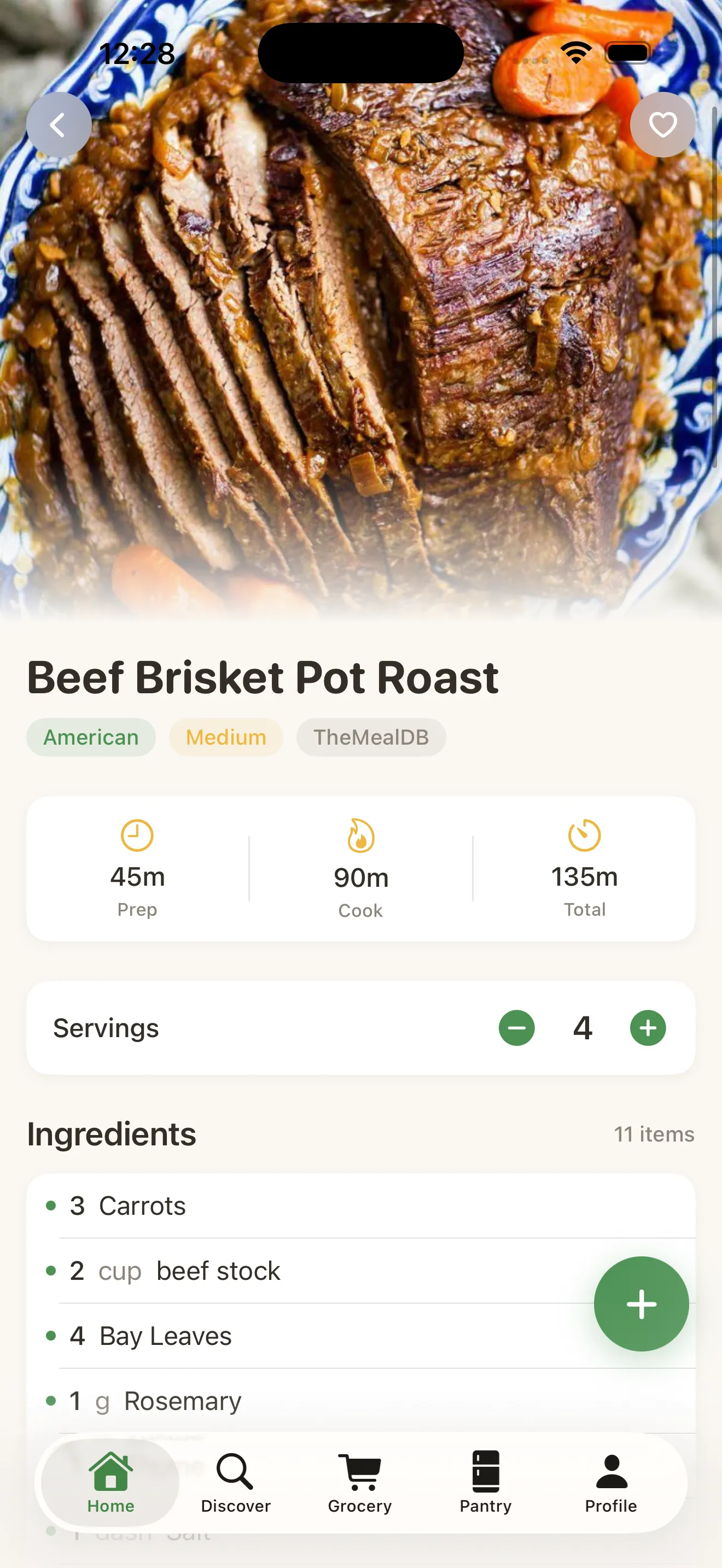
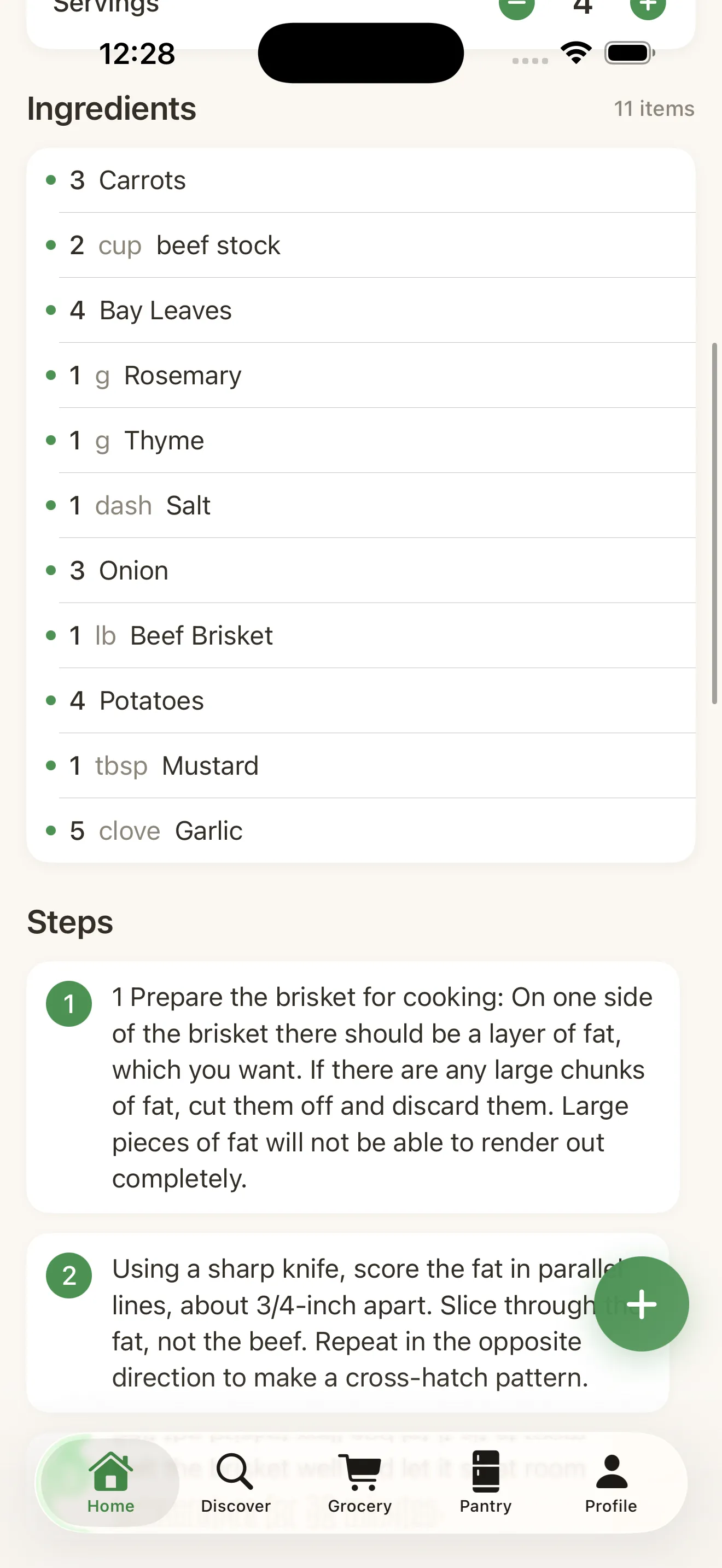
Consider a typical cooking session. You open your app looking for dinner ideas. A good discovery experience shows you what's trending, what fits your dietary needs, maybe what you can make with ingredients you already have. You pick something. The app scales it for your household size. You build a grocery list, mark off what you already own, and go shopping. At home, you follow step-by-step instructions with timers that actually sync to your stovetop. If you get stuck, the app suggests substitutions or rewrites the recipe on the fly. That's the all-in-one promise — nothing wasted, no context switching, no friction.
Getting started with the right fit
The good news: you don't have to choose based on theory. Most apps show you quickly what they're built for. Open one and see if the experience feels natural. Can you discover something in under three taps? Does your dietary preference from setup actually show up in recommendations? When you're cooking, do instructions feel like someone's standing next to you, or are you squinting at a wall of text? The right approach is the one that matches your cooking reality, not the one with the longest feature list.
This article was drafted with AI assistance and reviewed by a human editor before publishing.