Most word games ask you to think carefully. Tiny Word Sprint asks you to think fast. It's a deliberate design choice that changes everything. By compressing the time window and amplifying the reward for momentum, the game transforms from a leisurely puzzle into a sprint—one where every second matters and every correct word builds toward something bigger. There's no complexity to learn, no meta-game to master. Just you, a handful of letter tiles, and a clock that doesn't stop.
Speed as the Core Mechanic
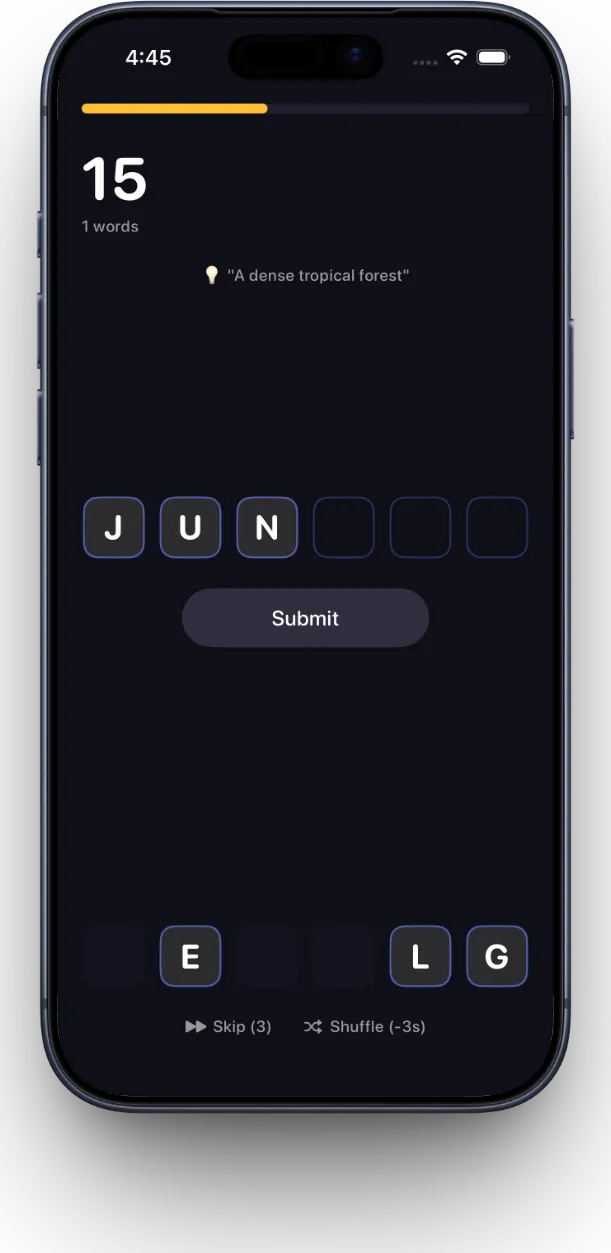
The heart of Tiny Word Sprint is constraint. You tap tiles to form words before time runs out. That pressure—knowing the clock is ticking—is what makes each round feel urgent. There's no option to pause and think for five minutes. The game forces you to trust your instincts, and that immediacy is where the addiction lives. Most players find themselves drawn back not because they love word puzzles in the abstract, but because they want to beat their own time. Speed becomes personal.
The Streak Multiplier: Momentum Rewarded
Chain correct words together and your multiplier grows. Hit 10 words in a row and you reach LEGENDARY status—a 3.5x boost that makes those final seconds feel monumental. The streak mechanic does something clever: it punishes hesitation and rewards confidence. Miss one word and your multiplier resets. But that reset is what keeps each run tense. You're not just playing to win points; you're playing to maintain momentum. The multiplier transforms what could be a calm puzzle game into a high-stakes race against yourself.
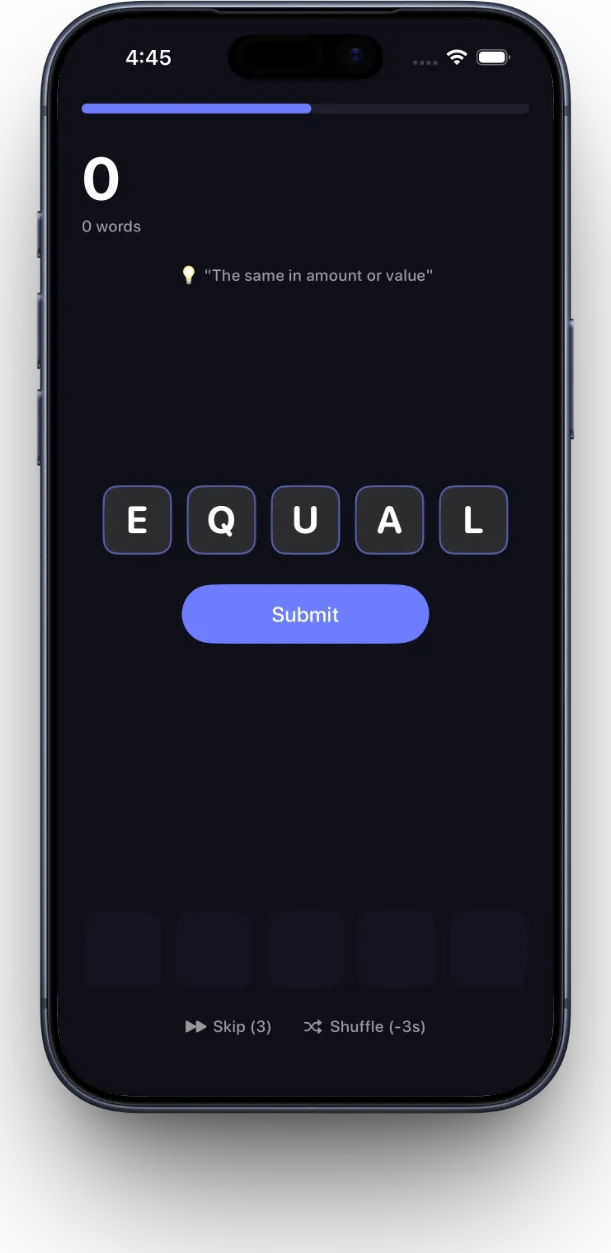
Speed becomes personal when the game forces you to trust your instincts rather than calculate your moves.
No Friction, No Distractions
Tiny Word Sprint is completely free—no ads, no in-app purchases, no accounts. That decision matters. Every other tap doesn't interrupt a video ad. You don't unlock features with a paywall. The game respects your time by not selling it back to you. The offline dictionary is deep enough to keep runs unpredictable and reward creative vocabulary, but it's bundled in. You download it once and you're done. That friction-free design is why the "one more run" feeling hits so hard. There's nothing between you and the next game except the restart button.
Replayability Built In
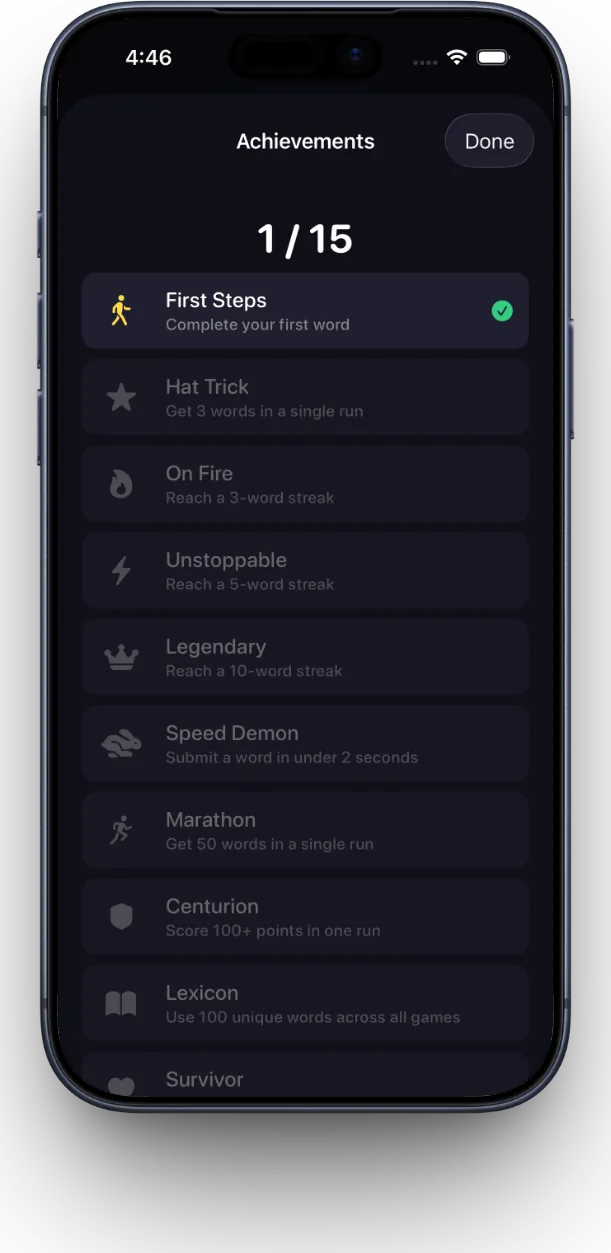
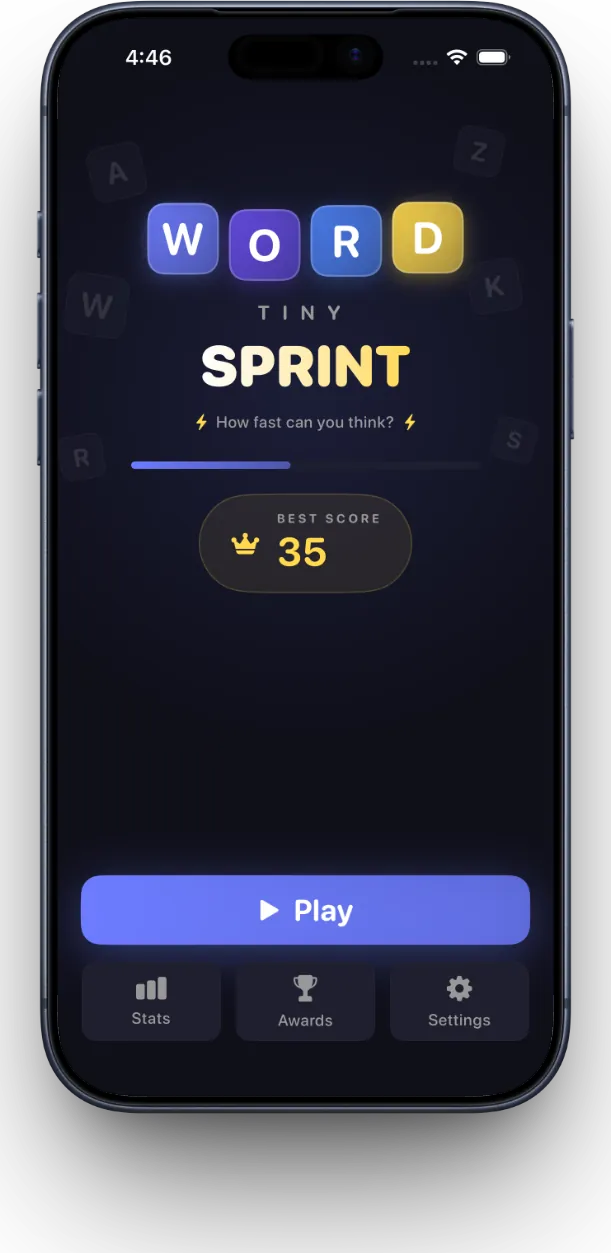
Daily challenges give you a structured goal each day, but the real hook is the lifetime stats dashboard. You can see your best streak, your personal record, your total words spelled. Those numbers create a narrative. Every run is a chance to rewrite your high score. There are 15 achievements to chase and 5 themes to customize your experience, but the core loop is simple: play, beat your best, play again. For players looking to deepen their skills, our guide on mastering Tiny Word Sprint tips and strategies breaks down the tactics that separate casual players from true competitors.
Why It Works
Tiny Word Sprint succeeds because it commits to one idea: make word games faster and more intense. It doesn't try to be everything. No story mode, no puzzles to solve, no elaborate progression tree. Just the core loop, refined until it feels inevitable. The streak multiplier creates peaks and valleys in tension. The offline dictionary ensures no two runs feel identical. And the complete lack of monetization means the game has no reason to manipulate you into staying longer than you want to.
This article was drafted with AI assistance and reviewed by a human editor before publishing.