What is a good 5-minute wind-down routine before bed?
A 5 minute wind down routine before bed works when it's the last small step of your evening and you do it most nights. It doesn't work as a perfect plan you save for the good nights. Below is the version we'd give a friend who has just shut the laptop at 11:40. It's timed minute by minute, with swaps for nights your head won't settle and a plan for when sleep still doesn't come. We make Reset, a five-minute nightly wind-down app for iPhone, and it runs this same routine for you. Every step here also works with a pen and a kitchen timer.
Is a 5-minute wind-down routine before bed really enough?
Yes, as long as the five minutes are the closing step of your evening and not the whole of it. The American Academy of Sleep Medicine recommends at least seven hours of sleep for adults and avoiding blue light from handheld devices for 30 to 60 minutes before bed. That gap is the buffer. The five minutes are the signal at the end of it that tells you the day is over.
The buffer is where most of us slip. In AASM's June 2025 survey of 2,007 US adults, half said they use a screen in bed every day, and only 9% said they never do. Another 26% said they put phone time ahead of getting enough sleep. And 38% said reading news before bed makes their sleep worse, rising to 46% of 18–24-year-olds. If you can change only one thing tonight, cut the feed. The missing meditation can wait.
The routine uses two of the better-studied bedtime habits, and both come with caveats. A 2026 systematic review in Sleep Medicine Reviews looked at 9 studies of slow breathing before bed. In 7 of them, people reported sleeping longer and better. Objective measures from wrist trackers and lab recordings were inconclusive, though, and the studies that took those measurements tested only a single night of practice. A 2018 Baylor study of 57 adults aged 18 to 30 compared two kinds of bedtime writing. People who spent five minutes on a to-do list fell asleep about nine minutes faster than people who wrote about tasks they had already finished. It's one small study. That's enough reason to try it, but not enough to promise it will work for you.
A five-minute routine you keep on a bad Tuesday beats a sixty-minute one you only manage on a good Sunday.
What should you do in each minute of a 5-minute bedtime routine?
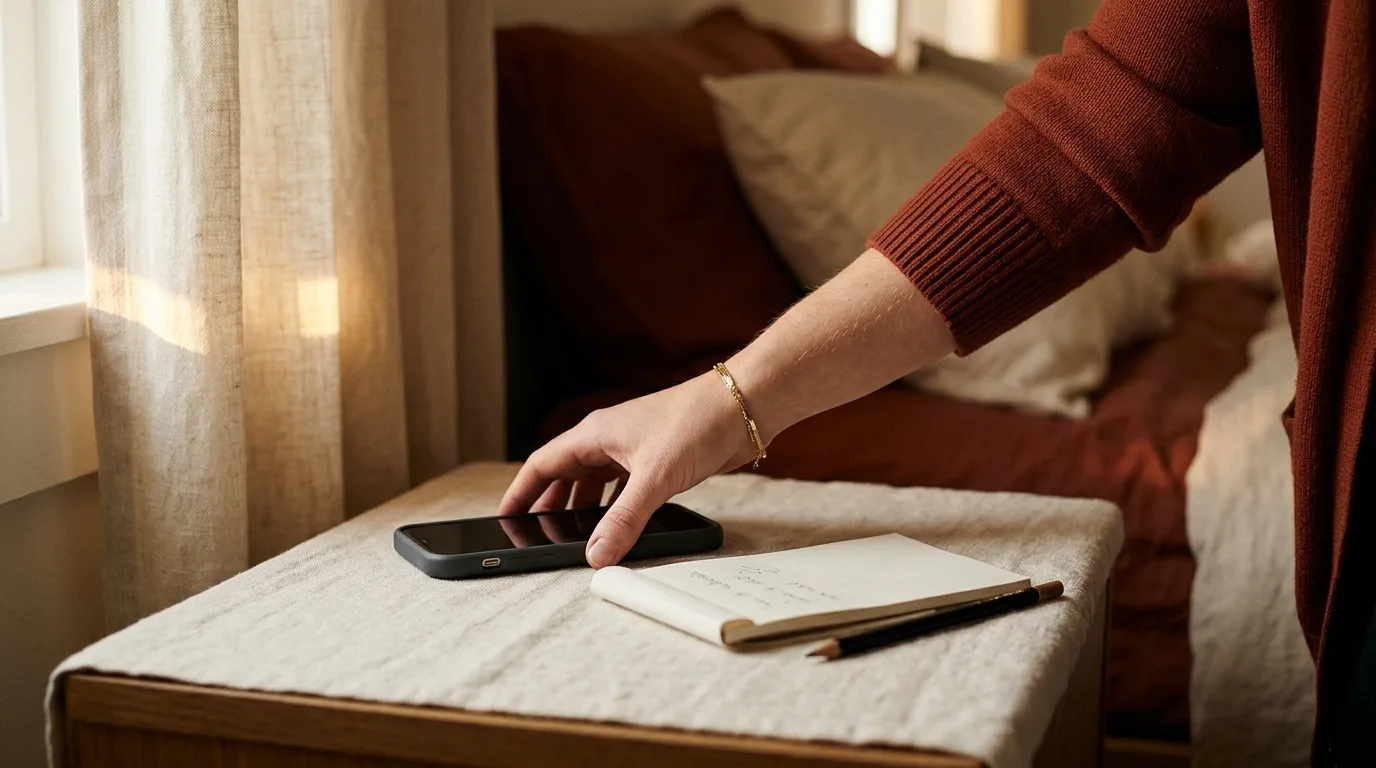
Spend the first two minutes writing tomorrow's to-do list and the last three breathing slowly. A short setup comes first, and it doesn't count toward the five. Here is the script.

Step 1: Set up before the clock starts
Step 2: Minutes 1–2: Write tomorrow's list, and make it specific
Step 3: Minutes 3–5: Breathe at about six breaths a minute
Step 4: Then: phone face down, lights out
How do you wind down when your mind is racing or your body is wired?
Change the middle of the routine to match whatever is keeping you up tonight, and keep everything else the same. The setup and the lights-out stay fixed. The five minutes in between can flex.
- Wired after a screen. Skip the writing. Put on a soft sound, like rain or a low hum, and do five minutes of slow breathing with your eyes closed. Tonight your body needs a slower rhythm more than your mind needs a list.
- Racing thoughts. Give all five minutes to the page. Write the to-do list first. Then write each worry as a single line followed by one next step, such as ‘Rent is late → call the landlord at lunch’. A worry with a next step is easier to leave on the bedside table.
- Tight shoulders or a sore back. Swap the breathing for a gentle stretch. Lie on your back and let both knees drop to one side for a minute, then to the other side. Spend a minute in child's pose, then sit on the bed and tilt your head slowly from side to side. Keep breathing slowly the whole time.
- Already in bed with the lights off. Don't get up to find the notepad. Do the breathing in the dark and say tomorrow's first task to yourself once.
- Too tired for any of it. Do one minute of breathing and stop there. Even a shortened version keeps the cue in place for tomorrow night.
You can run any of these on paper, in an app, or as the last part of a longer evening. Each option has a different trade-off.
- Pen, paper and a kitchen timer
- Free and screen-free. You pick the ritual yourself each night, and that choice is often the first thing to go when you're tired.
- Reset
- Tonight's ritual is already chosen, the breathing orb keeps the pace, and missed nights aren't held against you. It runs on your phone, so the routine ends when you put the phone down.
- Long guided meditation app
- Good if you have a free evening and like a voice leading you. Easy to skip on a late night, and a broken streak can become a reason to quit.
- A full screen-free hour before bed
- Closest to AASM's advice on devices. Best when your evenings allow it, and the five-minute routine still works as the final step.
How do you use Reset for a five-minute wind-down?
Open Reset after your setup step, press start on tonight's ritual and follow it for five minutes. The app takes away the small decisions that tend to sink a routine on a tired night.
- Open the app. Tonight's ritual is already chosen, so there's no menu to scroll.
- Press start. For breathwork, follow the breathing orb. It keeps the pace, so you aren't counting in your head.
- If you need to switch off the hall light or check the back door, the timer follows you to the Dynamic Island. The session keeps running after you leave the app.
- When the ritual ends, put the phone face down and turn off the lamp.
If tonight's pick doesn't suit your mood, the small library covers the same kinds of quiet as the swaps above: breathwork, gratitude, soundscapes, journaling and gentle stretches. New packs arrive in seasonal drops. Reset Cards give you a quieter way to share a good night if you want to.
Reset isn't the right fit for everyone. If you want a long guided meditation with a voice talking you through it, a longer app will suit you better. And if picking up your phone at night always ends in a feed, use the paper version above. A wind-down app is only useful if it doesn't hand you back to the scroll. Our guide on what to look for in a nightly wind-down app for iPhone covers how to choose.
Keep it going on the weeks that go wrong
Tie the routine to something you already do every night, like brushing your teeth or plugging in the phone, and start at roughly the same time each night. When you miss a night, pick it up again the next one. Don't make up for the missed night or double up. Reset counts the good nights and doesn't punish the misses, so you won't be staring at a broken streak after a late shift. For a night-by-night plan covering your first seven nights, see your first week with Reset.
What if you still can't sleep after your wind-down?
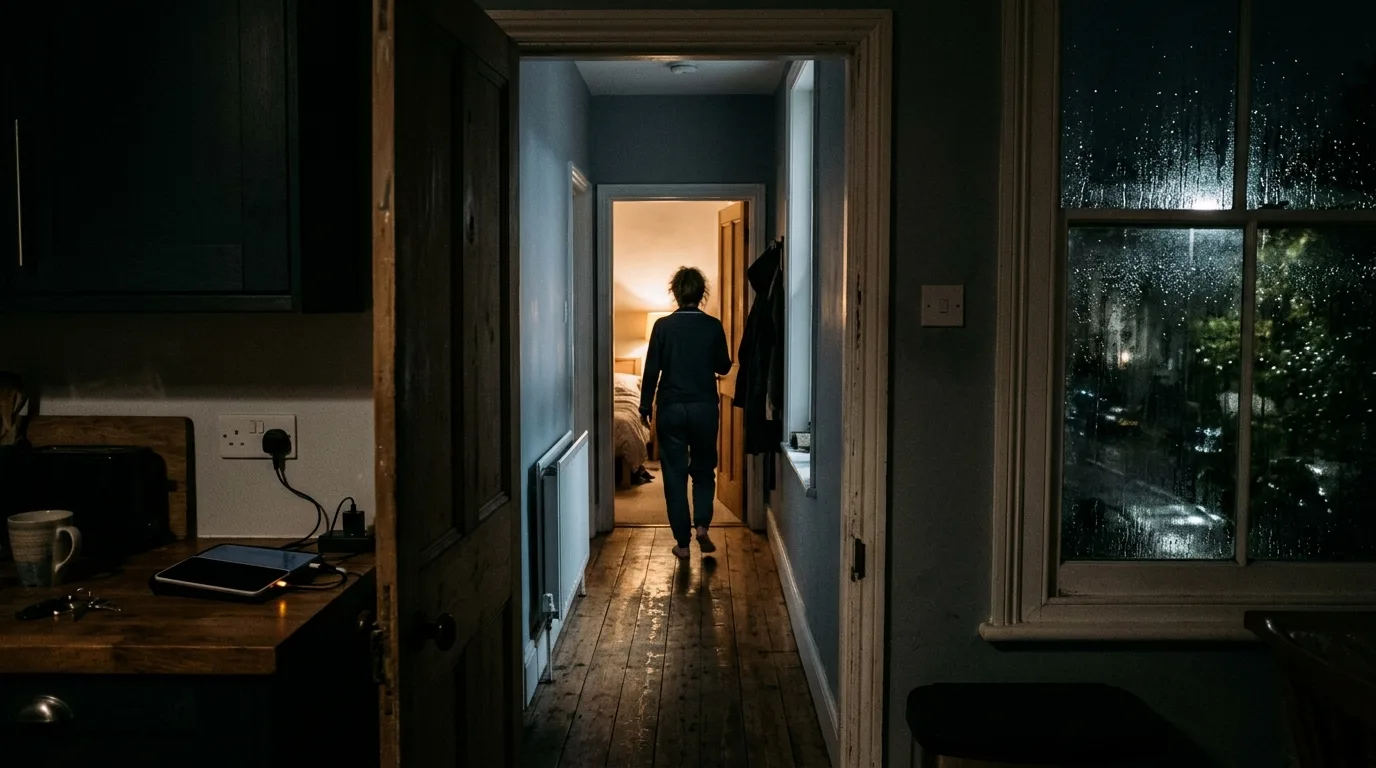
Don't fight it in bed, and don't reach for the phone. Get up, keep the lights low and go back to bed when you feel sleepy. If you've been lying awake long enough to feel annoyed, go and sit in another dim room. Add whatever is circling to tomorrow's list, do another round of slow breathing, and return to bed when your eyes get heavy. The same goes for waking at 3am. A middle-of-the-night scroll undoes everything the routine set up.

If you wear an Apple Watch, leave Sleep Score alone until morning. Apple added the score in watchOS 26 in September 2025. It gives up to 50 of its 100 points for sleep duration and up to 30 for bedtime consistency. In watchOS 26.2, Apple made the rating bands stricter, so a 70 no longer counts as High. One low number after one bad night tells you very little. A week of similar bedtimes is what that 30-point slice rewards, and a fixed five-minute cue helps you build that week. The next morning, get up at your usual time instead of sleeping in to make up for it.
If poor sleep goes on for weeks, talk to a doctor. The breathing review suggests people who report poor sleep may benefit most from slow breathing, but a five-minute routine is a habit, not a treatment. Reset doesn't claim to fix insomnia or anxiety.
Common questions
How long before bed should you start winding down?
What breathing exercise helps you fall asleep fast?
Do I have to put my phone away for a wind-down to work?
Is it better to do a bedtime routine in bed or before getting into bed?
Does writing a to-do list before bed help you sleep?
What should I do if I skip my bedtime routine one night?
Sources
- Slow breathing techniques before bedtime and the effects on sleep: A systematic review
- Can Writing Your ‘To-Do’s’ Help You to Doze? Baylor Study Suggests Jotting Down Tasks Can Speed the Trip to Dreamland
- Want to Fall Asleep Faster? Write a To-Do List Before Bed
- Americans are 'doomscrolling' at bedtime, prioritizing screen time over sleep
- You Don't Need the Apple Watch Series 11 to Get Your Sleep Score
- watchOS 26.2 makes a big change to Sleep Score, here's what's different
This article was drafted with AI assistance and reviewed by a human editor before publishing.