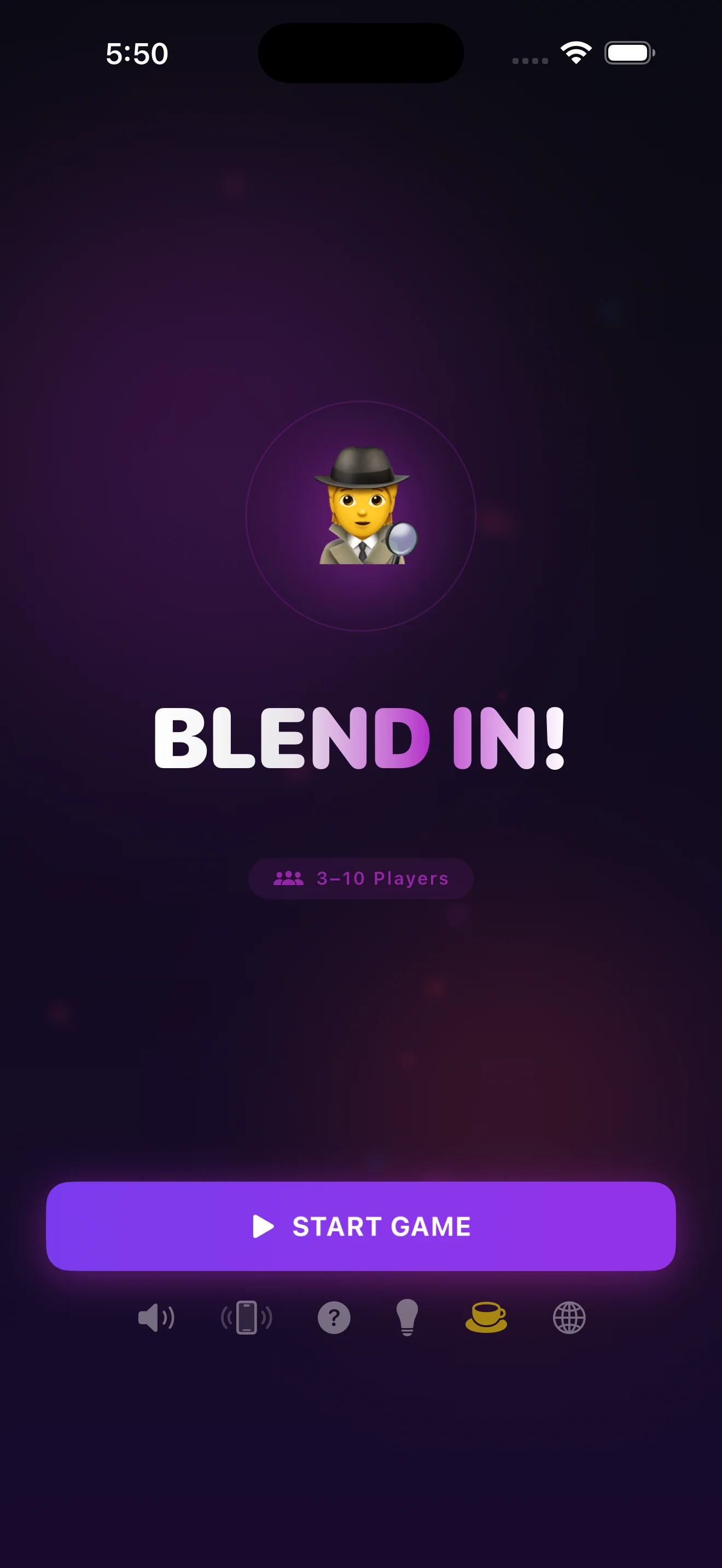
Blend In is deceptively simple: pass one phone around a group of 3 to 10 friends, each player glimpses a secret word or phrase, and one of you is lying about it. The game runs entirely offline, needs no accounts, and requires nothing but trust—which it systematically destroys. What makes it work is the elegant tension between what you see on the screen and what your friends say aloud. Every clue becomes suspect. Every vote feels personal. By the final reveal, someone's reputation is on the line.
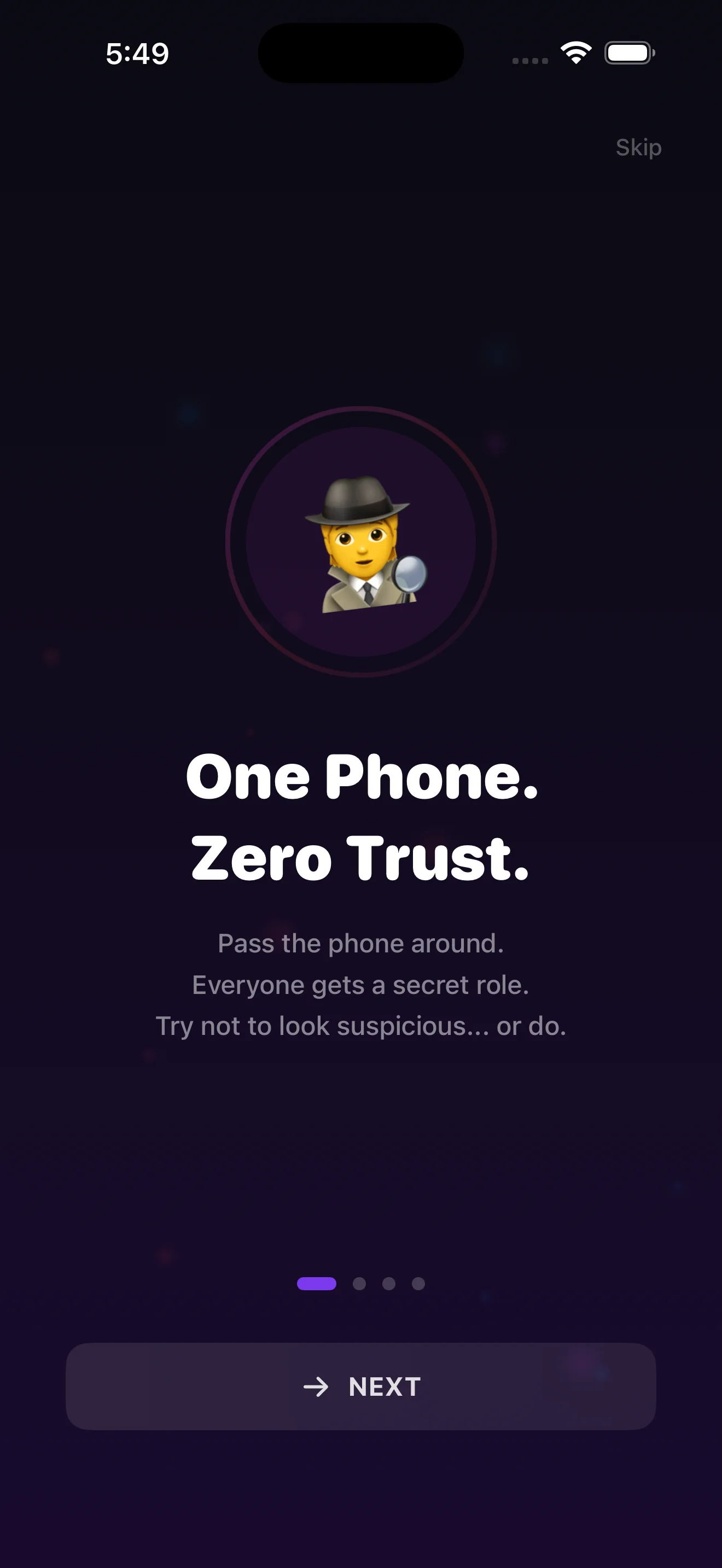
The Secret Role Reveal
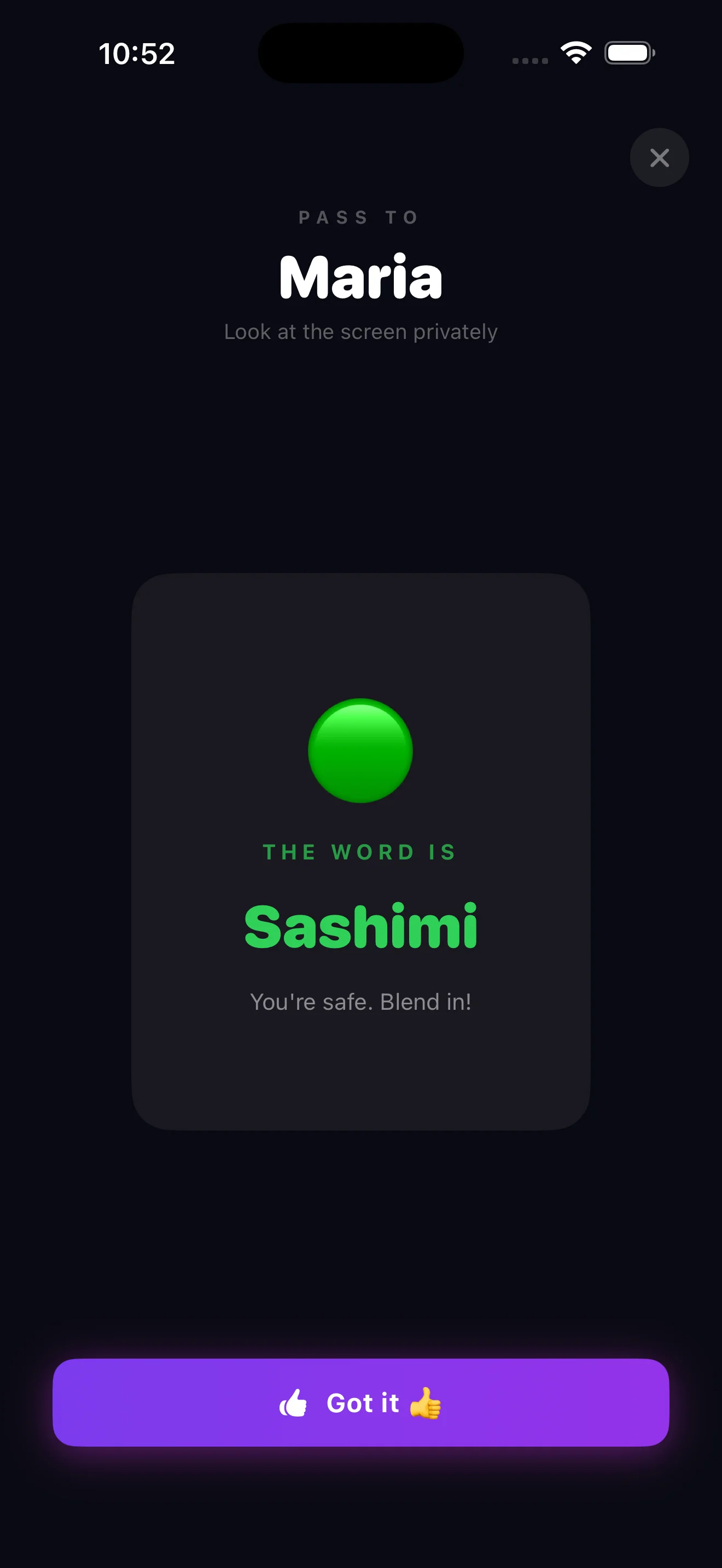
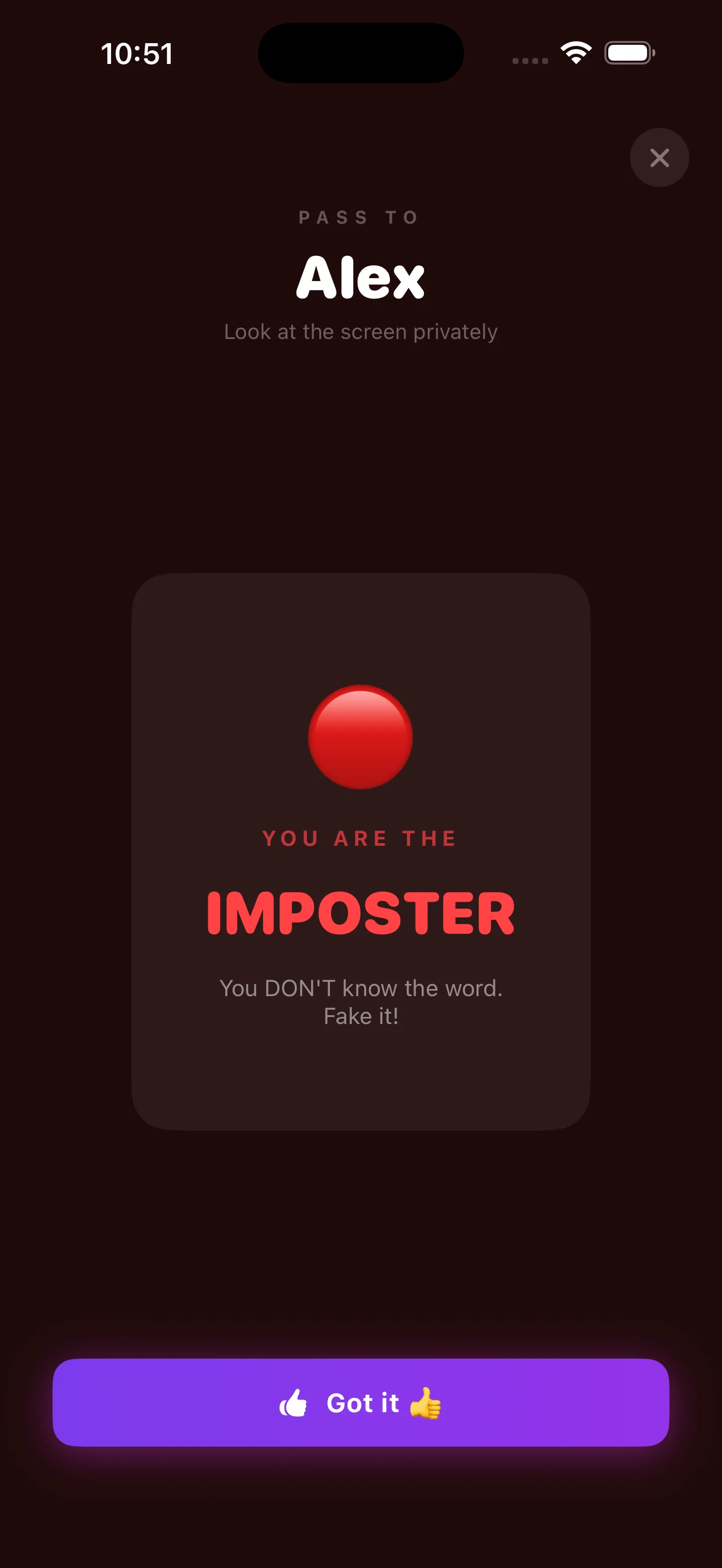
When you hit Start Game, the phone asks for player names and immediately assigns roles in silence. Nine of you get the same secret word. One of you gets nothing—or something deliberately vague. That asymmetry is the entire game. The imposter never knows what word the group is protecting, so they have to listen, adapt, and bluff their way through. Safe players know exactly what they're defending but have to sound natural about it. The moment the phone hands it back to you and you see your role, you understand the rules: if you're safe, you're about to give clues to friends who might betray you. If you're the imposter, you're about to fool people who trust you.
Timed Clues Under Pressure
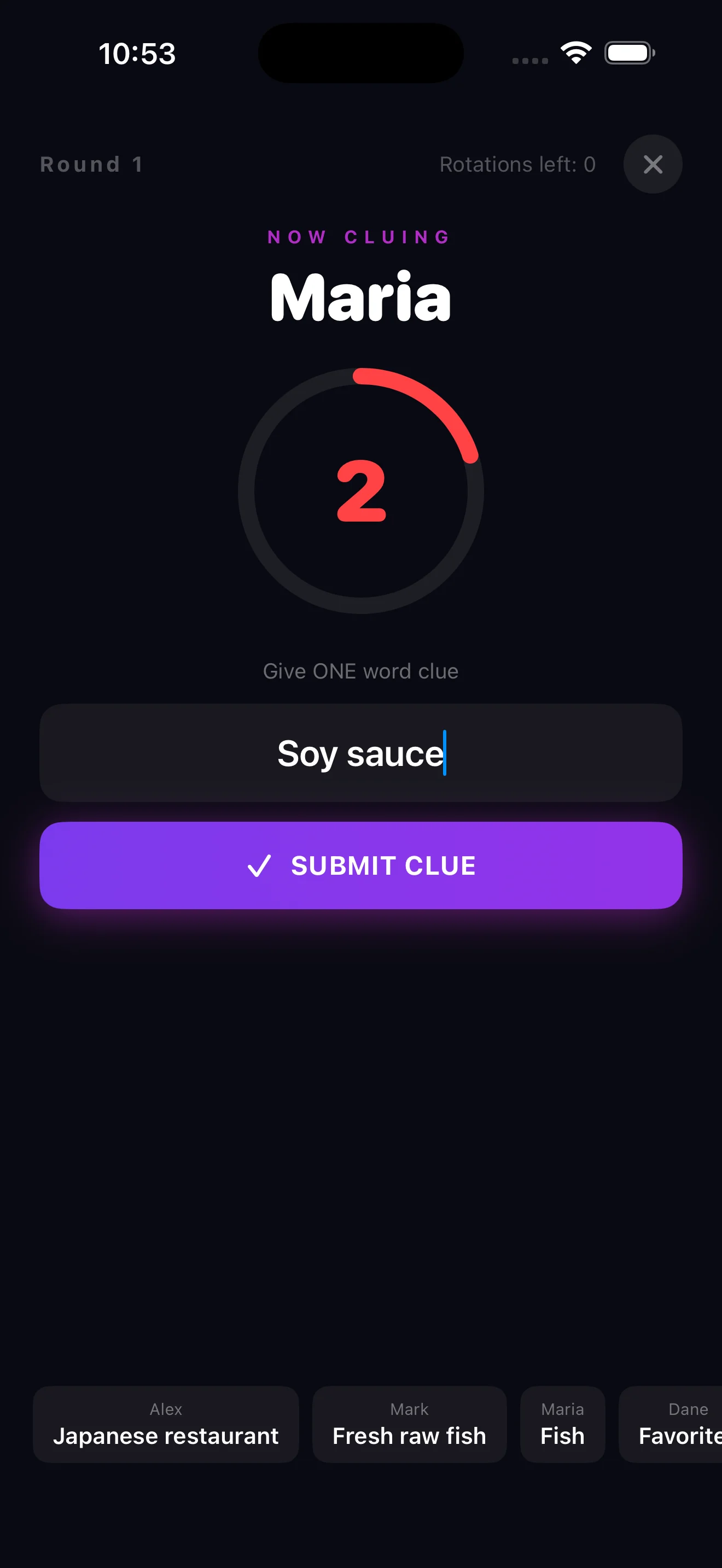
The clue round is where the game gets uncomfortable in the best way. Safe players take turns giving one-word or short-phrase clues about the secret word. There's a countdown timer—no endless thinking, no strategic delays. You have to speak fast, which means you sound either confident or panicked. The imposter listens intently, picks up on patterns, and drops their own clues that sound plausible but are calculated gambles. Are they being too clever? Too vague? Too specific? Real tells emerge under time pressure. Someone's breathing changes. Someone laughs nervously. That's when you start to suspect them. That's when the imposter starts to sweat.
Discussion and the Social Deduction
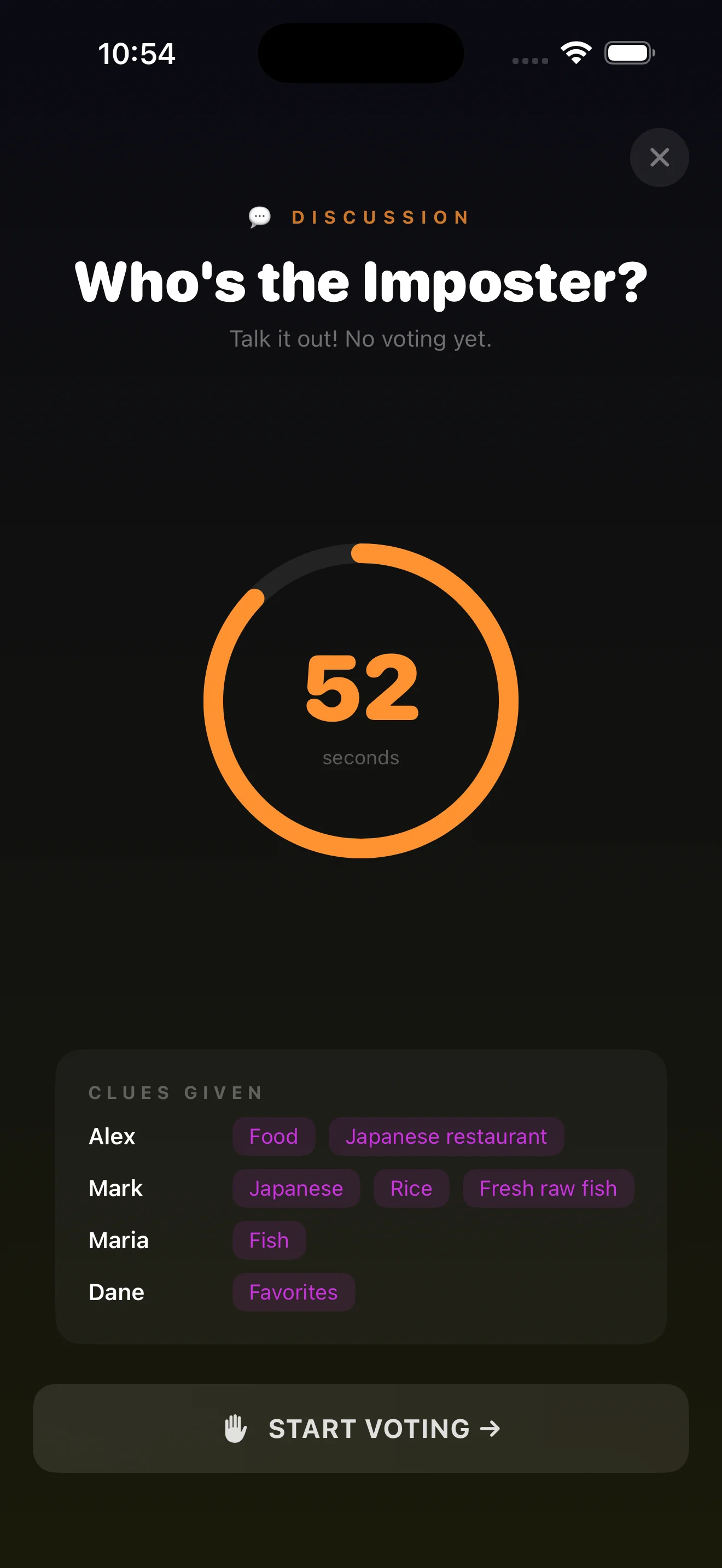
After the clues, the real game begins. Everyone (imposter included) gets to discuss who the faker is. Arguments break out. Alliances form. Someone defends the quiet player. Someone else accuses the confident one. The imposter has to participate—silence is its own tell. What makes this moment valuable is that it's unstructured. You're not following a template; you're having a real conversation with real stakes. Your reputation in the group is being tested. If you've played before, people remember who bluffed last week. If this is your first time, you have no track record to hide behind. The phone doesn't referee; your friends do. Read our guide to spotting fakers for specific strategies, but the core truth is simple: people reveal themselves when they're defending a lie.
The imposter has to participate—silence is its own tell.
Voting and the Reveal
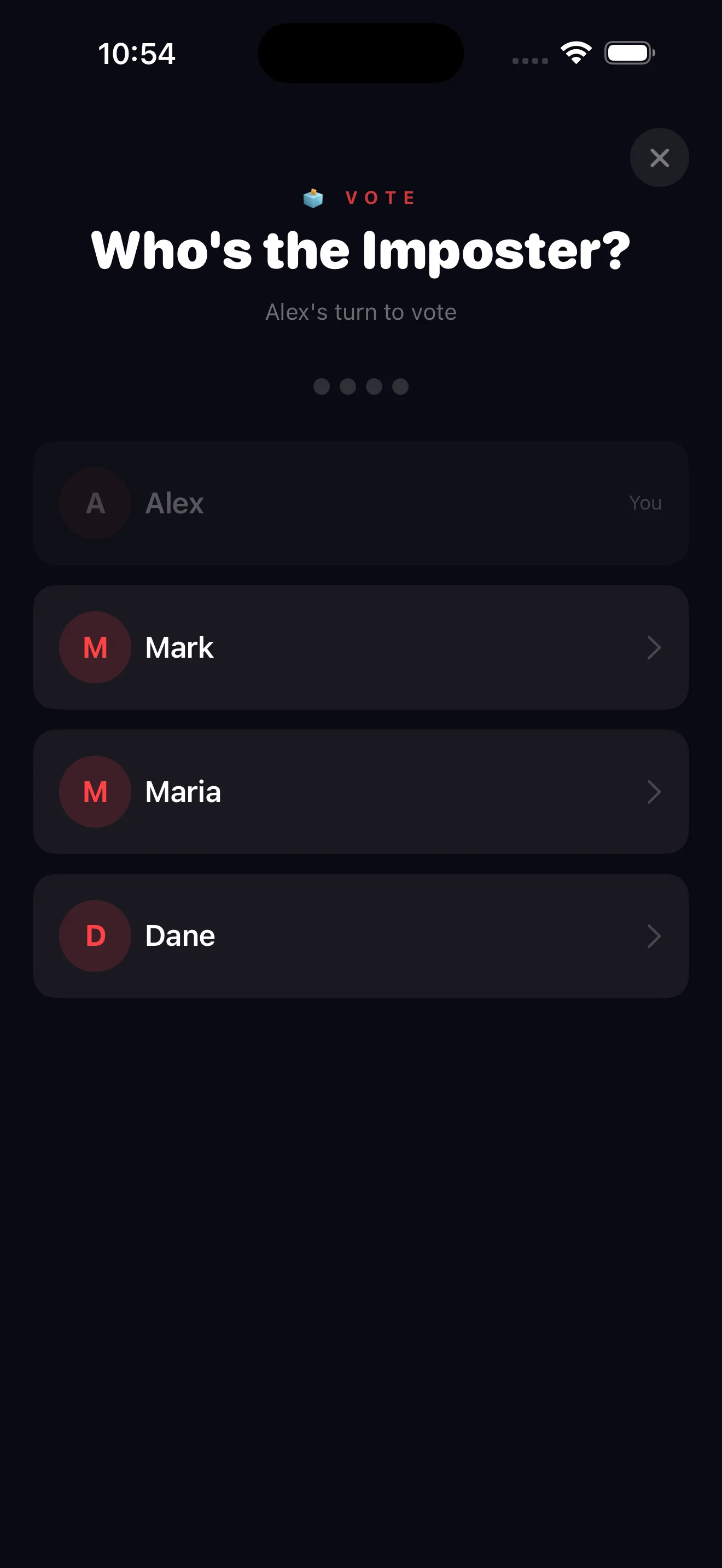
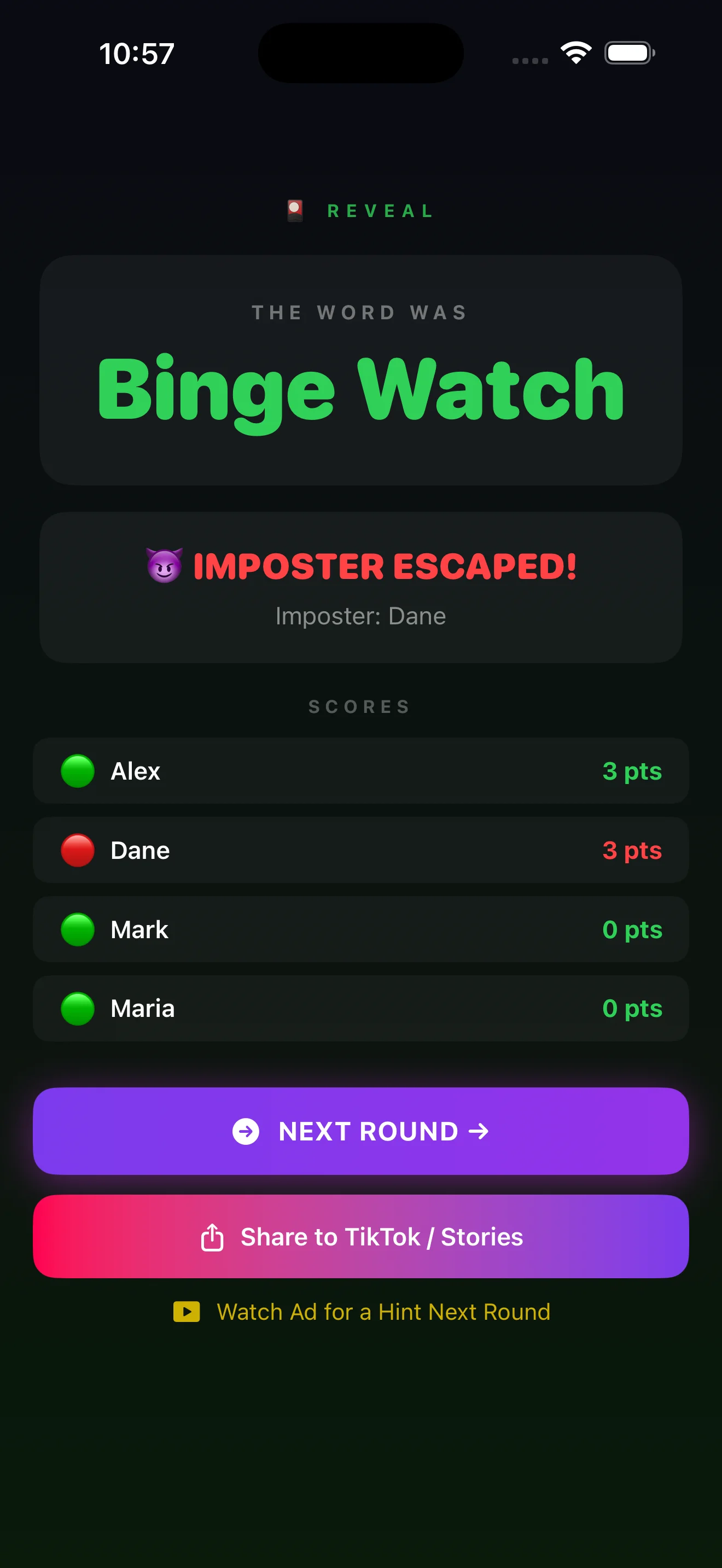
When the discussion ends, the phone moves to voting. Each player picks who they think is the imposter. The vote is simultaneous, so there's no bandwagon effect—you commit to your choice before seeing what anyone else picked. Then the app reveals the imposter. If the majority votes correctly, safe players score. If the imposter survives the round, they score. If safe players vote each other out, the imposter scores big. The scoreboard shows who called it right and who whiffed. Some games end with a clear consensus. Others end with the group split almost perfectly down the middle, which somehow feels worse—it means nobody trusted anybody.
Why Offline and One Phone Matter
Blend In requires zero internet because the game doesn't need it. There's no server keeping score, no cloud storing your secrets, no delay waiting for a network. The instant you press Start, the game runs locally on your device. That design choice isn't just about convenience—it's about friction. There's no reaching for a second phone to check something else. There's no stepping away from the table because you're waiting for something to load. Everyone is forced to stay present, to look at each other, to read micro-expressions. The single-phone passing mechanic also creates a natural turn-taking structure. You're not all staring at screens; you're staring at each other. That focus is what makes the social deduction work. When someone blinks at the wrong moment or their voice cracks, you catch it because you're actually watching them. Learn more about how one phone creates party chaos.
Word Packs and Replayability
The app ships with five free word packs: Food & Drinks, Movies & TV, Countries & Cities, Animals, and Sports. Each pack has over 100 words, so you're not hitting repeats for many rounds. The word selection matters because it anchors the clues to something concrete. Giving a clue about a movie is different from giving a clue about an abstract concept—it's easier to bluff but also easier to get caught. Different word categories reward different play styles and keep the game fresh across multiple rounds. You can play five or six rounds in a night and feel like you're playing different games because the context keeps shifting.
The Result: Real Moments
What sets Blend In apart from other party games is that it generates genuine moments. Not the manufactured kind from a game board or a rulebook, but real laughter when someone's bluff collapses, real frustration when you voted wrong, real satisfaction when you correctly pegged the imposter. The scoreboard at the end isn't just a tally—it's a record of who trusted correctly and who got fooled. It's the kind of detail that makes people want to play again immediately because they want to recover their reputation. And that's when the app has done its job: turned one iPhone into an evening of suspicion, accusation, and genuine fun.
This article was drafted with AI assistance and reviewed by a human editor before publishing.