Blend In! solves a simple problem: social deduction games are fun, but they're messy to run. Players need hidden information, timers, rules enforcement, and someone to keep score. That's usually a dealer or an app that requires everyone to huddle around a screen. Blend In! uses one phone passed around the circle to manage all of it, leaving your group's real focus exactly where it should be—on reading faces and calling out liars.
The Core Loop: Secret, Clue, Discuss, Vote
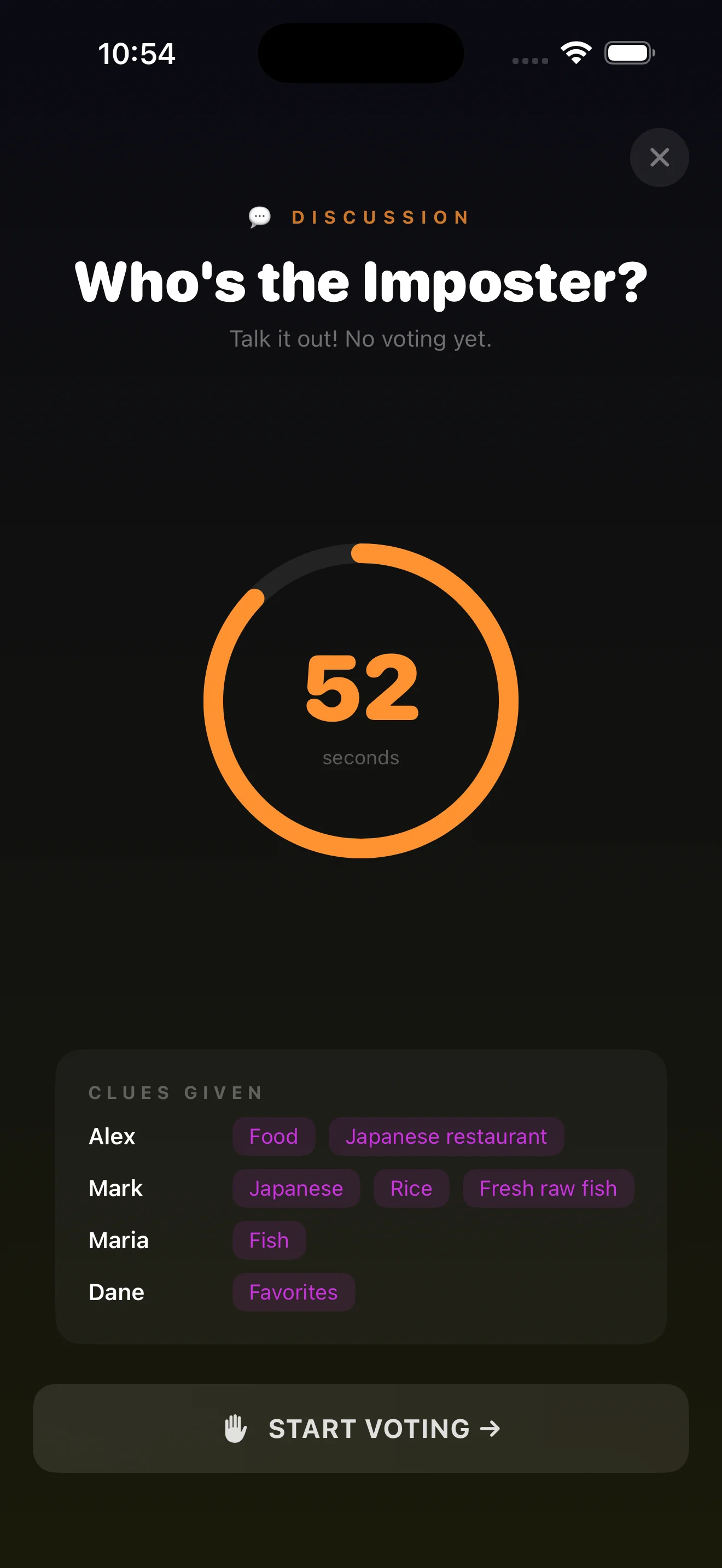
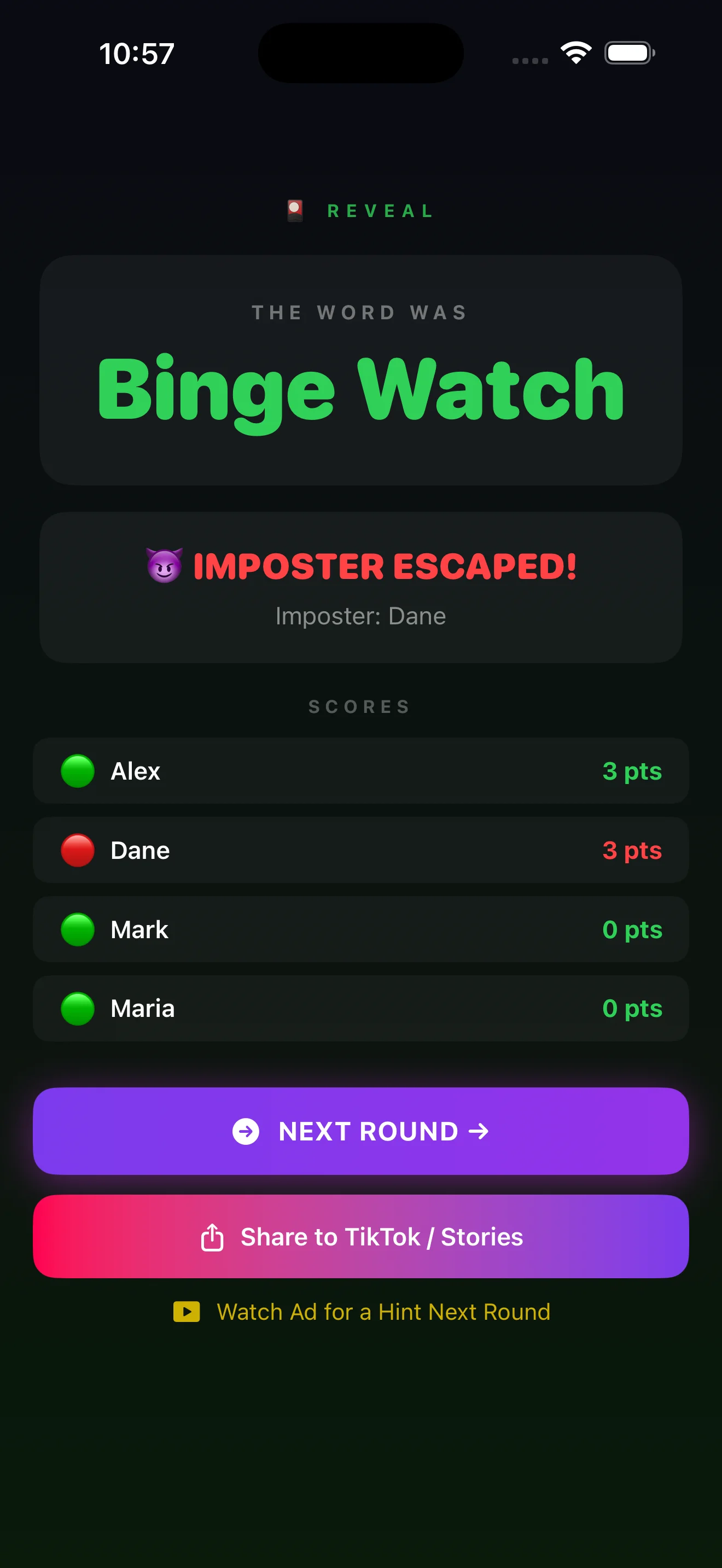
Every round of Blend In! follows the same rhythm. The phone reveals each player's role in turn—safe or imposter—without anyone else seeing. Then the group gathers while a timer counts down the clue round. Players give hints about a secret word, and one person has no idea what it is. The imposter has to blend in by guessing from context and pretending they know. After the timer stops, the group discusses openly: who seemed confused? Who was too confident? Finally, everyone votes on who they think the imposter is. The phone reveals the answer, updates the score, and the next round begins.
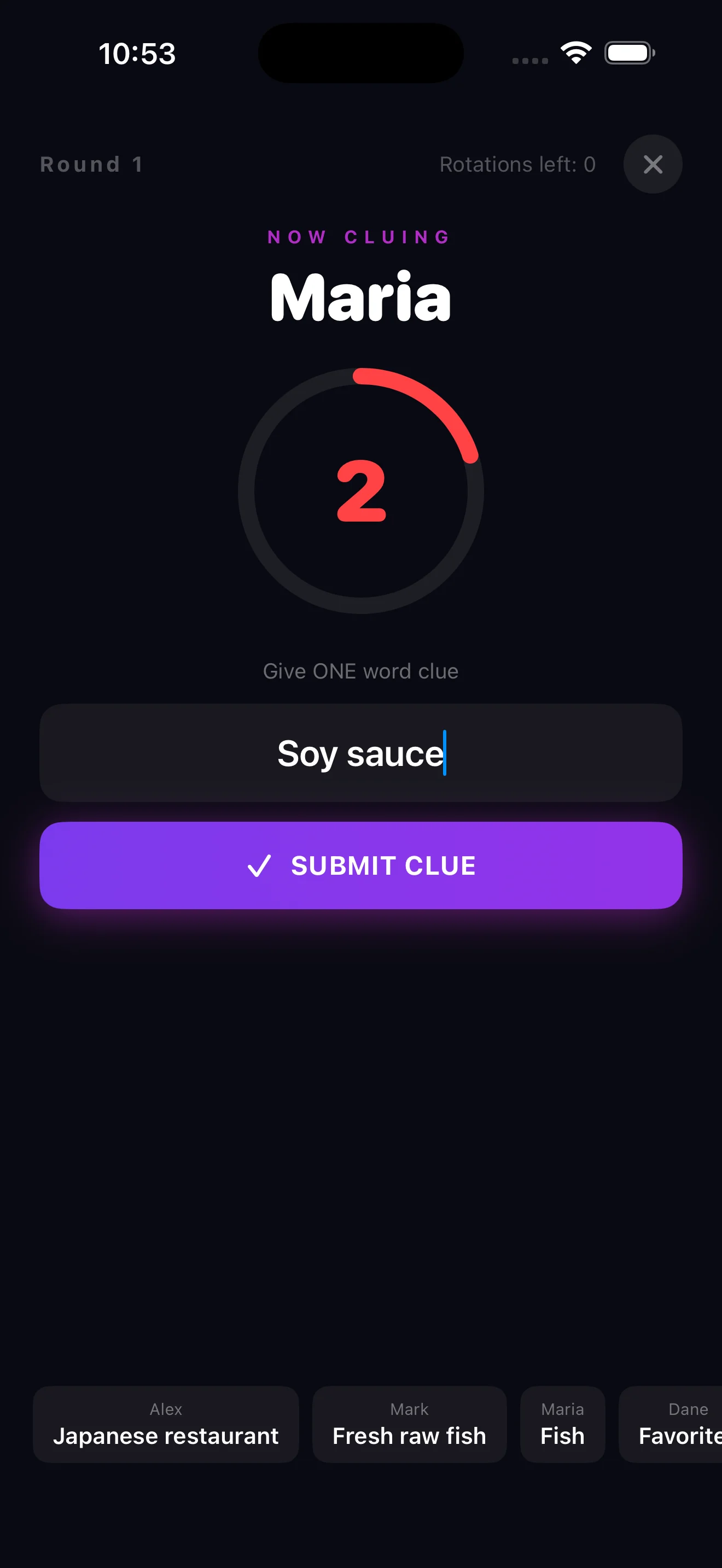
This structure is not new—it's borrowed from games like Among Us and Mafia. But Blend In! owns it. The phone handles role assignment (no accidental spoilers), the timer (no watch-checking), and the vote tally (no argument about who won). The design erases friction so the social reading stays sharp.
Why One Phone Matters
Passing the phone around is not just clever—it's essential to the experience. When everyone huddles over a shared screen, you lose the ability to watch each other's reactions to information. When the phone comes to you and lights up with your secret role, you have a split second to register it and hide your emotion before handing it off. That moment of controlled exposure is where the game's tension lives.
The phone handles role assignment, the timer, and the vote tally—erasing friction so the social reading stays sharp.
This design choice also removes one of the biggest barriers to social deduction games: setup. No one needs to shuffle cards, assign roles by whispering, or trust a dealer to do it fairly. The app does it instantly and fairly every time. And because Blend In! works offline—no internet, no accounts, no extra devices—you can start a game the moment someone suggests it.
Word Packs and Replayability
A social deduction game lives or dies by how well it hides the imposter. If the secret word is too obvious, safe players give terrible clues and the imposter gets lucky. If it's too obscure, everyone struggles. Blend In! ships with five word packs—Food & Drinks, Movies & TV, Countries & Cities, Animals, and Sports—each with 100+ carefully selected words that hit a sweet spot: specific enough to be fun, broad enough to be guessable.

The word sets are thoughtfully curated. A food word like "quiche" is recognizable but slightly less obvious than "pizza," so the imposter has a real chance. A movie word like "Parasite" is specific enough that safe players give interesting clues. This curation is invisible to players but it's the difference between a game that feels fair and one that feels rigged.
Chaos Modes and the Play Variety
Standard Blend In! lets one imposter hide among safe players. Chaos Modes twist the formula. You might play with two imposters, or a mode where safe players secretly know each other's identities. These variants keep the game fresh across multiple rounds and let you adjust difficulty based on your group's deduction skills. A ruthless table of poker faces might need both imposters to win. A more casual crowd might prefer the core mode where one faker still feels challenging.
Social Deduction Without Setup
Games like Mafia and Among Us prove that social deduction is endlessly replayable. But they also require a dealer, a moderator, or a group chat spamming accusations. Blend In! automates the annoying parts. The app reveals roles fairly, counts down the timer so no one has to watch their phone, tallies votes instantly, and keeps score across rounds. For more tips on reading your opponents, check out Master Blend In: Tips for Spotting Fakers and Winning.
The offline design matters too. You don't need Wi-Fi, mobile service, accounts, or any setup beyond opening the app and adding player names. This makes Blend In! perfect for road trips, family gatherings, cabin weekends—anywhere the usual internet-dependent party games fall apart. It also means there's no data collection, no ads interrupted between rounds, and no pressure to log in.
Why Blend In! Works at Any Table Size
Social deduction scales. With 3 players, the imposter faces tough odds but the game is quick and tense. With 10 players, there's more chaos and more space to hide. Blend In! supports the full range without breaking. The app simply assigns roles, runs the timer, and counts votes—the number of players doesn't change the flow. This flexibility means you can pull it out for a small dinner or a crowded party and it works either way. If you want deeper strategy insight, read Blend In! Review: The Party Game That Kills Trust.
This article was drafted with AI assistance and reviewed by a human editor before publishing.