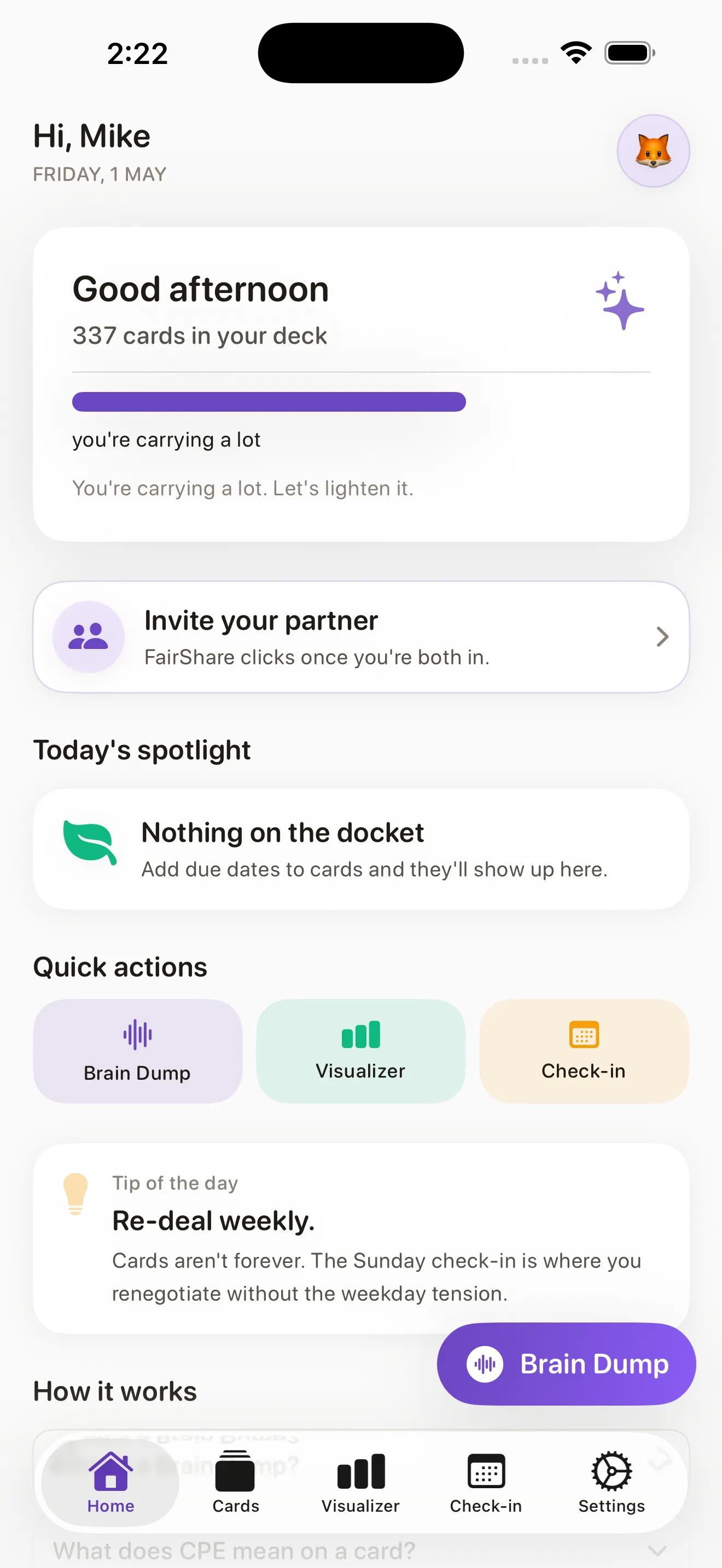
Most household apps treat chores like a spreadsheet problem. FairShare treats them like what they really are: a mental-load problem. It's built on Fair Play, the household management system that asks who owns the entire journey of a task—from first thought through execution—not just who does it on Tuesday. The app splits responsibility through ownership cards, intercepts the brain dump of floating tasks, and surfaces imbalance through a visualizer that makes the invisible work suddenly, clearly visible.
Who This Is For
FairShare is built for couples who recognize that "equal effort" often means unequal mental load. You notice one person carries the thinking about who eats what, when the car needs service, whether the house is livable—while the other executes tasks when asked. You've felt resentful about this imbalance but struggled to name it in conversation. You want a system that doesn't just assign chores but makes ownership explicit, trackable, and negotiable.
It's not for households that already have a working system or that want a simple task tracker. It's also not a replacement for relationship counseling if deeper partnership issues exist. But if you're ready to see and discuss mental load differently, this app meets you there.
What FairShare Does Uniquely Well
Ownership Cards That Name the Full Cycle
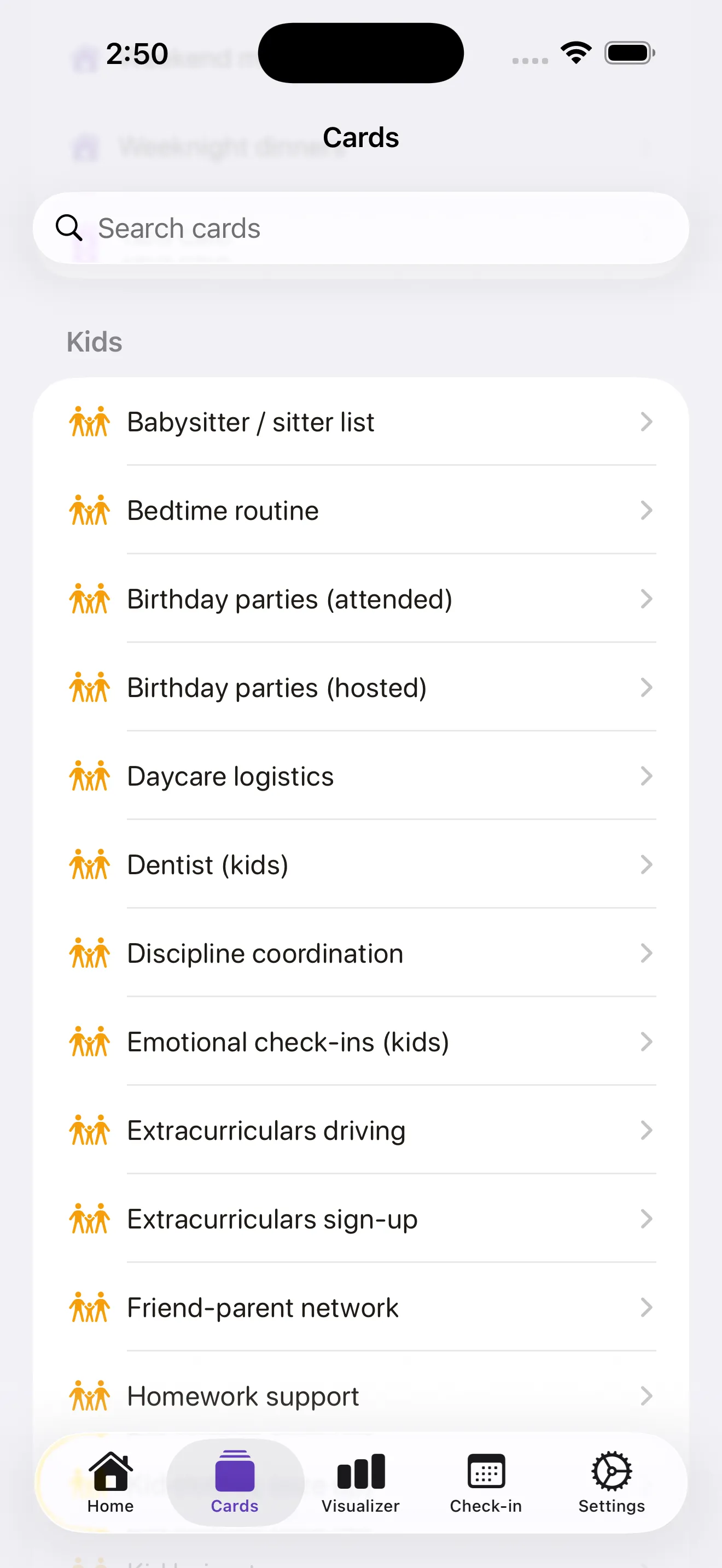
Each household responsibility lives on a card that covers three phases: Conceive (recognizing the need exists), Plan (deciding how to handle it), and Execute (doing it). One person owns the whole card—not split between you. This is the core insight. You're not dividing "think about meals" from "cook meals." Someone owns meal planning entirely; someone else might own car maintenance entirely. The ownership is visible, and you can swap or renegotiate which card belongs to whom.
Brain Dump with AI Interception
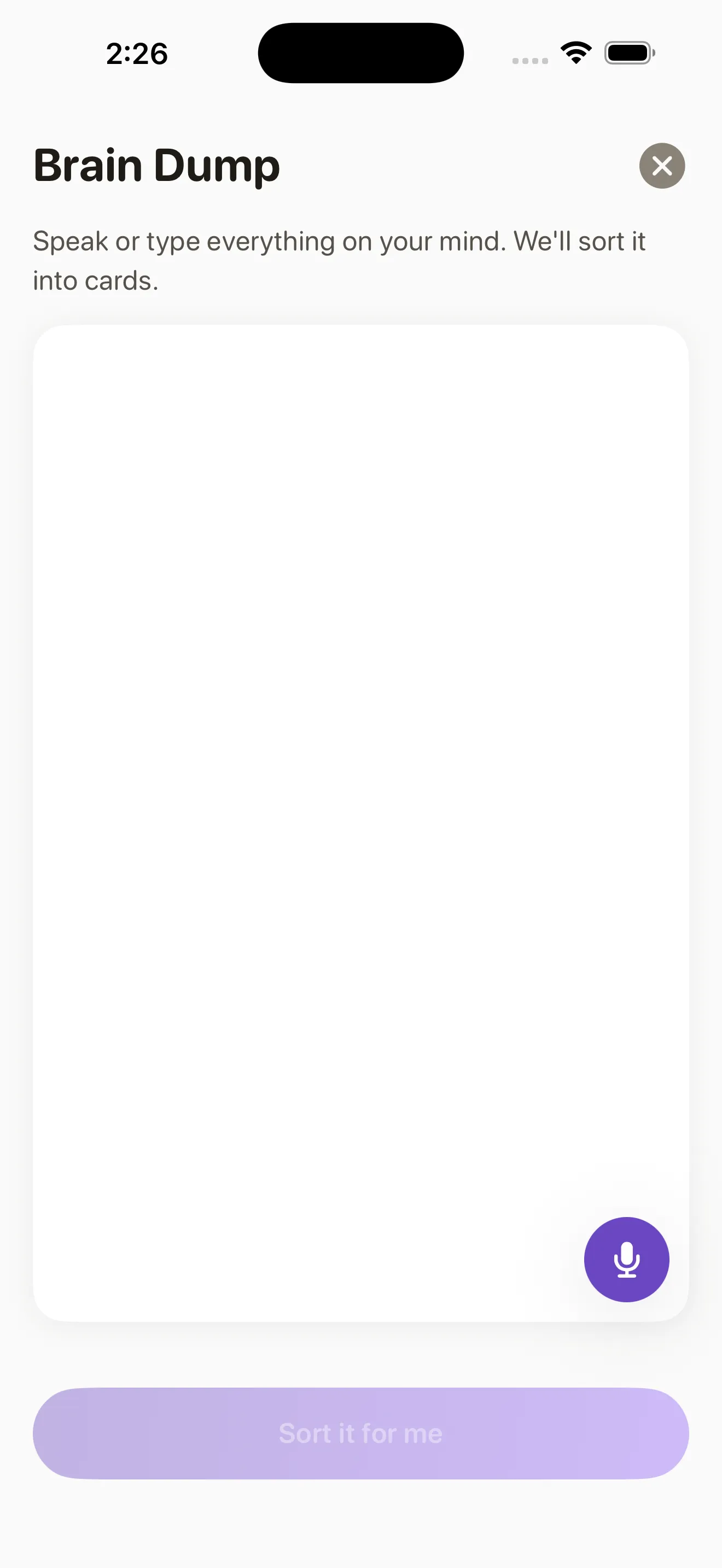
One of the app's smartest features is the Brain Dump. You can capture floating tasks—"we need cat food," "roof inspection?," "birthday for his mom"—as raw input. The app's AI intercepts these and suggests which existing card they belong to, or whether they're new cards. This prevents the real-world problem: one partner mentally tracking dozens of micro-decisions while the other stays unaware. The dump surface lets you both see the full weight of the thinking load.
Weekly Check-Ins Without Waiting for Conflict
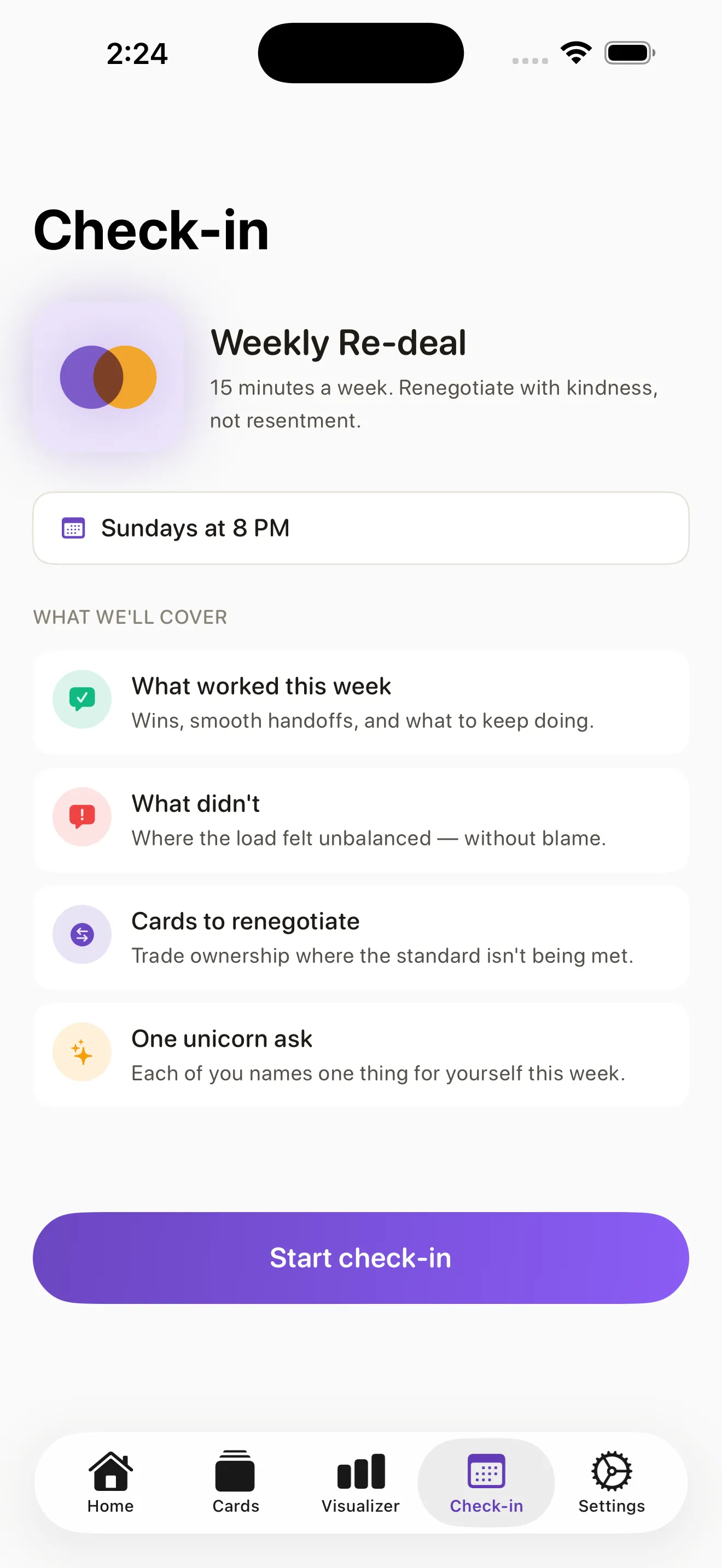
Rather than letting resentment build until a fight forces the conversation, FairShare prompts a low-friction weekly check-in. You discuss what shifted, if anyone wants to swap responsibilities, whether the current Mental Load Capacity (MSC) is realistic, or if cards need renegotiating. It's a rhythm—not a crisis tool. This alone changes the dynamic from reactive blame to proactive conversation.
The Visualizer: Making Imbalance Visible
A bar chart shows the split of mental load between partners. You can see at a glance whether the distribution is actually equal, and which categories of responsibility are lopsided. This visualization is powerful because it removes ambiguity. You're not debating feelings; you're looking at data you both created together.
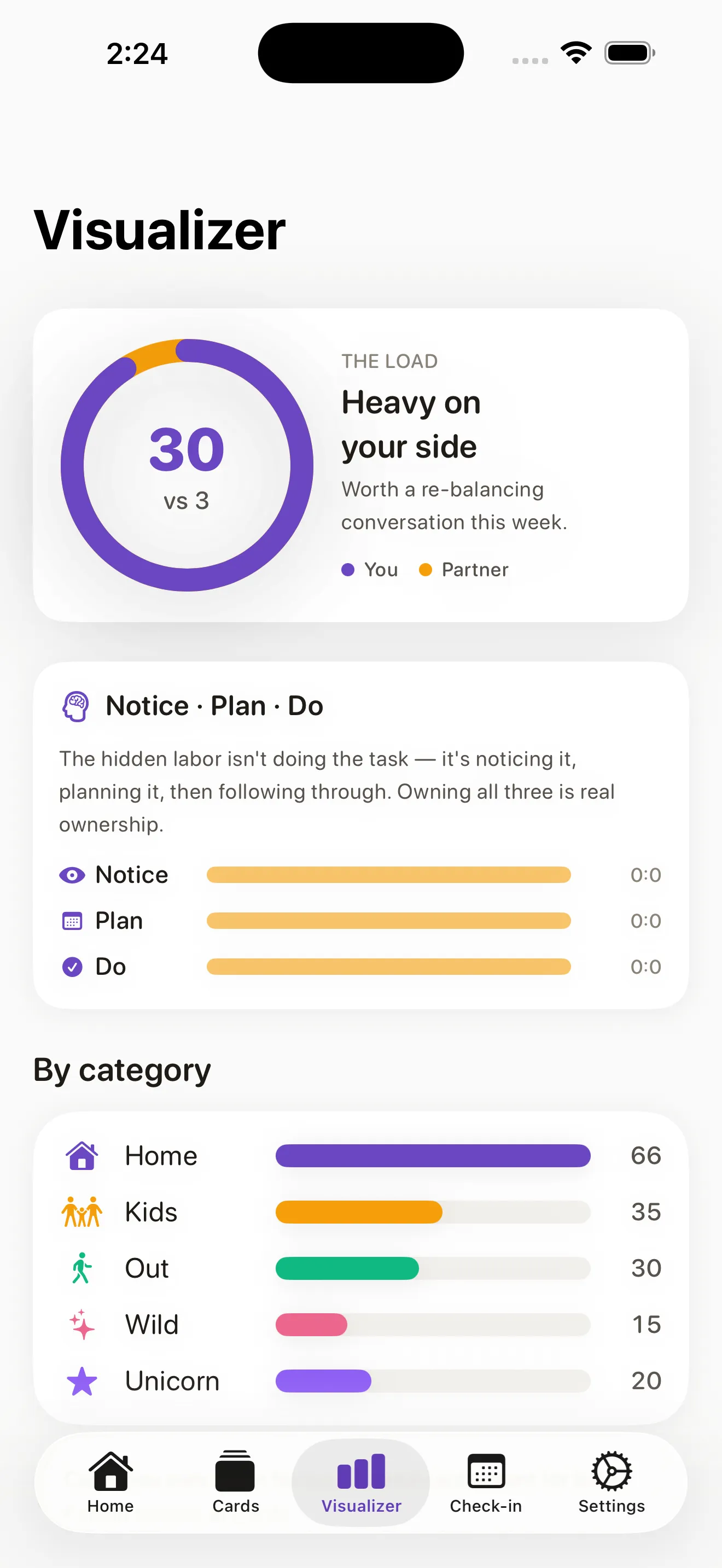
FairShare doesn't assume all tasks are equal weight or should be split 50/50 by count. It surfaces the full thinking work and lets you design fairness together.
Real Strengths and Honest Caveats
What Works
- The CPE model is genuinely clarifying. Most couples have never explicitly discussed who owns the thinking vs. the doing.
- Brain Dump + AI suggestion reduces friction in capturing scattered tasks without forcing a formal structure upfront.
- Weekly check-ins create a low-pressure cadence for renegotiating, preventing resentment from calcifying.
- The visual breakdown of mental load is concrete and hard to dismiss.
- Invite links are seamless; joining your partner takes one tap if you both install the app.
Caveats
- Success depends on both partners choosing to engage. If one person treats it as busywork, it won't shift behavior.
- The app models Fair Play closely, which means it requires buy-in to that philosophy. If you've never read or engaged with Fair Play ideas, the onboarding helps, but the system assumes that framework resonates.
- AI suggestions are useful but not always accurate early on. You'll refine them as the app learns your household.
- There's no web version. If one partner uses Android or prefers a browser, you're out of luck for collaborative features.
- Subscription required for full features. The free tier is limited; partner invites and check-ins require a paid plan.
Integration and Ecosystem
FairShare stays focused on its core job: making mental load visible and fair. It doesn't try to be a calendar, a grocery list, or a payment splitter. This focus is a strength. You'll still use your calendar app, your notes app, and your payment app—but FairShare becomes the source of truth for who owns which household responsibility and whether that ownership is balanced. If you want to dive deeper into how mental load shows up in your everyday life, read how FairShare makes mental load visible.
The Verdict
FairShare works if you're ready to make invisible work visible and name fairness differently than you've been taught. It's not for every couple, and it won't fix a relationship that has deeper trust issues. But if you recognize that one person in your household carries more of the thinking load, and you want a structured way to see it, discuss it, and change it—this app is built exactly for that problem. It's honest design: it does one thing, does it well, and makes fairness an active practice instead of something you hope happens.
This article was drafted with AI assistance and reviewed by a human editor before publishing.