When a parent or relative needs care, families usually end up with a mess: a shared note that's chaos, a text chain no one reads, a medication list stuck in someone's Notes app, appointment details scattered across email. Most families reach for generic tools—task managers, group chats, spreadsheets—and then realize none of them are built for the specific, sensitive work of caregiving. We wanted to understand the main approaches families actually use, and where a focused caregiving app like Kindred fits into the landscape.
The Spreadsheet and Notes Approach
Many families start here: a shared Google Sheet or a note in your phone with Mom's medications, Doctor Johnson's number, insurance details. It's free, familiar, and it works—until it doesn't. Updates don't send reminders. Medication changes get lost in version confusion. Sensitive health details live in the same document as grocery lists. No one knows who actually needs to be looped in, and sharing feels risky. The spreadsheet approach is really a workaround, not a system.
Generic Task and Collaboration Tools
Teams use Asana and Slack for projects; some families try the same. You can create tasks, set reminders, and tag family members. But these tools optimize for team productivity, not for the rhythm of caregiving. There's no way to track medications by dose and time. Appointment details don't integrate with calendar reminders. Everything feels a little like overkill—and a little too much like work. Privacy also remains a question: your parent's health data is sitting in a general-purpose platform not designed with sensitive health information in mind.
Clinical and Medical Software
Patient portals and clinical platforms are built for doctors and healthcare systems, not for families. They're powerful but feel institutional. They rarely let you easily invite and coordinate with adult children or siblings. Documentation is thorough but not warm. Cost is typically a barrier. And even when a loved one has access, there's often no way to summarize doctor visits or share information simply with the wider care circle.
Caring for someone you love is deeply personal. The tools should be too.
The Private-First Family Care App Approach
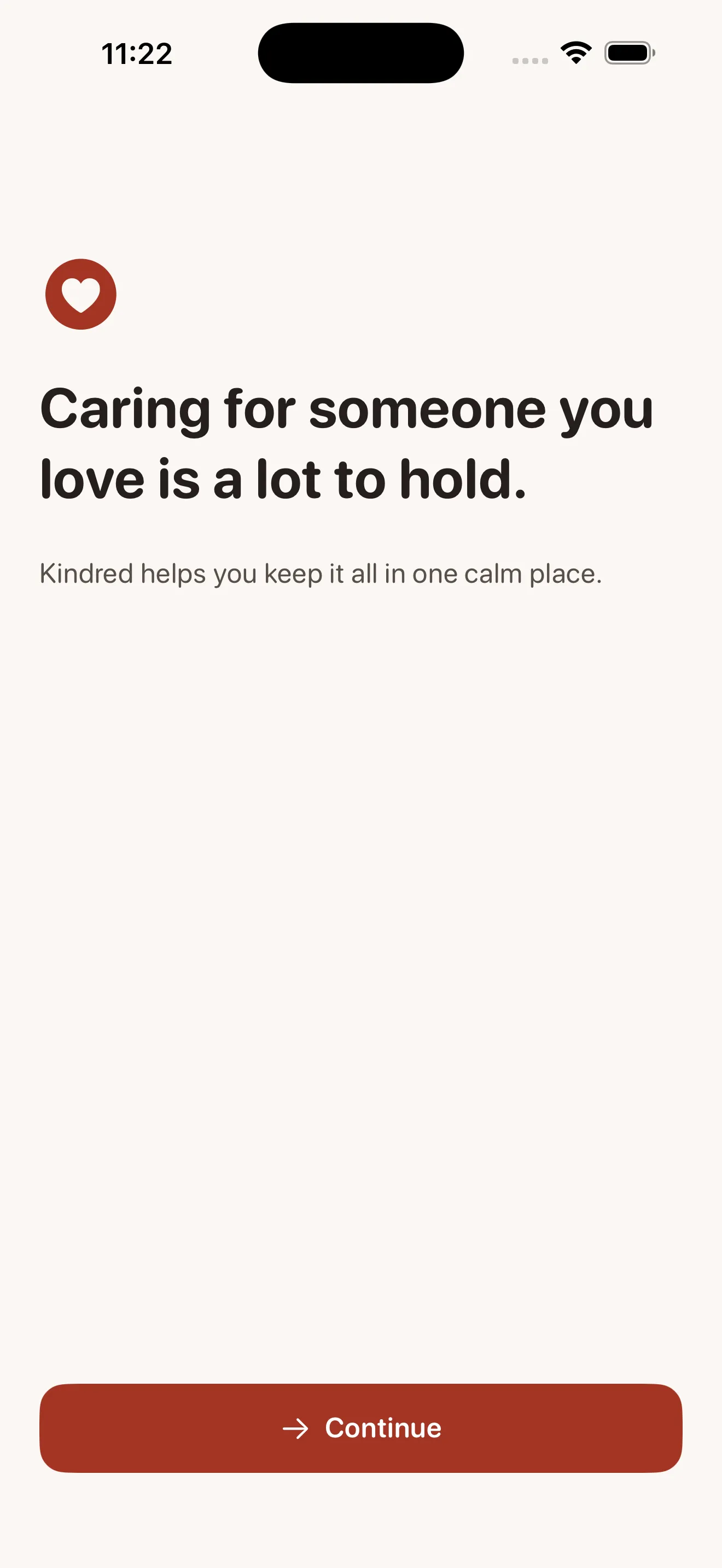
A newer category of apps recognizes that family caregiving is its own thing—different from work collaboration, different from patient portals, different from general life management. These apps are built specifically for coordinating care: medication reminders that actually work, appointment calendars, document storage for insurance cards and healthcare directives, and shared access for the people who help. Privacy isn't an afterthought; it's the foundation. Data stays encrypted. Nothing is sold. No ads interrupt you at a stressful moment. Kindred falls squarely in this category, with a specific focus on being free for one organizer—the primary caregiver—and then scalable when you need to bring family into the circle.
What Sets Kindred Apart
Built for the actual work of caregiving
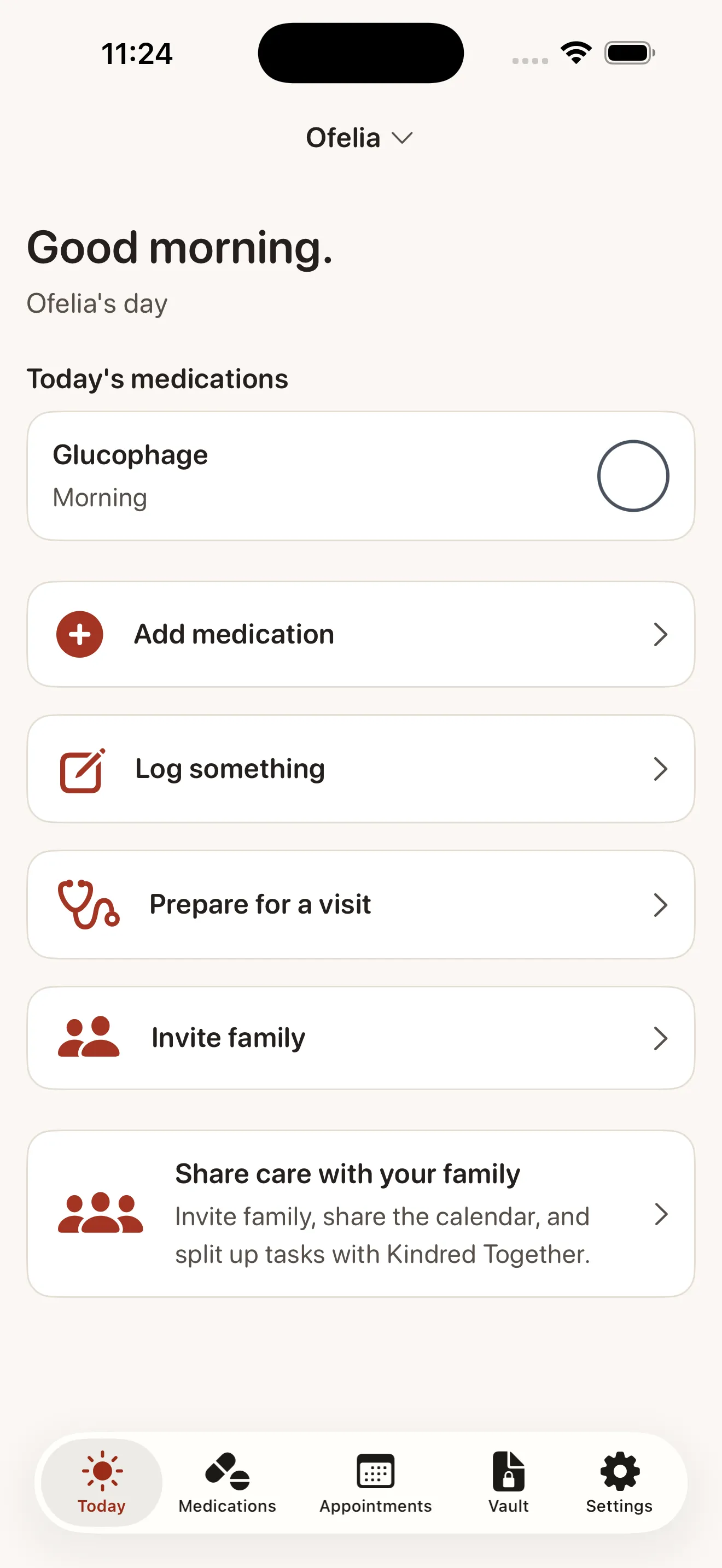
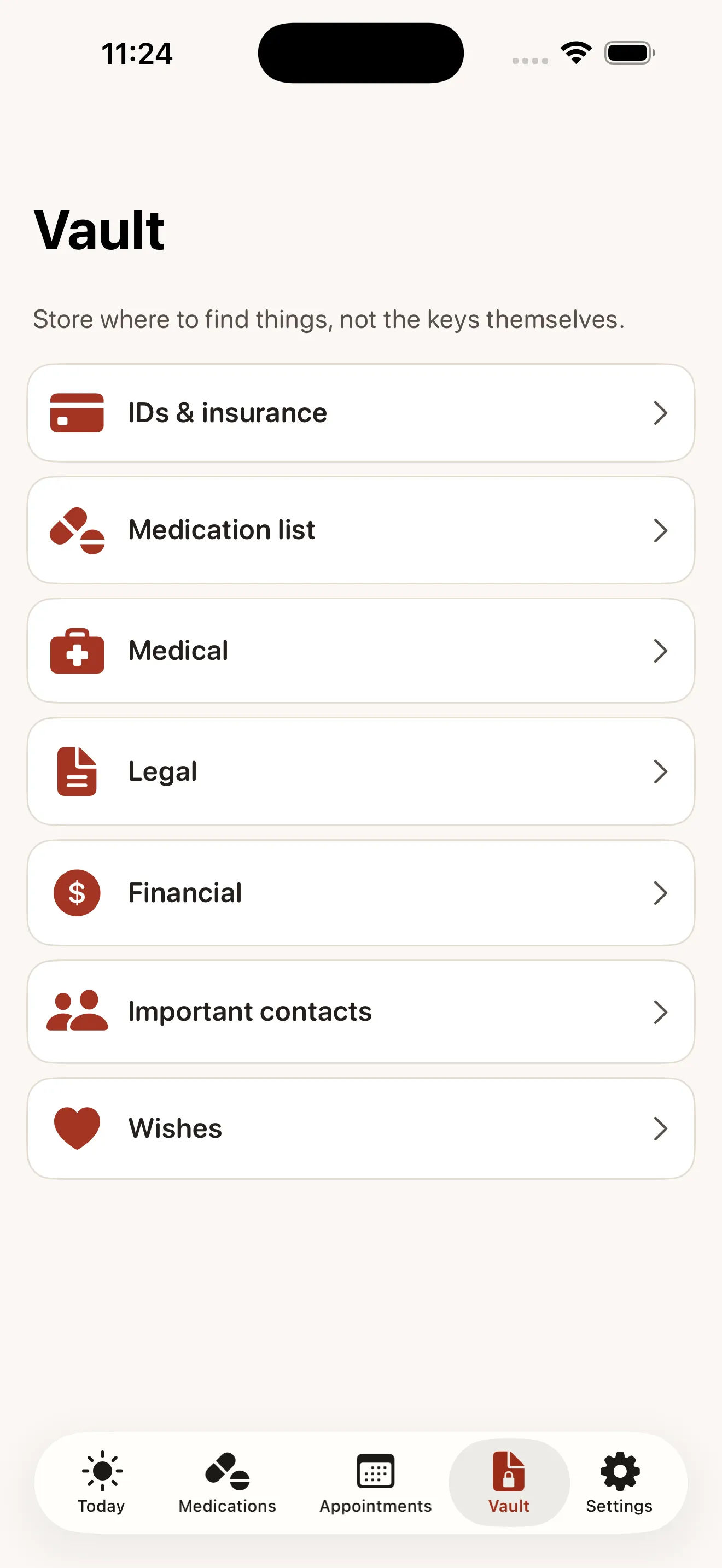
Kindred starts with what families actually need: a clear view of today's medications and appointments, one-tap doctor summaries, a secure vault for documents. Every feature solves a real caregiving task, not a generic productivity problem.
Free for one, scalable when you need it
You can organize a parent's care alone—for free, no ads, forever. When you're ready to bring your siblings, adult children, or spouse into the circle, you can. Everyone syncs to a shared calendar and activity feed. Tasks get assigned. But the baseline never costs money if you're the only organizer.
Privacy is not optional
Only people you invite see anything. Data is encrypted. You can export everything at any time. Kindred doesn't sell your data or run ads. This matters because health information is deeply sensitive, and your parent's care details shouldn't be a commodity.
- Approach
- Medication, appointment, and document coordination built specifically for families
- Cost
- Free for one organizer, forever. Optional shared plan to invite family.
- Privacy
- End-to-end encrypted. No ads. No data sales. Export anytime.
- Best for
- Adult children coordinating parent care, or any family managing a loved one's health and documents
- Learning curve
- Gentle onboarding. Warm, calm interface. Designed for people in crisis, not power users.
If you're ready to move beyond the patchwork of spreadsheets and group chats, Kindred offers a calmer way to keep track and stay together.
This article was drafted with AI assistance and reviewed by a human editor before publishing.