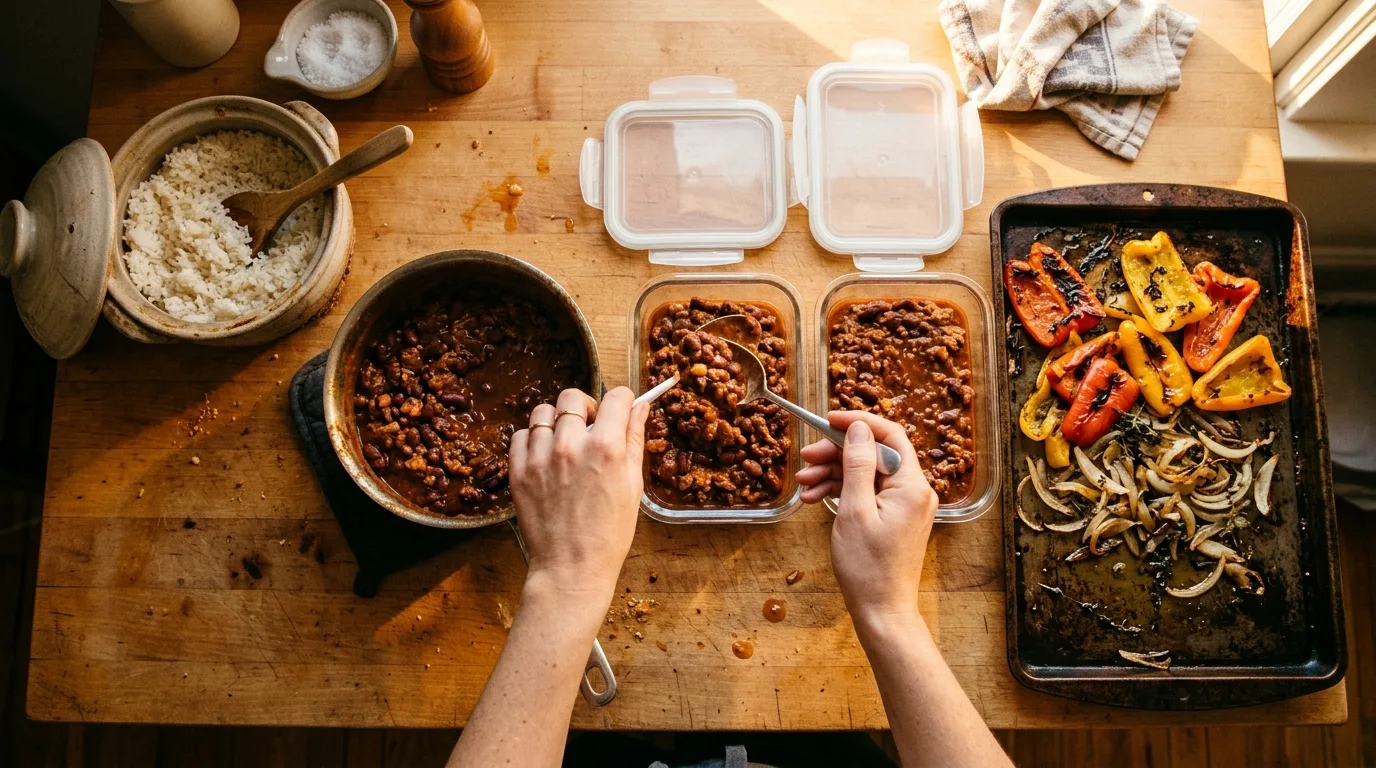
Meal prep for beginners isn't a cooking skill. It's a small system. You pick one meal you keep buying, cook enough of it in one afternoon to cover a few days, and store it so it's still good when you open the container on Wednesday. If you can cook a weeknight dinner, you can do this. What trips people up is planning too much, shopping for three recipes as if they were unrelated, and not knowing how long cooked chicken really keeps. Below is one first prep day from start to finish, and an honest picture of the week that follows.
What you'll have when you finish
- A free afternoon in the coming week, ideally the day before your busiest stretch
- Four to six containers with lids. Shallow ones beat deep tubs, and they don't need to match
- A sheet pan, a large pot and a saucepan
- Some room in the fridge and a little in the freezer
- Masking tape and a marker for dating lids
- MiseMate on your iPhone. The free version covers recipe browsing, scaling, grocery lists and Cook Mode
What does meal prep actually mean?
Meal prep means cooking ahead so a future meal takes three minutes instead of an hour or a trip to the sandwich shop. It doesn't mean seven identical boxes of chicken and broccoli, and it doesn't eat your whole Sunday. You'll see these terms on every recipe site.
- Batch cooking: making a large amount of one recipe at once, like a big pot of chili you eat over several days.
- Full-meal prep: cooking complete meals and splitting them into single portions. You grab one, reheat it and eat.
- Component prep: cooking separate parts, such as a grain, a protein and a roasted vegetable, then combining them differently each day.
- Freezer meals: portions you cook now and freeze for a week when the fridge is empty.
- Scaling: changing a recipe's quantities so it makes the number of portions you need, not the number the author picked.
- Mise en place: French for 'everything in its place'. You chop and measure everything before the heat goes on. Our app takes its name from it, and it's the habit that keeps a prep afternoon calm.
For a first try, mix the two main styles. Cook one or two complete dishes plus one plain component, like rice, that goes with both. The steps below are built that way.
Why meal prep for beginners should start small
Skill is rarely the real obstacle. In Instacart's survey of 1,011 U.S. adults, the biggest barriers to cooking at home were time (20%) and exhaustion (19%). Only 7% blamed a lack of skill. Saving money was the top reason people cook more at home, at 35%.
The money case holds up. The USDA's Economic Research Service forecasts grocery prices rising 2.5% in 2026 and restaurant prices rising 3.6%. Every lunch you pack shifts your spending away from the faster-rising side of the bill.
So your first attempt isn't a test of your cooking. It's a routine that has to survive a tired Thursday, and a small one does. Aim for four lunches, not fourteen meals.
Your first prep day, step by step
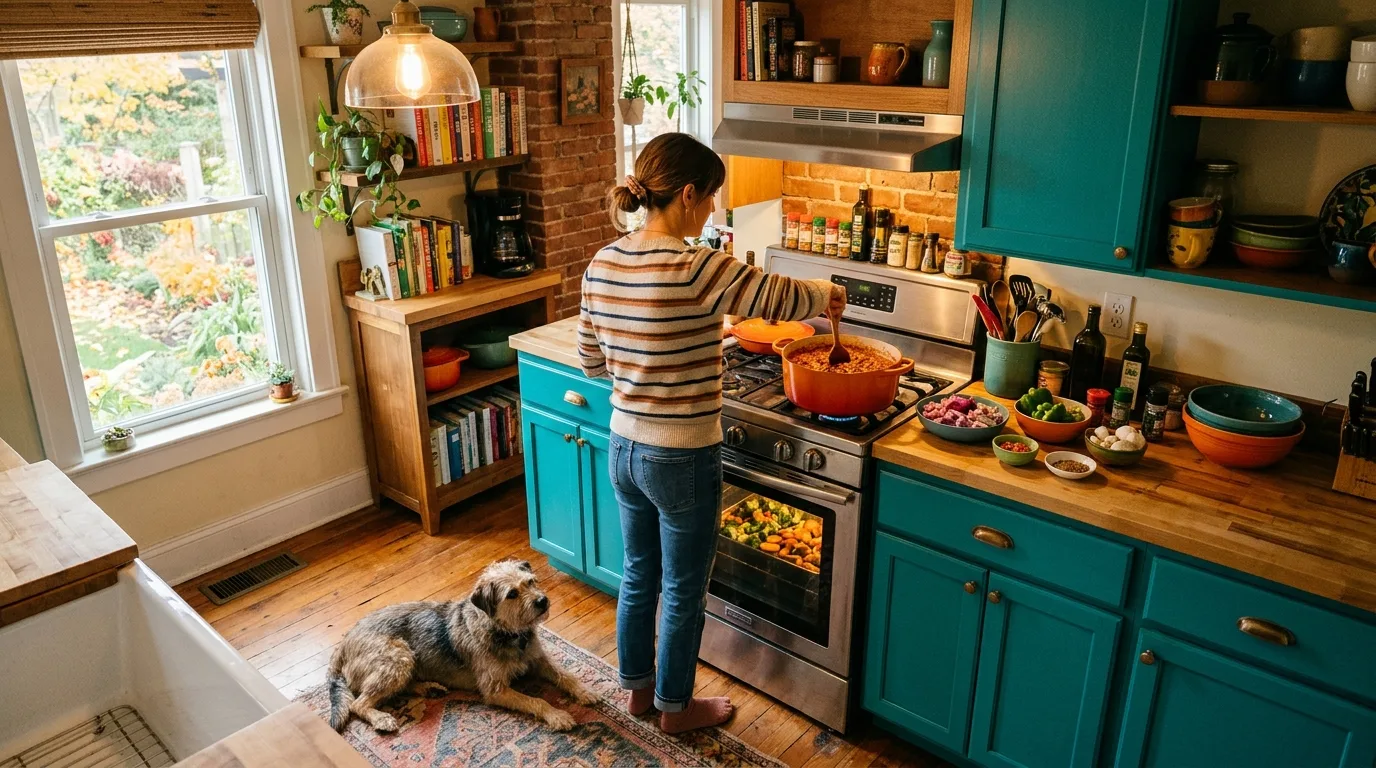
Go in order. Steps one to four take an evening on the sofa plus a shopping trip. Steps five to eight are the cooking afternoon.
Step 1: Pick the one meal you keep buying
Step 2: Choose two or three recipes that share ingredients
Step 3: Scale each recipe to the portions you need
Step 4: Build one grocery list and shop once
Step 5: Chop everything before you turn on a burner
Step 6: Start the slowest dish first
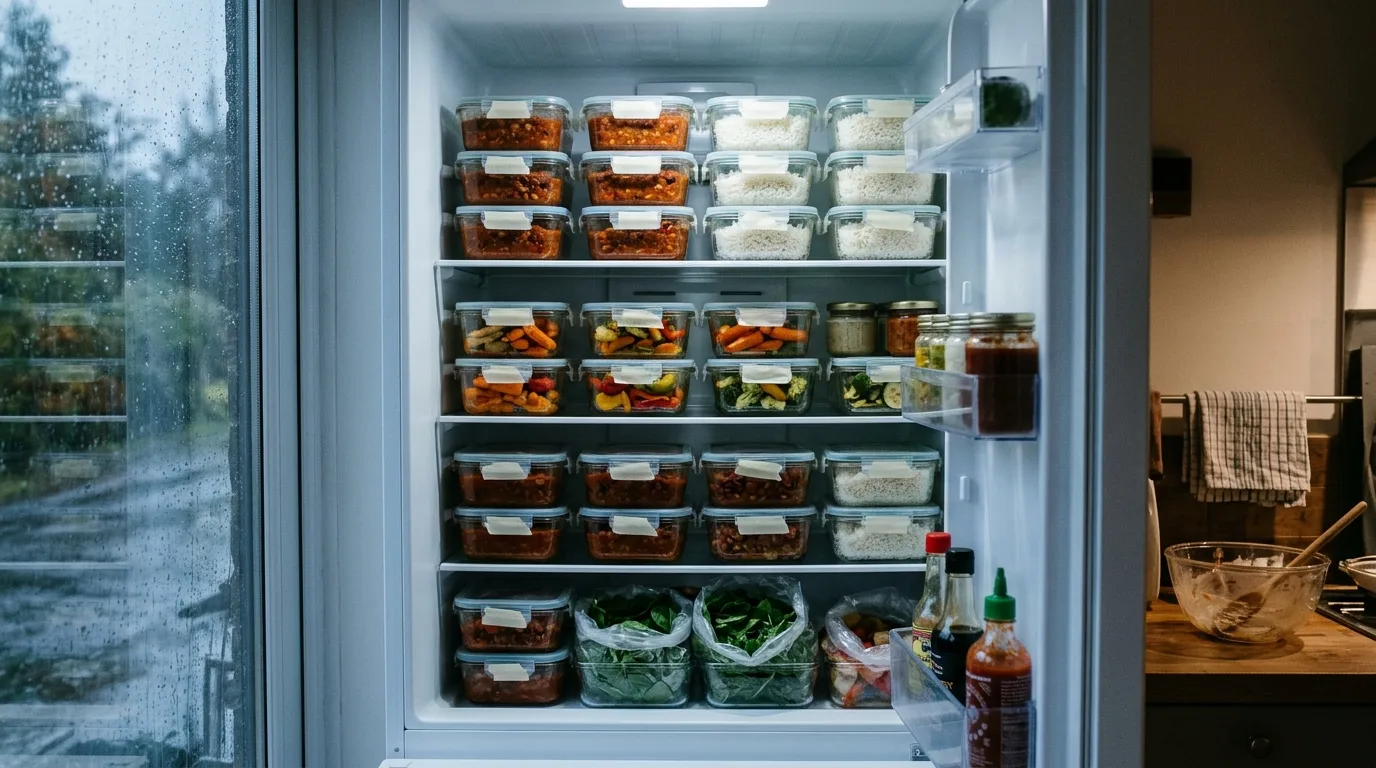
Step 7: Cool, portion and date the containers
Step 8: Eat the fridge portions first and freeze the rest
How long does prepped food last in the fridge and freezer?
These limits come from the USDA's guidance on leftovers and food safety and apply to every container you prep.
- Fridge
- 3 to 4 days
- Freezer
- 3 to 4 months for best quality. Safe longer, but drier and less flavorful
- Get it cold within
- 2 hours of cooking
- Fridge temperature
- 40°F or below
- Freezer temperature
- 0°F or below
- Reheat to
- 165°F
Safe on day three isn't always nice on day three. Soups, stews, chili, braises, roasted root vegetables and cooked grains reheat well. Crispy or breaded food turns soft. Leafy salads wilt once dressed, so pack the dressing in a small separate pot. Pasta keeps soaking up its sauce until it goes mushy, which is why we'd point a first-timer toward rice or another sturdy grain.
For the freezer, chili and soup are the safest bets. Raw salad vegetables don't freeze well at all, and creamy sauces can split when they thaw.
How to keep eating the same food from getting boring
Prep plain parts and change the last minute. Cook the rice and the roasted peppers and onions without strong flavors. Top Monday's bowl with chili and Tuesday's with chicken and a lemon-yogurt sauce. On Wednesday, roll chicken and salsa into a wrap. One afternoon of cooking, three lunches that don't taste alike.
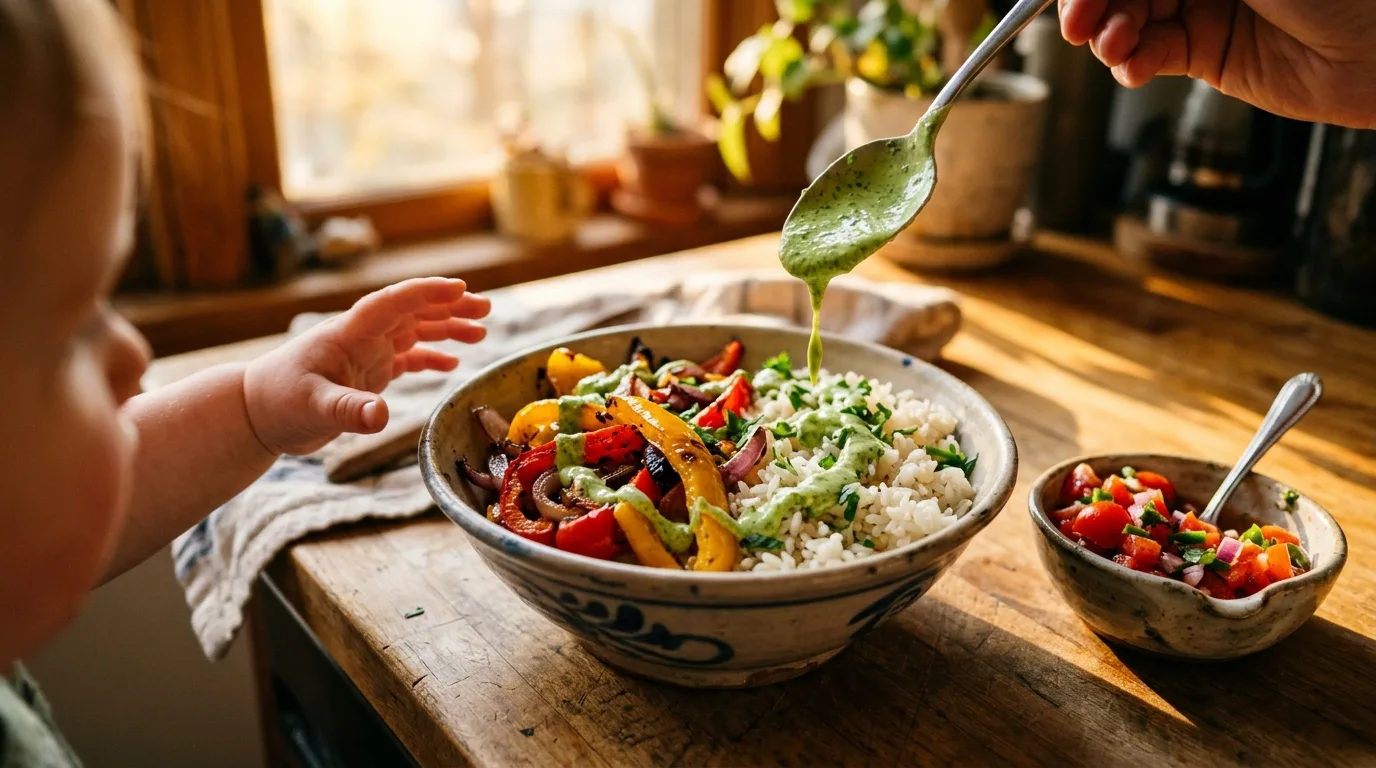
A sauce is the cheapest change you can make. Make one at home on prep day and buy one ready-made, and every container can go two ways. With MiseMate Premium, you can ask the AI kitchen assistant, which runs on Claude, what to cook with whatever is left in your fridge on Wednesday. It suggests recipes from your pantry, recommends substitutions and can rewrite a recipe for a different diet.
Meal prep for one or two people
If you live alone, you may not need to scale at all. Many recipes serve four, so one pot of chili at its original size already covers your four lunches. Don't fight that. Make one main dish, skip the second recipe, and get variety from a plain grain and a couple of sauces.
For two people, double the portions, not the number of recipes. Eight lunches from two dishes still fit in one afternoon, and the extra time goes into chopping and portioning rather than a third recipe.
What to expect in your first week
Prep day will take longer than you expect, mostly because of chopping and washing up. It speeds up by the third or fourth time, once you stop rereading every step.
Monday feels great. You walk past the lunch queue. By Wednesday you'll have opinions: one dish reheats beautifully, the other is just fine, and the portions are a little small or a little big. Write that down while it's fresh. That one note is what makes next week's prep better.
You'll also throw away less food, because food you planned for gets eaten. ReFED's 2026 U.S. Food Waste Report found household food waste fell by about 950,000 tons in 2024, and credits people managing their food more carefully while prices stayed high. A short plan and a single shopping list are exactly that habit.
Expect to miss a day. A birthday lunch or a late meeting will happen. That's what the freezer portion is for.
Where MiseMate fits, and where it doesn't
Everything in the steps above works on the free version. Recipe browsing, ingredient scaling, the grocery list and Cook Mode cost nothing. Premium adds the meal planning calendar, where you place each portion on a day so nothing gets forgotten, and the AI kitchen assistant. You need neither for a first prep day. Until you know you'll keep going, a sticky note on the fridge listing Monday to Thursday does the calendar's job.
MiseMate isn't the right fit if you want ingredients delivered with the planning done for you. A meal kit service suits that better. And if you already cook the same recipe every Sunday and only need a shopping list, a notes app is enough. If you're weighing options, our guide to what to look for in a recipe and meal prep app for iPhone lays out the trade-offs.
Common questions
How many meals should I prep the first time?
Do I need special meal prep containers?
Which day should I meal prep?
Is it safe to eat prepped chicken on day five?
Can I do all of this on the free version of MiseMate?
What to do tonight
- Choose your four days and block out a prep afternoon on the day before the first one.
- Open MiseMate, find one dish you'd happily eat twice and a second that uses the same vegetables, then scale both to the portions you need.
- Add both recipes to your grocery list, cross off what's already in the cupboard, and count your containers with lids before you head to the shop.
Sources
This article was drafted with AI assistance and reviewed by a human editor before publishing.