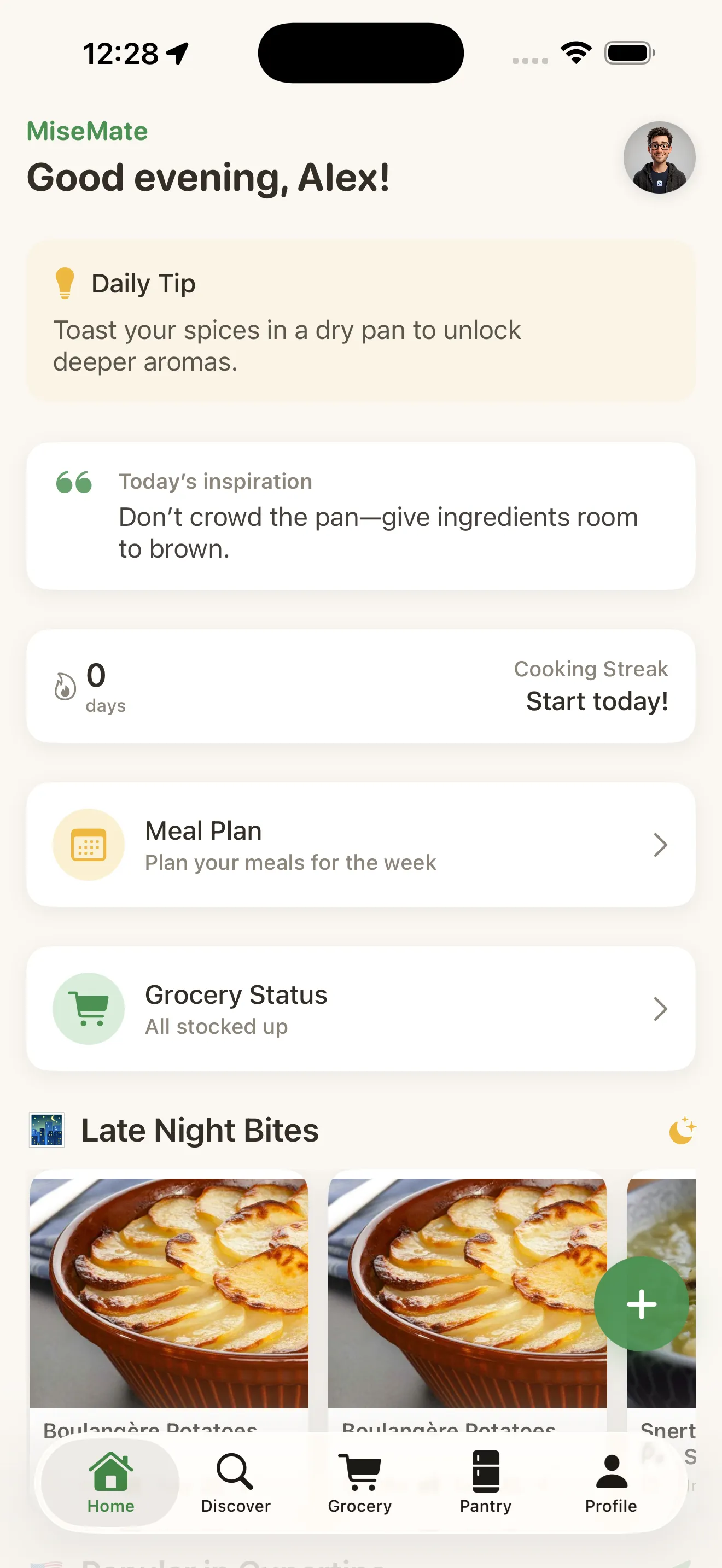
The typical recipe app journey is fractured. You find a recipe in one place, check your pantry in another, build a list somewhere else, then struggle through cook mode on a fourth screen. By the time you start cooking, you've already lost momentum. The best kitchens aren't those with the most recipes—they're the ones with the clearest path from inspiration to a finished meal.
The three flavors of recipe apps
Recipe apps tend to cluster into three categories. Discovery-first apps shine at finding new recipes across massive libraries—think Instagrammable collections and endless browsing. Meal-planning apps focus on weekly calendars and structured prep, often built for batch cooking or specific diets. Cooking-focused apps emphasize the moment you're at the stove: timers, step-by-step guidance, and real-time help. Most apps pick one and do it well. The trade-off is friction between steps.
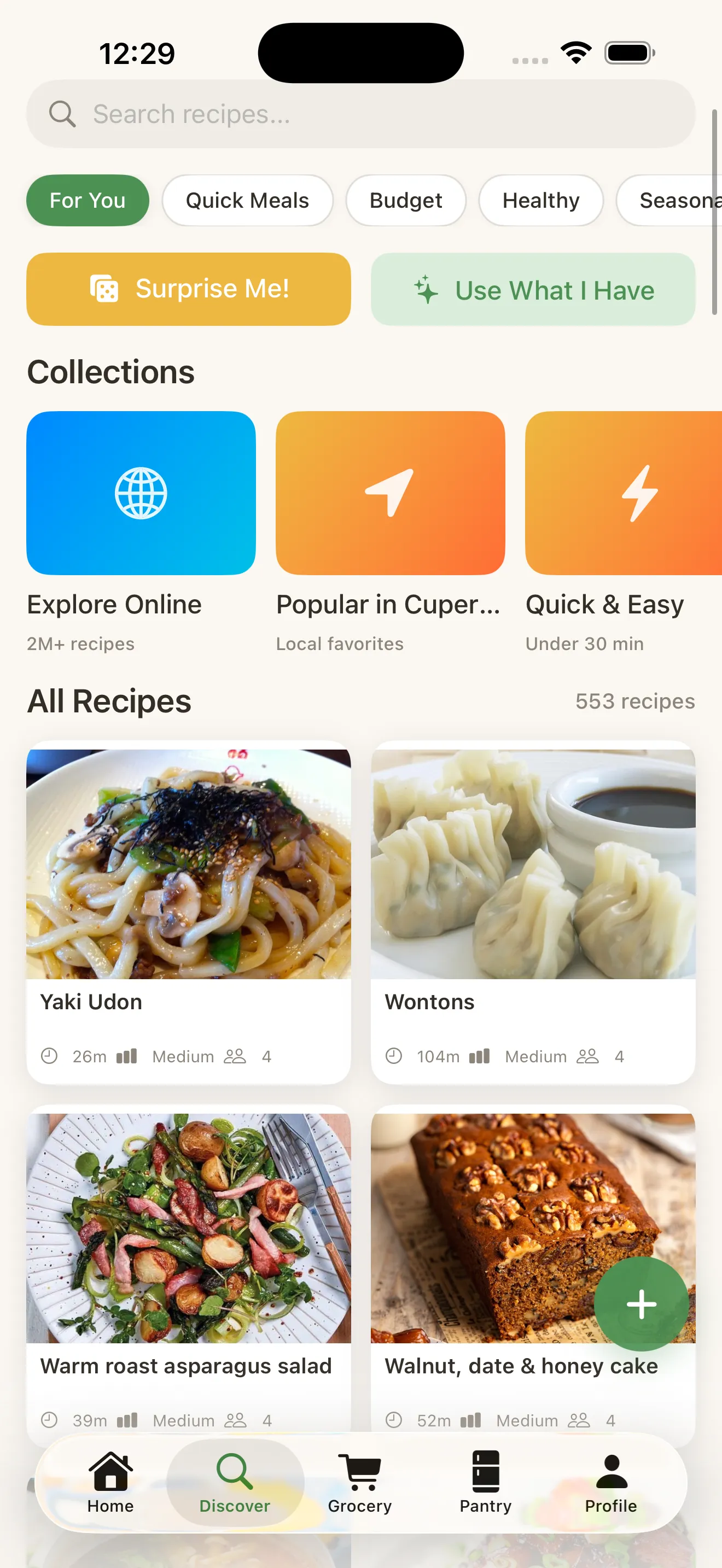
What separates a good recipe app from a kitchen companion is whether it reduces the number of decisions you make between "I want to cook" and "dinner is ready." If you're toggling between five apps to find a recipe, scale it, buy ingredients, and cook, you're not saving time—you're managing complexity.
Where scaling and lists become critical
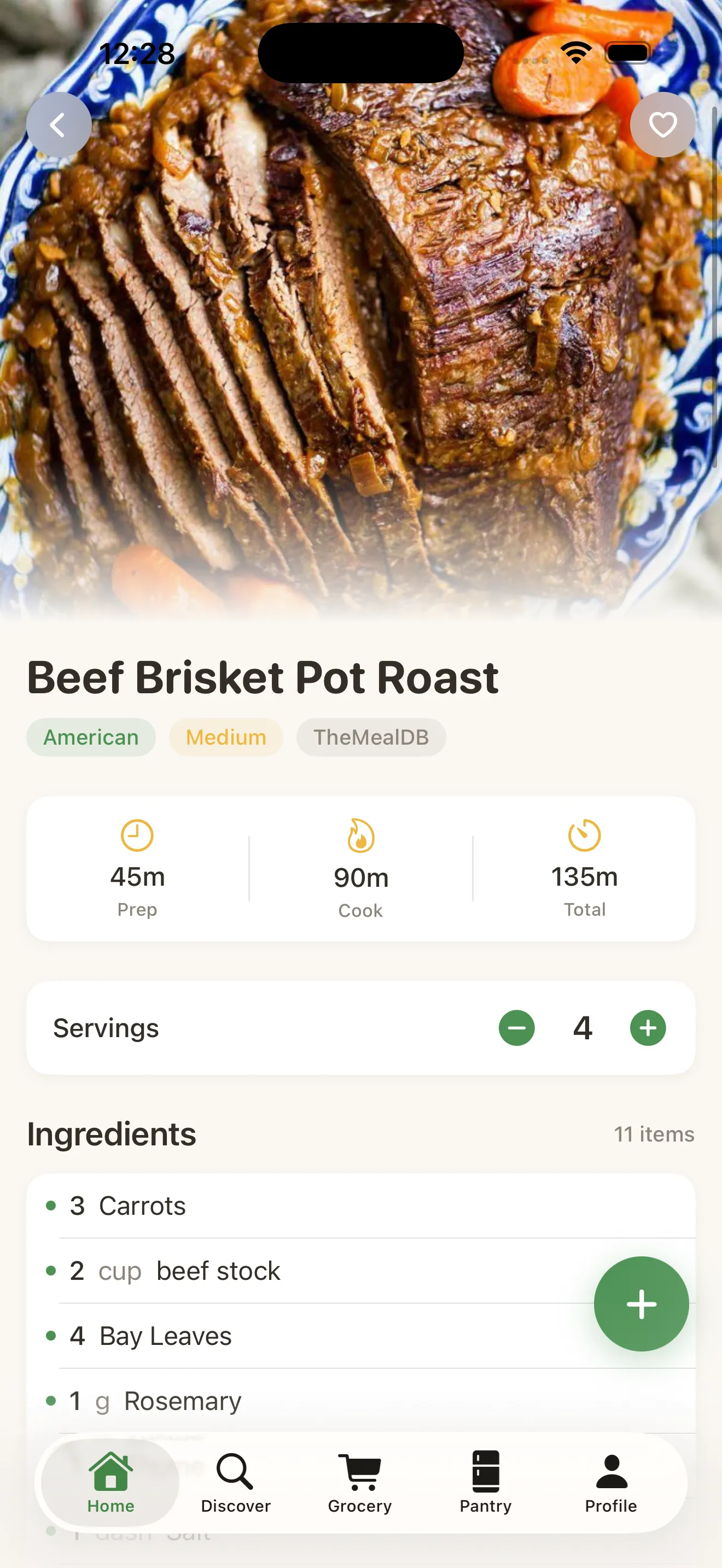
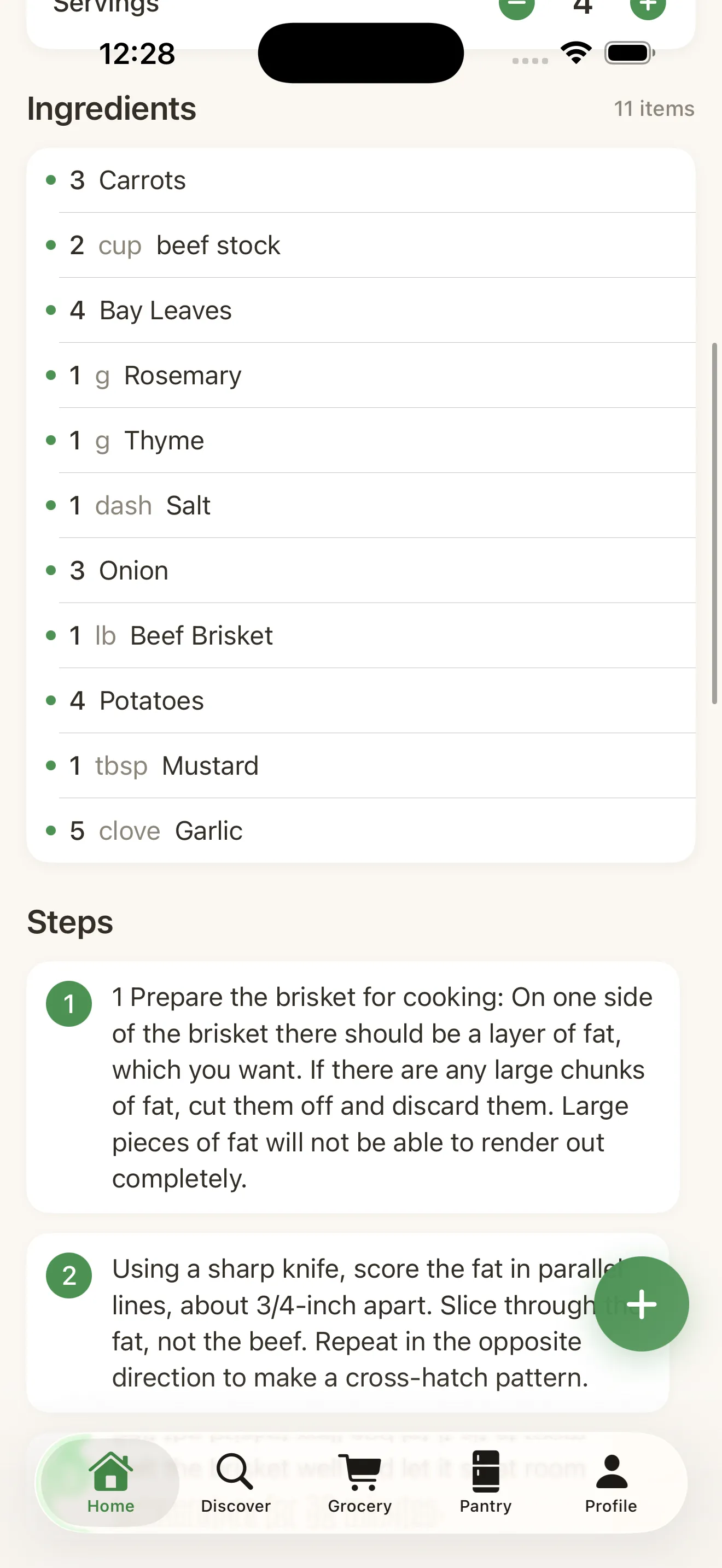
Most recipe apps let you save or bookmark. Few actually help you cook the recipe you saved. The gap widens when ingredient scaling enters the picture. A recipe for four people shouldn't require a calculator to feed six. Grocery lists shouldn't be manual copy-paste exercises. And cooking shouldn't mean juggling a phone recipe with a physical notepad for substitutions.
The best recipe app isn't the one with the most recipes. It's the one that reduces friction between inspiration and execution.
The AI advantage in the kitchen
AI in recipes used to mean vague auto-generated meal plans. Now it means something more useful: a cooking assistant that knows your pantry, dietary preferences, and cooking level. If you have chicken and need dinner in 30 minutes, an AI that suggests recipes from what you already own saves a grocery trip. If a recipe calls for an ingredient you hate, an AI that recommends substitutions that actually work beats scrolling comment sections.
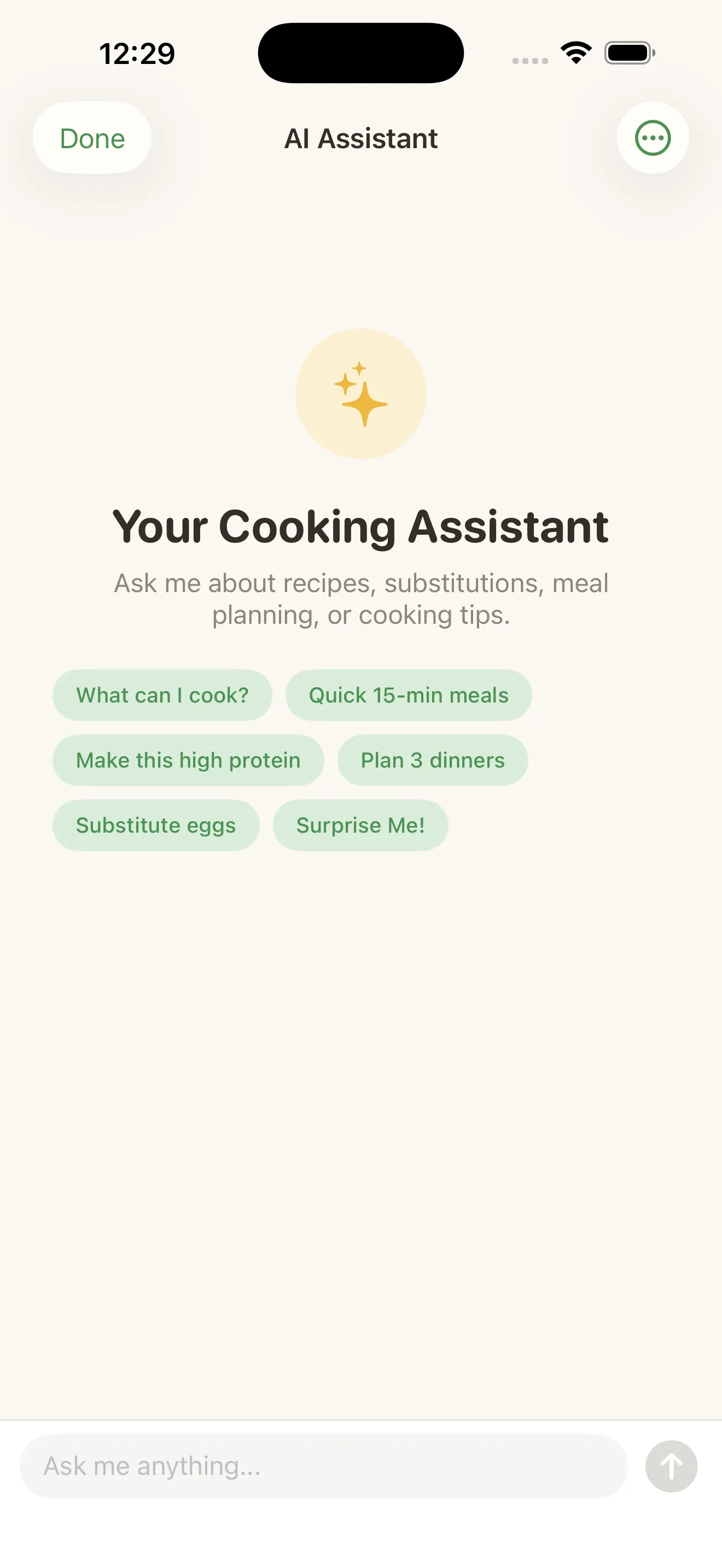
This is where the coherence matters. An AI assistant that lives in isolation is a novelty. One that integrates with your full cooking flow—your dietary restrictions, your cooking skill level, your favorite flavors, the ingredients already in your house—becomes genuinely useful. The apps that connect these dots tend to reduce waste because you're cooking with intention, not just following a recipe blindly.
Cook Mode as the final piece
You've chosen your recipe. Ingredients are scaled. You bought what you need. Now you're standing at the stove, hands possibly wet or sticky, trying to see your phone without glasses. This is where cook mode becomes essential. A good cook mode gets out of the way: clear steps, visible timers, easy tapping to mark progress. A great one adapts to how you actually cook—pausing timers if you're not ready, suggesting when to prep ingredients in advance, warning you about timing conflicts.
The full-loop advantage
The strongest recipe apps connect discovery, scaling, shopping, and cooking as a single flow. You're not exporting lists or screenshotting ingredients. You're not bouncing between four apps. You're in one place where your preferences, your pantry, your dietary needs, and your cooking level all inform the experience. That coherence saves time, reduces waste, and actually makes cooking feel smarter.
What you actually need to start
If you're evaluating recipe apps, ask yourself what friction you feel most acutely. Is it finding recipes you actually want to make? Scaling portions correctly? Building grocery lists without transcription errors? Cooking with clear guidance? The best app for you solves the biggest pain point first. And ideally, it doesn't make you solve the other three separately.
This article was drafted with AI assistance and reviewed by a human editor before publishing.