The meditation app market built itself on ambition. Longer programs. Deeper dives. Streak counters that remind you daily what you've missed. But there's a quieter approach gaining ground: apps that ask for five minutes, not fifty. Apps that trust you to show up without guilt. Reset represents a category shift—one small ritual a night instead of one large commitment you'll eventually abandon.
The Traditional Hour-Long Model
Most meditation and wind-down apps follow the same blueprint. They offer extensive guided programs—10, 20, even 40-minute sessions. The logic is sound: deeper immersion, more transformative results. But this model comes with friction. Life is irregular. Some nights you have ten minutes; others you have none. When the app's designed for forty and you can only spare five, you skip it. The streak breaks. Guilt follows.
When the app's designed for forty and you can only spare five, you skip it. The streak breaks. Guilt follows.
Streaks, while motivating for some, become a burden for others. Miss one night and you've failed. The app punishes inconsistency by resetting your count to zero. That's psychologically expensive—especially for a wind-down tool that should lower stress, not create it.
The Five-Minute Category
A smaller category of apps has emerged with a different thesis: five minutes is enough. One ritual. One small commitment. The bet is that consistency beats depth. That showing up every night, even briefly, matters more than showing up sometimes for a long session.
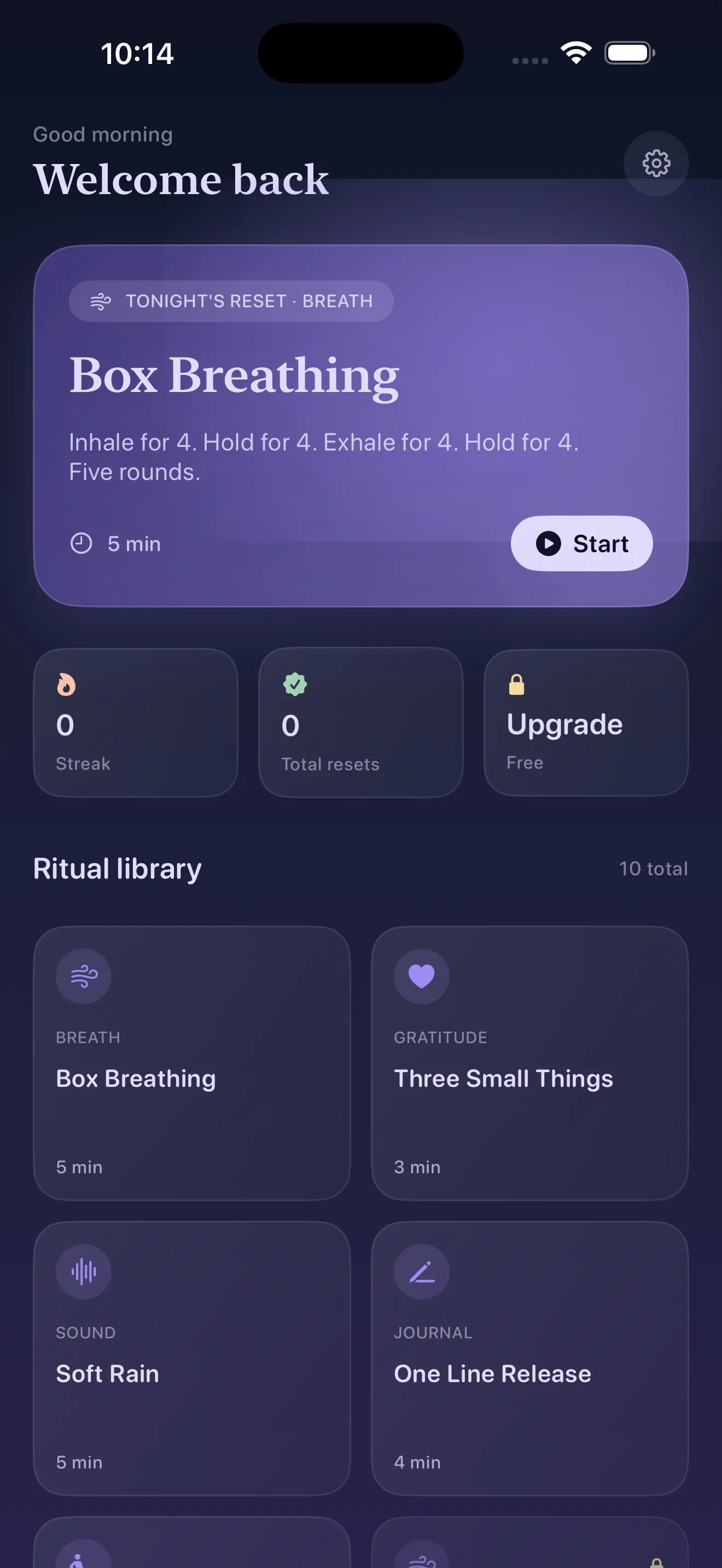
Reset sits squarely in this camp. Tonight's ritual is already chosen for you—breathwork, gratitude, a soundscape, journaling, or gentle stretching. No decision fatigue. No scrolling through options when you're tired. Tap it. Do it. You're done by the time your kettle boils.
Where Reset Differs
No Streak Guilt
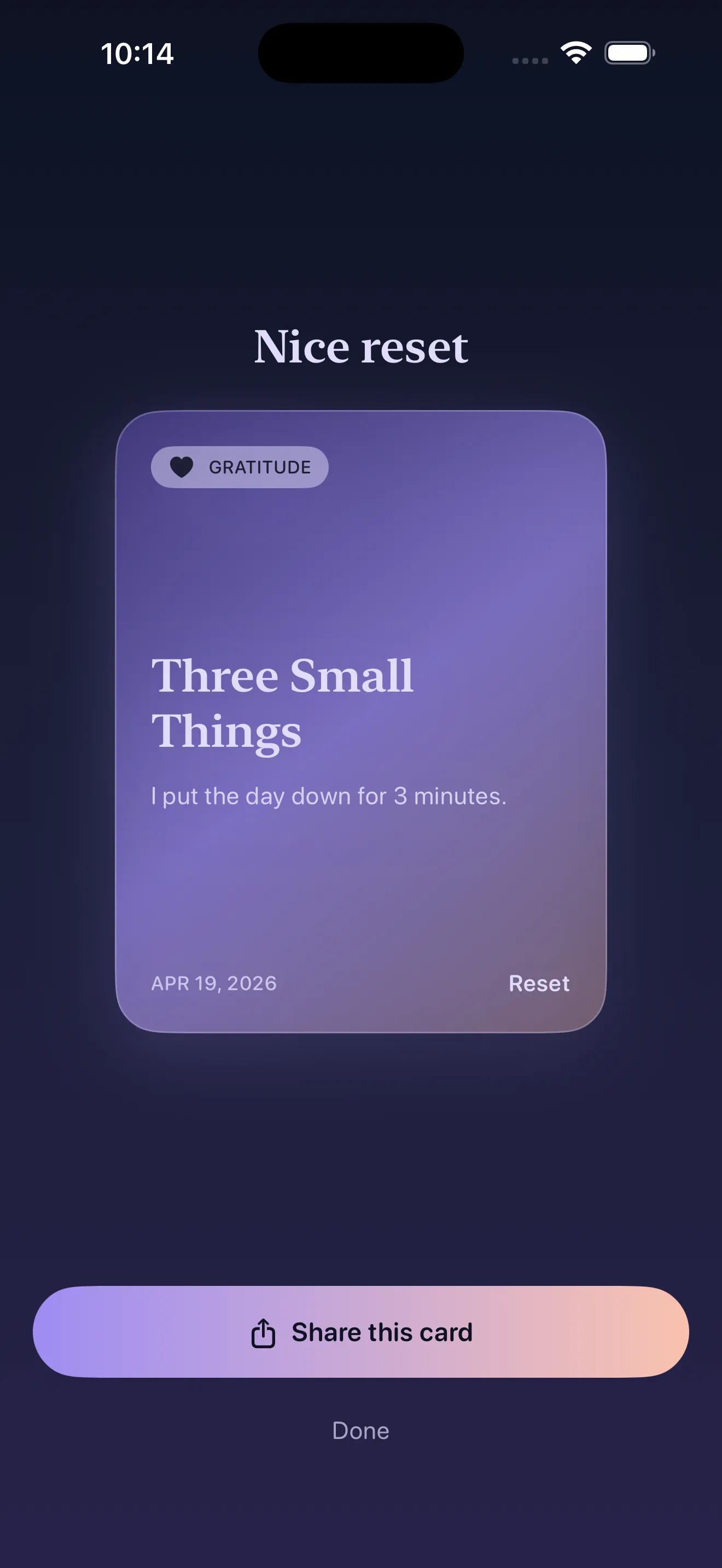
Reset counts good nights instead of punishing misses. Tired is not a badge. You're tracking wins, not managing failure. The streak mechanic is there—it's visible—but it's framed as a celebration of consistency, not a tally that demands perfection.
Pre-Selected Rituals
Every night, a ritual is waiting. Breathwork one evening. Journaling the next. A soundscape after that. You're not choosing; you're accepting. This removes decision friction entirely. When you're winding down, the last thing you need is a menu.
Seasonal Content Drops
Rather than overwhelming you with an endless library, Reset adds new ritual packs seasonally. More to discover, but in manageable doses. It's the opposite of decision paralysis.
The Ritual Types
- Breathwork: Guided pacing to calm your nervous system
- Gratitude: Brief reflection on the day's small wins
- Soundscapes: Ambient audio—nothing instructional, just presence
- Journaling: Prompt-based writing to clear your head
- Gentle stretches: Movement without intensity
This variety ensures the app doesn't feel repetitive across weeks, but each ritual stays short and focused. You're also not locked into one type. Over time, Reset learns what lands and surfaces it more often.
How This Fits Your Evening
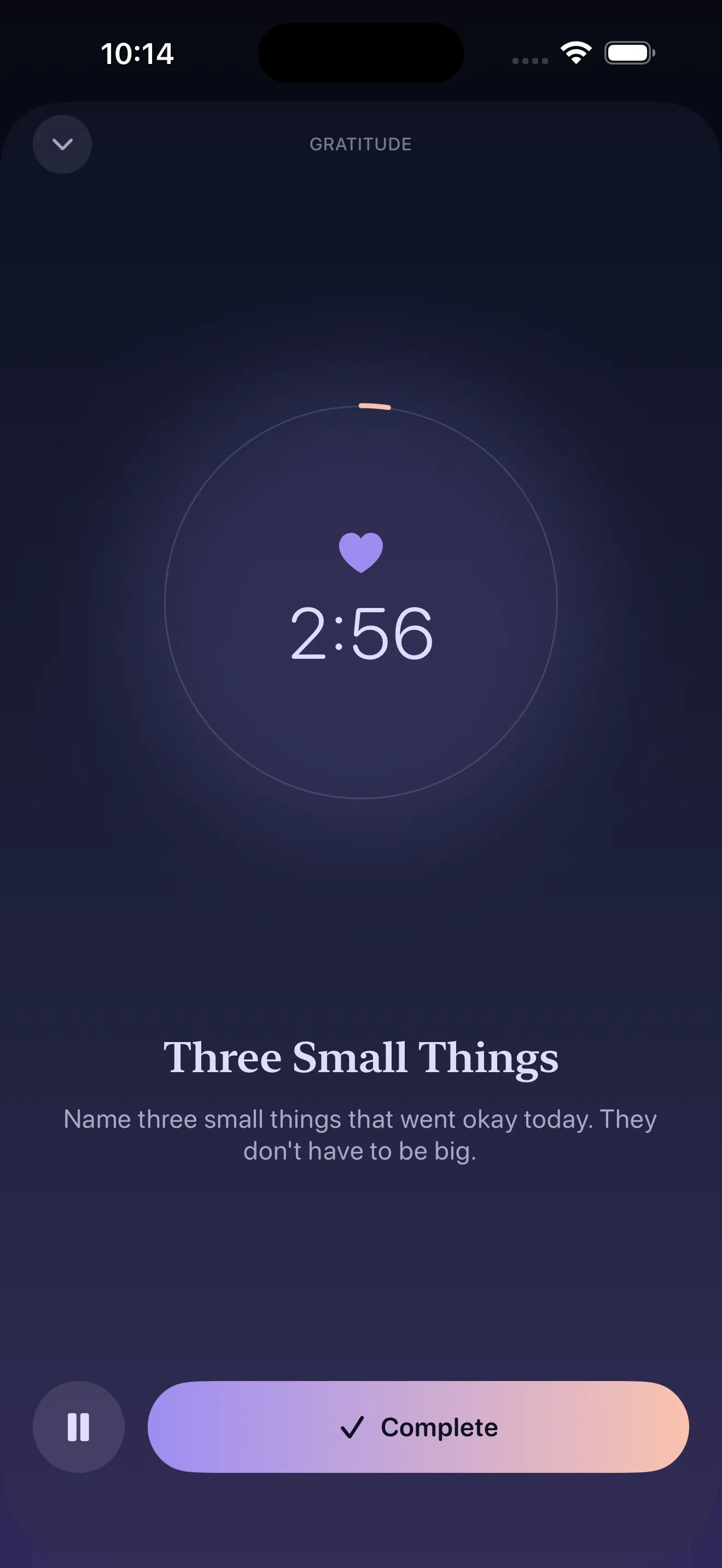
You have five minutes. Before bed, after dinner, in the bathroom while your family settles down. That window is real and recurring. Reset is built for it. No setup time. No scrolling. No guilt if tomorrow night is hard. The Dynamic Island timer follows you if you wander. The ritual just works.
If you're looking to build a wind-down habit without the pressure of streaks, or if you've tried longer meditation apps and abandoned them, the five-minute approach is worth testing. For more on how to make this stick, see our guide on five-minute wind-down tips, or dive deeper into why short apps often outlast long ones.
The Reset Difference in Practice
- Commitment per session
- 5 minutes
- Ritual pre-selected?
- Yes
- Streak punishes misses?
- No
- Content library size
- Curated, seasonal drops
- Goal
- Consistency over perfection
Tired is not a badge.
This article was drafted with AI assistance and reviewed by a human editor before publishing.