The bedtime wellness market splits into two camps. One asks you to carve out an hour for a guided meditation session—the kind you bookmark with intention and often skip when tired. The other recognizes that most nights, you don't have an hour, and forcing one creates guilt instead of calm. Reset sits firmly in the second camp, betting that five minutes of intentional breathing, stretching, journaling, or listening beats a lengthy session you'll abandon.
The Long-Session Approach
Established meditation platforms have built their reputation on comprehensive, instructor-led experiences. A typical session runs 20 to 60 minutes, offering depth: story arcs, layered guidance, and the feeling of being held through a complete journey. These apps often emphasize consistency through streak systems, daily challenges, and progress tracking. The assumption is that investing time upfront creates lasting habit change.
This works beautifully for people with structured schedules and high intrinsic motivation. But it creates friction for the rest of us. A 45-minute commitment on a Tuesday after a long day feels less like wind-down and more like homework.
The Five-Minute Ritual
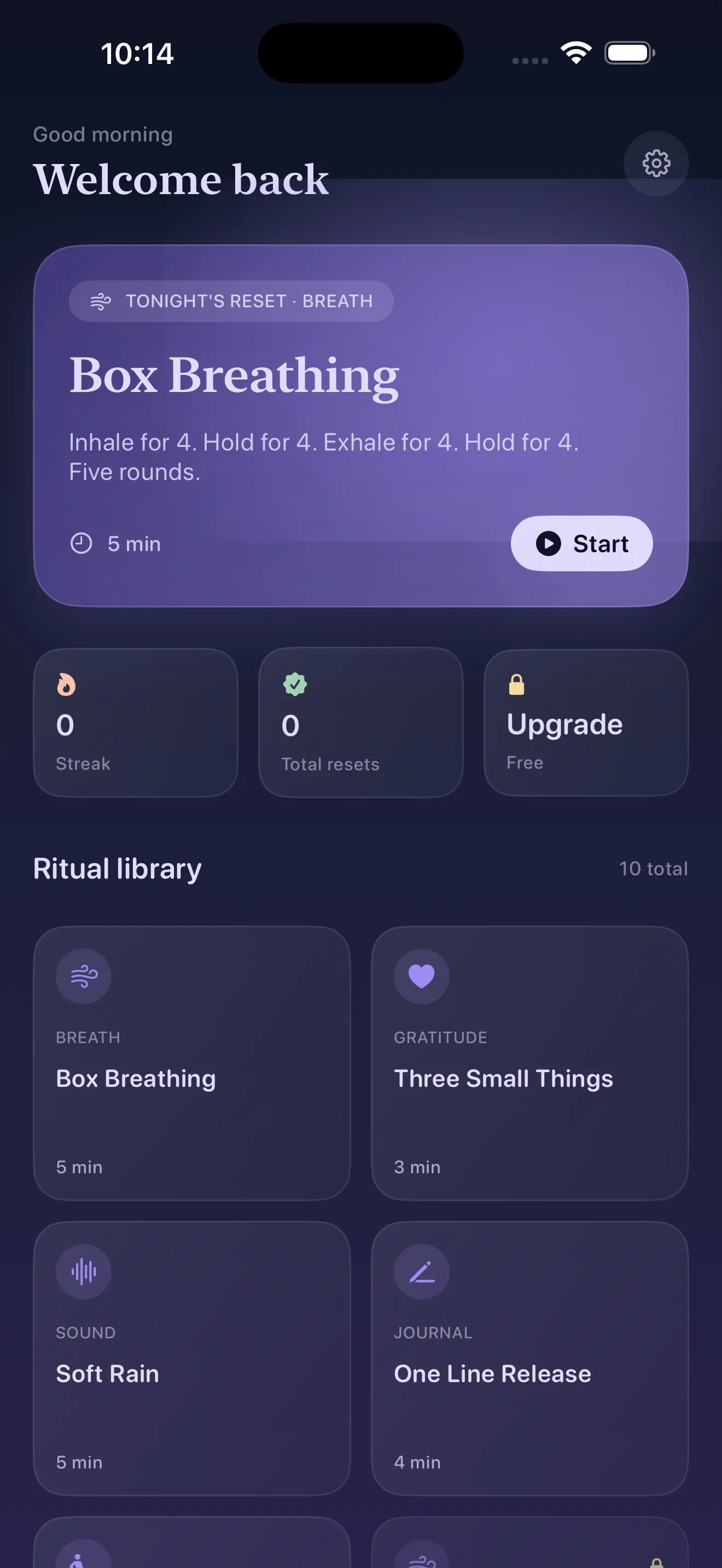
A smaller, focused ritual removes the activation barrier entirely. Five minutes is specific enough to feel real—not a distraction you're pretending counts as sleep prep—but short enough to fit into any night, no matter how exhausted you are. Reset picks your ritual for you each evening, so you don't face a menu of choices when your brain is already tired.
Tired is not a badge.
Streaks: Counting Wins Instead of Punishing Misses
Traditional meditation apps lean on streak mechanics—consecutive days of practice that build momentum but also create anxiety the moment you miss a day. One skipped session becomes a broken chain, triggering the sunk-cost feeling that makes returning harder.
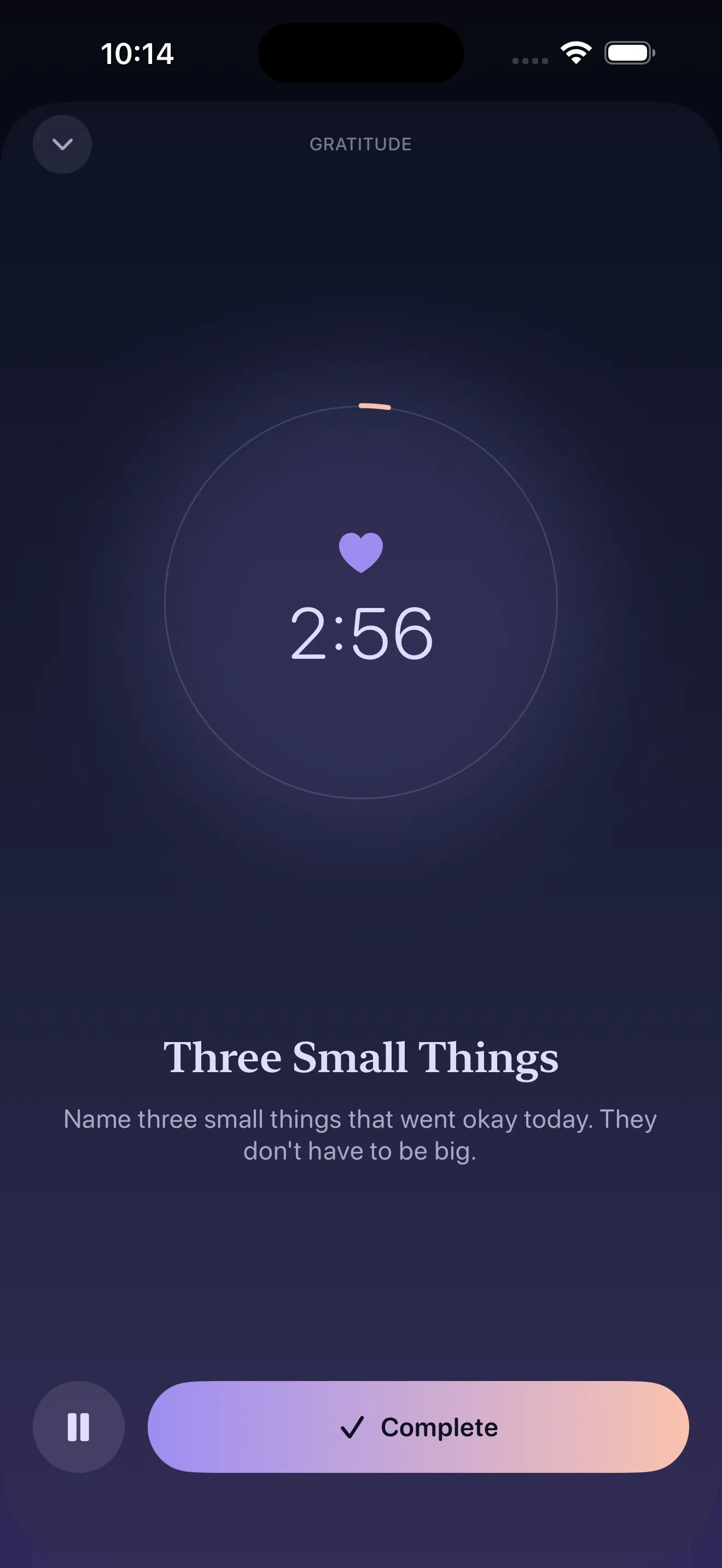
Reset counts good nights without weaponizing rest. If you skip a session, the counter doesn't reset. Your next ritual starts fresh, no guilt attached. This distinction matters more than it sounds. Bedtime is already loaded with fatigue and sometimes stress. Adding streak pressure contradicts the whole point.
What You Actually Get in Five Minutes
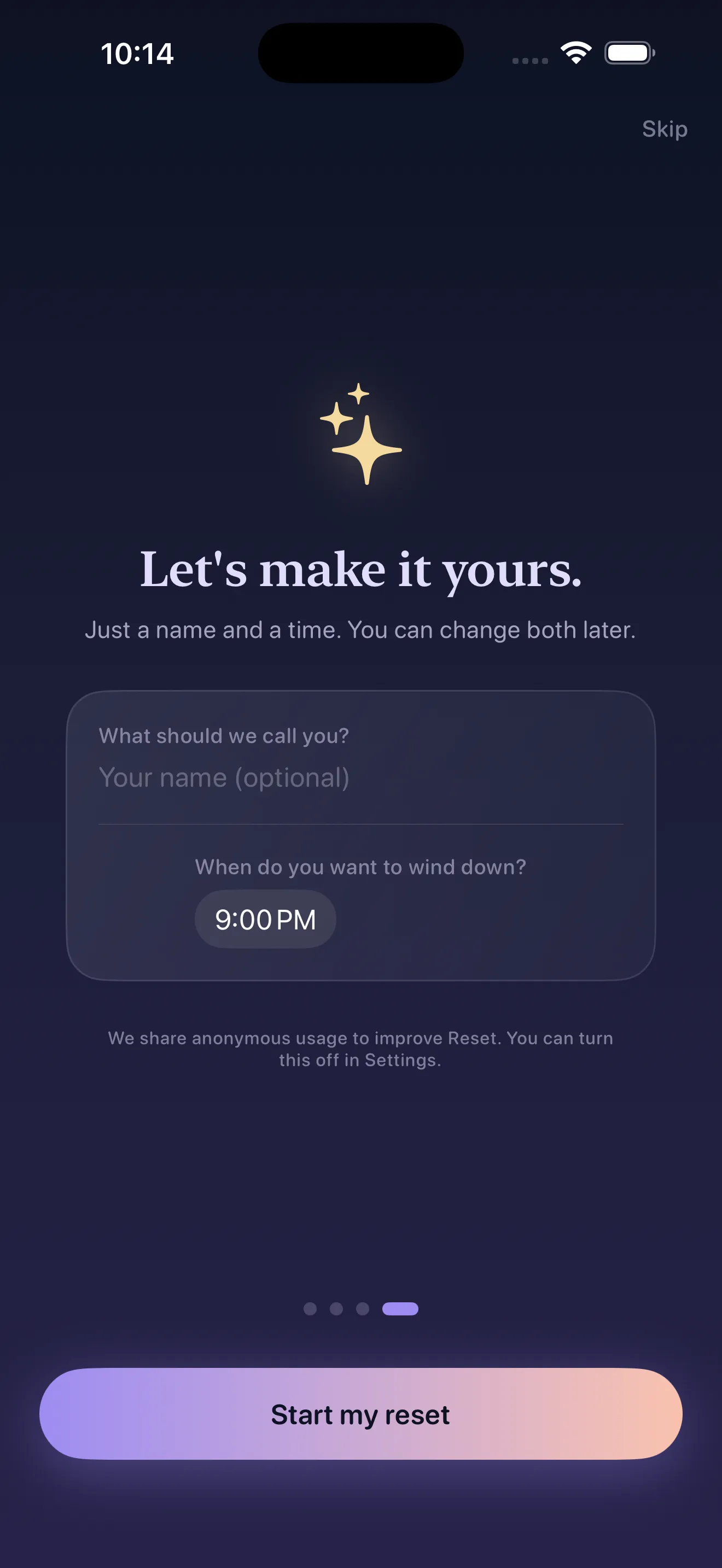
Reset rotates through five ritual types: breathwork, gratitude, soundscapes, journaling, and gentle stretches. Each one is designed to drop mental chatter within minutes. The breathing orb visualizes your pace without lecturing you. Soundscapes play quietly in the background. A prompt lets you journal three sentences instead of three pages.
- Breathwork with a visual guide—no narration needed
- Curated soundscapes for different moods
- Simple gratitude or reflection prompts
- Gentle stretches you can do in bed
- Journaling that respects your energy level
Who This Works For
If you've ever bookmarked a 40-minute meditation with genuine intent and never opened it, Reset is built for you. If you're skeptical that wellness apps work but want to try something that doesn't feel like a second job, this approach trades depth for consistency. If you're exhausted by streak-based motivation, the guilt-free counter feels like permission to rest.
The Bigger Picture
The choice between long sessions and short rituals reflects a broader shift in how wellness apps think about time. Not every practice needs to be an event. Not every commitment needs to live in your calendar. Sometimes the most effective habit is the smallest one—the one you actually do, consistently, without feeling bad when life gets in the way.
This article was drafted with AI assistance and reviewed by a human editor before publishing.