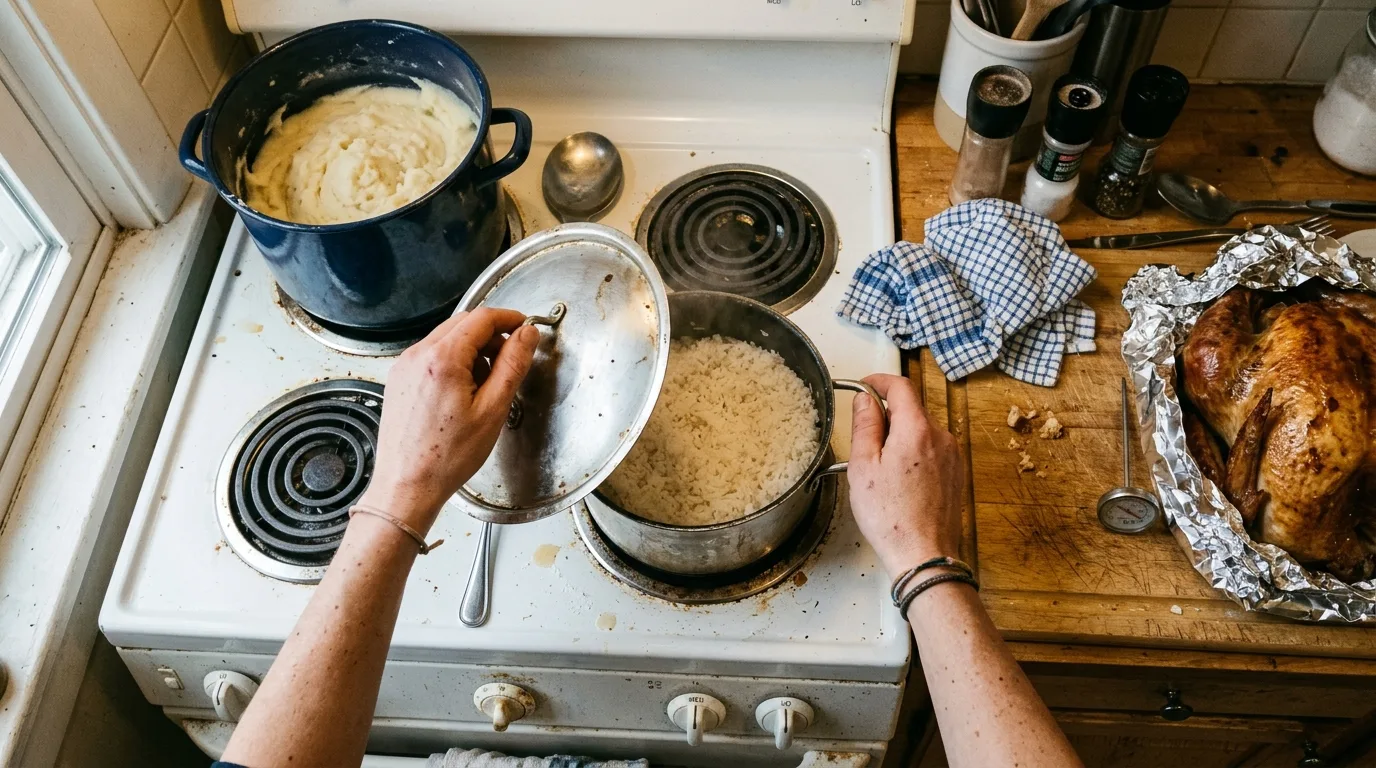
To get all dishes ready at the same time, pick the minute you will serve, then count backward from it to a written start time for every dish. Rice, mashed potatoes and casseroles can finish early and wait, covered and hot, until that minute. Only the one or two dishes that can't wait, like quick green vegetables or anything crisp, are still cooking at the end. That one change takes most of the panic out of the last ten minutes.
What you'll have when you finish
- The recipes you plan to cook, with their stated cook and rest times
- A serving time you will actually stick to
- A sheet of paper and a pen (a notes app works, but paper stays visible next to the stove)
- An instant-read food thermometer if you are roasting a turkey or any large cut
- Your final guest count
- MiseMate on your iPhone; the free features cover everything in this guide
Why is one dish always cold or overdone when the rest is ready?
A recipe tells you how long a dish takes. It never tells you when to start it. Each one also assumes it has you, the stove and the oven all to itself. Put three recipes side by side and they fight over the same burner, the same oven temperature and the same pair of hands at 6:55. So you write one schedule that covers all of them.
How to get all dishes ready at the same time, step by step
Step 1: Pick a serving time and write it at the top
Step 2: Find your anchor dish
Step 3: Split each recipe into hands-on and hands-off time
Step 4: Sort every dish into "holds" or "serve now"
Step 5: Write the backward schedule and check for clashes
Step 6: Put the recipes in MiseMate and scale them
Step 7: Run each dish from Cook Mode when its time comes
Step 8: Use the anchor's resting time to finish everything else
A weeknight example: chicken, rice and greens on the table at 7
The times below are placeholders. Say your chicken thigh recipe says 35 minutes in the oven plus 5 to rest, the rice says 20 minutes plus 10 off the heat with the lid on, and the greens take about 5 minutes in a hot pan. Swap in the numbers from your own recipes and the shape of the schedule stays the same.
- 6:05
- Oven on (check how long yours takes to heat). Season the chicken.
- 6:20
- Chicken in. Rinse the rice, wash the greens, slice the garlic.
- 6:30
- Rice on. Lid on, heat down once it boils.
- 6:50
- Rice off the heat. Leave the lid on.
- 6:55
- Chicken out to rest. Greens into a hot pan.
- 7:00
- Fluff the rice, slice the chicken, serve.
Read down the right-hand column and you'll see that two things never need your hands at once. The rice is a holder, so it finishes ten minutes early on purpose and keeps cooking in its own steam. The greens are the serve-now dish. They go on during the chicken's rest and reach the plate still bright.
Which dishes can wait and which must go out right away
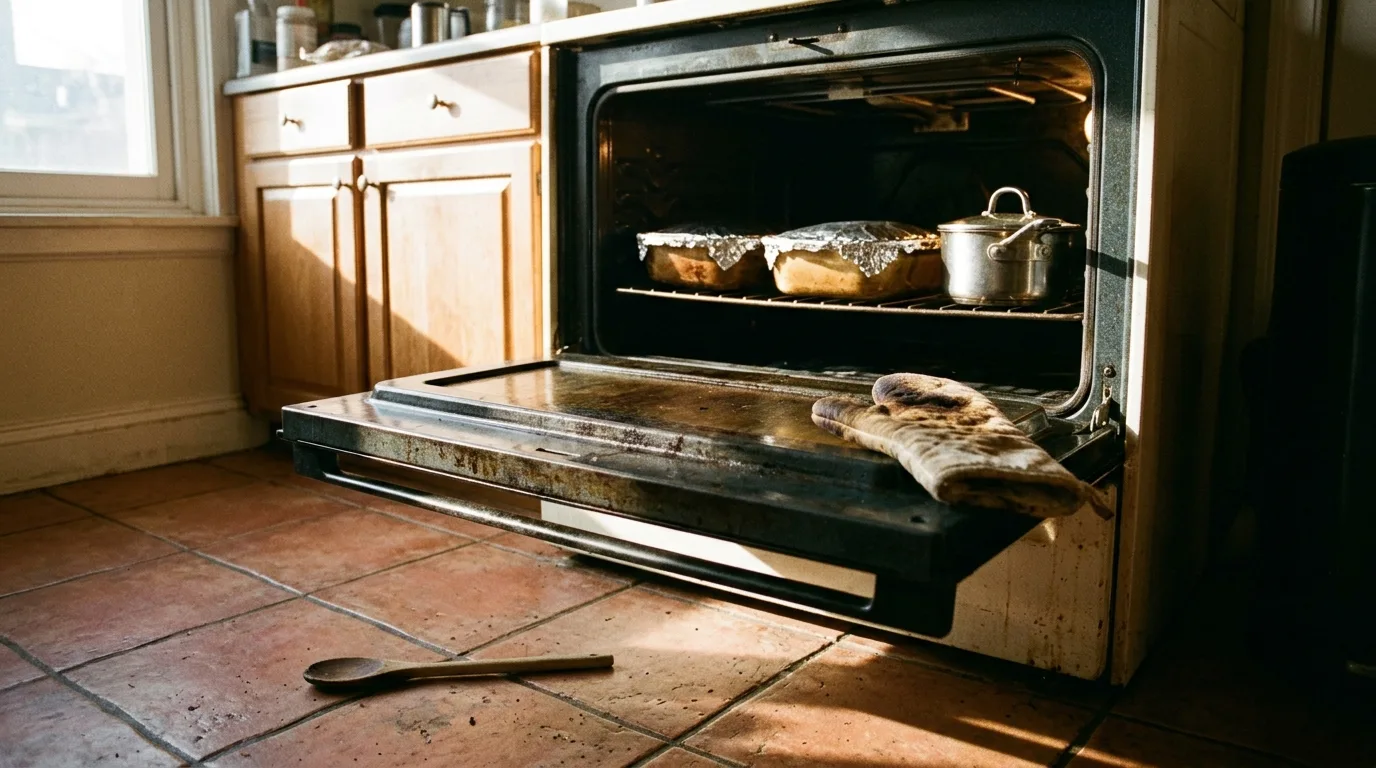
- Holds well, covered, in a low oven or on the back of the stove: mashed potatoes, rice off the heat with the lid on, stuffing, braises and stews, sweet potato casserole, gravy (it reheats on the stove), roasted root vegetables (they soften a little)
- Serve right away: pasta, anything fried or with crisp skin, fish and shellfish, dressed green salads, quick-cooked green vegetables you want bright
- Make earlier and serve cold or at room temperature: pie, cranberry sauce, salad dressing, bread and rolls
Holding comes with a rule. The USDA says to keep hot food at 140°F or above in the oven, a heated chafing dish, a warming tray or a slow cooker, because bacteria grow quickly between 40°F and 140°F. A covered pot cooling on the counter doesn't count, because it drops into that range as it sits.
Thanksgiving: one oven, a turkey and the sides that need it too
In Butterball's 2026 Togetherness Report, a Circana survey of 1,374 U.S. adults, 84% of hosts plan to serve turkey, and the favorite parts of the meal were turkey (45%), stuffing (42%), pie (29%), sweet potatoes (25%) and potatoes (22%). Four of those five can want the oven. The same report puts the average gathering at 10 people, up from 9, so set your servings to the real headcount before you build the shopping list.
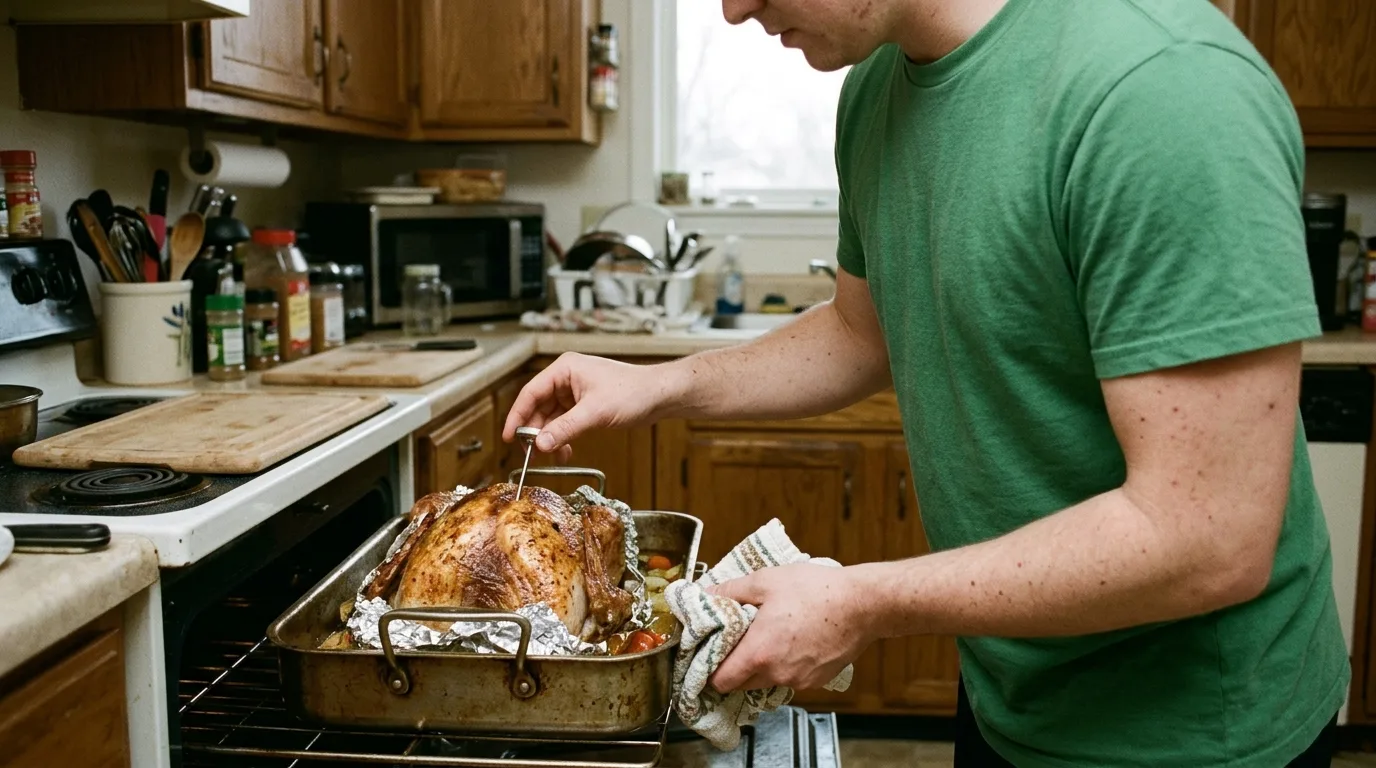
The turkey is the least predictable line on your page. The USDA says a food thermometer is the only sure way to know it's done: 165°F in the thickest part of the breast and the innermost part of the wing. Treat the recipe's time as an estimate and start checking the temperature before it's up. Schedule the bird to come out early enough that its rest can absorb a surprise.
Then take dishes out of the oven queue on paper. Bake the pie the day before. Make mashed potatoes on the stove and hold them covered. Stuffing and sweet potatoes go into the oven the moment the turkey comes out to rest. If two oven dishes call for different temperatures and you can't run them one after the other, move one to the stovetop, a slow cooker or the day before. If that make-ahead work is new to you, our guide to cooking several things in one afternoon covers the habits that help.
Last, write names on the schedule. The 2026 Butterball report found 85% of hosts would rather guests offer help than have to ask, yet only 38% ask, and final cleanup is the job hosts want help with most (49%). A line that reads "6:40, Sam mashes potatoes" is easier to hand over than "let me know if you need anything".
What do you do when the main is late or the sides finish early?
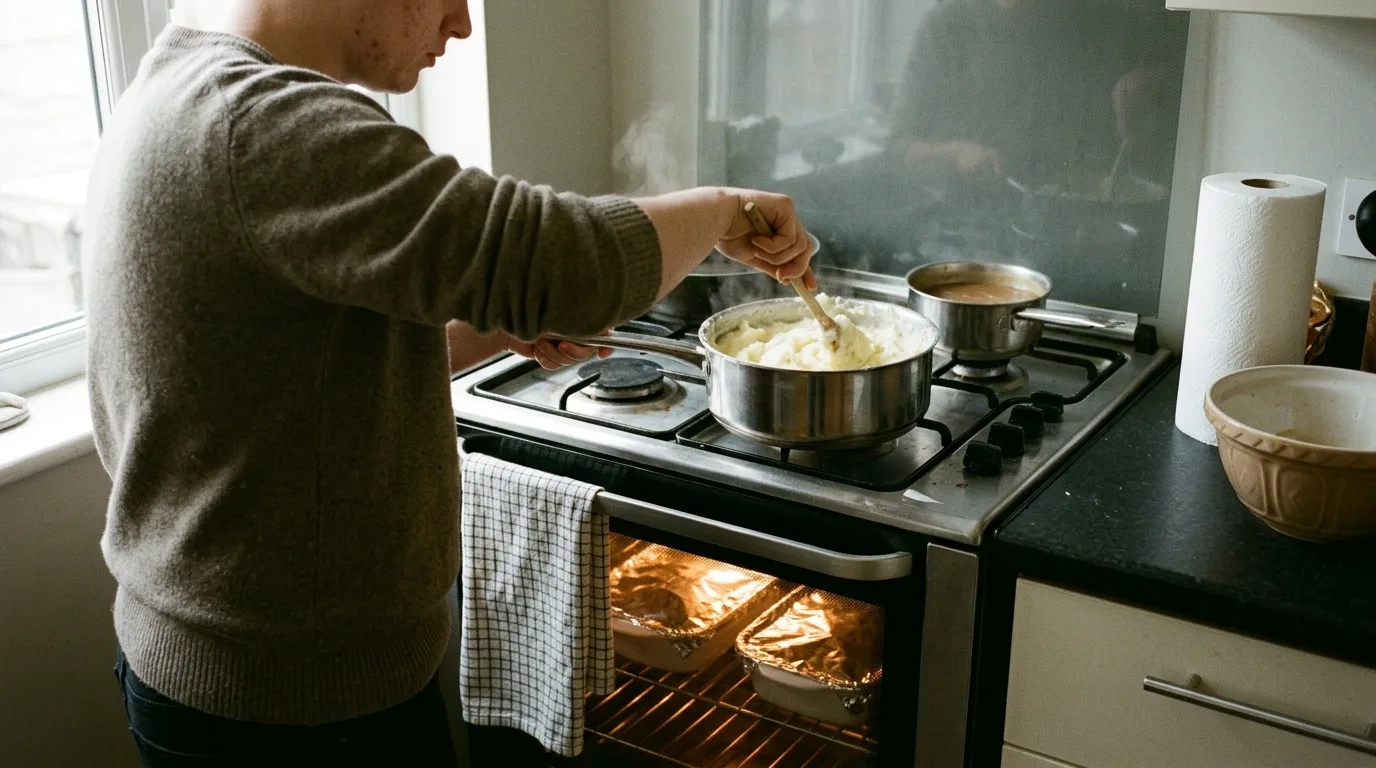
The sides are done and the main isn't
Cover them and keep them at 140°F or above in a low oven, a slow cooker on warm or a warming tray. Leave rice in its pot with the lid on. Don't let them sit on the counter. The USDA says perishable food left at room temperature for more than two hours should be thrown out, and that window drops to one hour above 90°F, which a crowded kitchen can reach.
The main is running late
Move the serving time and tell people. Cranking the oven to catch up tends to dry out the outside before the middle is done. Hold off on the serve-now dish until the main is out and resting, put out something cold to eat, and let the holders keep holding.
The oven is full and everything is behind
Take out the dish that reheats best. Mash goes to the stovetop, gravy to a saucepan. Each dish you move gives the others back some of the oven's heat. If a dish fails outright, drop it and serve the rest on time; your guests only see what reaches the table.
What MiseMate does here, and what it doesn't
MiseMate won't merge your recipes into one combined timeline. That page is still yours to write, and if you cook from memory and know your timings cold, paper alone is enough. The app handles everything around the page: recipes saved in one place instead of six browser tabs, quantities scaled to the guest count, one grocery list, and Cook Mode keeping each dish's timers so you can watch the clock on the wall. Recipe browsing, scaling, grocery lists and Cook Mode are free. Premium adds the meal planning calendar and the AI assistant, which can rewrite a recipe for a guest's diet or suggest a substitution when you're out of something. If you're comparing apps first, here is what to look for in a recipe and meal prep app for iPhone.
Common questions
What time should I start cooking for a 7:00 dinner?
How do I keep side dishes warm while the main dish finishes?
How do I cook three dishes with only one oven?
Do I need MiseMate Premium to follow this method?
How long can food sit on the table once dinner is served?
Sources
This article was drafted with AI assistance and reviewed by a human editor before publishing.