Dana Okafor works nights in an ER, which means her commute home happens at 7:42 in the morning, half-asleep, half-wired, riding a train full of people who look exactly as tired as she feels. For a long time she filled that twenty-minute ride the way most of us do: five different apps, a dozen half-read headlines, a scroll that ended only because her stop arrived. She never remembered any of it. What she wanted wasn't more content. It was something with a beginning, a middle, and an end that actually landed before the doors opened.
The problem wasn't boredom, it was shapelessness
Dana didn't need distraction. Twelve hours in a trauma bay gives you plenty of stimulation. What she was missing on the ride home was closure — a small task with a clear finish line, something she could complete and set down before she walked in her front door. Her feeds never closed. They just kept feeding. A coworker mentioned Casefile Daily, a noir mystery app built around exactly one case a day, and Dana figured it couldn't hurt to try it for a week.
Twelve seconds of noir before the grid
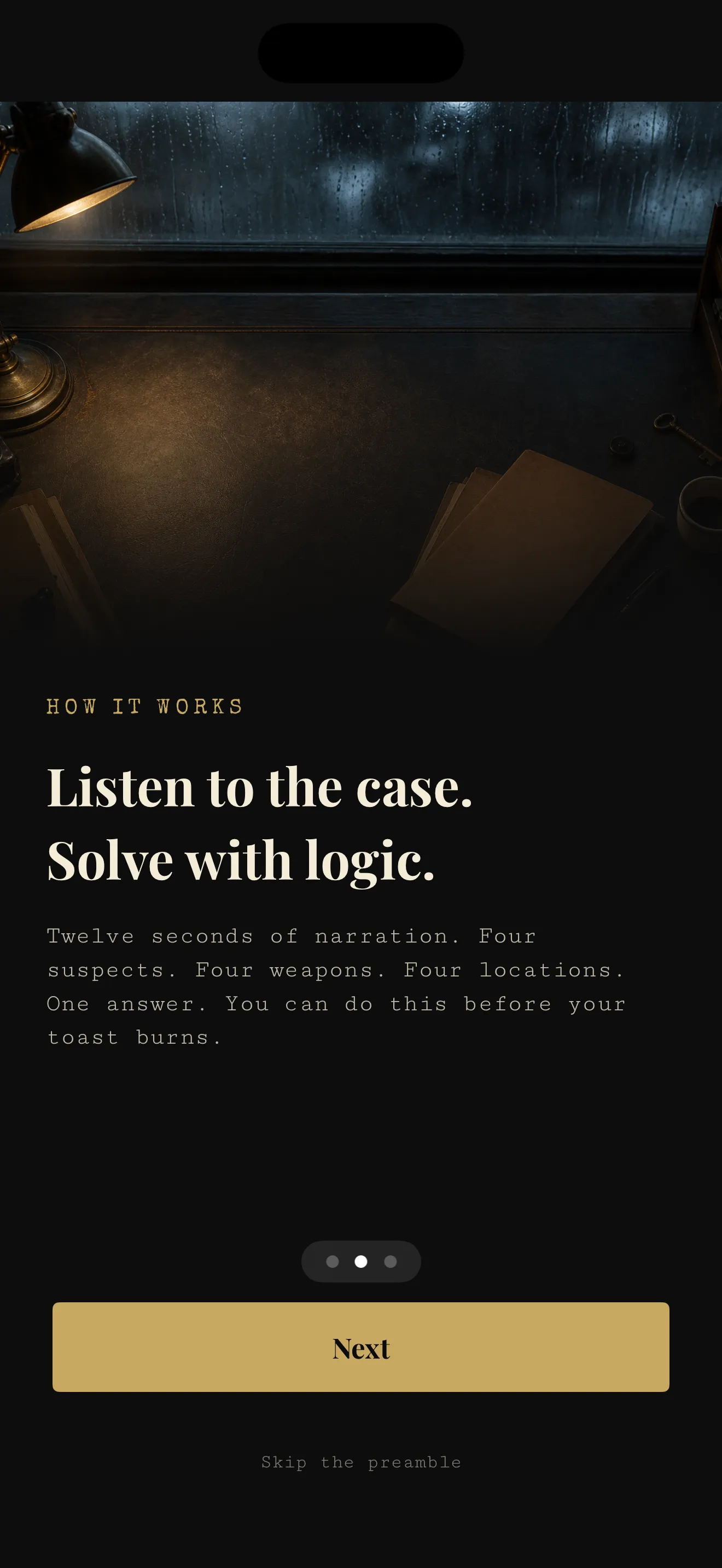
The first thing that struck her wasn't the puzzle. It was the voice. Each case opens with a pre-recorded hardboiled detective narrating the scene, twelve seconds of atmosphere with subtitles running underneath — a body in a rain-slicked alley, a suspect list, a motive nobody's saying out loud. Nothing generated on the fly, nothing rushed. Just enough story to make the case feel like a case, not a worksheet.
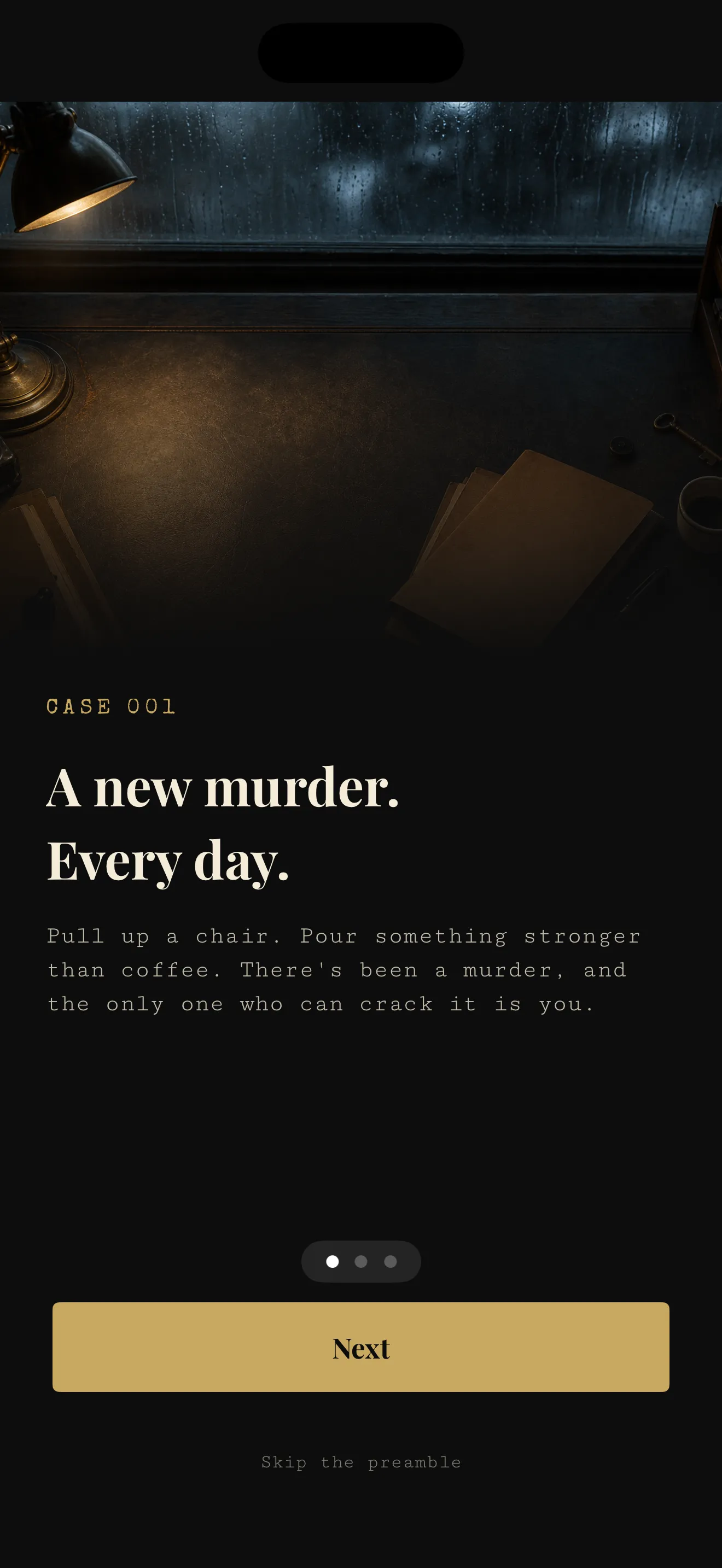
Then the grid appears, and the noir gives way to logic. Suspects, weapons, locations, alibis — the same deduction-grid format Dana half-remembered from childhood puzzle books, except now it comes wrapped in atmosphere instead of graph paper. She marks what's ruled out, cross-references what's confirmed, and works toward the one solution the case actually has.
Solving without second-guessing
What kept Dana coming back wasn't difficulty, it was trust. Every case is built to have exactly one valid solution, so when she follows the logic through to an answer, she's not guessing and hoping. She's either right because the deductions hold, or she's missed a clue and can retrace her steps. There's no luck involved, which turns out to matter a lot to someone whose job punishes guessing.
I don't need my commute to entertain me. I need it to end on purpose.
The streak she actually wants to keep
A few weeks in, Dana noticed she was checking her streak the way she used to check notification counts, except this one felt earned rather than anxious. She texts her coworker a screenshot of her streak number most mornings, never the answer. That's built into the habit loop on purpose: you can brag about consistency without ruining the case for anyone else still working through it that day.
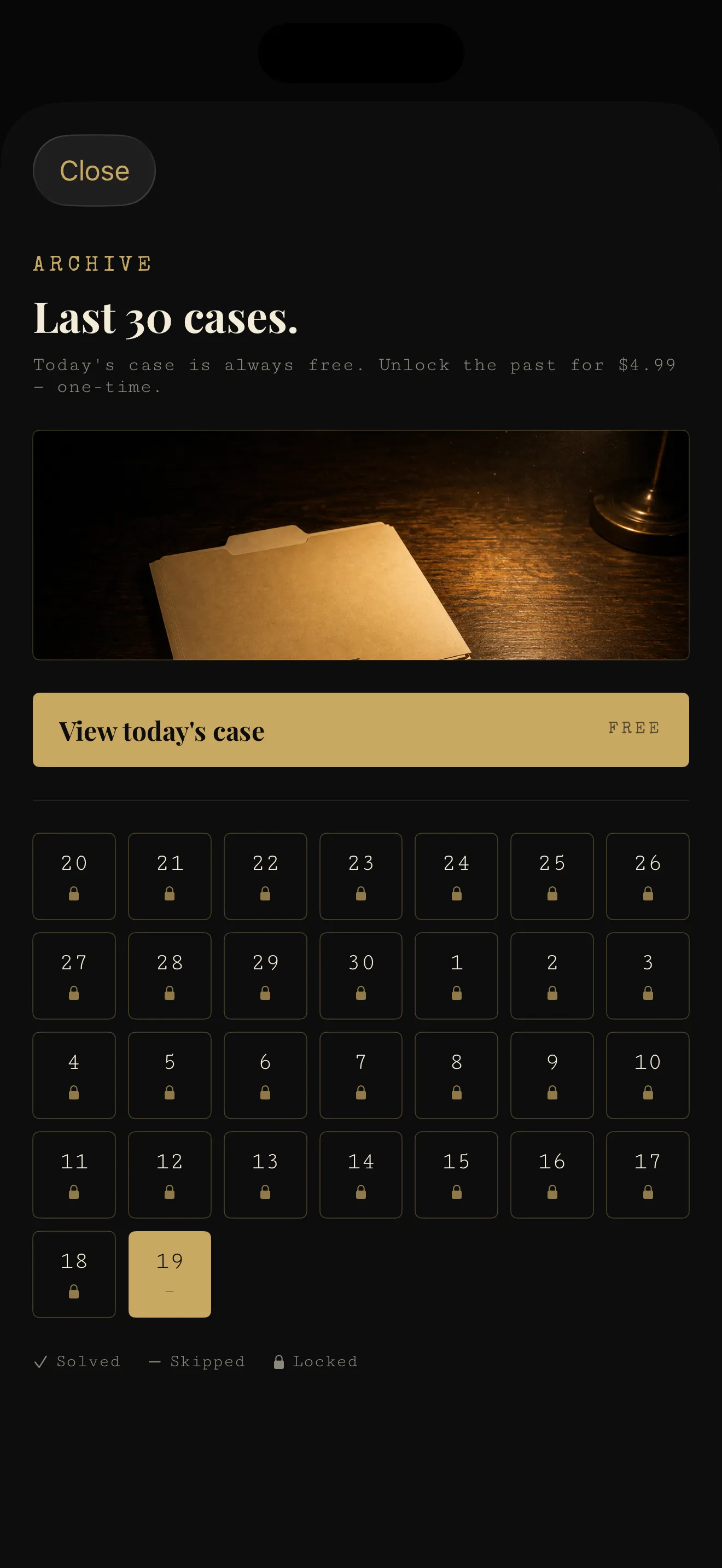
On weekends when she has more time, she dips into the case archive to replay older mysteries she missed during a rough stretch of shifts. It's the same five-minute ritual, just stacked a few times in a row, and it scratches an itch that a bottomless feed never could — the itch to actually finish something.
What changed, concretely
- Her commute now has a natural stopping point instead of ending mid-scroll
- She remembers something specific from the ride, not just a blur of headlines
- Sharing her streak gives her a small daily connection with a coworker, spoiler-free
- Weekend catch-up through the archive removes the guilt of a missed day
None of this required a subscription or a new daily obligation stacked on top of an already demanding schedule. The cases she wanted came bundled at launch, a new one drops for everyone at midnight UTC, and the only optional purchases are one-time unlocks for going ad-free or opening the full archive whenever she's ready for it. For readers curious about how the format holds up across different routines, the deeper resource guide on daily logic mystery games covers the narration and grid mechanics in more detail.
If you're weighing Casefile Daily against other ways to spend a short commute, it's worth seeing how the format compares to habit-style apps more broadly — the comparison category is a good place to start, and our full breakdown in this review of Casefile Daily gets into what a week of daily cases actually feels like beyond the first impression.
Common questions
Do I need to play every single day to keep it useful?
Can I share that I solved a case without spoiling it for others?
Is the narration different every time, or the same recording for everyone?
This article was drafted with AI assistance and reviewed by a human editor before publishing.