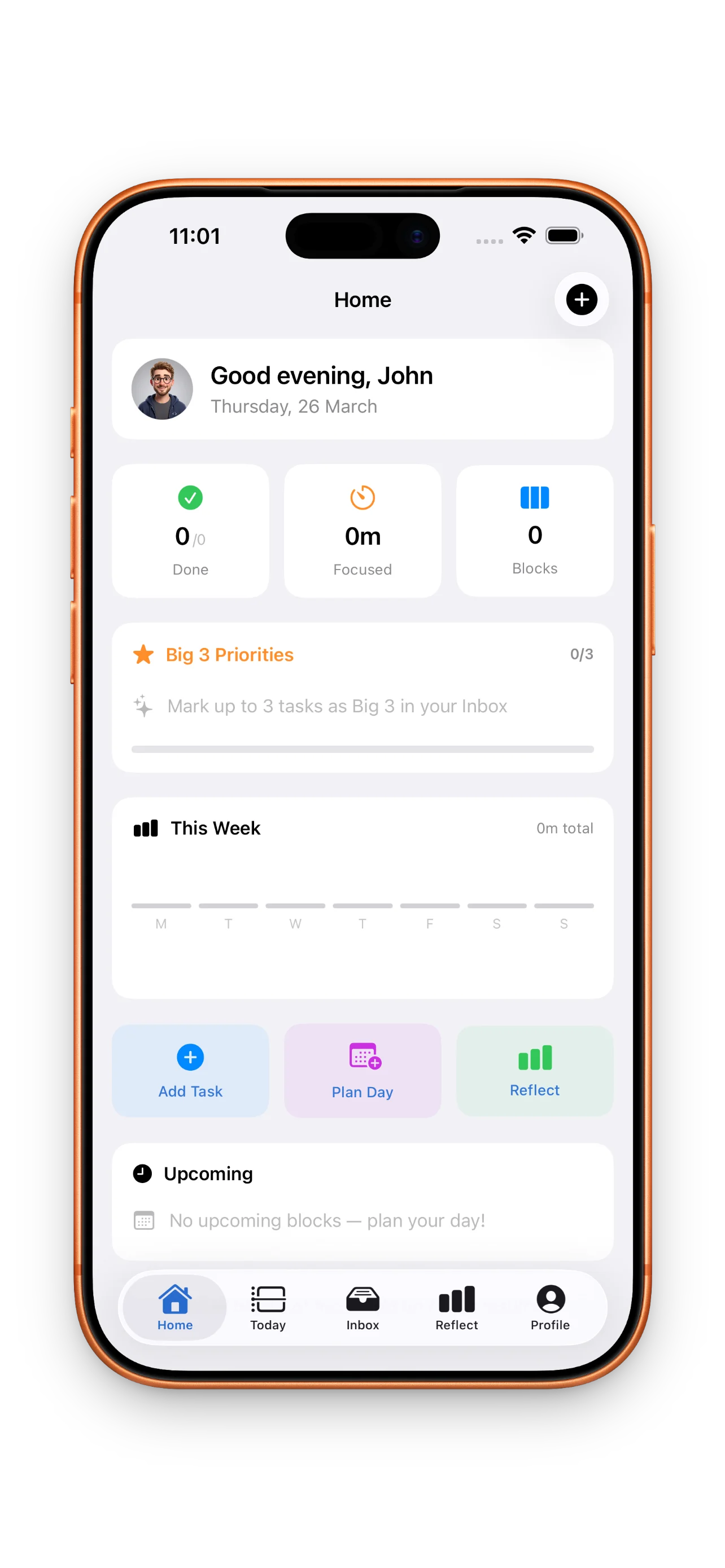
You open DayBox for the first time and see a clean timeline staring back at you. No complicated setup. No onboarding funnel. Just a quiet invitation to plan your day. Over the next few hours, you'll move through five small rituals—capture, prioritize, schedule, focus, and reflect—that turn a loose to-do list into a genuinely achievable plan. By the end of the day, you'll know exactly which tasks you finished and which ones slipped. That clarity is where real momentum starts.
Step 1: Capture everything in the inbox
The first ritual is capture. Throughout your morning—or even before you open DayBox—ideas, tasks, and requests land in your brain. Email, Slack, that thing your manager mentioned. Instead of trying to mentally sort them all into a timeline, you dump them into the inbox. This is the lightweight part. No estimates yet. No time slots. Just a growing list of stuff that needs doing.
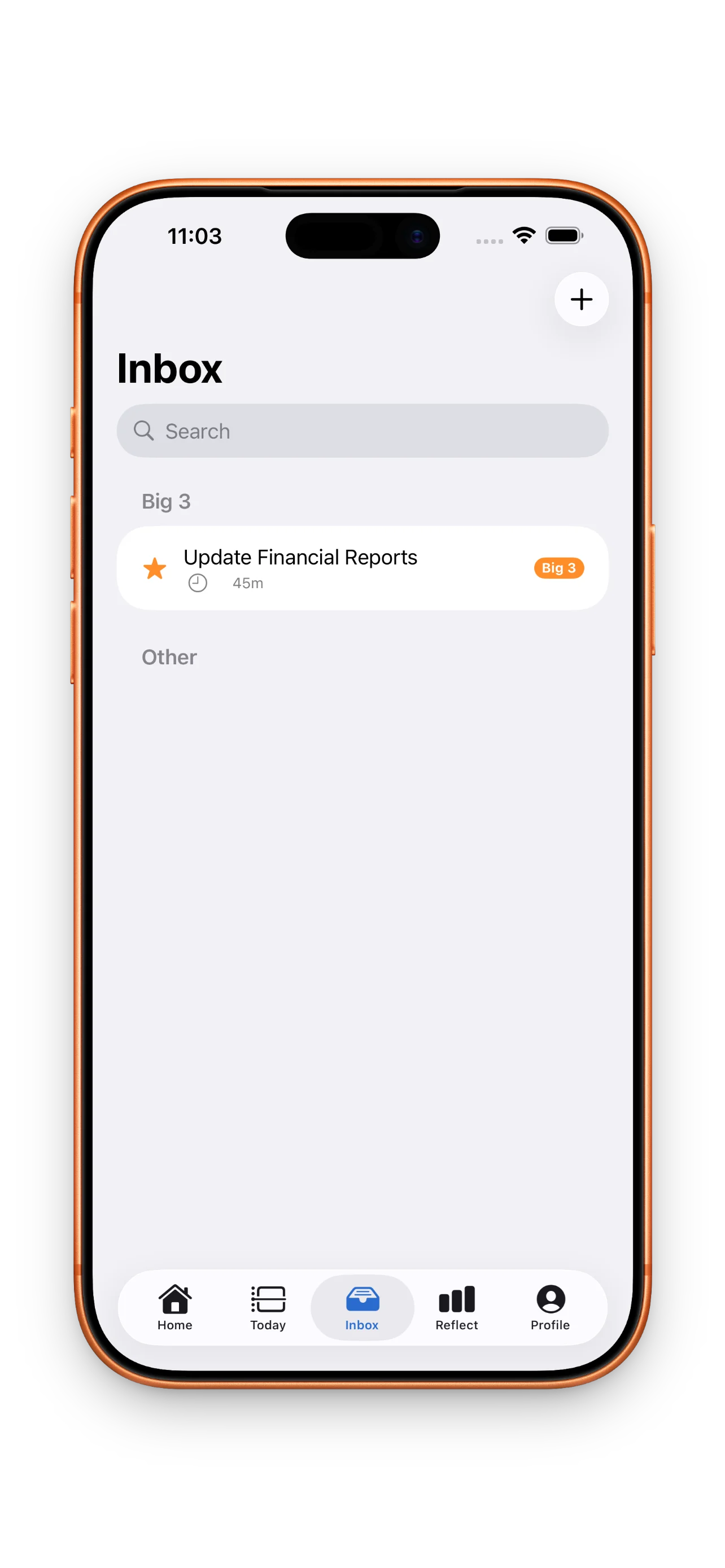
The inbox keeps your timeline uncluttered. You're not staring at a sprawling list of 20 things. You're looking at today's actual plan. Everything else waits safely in the inbox until you're ready to tackle it.
Step 2: Pick your Big 3 and build the timeline
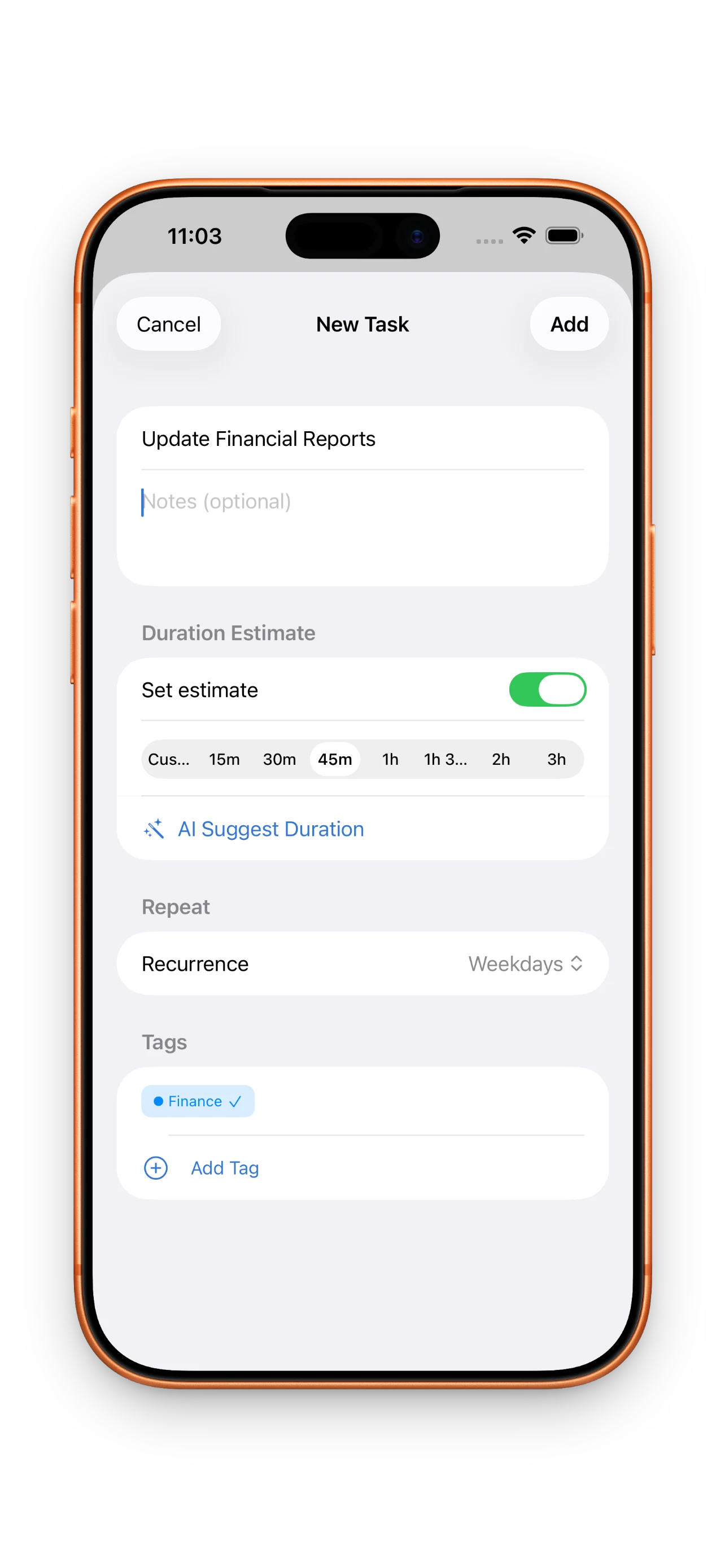
Now you prioritize. DayBox calls this the Big 3—three tasks that, if nothing else gets done today, you'll know the day was a win. These aren't necessarily the hardest or longest tasks. They're the ones that matter most. Once you've chosen them, you start pulling tasks from your inbox onto the timeline.
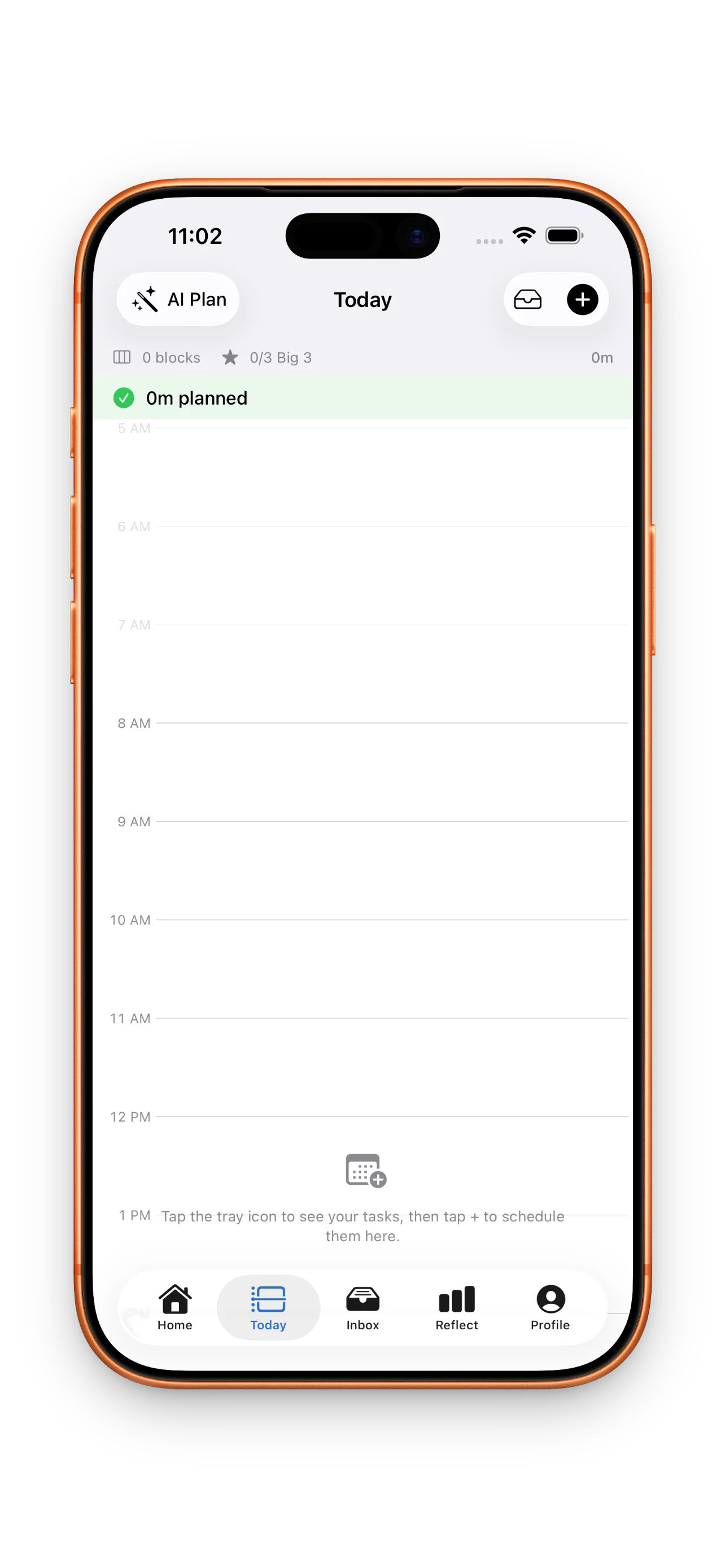
Timeboxing works because it forces you to be honest about what's possible—not in theory, but in the actual hours you have today.
The timeline shows your calendar events right alongside your planned blocks. If you have a 30-minute meeting at 10am and you estimate a task at 45 minutes, you see that conflict immediately. You can drag tasks around, adjust estimates, and build a plan that actually fits. This is the core of how to build a realistic daily plan with DayBox—you're not dreaming up an ideal day. You're building the day you can actually live.
Step 3: Run focus timers on each block
It's 9am. Your first task is a 60-minute design review. You tap the block and start the focus timer. DayBox counts down, keeping you anchored to what you said you'd do for the next hour. No switching tabs to check messages. No drifting into related-but-different work. The timer is a contract between morning-you and right-now-you.
You can pause, skip, or extend if something genuinely changes. But the default is: focus on this one thing for the time you estimated. It's a simple mechanic that builds real focus habits over weeks and months.
Step 4: Reflect on planned vs. actual
By the end of the day, something remarkable happens. You open the reflect view and see your timeline side by side with what actually happened. You planned four 45-minute blocks and a Big 3. You completed three blocks on time, spent 20 extra minutes on one, and deferred the fourth to tomorrow. For the Big 3: two are done, one is in progress.
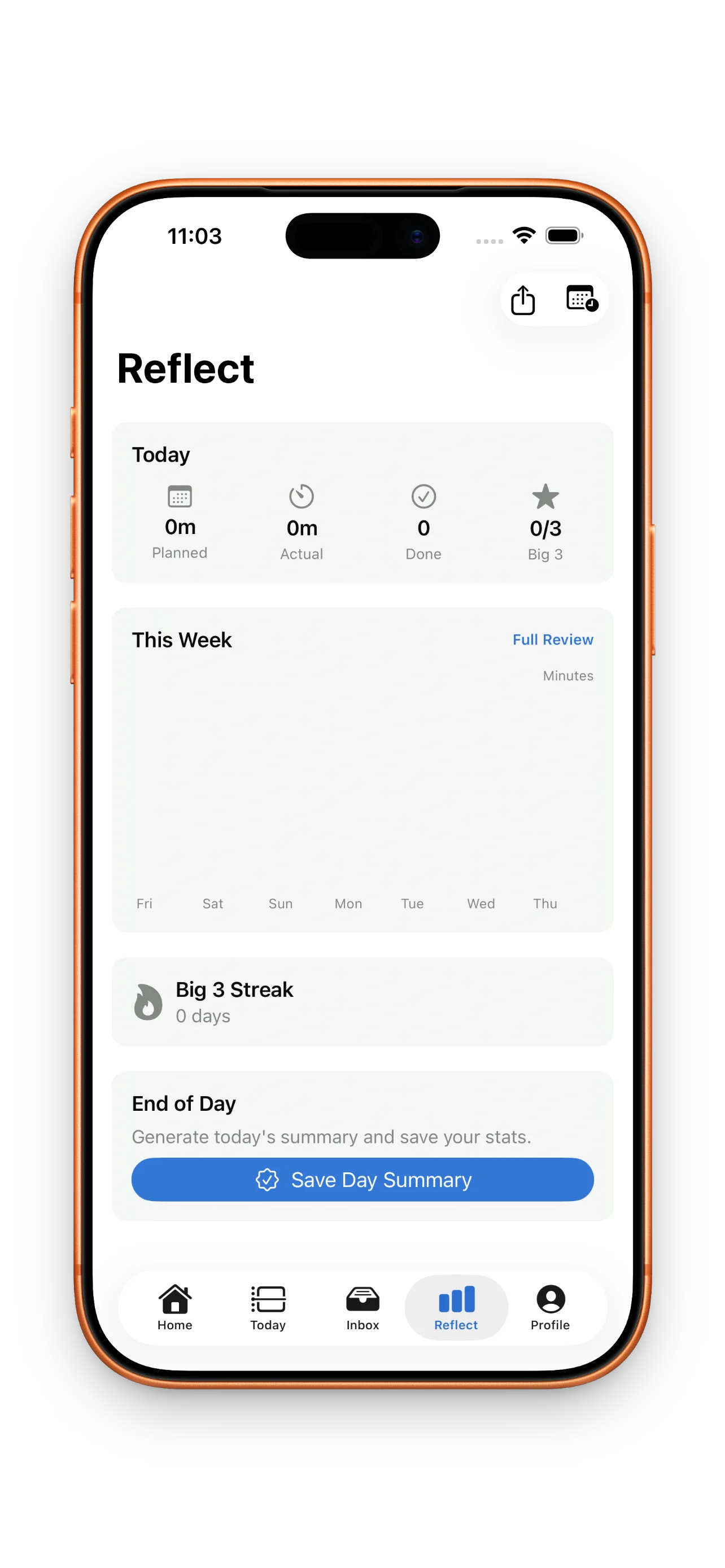
This is where the feedback loop closes. You see patterns. Maybe you consistently overestimate deep work blocks, or maybe meetings eat more time than you budget. Maybe you finish your Big 3 most days, but urgent stuff crowds out mid-priority work. Each day teaches you something about the gap between your plan and reality—and that's where learning happens. Master your day with DayBox timeboxing tips to refine your estimates and build better plans over time.
Step 5: Build momentum with streaks and milestones
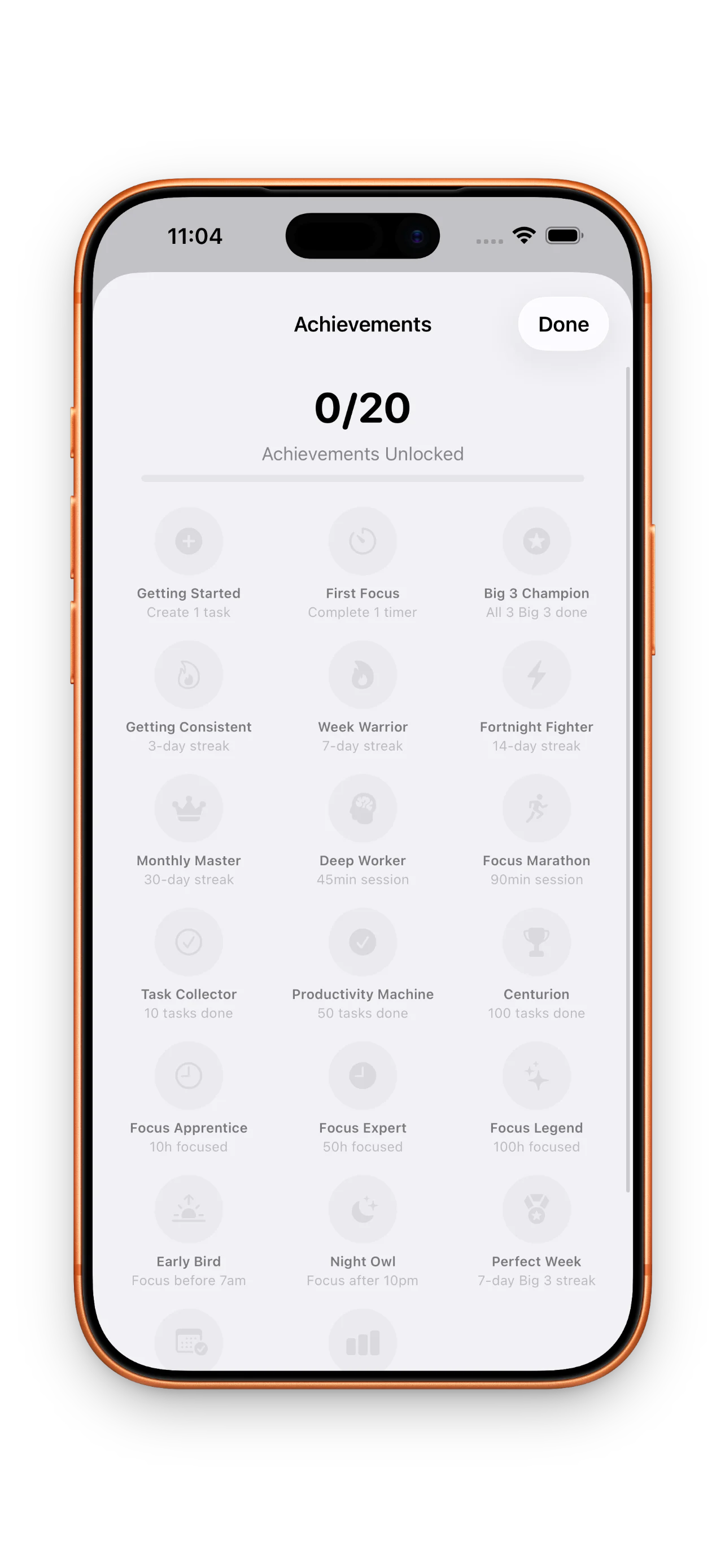
As you move through day two, day three, and beyond, DayBox tracks your momentum. You earn streaks for planning every day, completing your Big 3, and running focus timers. You unlock milestones—small badges that remind you you're building a real habit. None of this is required. But for people who thrive on consistency, these markers turn the daily ritual into something tangible.
Optional: customize and upgrade
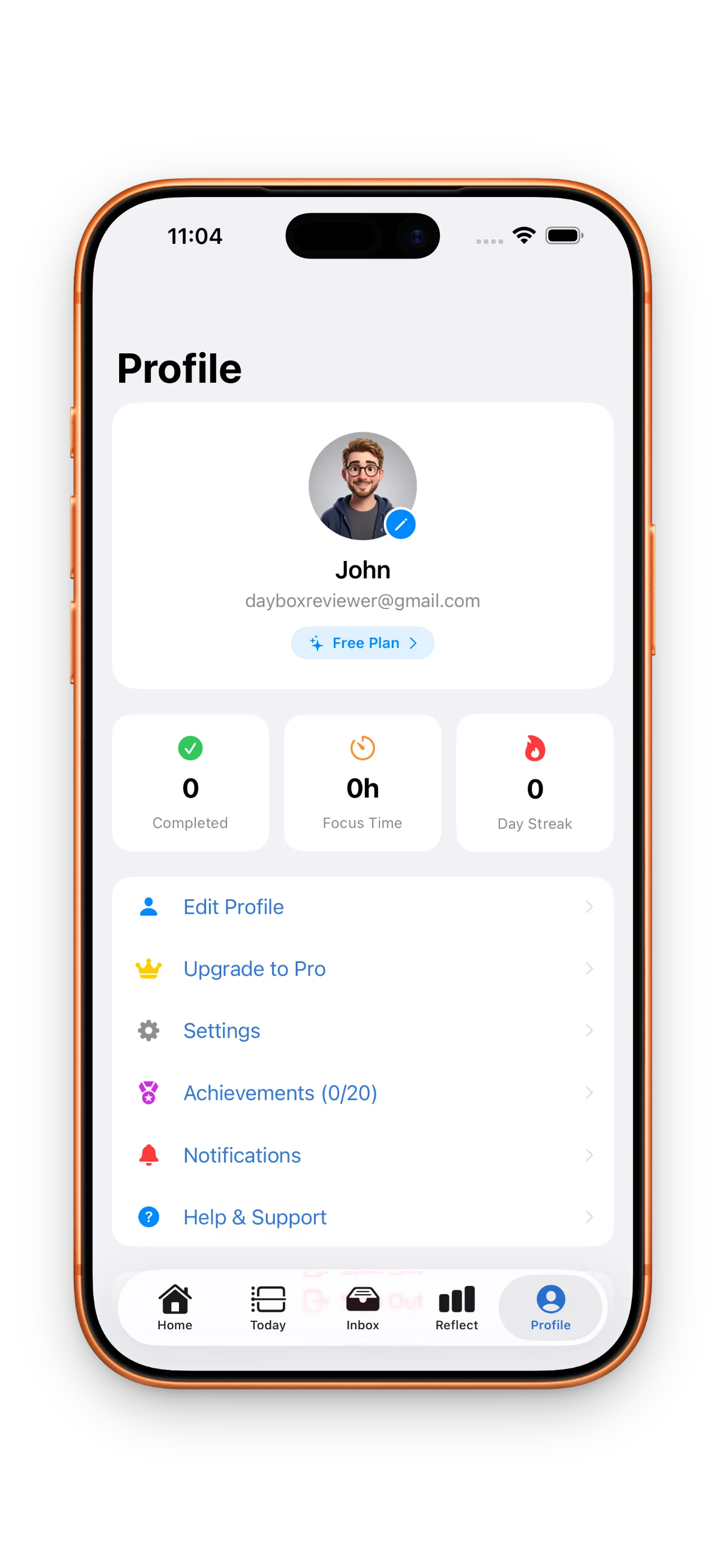
Once you've run a few days, you might want to personalize. DayBox lets you pick themes, adjust colors, and set your profile. If you want deeper analytics or advanced planning features, a Pro subscription unlocks those tools. But the core experience—capture, prioritize, schedule, focus, reflect—works beautifully on day one and stays that simple.
This article was drafted with AI assistance and reviewed by a human editor before publishing.