
The mental load—the invisible work of remembering, planning, and orchestrating household life—rarely shows up in productivity apps. Most chore trackers treat tasks as if they're all equal, missing the real imbalance: one partner usually conceives of the need, plans the solution, and executes it, while the other just responds. FairShare breaks that pattern. Built on Fair Play principles, it splits not chores but full ownership cards, adding a Brain Dump interceptor and weekly check-ins so couples can actually see the imbalance and negotiate it without waiting for resentment to boil over.
Who This Is For
FairShare is built for couples—married, partnered, long-term—who recognize that one person often carries more of the invisible work and want a structured way to talk about it. If you've felt frustrated that you're the only one remembering dentist appointments, researching schools, or planning meals, or if you're the one who's always the "household project manager," this app is for you. It's also valuable for couples who want to be intentional about fair distribution before resentment sets in, or those recovering from a major conversation about mental load who need a system to keep things fair week to week.
You don't need to be already familiar with Fair Play to use it—the app walks you through the core ideas—but if you've read Reese's book or engaged with the Fair Play framework, you'll recognize the language and structure immediately. See how FairShare makes mental load visible for more on the framework.
What It Does Well
Full Ownership Cards
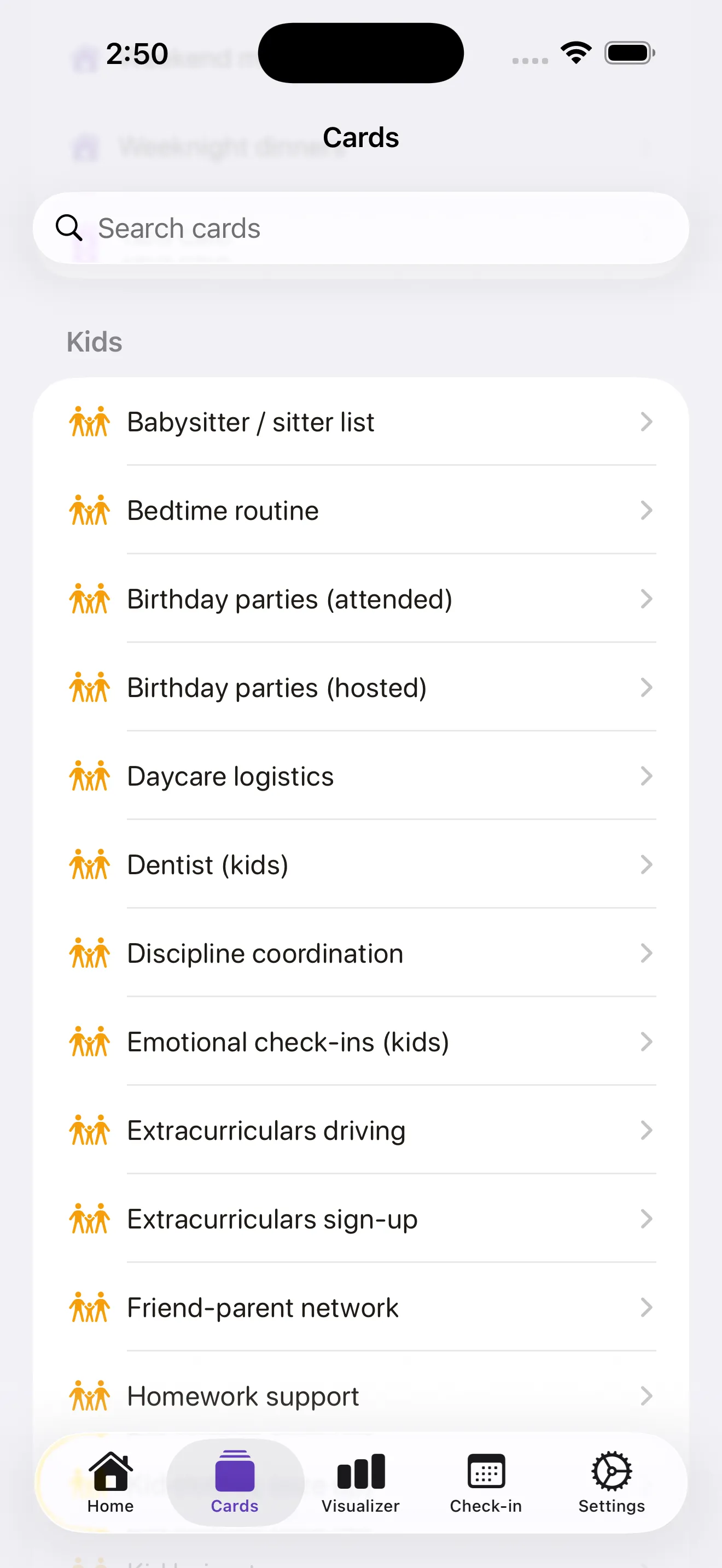
The core unit isn't a task or a chore. It's a card that covers Conceive, Plan, Execute (CPE)—three stages where responsibility matters most. One person owns the whole arc: thinking of the need, figuring out how to solve it, and making it happen. This is the insight that makes FairShare different from a checklist. You can assign tasks forever and still have one partner mentally managing everything. The card model makes that visible.
Brain Dump Interceptor
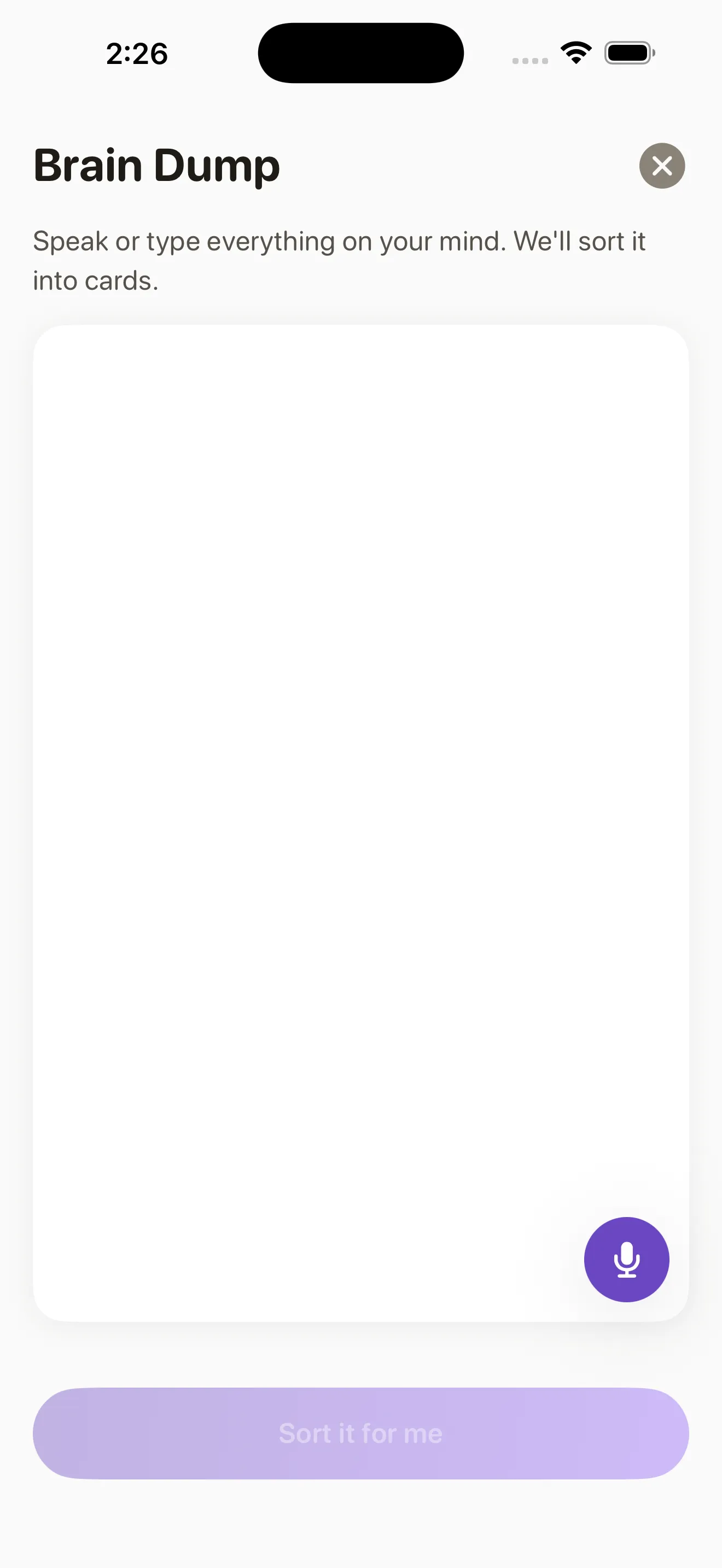
One of the best stress points in any household is the moment someone thinks of a new task and drops it into the mental load. "Hey, did you remember we need to book the car in?" or "Oh, the kids' camp forms are due next week." FairShare's Brain Dump feature lets you capture these thoughts as they arrive. The AI interceptor then suggests which card it belongs to (or lets you create a new one), routing it to the right owner without the interrupt-and-delegate dynamic that creates fatigue and resentment.
Weekly Check-Ins
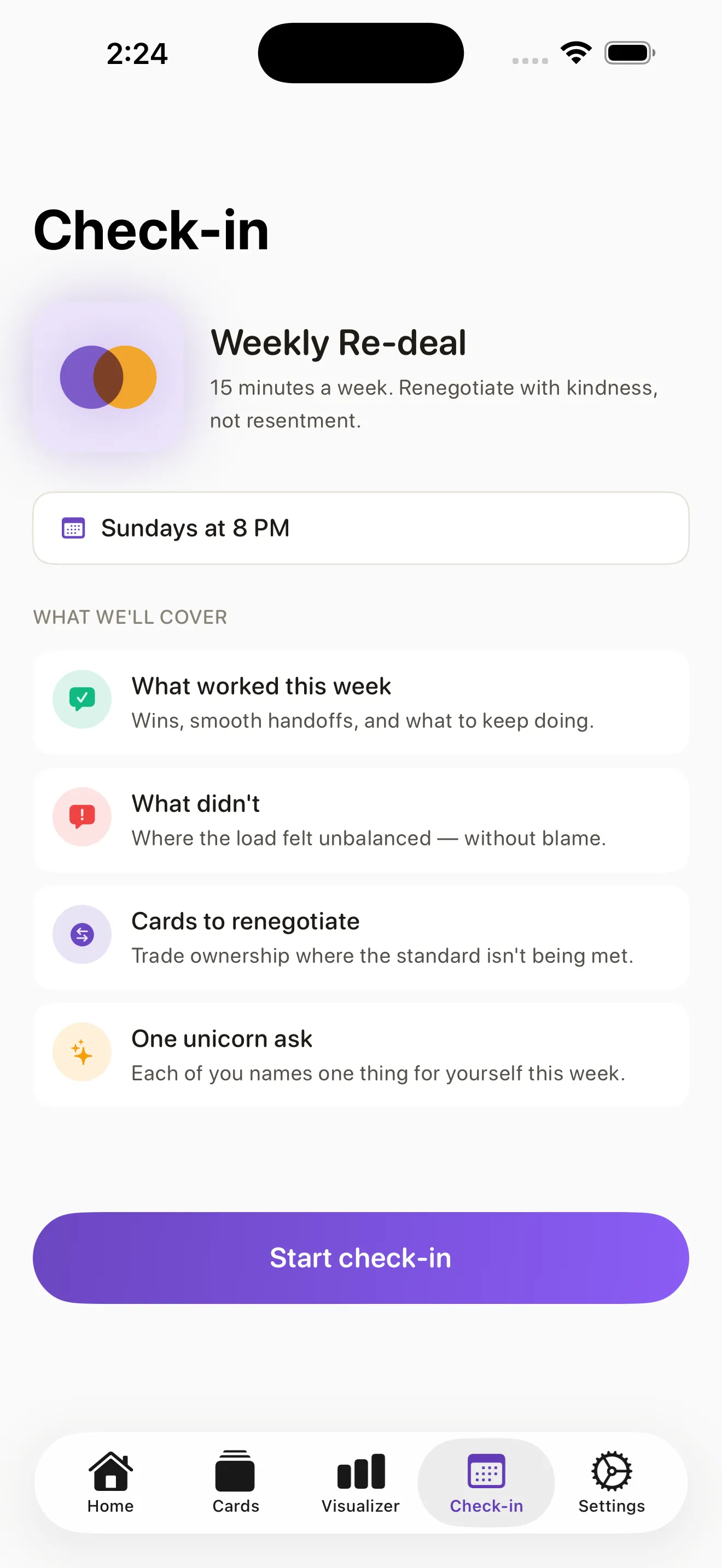
The weekly check-in is built to be short and structured. Instead of letting tension build until you have a "mental load fight," you answer a few prompts: What shifted? Are there swaps or asks? Any updates to Master Standard of Care (MSC) expectations? It's a rhythm that creates permission to renegotiate without crisis. The prompts are specific enough to keep you on track but not so long that it feels like homework.
The Visualizer
Data alone won't change a relationship, but visibility helps. The Visualizer shows you who owns what, by category and percentage. If one partner is carrying 65% of the mental load and the other 35%, the imbalance becomes hard to deny or rationalize away. It's a tool for conversation, not judgment—but it's honest.
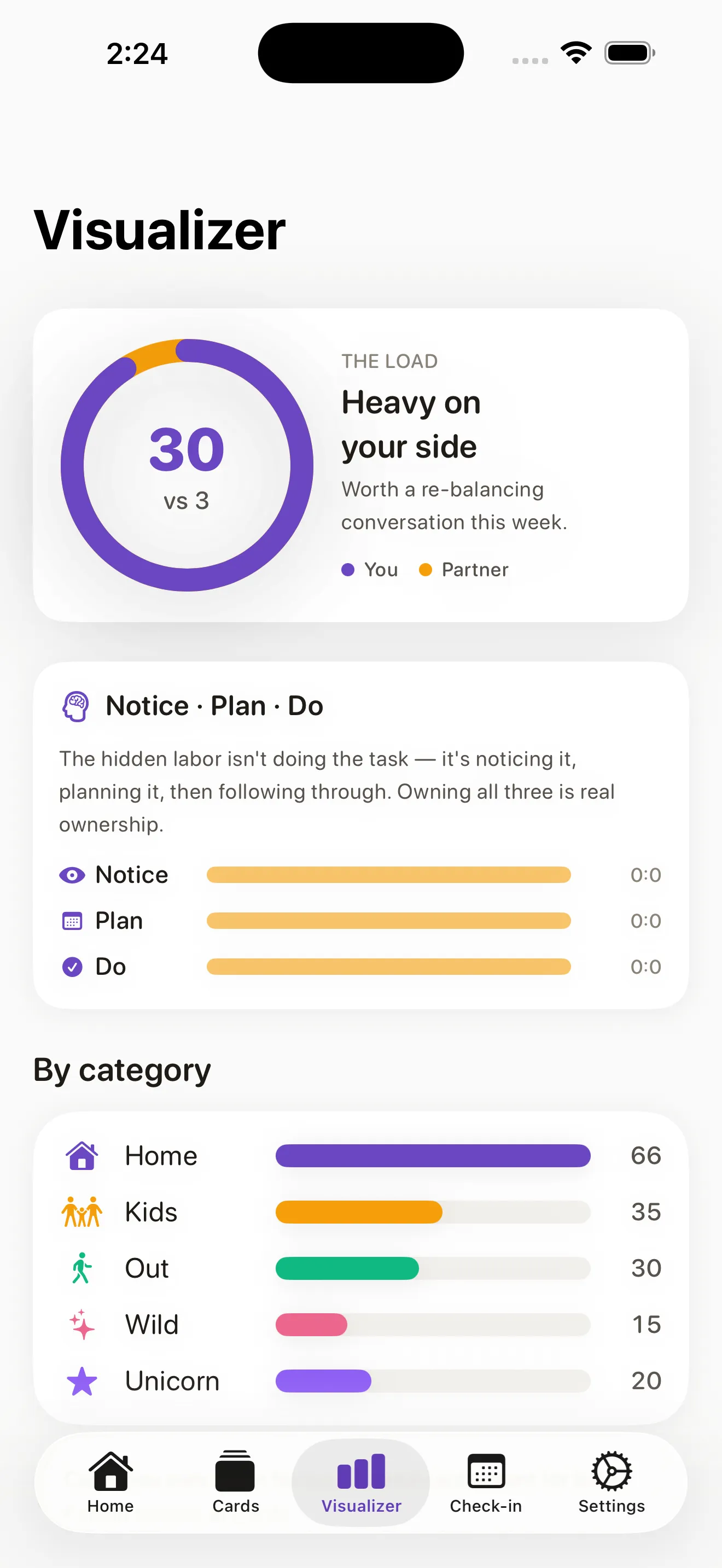
One partner usually conceives of the need, plans the solution, and executes it, while the other just responds. FairShare's card model makes that visible.
What to Keep in Mind
FairShare is a tool for households that are already willing to talk about mental load—or at least curious about why it matters. If your partner isn't bought in on the problem, they may not engage with the app, and it can't work solo. There's also a learning curve to understanding Fair Play concepts and how they translate to your household. The app does a good job onboarding you, but it's worth reading or watching some Fair Play material to get the most from it.
It's also worth noting that FairShare doesn't solve the underlying task work—the dishes, the laundry, the admin calls. What it does is make visible who's thinking about it, so you can redistribute that thinking work. That's the harder problem, and it requires actual conversation and behavior change, not just a better UI.
Verdict
If you and your partner have felt the weight of unequal mental load—or want to prevent it from becoming a problem—FairShare is worth trying. It's built with care, it respects the framework it's based on, and it gives you a language and rhythm for fairness. It won't fix a broken relationship on its own, but it can help a willing couple see and share the work that actually matters.
This article was drafted with AI assistance and reviewed by a human editor before publishing.