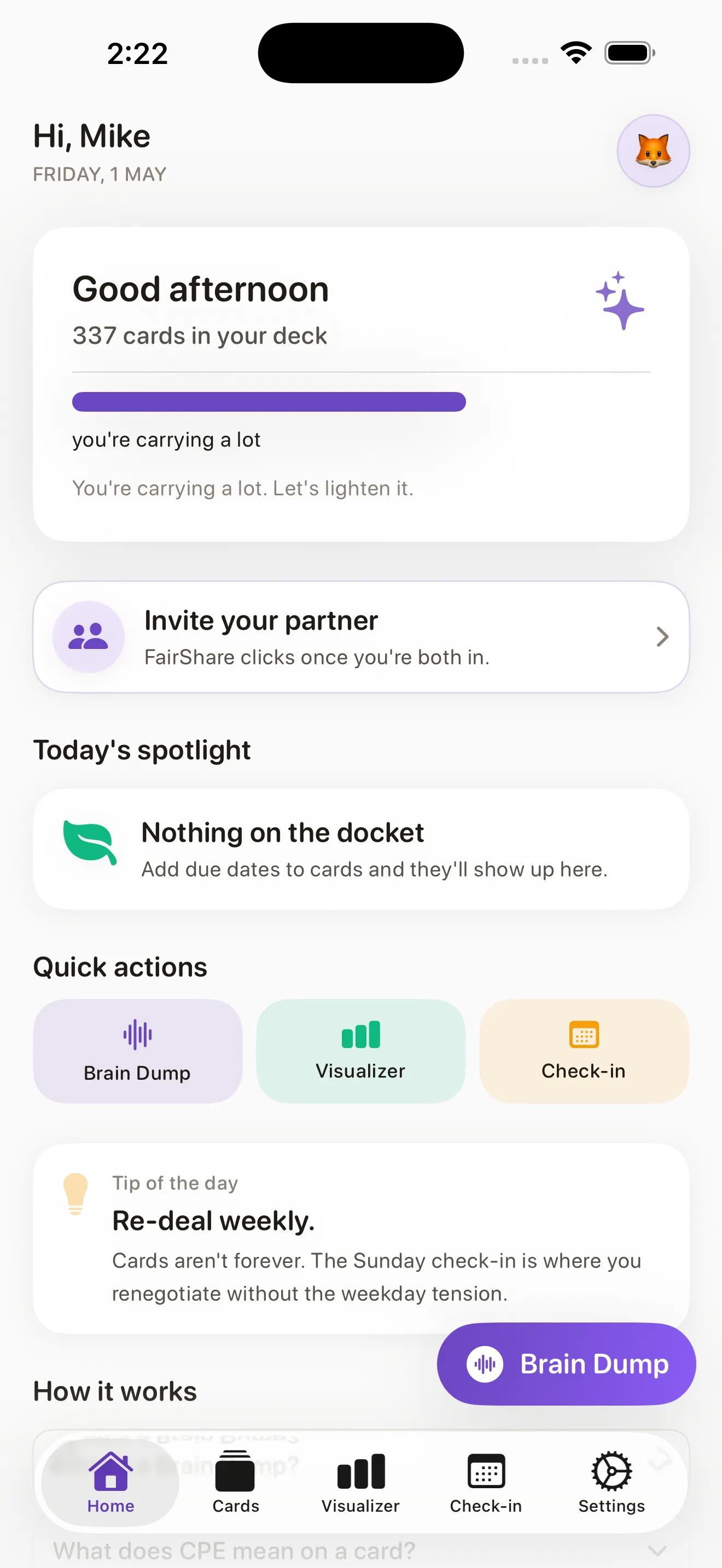
If you've ever felt like you're the one tracking everything—remembering appointments, planning meals, deciding when the house needs cleaning—you're experiencing mental load. It's the invisible cognitive work behind household decisions and tasks, and it rarely splits evenly. FairShare is built to make that work visible, explicit, and genuinely fair. Instead of a chore chart, you'll use Fair Play-style cards where one person owns a whole responsibility from conception through execution. This guide walks you through what to expect in your first week and how to actually use the app.
What is mental load anyway?
Mental load is the cognitive and emotional work of running a household. It includes remembering that your kid needs new shoes, researching schools, meal planning, tracking doctor's appointments, knowing the pantry is low on staples, and deciding whether the bathroom is due for a deep clean. One partner often carries far more of this invisible work than the other—sometimes without anyone explicitly realizing it.
The problem with traditional chore charts is they only capture the execution part ("clean the bathroom"). They miss the conceiving ("we need to clean the bathroom") and planning ("what day, with what supplies"). That's where the mental load actually lives. FairShare solves this by putting full ownership into cards: one person owns each household responsibility from start to finish.
Mental load isn't about washing dishes. It's about knowing the dishes need to be washed, remembering to ask someone to do it, and tracking whether it happened.
The core pieces of FairShare
Cards
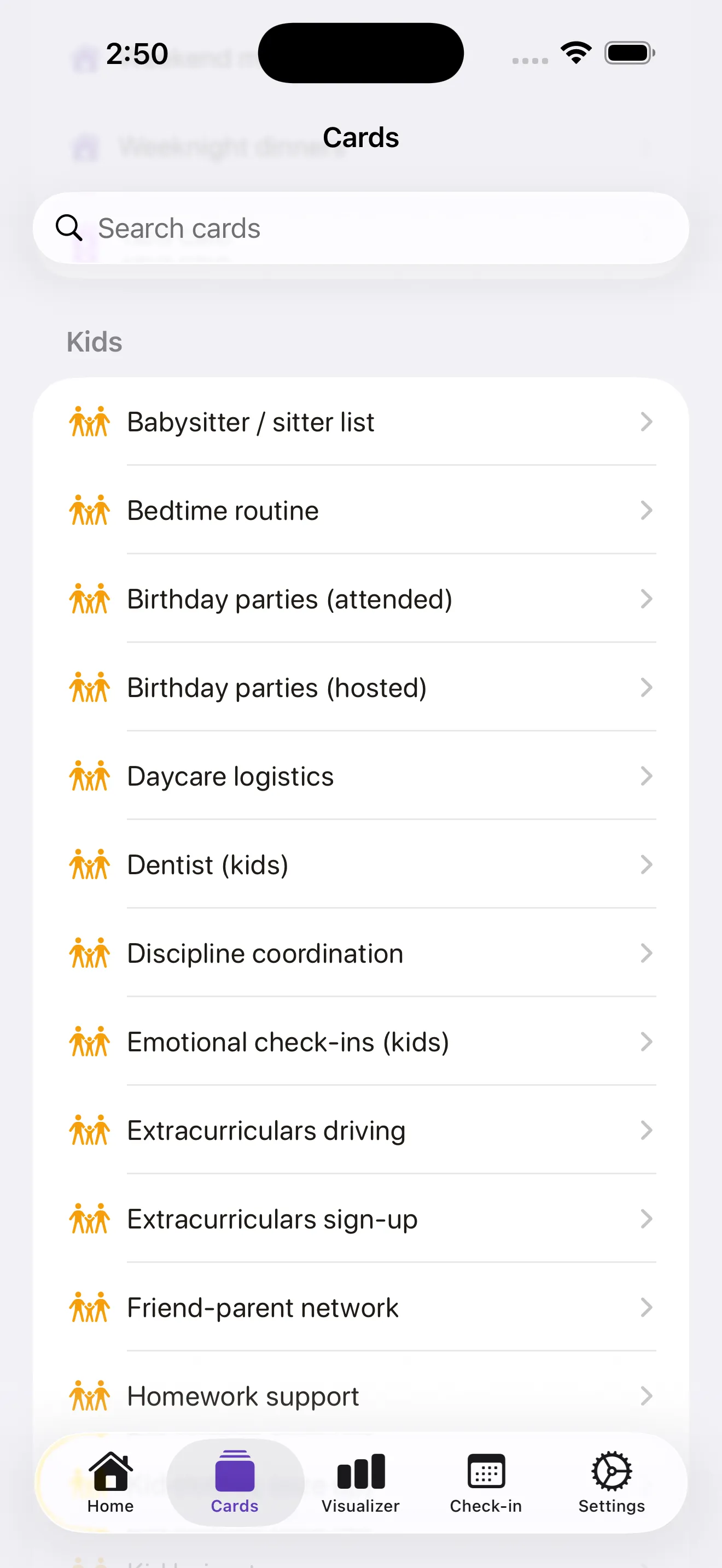
Each card represents one household responsibility. A card lives with one partner. You own it fully: you conceive the need, plan how to handle it, and execute it (or delegate it—but you still own making sure it happens). Examples include "Meal Planning," "Kids' Medical Appointments," "Car Maintenance," or "Social Calendar."
Brain Dump
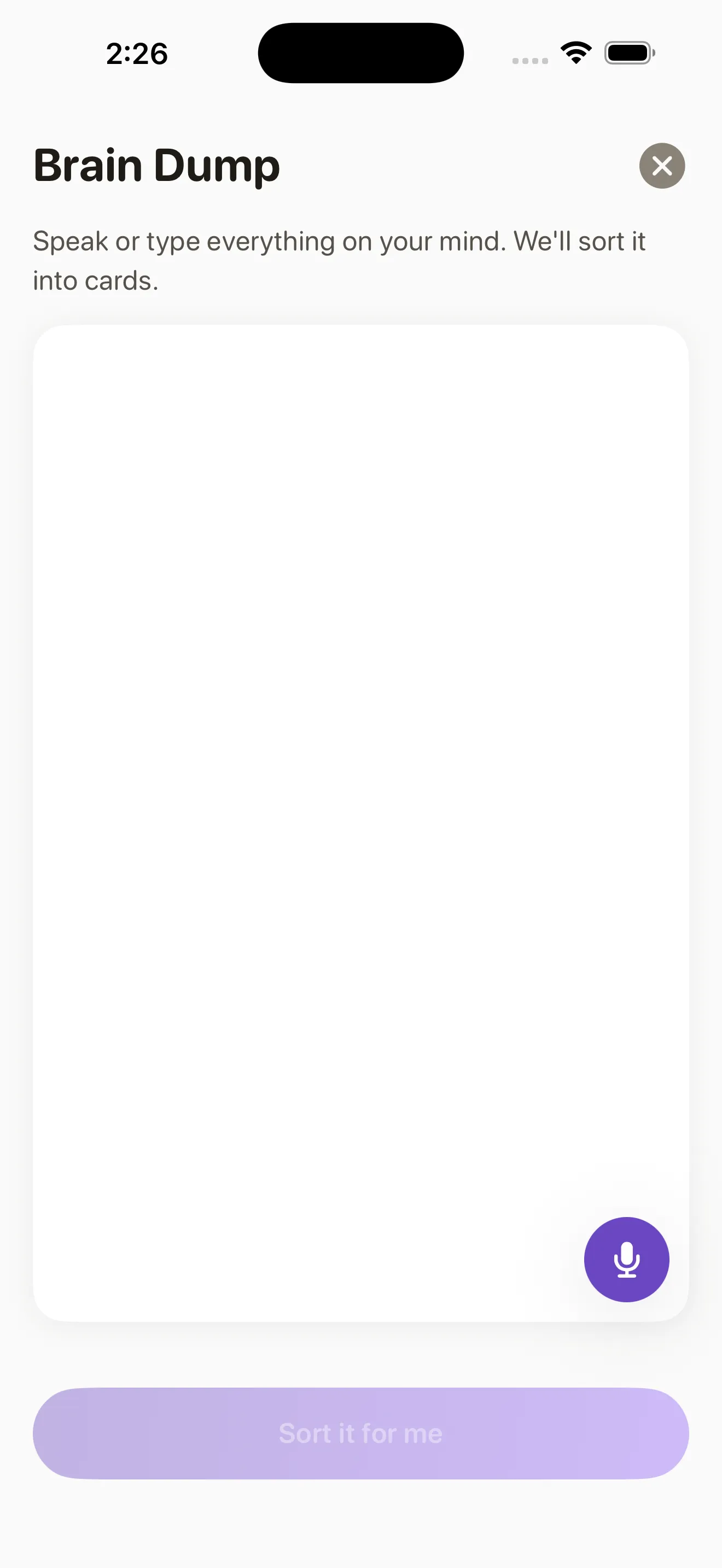
The Brain Dump is where random household thoughts live before they become cards. When something pops into your head—"We need new shower curtains" or "When is the dog's vet appointment?"—you dump it here instead of trying to remember it. FairShare's AI interceptor helps organize these thoughts, so you're not carrying them in your head anymore.
Weekly check-ins
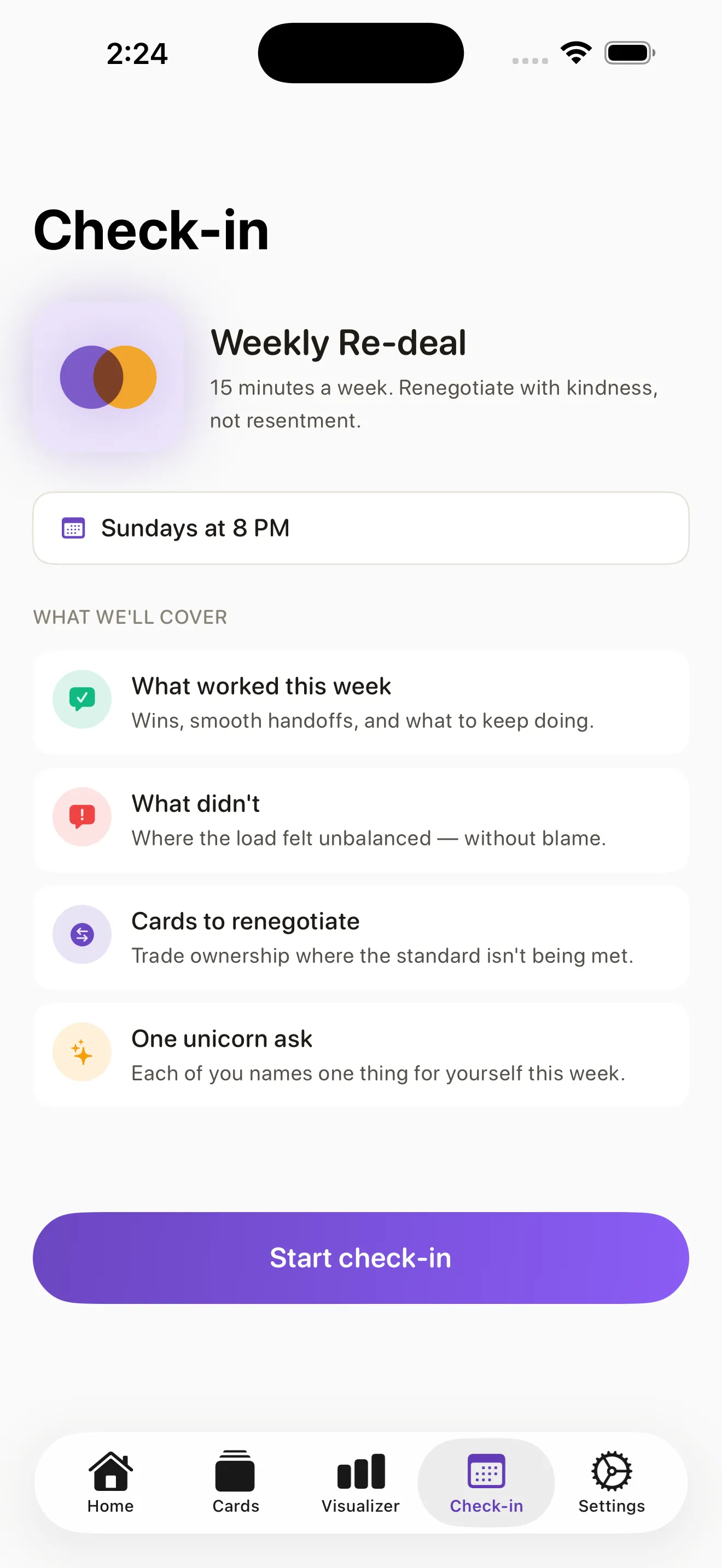
Instead of waiting for frustration to boil over, you check in together every week. You'll answer short prompts about what shifted, which cards felt heavy, whether anyone wants to swap responsibilities, and whether your household situation changed. This rhythm keeps imbalances from accumulating.
Visualizer
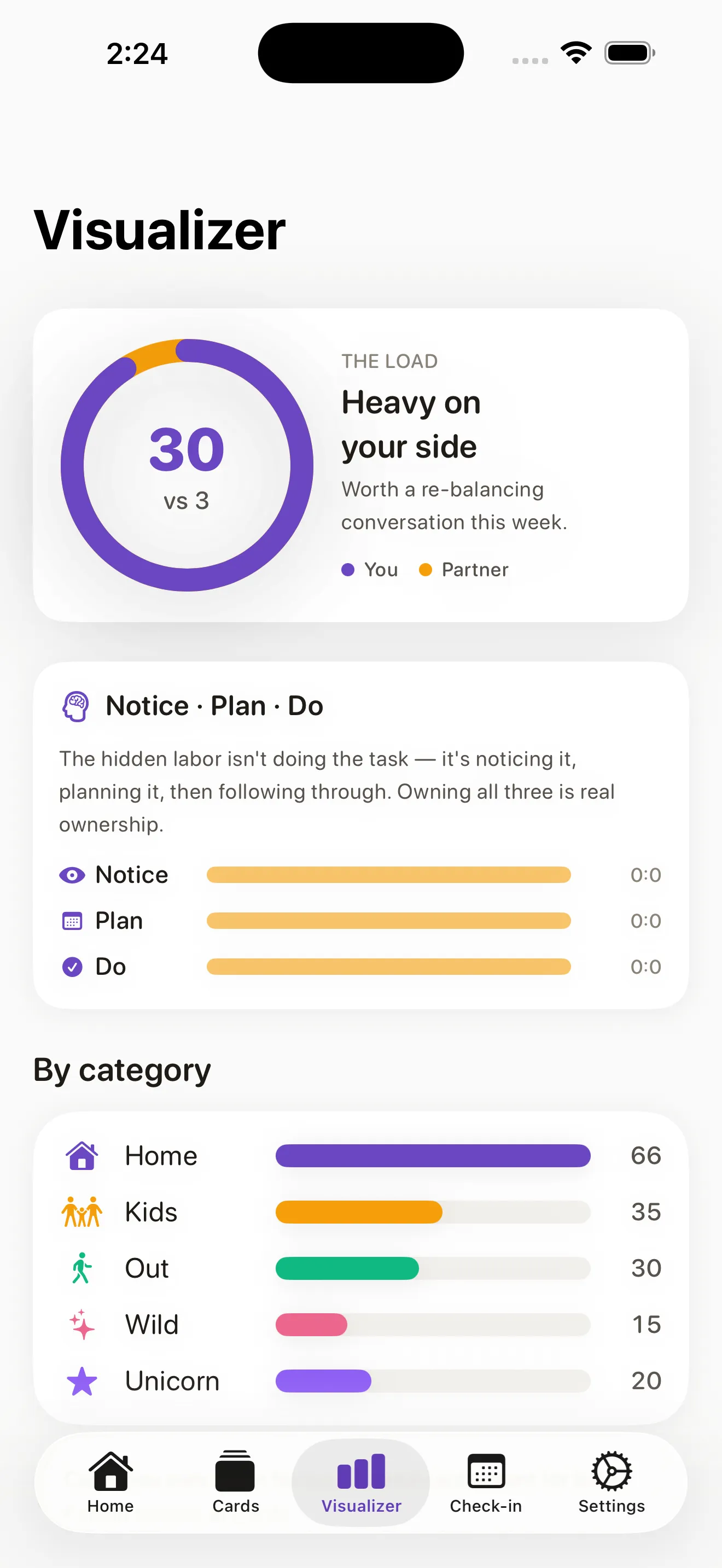
The Visualizer shows how mental load is actually distributed in your household. You can see at a glance who owns more cards, which categories (like "Kids" or "Finances") are heavier, and whether things have shifted over time. It makes invisible work visible.
Your first week: what to expect
- Day 1–2: Setup and onboarding. You'll create an account, describe your household type (couple with kids, couple no kids, etc.), and name yourself. Then you'll get a link to invite your partner. Don't expect them to join immediately—give them a few days.
- Day 2–3: Brain Dump and card creation. While waiting for your partner, start dumping the mental load that's in your head. As you do, FairShare will help you shape these thoughts into actual cards. You'll own some; others will wait for your partner to take.
- Day 3–5: Partner joins. Your partner will see the same onboarding, then see the cards you've already created. They'll add their own household thoughts and may own or renegotiate some cards. This is normal and healthy.
- Day 7: First check-in. You'll do your first weekly check-in together. The prompts are short and specific. Most couples spend 10–15 minutes on this.
How to actually get started
- Download FairShare and create your account.
- Answer the onboarding questions about your household (who lives there, your situation, etc.).
- Spend 10 minutes brain dumping: think of 5–10 household responsibilities or decisions you actively hold in your head right now.
- Let FairShare help you turn those brain dumps into cards.
- Generate an invite link for your partner and send it to them.
- Schedule your first weekly check-in for 7 days from now (set a phone reminder so it actually happens).
- When your partner joins, have a low-pressure conversation about which cards feel right for each of you. This might take a few days to settle.
If you want to go deeper after your first week, read how FairShare makes mental load visible or check out the step-by-step setup checklist. Both will give you language and structure for conversations with your partner that might feel awkward at first.
Common questions
Do I have to own a card for the whole week?
No. You can renegotiate anytime. But the idea is that one person owns each card so the responsibility is clear and nothing falls through cracks. If you swap a card in the weekly check-in, you'll both see that shift. That clarity matters more than rigidity.
What if my partner doesn't buy into this?
You can still use FairShare on your own—it'll help you track what you're actually responsible for. But the app works best as a shared tool. If conversation feels tense, start with the visualizer: "I want to show you something about how our household work is split. Can we look at this together?" Seeing it visually often opens doors.
Do I need to do the weekly check-in?
The check-in is where FairShare's real power lives. Without it, you have a good task list. With it, you have a rhythm that prevents resentment from building. Even couples who think their load is "already fair" often discover imbalances in the visualizer during check-ins. Try it for a month.
This article was drafted with AI assistance and reviewed by a human editor before publishing.