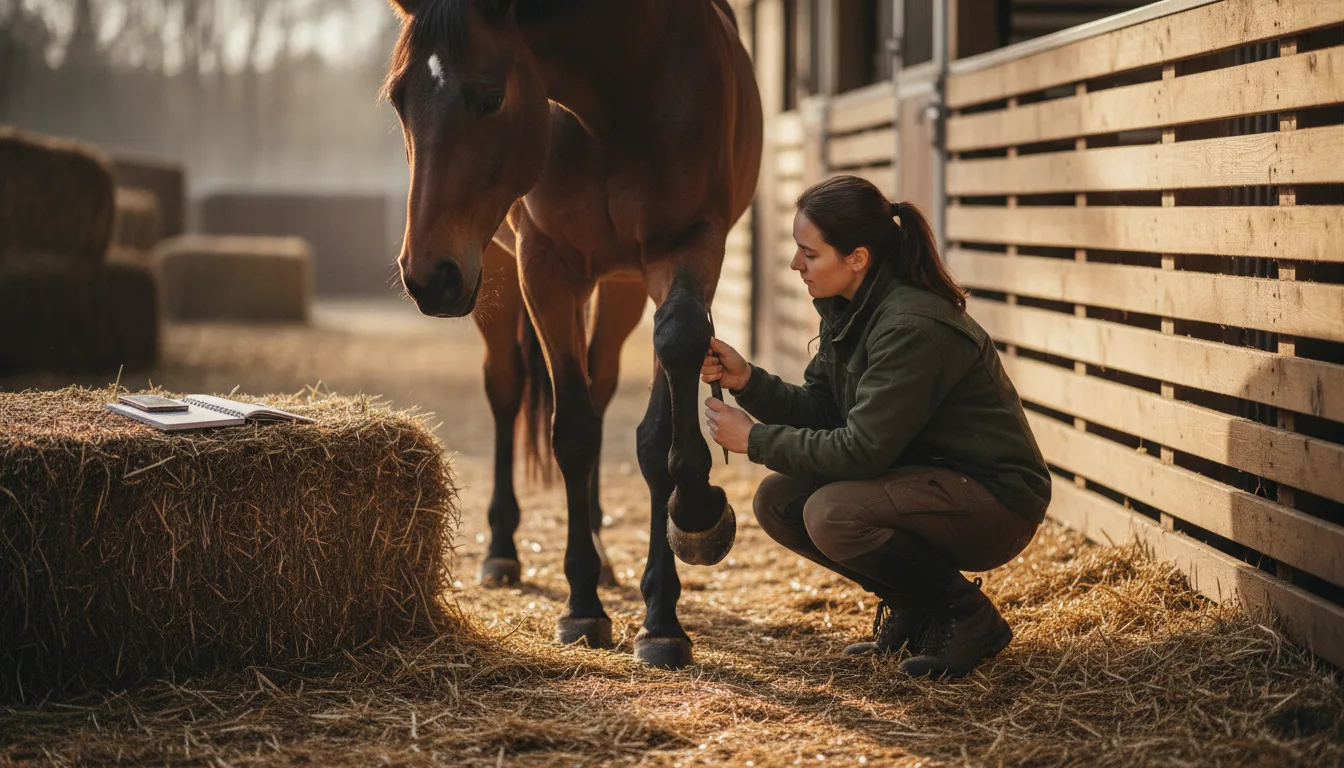
Farrier, vet, vaccines, dentist, deworming — every horse owner ends up juggling a handful of recurring dates, and most of us track them the same clumsy way: half in a barn calendar, half in memory, half in a text thread with the vet. The good news is that current veterinary guidance is getting more specific about what actually needs a fixed schedule and what needs a personalized one. Here's how to turn that guidance into a timeline you can act on, and how a daily habit makes the whole system easier to keep.
Build a timeline, not a single annual checklist
The instinct is to treat every recurring task the same way — deworm every eight weeks, vaccinate every spring, trim every month, done. But a horse's age, exposure to other horses, travel schedule, workload, and prior care history all change what "due" actually means. The more useful habit is a living timeline: log what happened and when, then let each next date get set individually with your vet or farrier instead of defaulting to a fixed interval. This is exactly the gap Hoofprint is built to fill — one place to see what's been done and what's coming, per horse.
Let fecal egg counts drive deworming, not the calendar
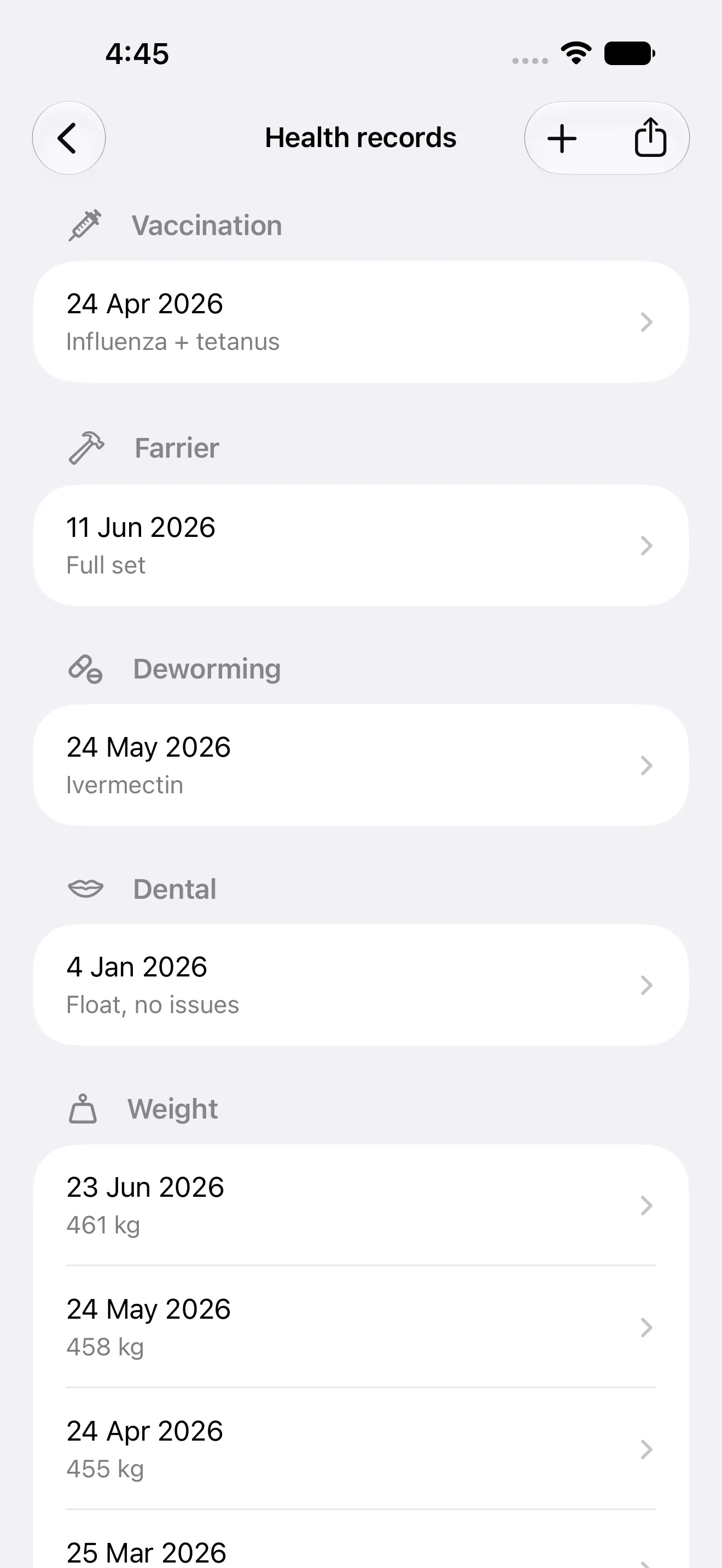
If you're still deworming on a fixed rotation every couple of months, that guidance has changed. The American Association of Equine Practitioners revised its parasite control recommendations in 2024, and the update is direct: stop the fixed, year-round schedule and stop blindly rotating dewormer classes. Instead, run fecal egg counts once or twice a year to classify each horse as a low, medium, or high shedder, treat accordingly, and add annual fecal egg count reduction testing across the herd or barn. In practice, that means your deworming record needs more than a date — it needs the test result that justified the treatment.
Match vaccine timing to exposure, not just the label
Core vaccines aren't one-size-fits-all either. AAEP's tetanus guidance calls the toxoid a core annual vaccine for every horse, and specifically notes that an adult horse with a wound or surgery six months or more after its last booster should be revaccinated immediately at the time of injury, not on the next scheduled date. Influenza works on exposure rather than the calendar alone: previously vaccinated adult horses are generally revaccinated annually, but higher-exposure horses — the ones showing, boarding with turnover, or traveling — may need it every six months, and some facilities require proof within that same window. That's a strong case for a reminder that adjusts per horse rather than a generic "vaccines: yearly" note taped to the stall.
Treat the farrier cycle as a range, not a fixed date
How often does a horse need the farrier?
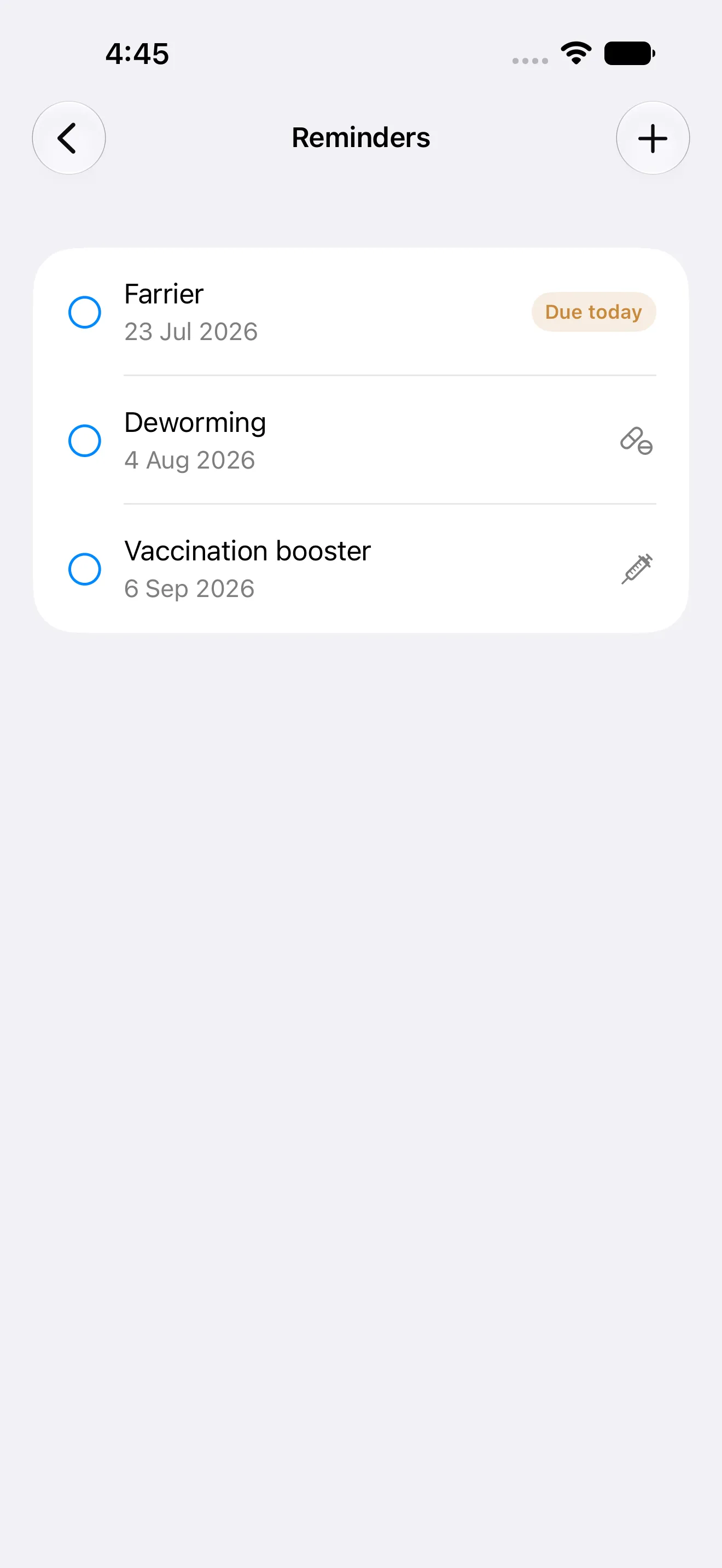
The four-to-six-week window from The Horse's hoof-care record is a starting point, not a promise. Some horses drift toward the shorter end after a lameness issue or a shoeing change; others hold steady at six weeks for years. The way to know which one you have isn't guesswork — it's a running log of actual trim dates next to notes on how the feet looked in between.
A farrier date isn't a deadline you survive — it's a rhythm you protect.
Keep records that travel with your horse, not just with you
The Horse's guide to health records makes a point worth remembering: clear, dated, accessible records matter most in exactly the moments you didn't plan for — a disease event at the barn, a sale, an insurance claim, a last-minute entry that requires proof of vaccination. The guide's real lesson is that the best system is the one you'll actually keep, which is why photo attachments and one-tap entry matter more than a perfect spreadsheet nobody updates. Dental care fits the same logic: University of Minnesota Extension recommends a yearly exam even when nothing looks wrong, since young horses may need baby or wolf teeth removed and older horses can develop loose teeth needing extraction — the kind of thing that's easy to miss without a yearly checkup on the books.
Use streaks and "a year ago today" to catch what a spreadsheet misses
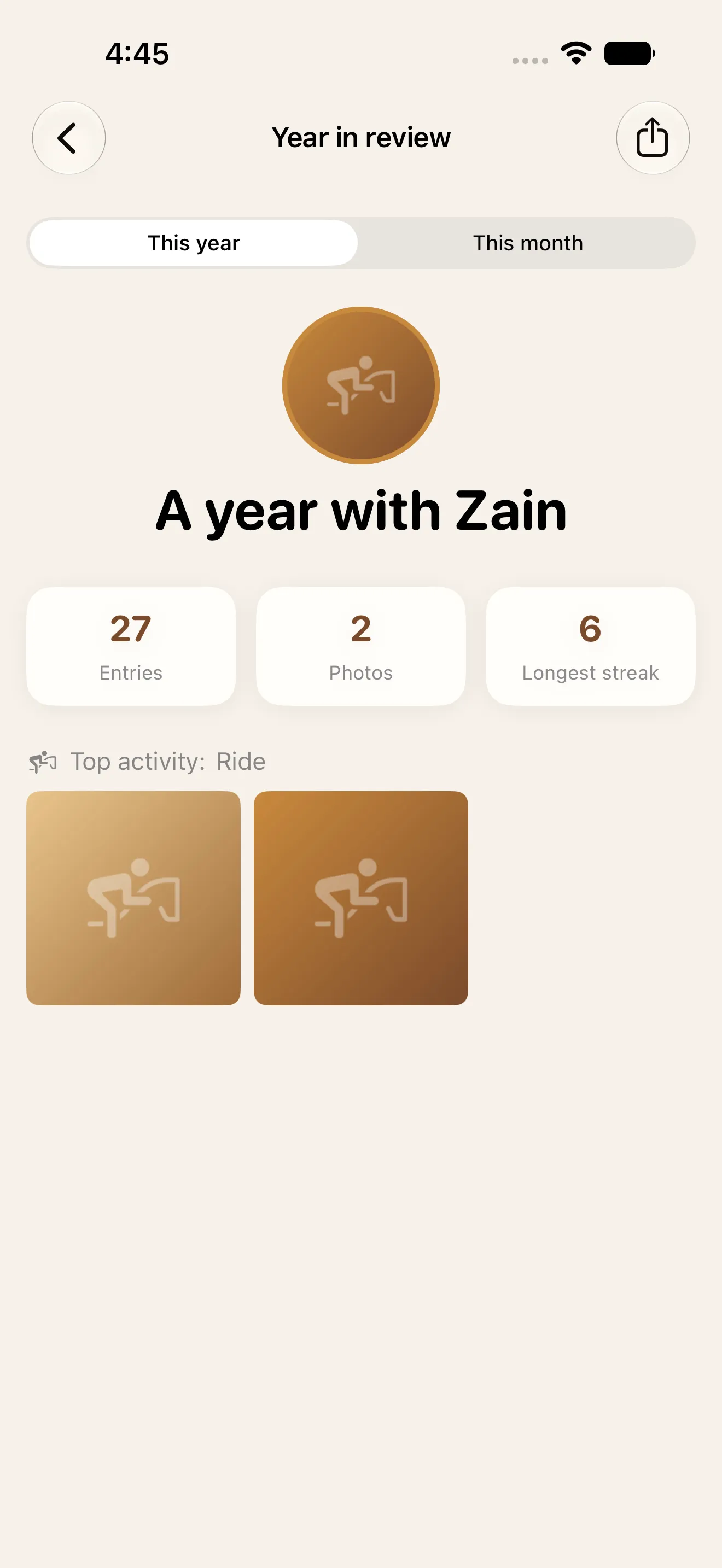
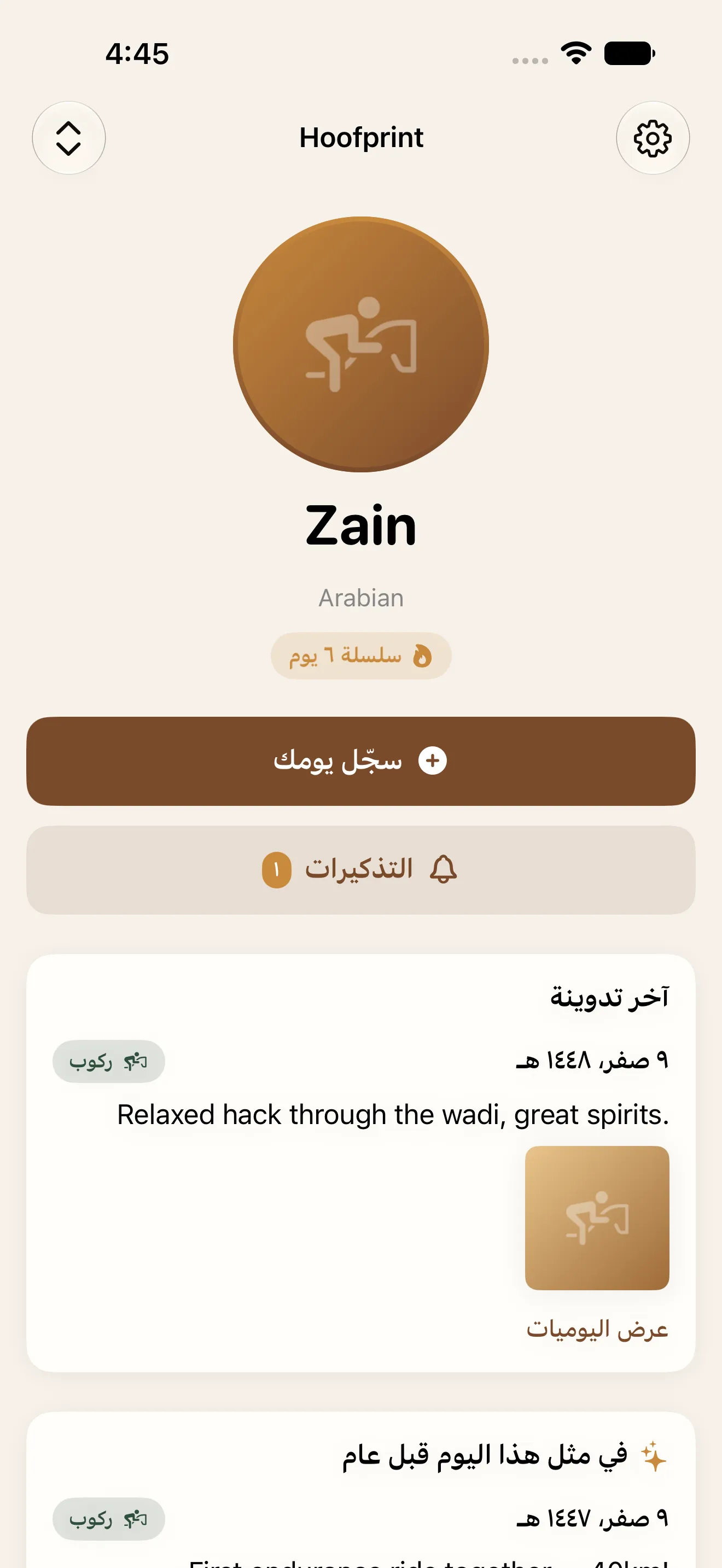
Medical records answer "is this horse due for something." A daily log answers a quieter but equally important question: is this horse doing okay right now. Logging today with a quick note, a photo, or an activity — and building a streak with a day of grace for the days you forget — turns care into a habit instead of a chore. It also means "a year ago today" can resurface a photo or note you'd have otherwise lost, which is where patterns in weight, mood, or workload actually become visible.
It's also worth noting where the privacy story stands right now. Apple's newer on-device intelligence in iOS 26 is genuinely offline and private, but as Apple detailed in September 2025, it only runs on Apple-Intelligence-compatible devices with the feature enabled, and its published language list doesn't include Arabic. Hoofprint takes the more universal route instead: no account, everything stored on your device and your own iCloud, working fully offline, with full English and Arabic support including right-to-left layout — a design choice that doesn't wait on a specific chip or language rollout. If you're comparing what to look for in a horse app more broadly, our guide on what to look for in a horse care app for iPhone covers this in more depth, and our beginner's guide to getting started walks through setup for a first horse.
This article was drafted with AI assistance and reviewed by a human editor before publishing.