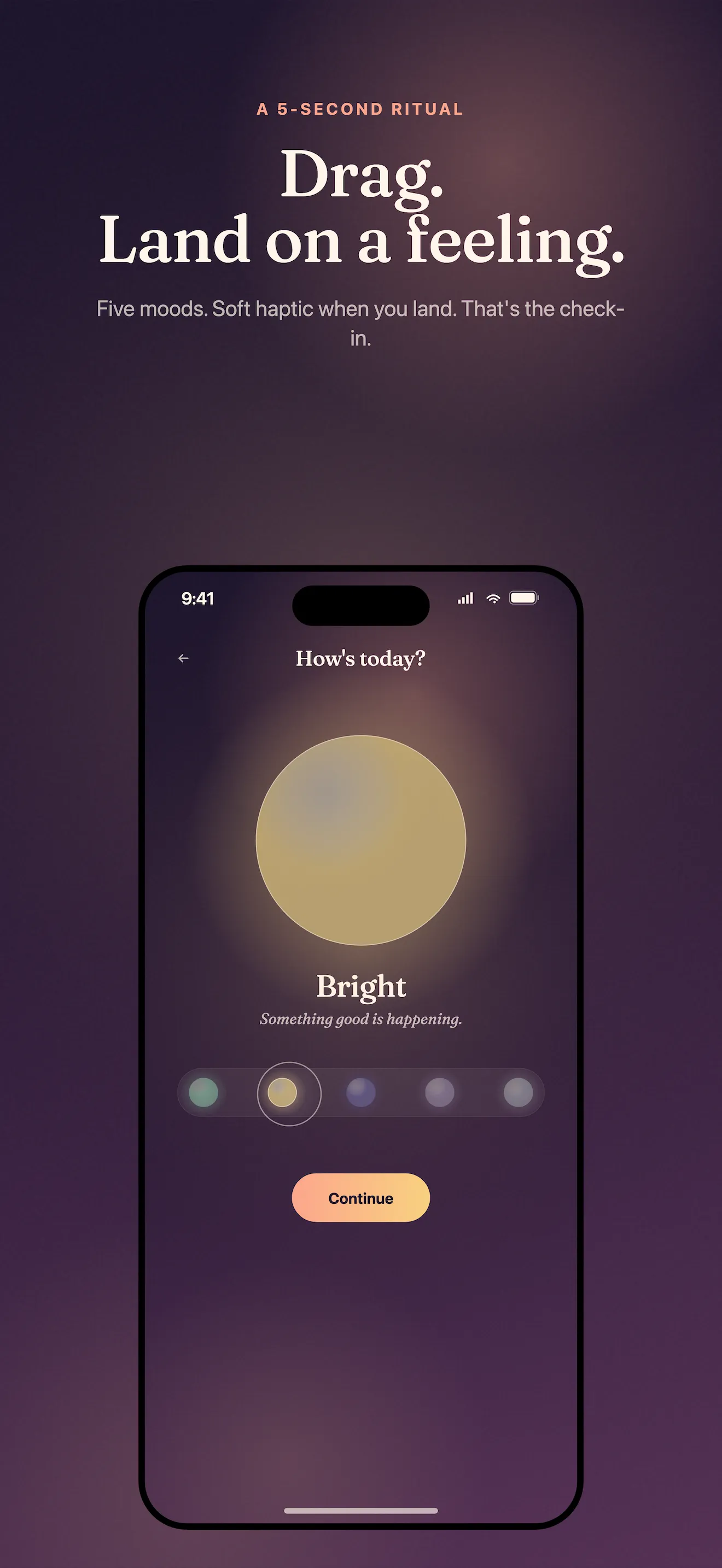
If you've ever stared at a mood tracker asking yourself "Am I a 6 or a 7 today?", you know the problem. Numbers don't capture how you actually feel. Most mood apps rely on numerical scales, clinical wheels, or lengthy questionnaires—tools designed for clinicians, not for the quiet moment when you're checking in with yourself. MoodLight exists in a different category altogether. It strips away the scaffolding and gives you five orbs: calm, bright, heavy, off, numb. Real states. Real simplicity.
The problem with traditional mood scales
The 1-10 scale has dominated mood tracking for decades. It's simple, it's quantifiable, and it feels scientific. But simplicity comes with a cost. A "5" means something different to everyone. You end up second-guessing yourself, trying to map internal experience onto an arbitrary number. Am I sad or just tired? Is this a "3" or a "4"? The scale becomes a barrier rather than a mirror.
Clinical mood wheels add another layer of complexity. They ask you to identify emotions by category (valence and arousal), which is how psychologists think about affect—but it's not how most people experience their day. You're asked to choose between eight or sixteen options, each requiring you to think about your emotions as data points. For something meant to help you connect with yourself, it often feels like filling out a form.
Why orbs work differently
An orb is not a number. It's not a clinical category. It's a word paired with a color, and you recognize it immediately. Calm doesn't ask you to calculate anything. Heavy doesn't need translation. These five states—calm, bright, heavy, off, numb—map to how people actually describe their days in conversation, in therapy, in moments of honesty. They're descriptive rather than comparative. You're not ranking yourself against a scale; you're naming what's true.
An orb is not a number. It's a word paired with a color, and you recognize it immediately.
Speed and friction matter more than you think
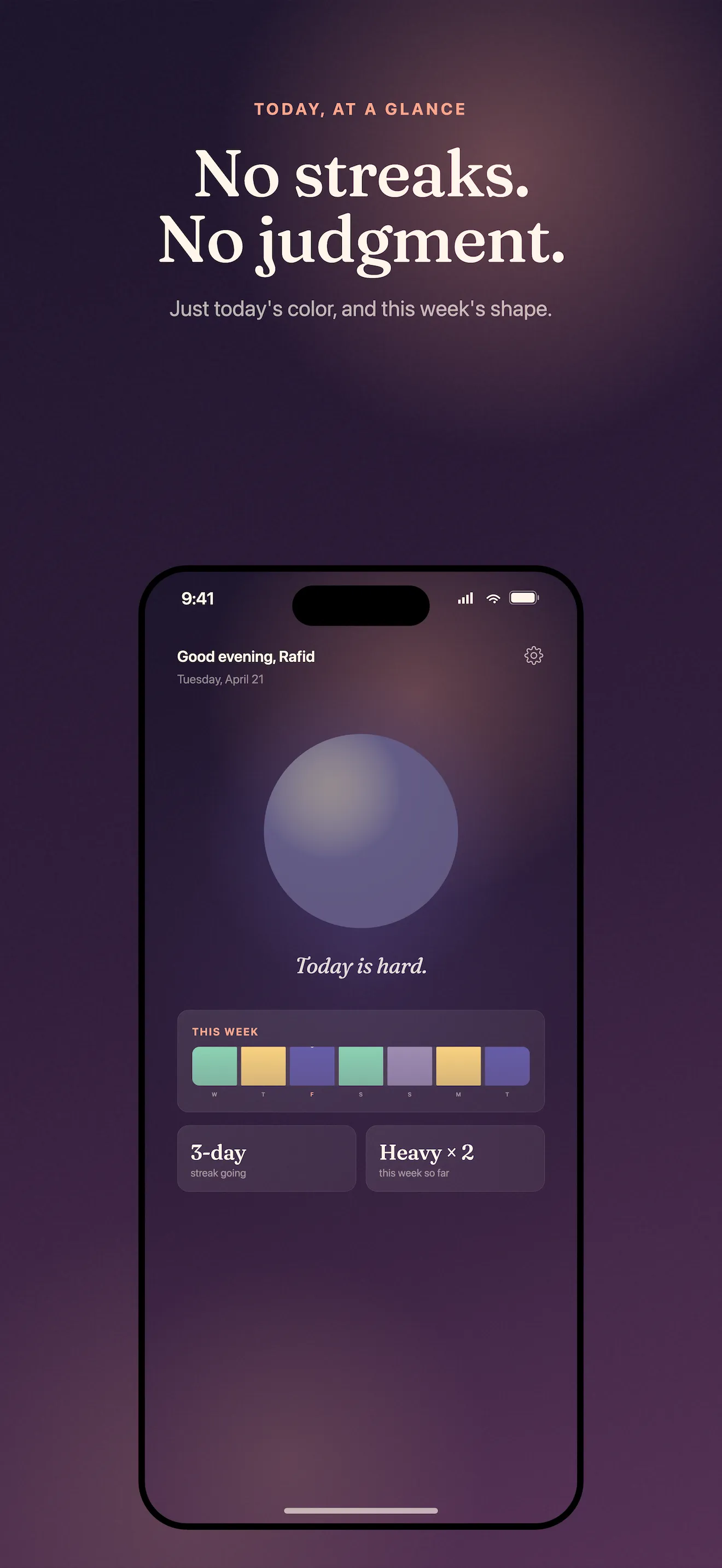
A mood check-in takes thirty seconds in MoodLight. You tap an orb. You optionally add a one-line note. You're done. That speed is not a bug—it's the entire point. If a mood tracker takes longer to use than the moment of reflection it's meant to support, it becomes a chore. Friction kills habit. Apps that ask you to answer five questions, select from multiple wheels, or rate multiple dimensions of your mood are asking you to labor. MoodLight trusts that the orb you choose is enough.
Privacy and device-first design
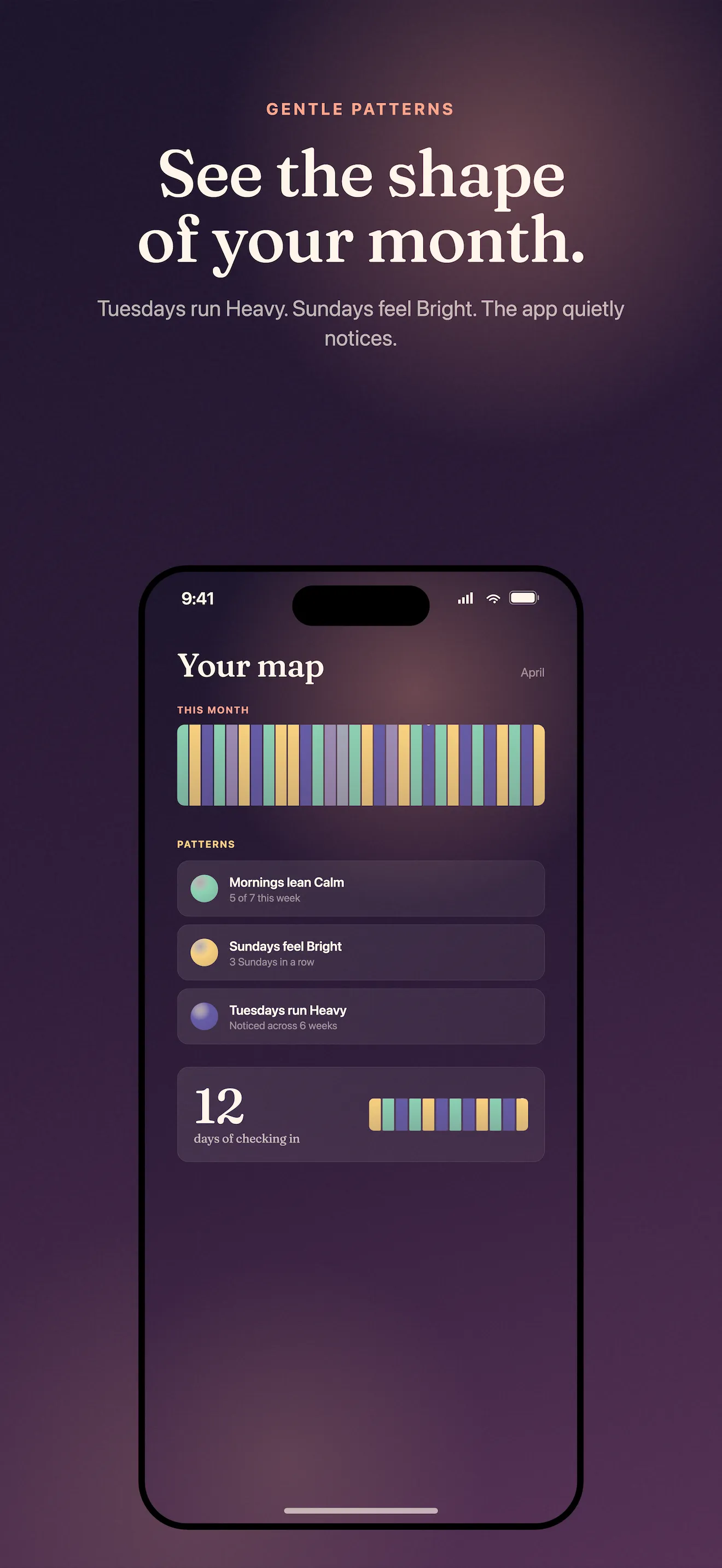
Most mood trackers live in the cloud. That means your data is synced, stored, and subject to a company's privacy policy. Many also use streaks as motivation—the idea that you'll feel guilty breaking your chain. MoodLight takes the opposite approach. Your check-ins live only on your device. No account. No cloud. No streak you can lose. You can skip a day without penalty. There's no guilt baked into the design, because there's no invisible audience rewarding consistency.
How to know if this approach fits you
- You want to track mood but don't like the feeling of "scoring" yourself
- You've abandoned other mood apps because they felt like homework
- You prefer color and intuition to numbers and graphs
- You want something you can bring to therapy as a conversation starter
- You value privacy and don't want your data in the cloud
If you're looking to deepen your mood tracking practice, our guide on how the five orbs rethink daily mood tracking goes deeper into the philosophy. And if you're ready to start but want practical tips, quick check-ins that actually stick shows you how to build the habit.
- Input method
- Five orbs vs. 1-10 scale vs. clinical wheel
- Time per check-in
- 30 seconds vs. 2-5 minutes
- Data storage
- Device only vs. cloud-synced
- Streak pressure
- None vs. guilt-based motivation
- Privacy model
- No account, no tracking vs. account-required
This article was drafted with AI assistance and reviewed by a human editor before publishing.