MoodLight strips away the complexity of traditional mood tracking. There's no scoring system to game, no streaks to guilt you, and no clinical questionnaire to get through. Instead, you get five orbs and thirty seconds — the time it takes to be honest with yourself about how you're really feeling. These tips will help you build a genuine check-in habit that lasts.
Pick Your Orb Without Overthinking It
The five orbs — calm, bright, heavy, off, numb — map to real emotional states that most mood apps ignore. When you open MoodLight, don't deliberate. Your first instinct is usually the truest one. Calm feels peaceful and grounded. Bright is energized and clear. Heavy carries weight or pressure. Off means detached or withdrawn. Numb is when you can't quite feel anything. If you're hovering between two orbs, pick the one that resonates loudest in your gut.
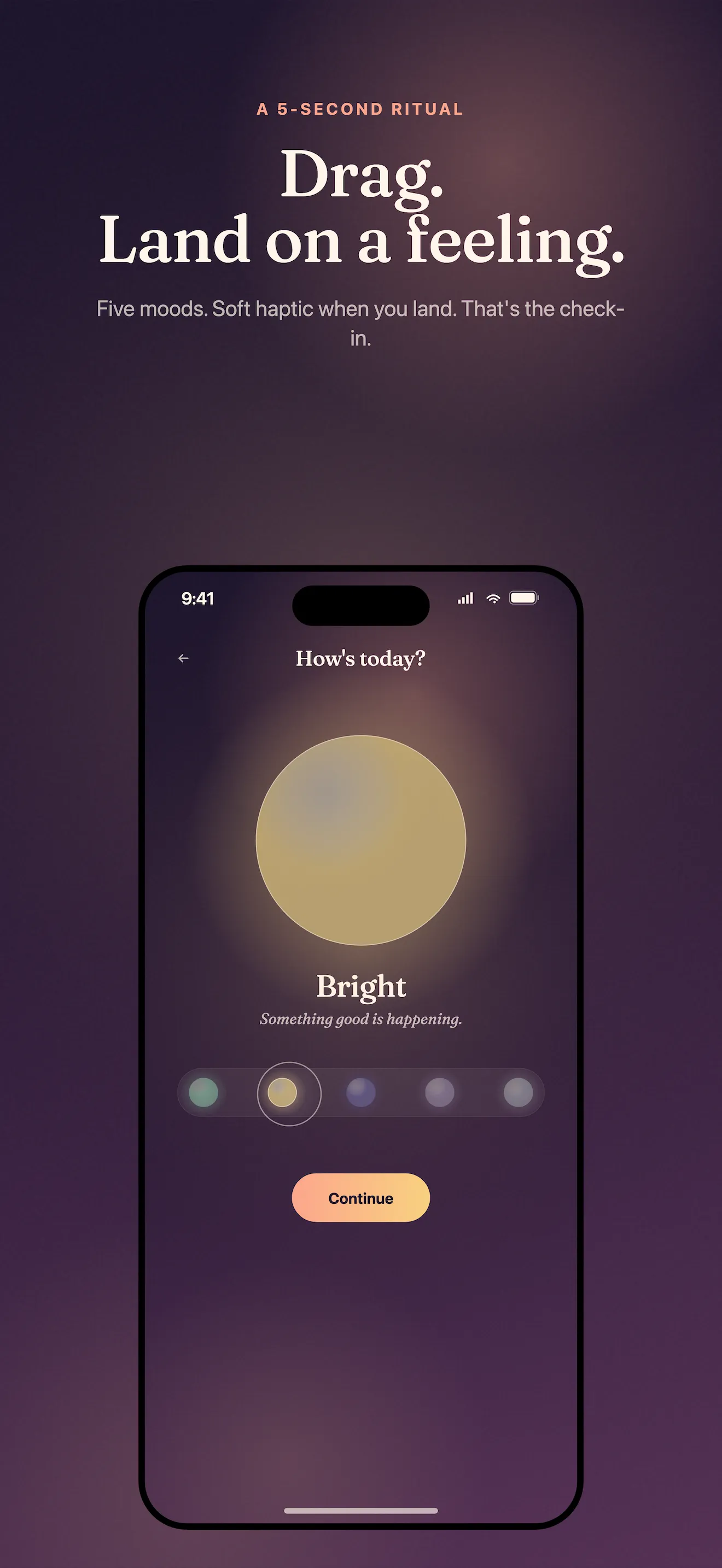
The beauty of this system is that it doesn't ask you to quantify your feelings. You're not forcing a complex emotion onto a 1-to-10 scale. You're naming what's actually happening, which is faster and more honest.
Use Optional Notes to Anchor Your Week
After you tap your orb, you have the option to add a one-line note. This is where MoodLight becomes a real tool. A single sentence — "got bad sleep," "finished that project," "saw a friend" — gives your future self context. When you look back at your weekly gradient, those small notes turn colors into stories.
A single sentence turns your mood map from abstract art into a genuine record of your week.
Keep notes brief. MoodLight is designed for speed. You're not writing a journal entry — you're capturing the one detail that made today different from yesterday.
Check In at the Same Time Each Day
Consistency matters, but MoodLight doesn't punish you for skipping a day. There's no streak counter, no notification nagging you, no guilt trip waiting. That said, picking a regular time to check in — morning coffee, lunch break, right before bed — builds a sustainable habit.
- Morning check-in: captures how you woke up and what you're carrying
- Midday check-in: reflects how the first half of your day is going
- Evening check-in: closes out the day and lets you decompress
- Before therapy or a conversation: grounds you in how you actually feel
Pick whatever rhythm fits your life. MoodLight will record it, and over a week or month, you'll see patterns emerge without any algorithm pushing you toward them.
Read Your Weekly Gradient Like a Story
The colored gradient strip is where MoodLight becomes visual. Each day is a dot of color, and when you step back, you see your week all at once. A strip of calm followed by heavy followed by bright tells you something real about how you move through time.
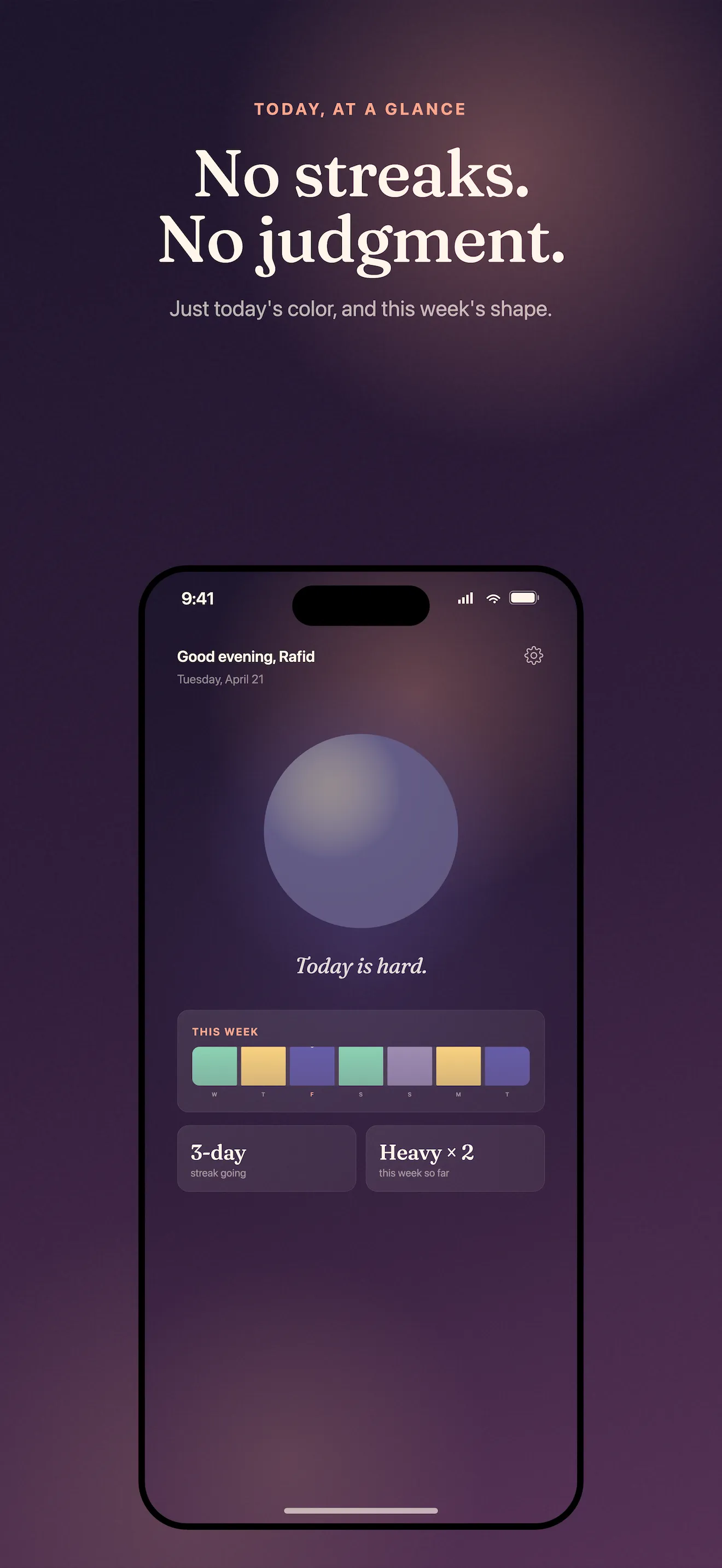
Look for patterns. Do certain days always land on the same orb? Does bright always follow a day you noted time with friends? Does numb creep in after particular tasks? These aren't clinical insights — they're just honest observations about what affects your mood.
Share Only When It Helps
Sometimes you'll want to show someone how you've been feeling. MoodLight lets you create soft, shareable mood cards — a visual that captures your week without exposing your raw data. This is useful if you're checking in with a therapist, talking to a partner about your mental health, or just showing a friend what a tough week looked like.
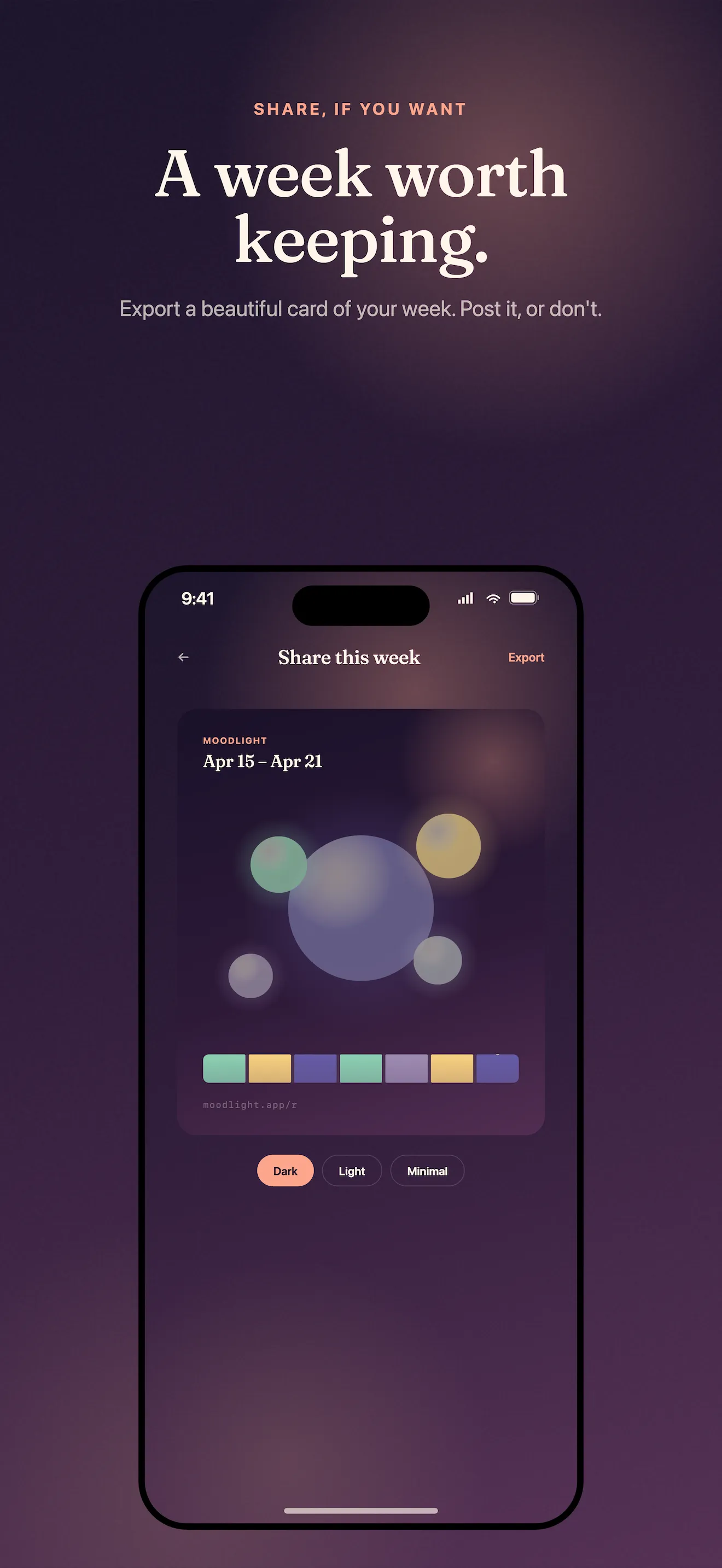
You control what gets shared. The card is a summary, not a diary. It opens a conversation without oversharing.
Your mood data stays on your device. You decide what you share, and with whom.
This article was drafted with AI assistance and reviewed by a human editor before publishing.