Most mood-tracking apps ask you to pick a number. Slide the scale. Rate your anxiety on a clinical wheel. The problem: those frameworks often make you feel worse. You're hunting for the "right" answer instead of being honest. MoodLight takes a different path. It doesn't ask how you are on a scale of one to ten. It asks something simpler and more true: are you calm, bright, heavy, off, or numb? A tap. Maybe a line or two of notes. Then your day is recorded—not as a score, but as a color in a gradient that grows throughout your week. No judgment. No streak counter that makes you feel guilty for skipping a day. Just five orbs and the space to meet yourself where you actually are.
Why Five States Beat Any Scale
The 1-10 mood scale became ubiquitous because it seemed objective. But objectivity is the problem. When you're asked to score your mood numerically, you're doing math instead of feeling. You're comparing today to yesterday. You're trying to place yourself on someone else's spectrum. MoodLight abandons that altogether. Instead of a range, you get five discrete emotional states that map to real human experience: calm (steady, at ease), bright (energized, present), heavy (weighted down, tired), off (disconnected, irritable), and numb (absent, foggy). No state is "better" or "worse." Heavy isn't a 3. Numb isn't a 4. They're just names for the texture of your day.
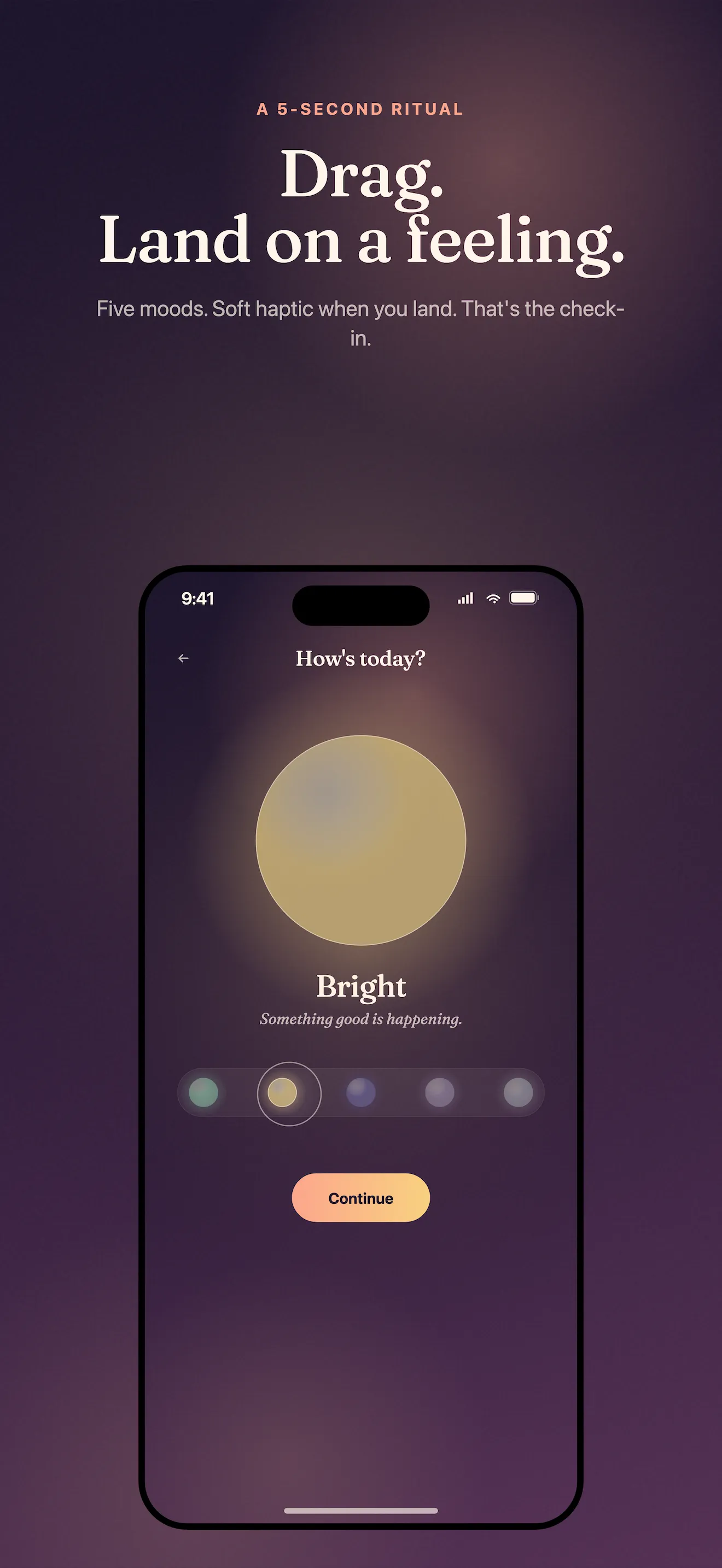
You're not hunting for the right answer. You're just meeting yourself where you are.
This shift removes a layer of friction that makes other mood apps feel clinical and exhausting. You're not second-guessing whether you're a 6 or a 7. You're not comparing your score to yesterday's. You're simply acknowledging the truth: today felt calm, or bright, or heavy. The honesty comes faster. The guilt dissolves.
Thirty Seconds, Once a Day
Speed matters more than most app makers admit. If a mood check-in takes two minutes, you'll avoid it some days. If it takes ten, you'll convince yourself you're too busy. MoodLight's check-in is built to take 30 seconds. Tap an orb. Optionally type one line—a note about what happened, how you felt, anything you want to remember. Done. Your mood is logged. No setup screens, no branching questions, no fields to fill. The restraint is intentional. It treats the check-in as a moment of quiet reflection, not a data-collection task. And that speed is what makes consistency sustainable—not through guilt or streak psychology, but because the friction is genuinely low.
Your Week Becomes a Gradient
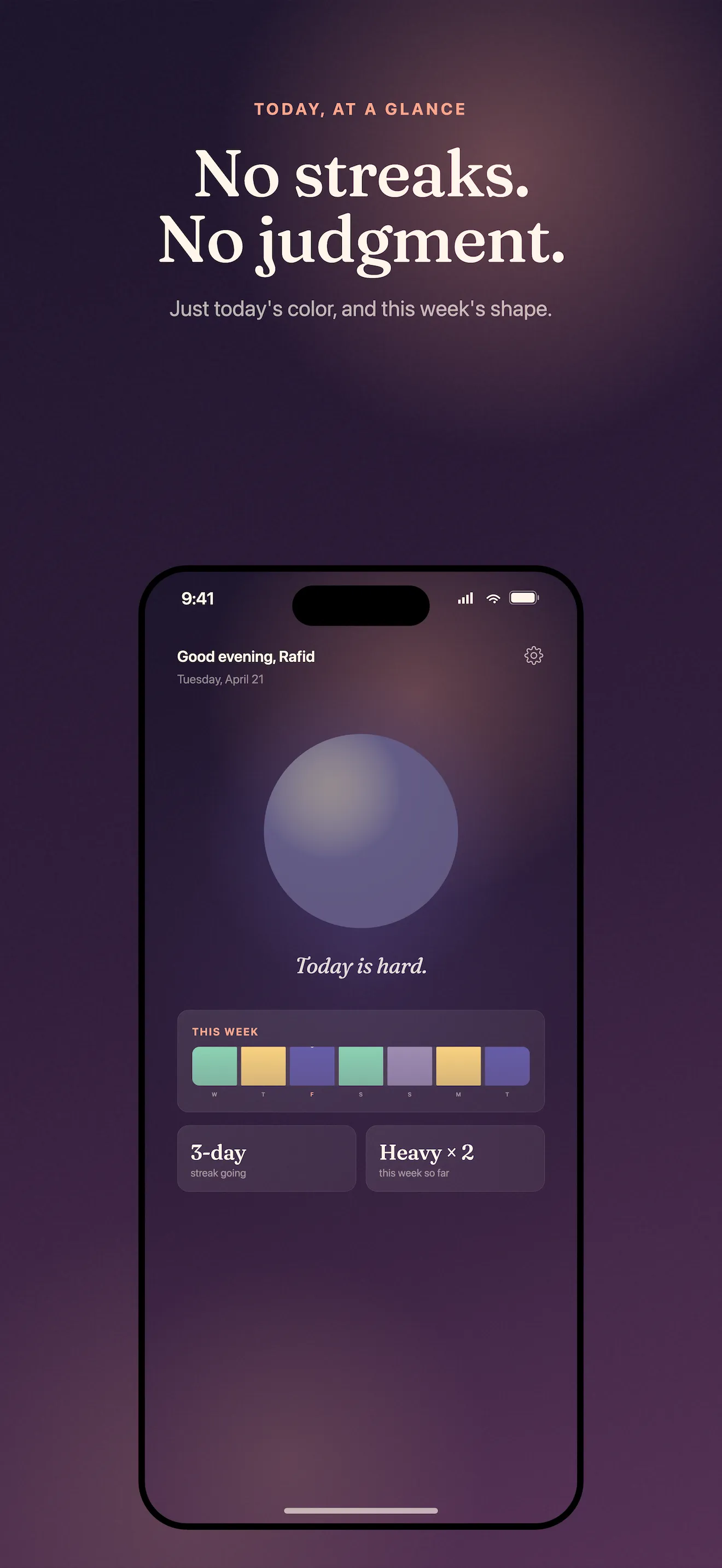
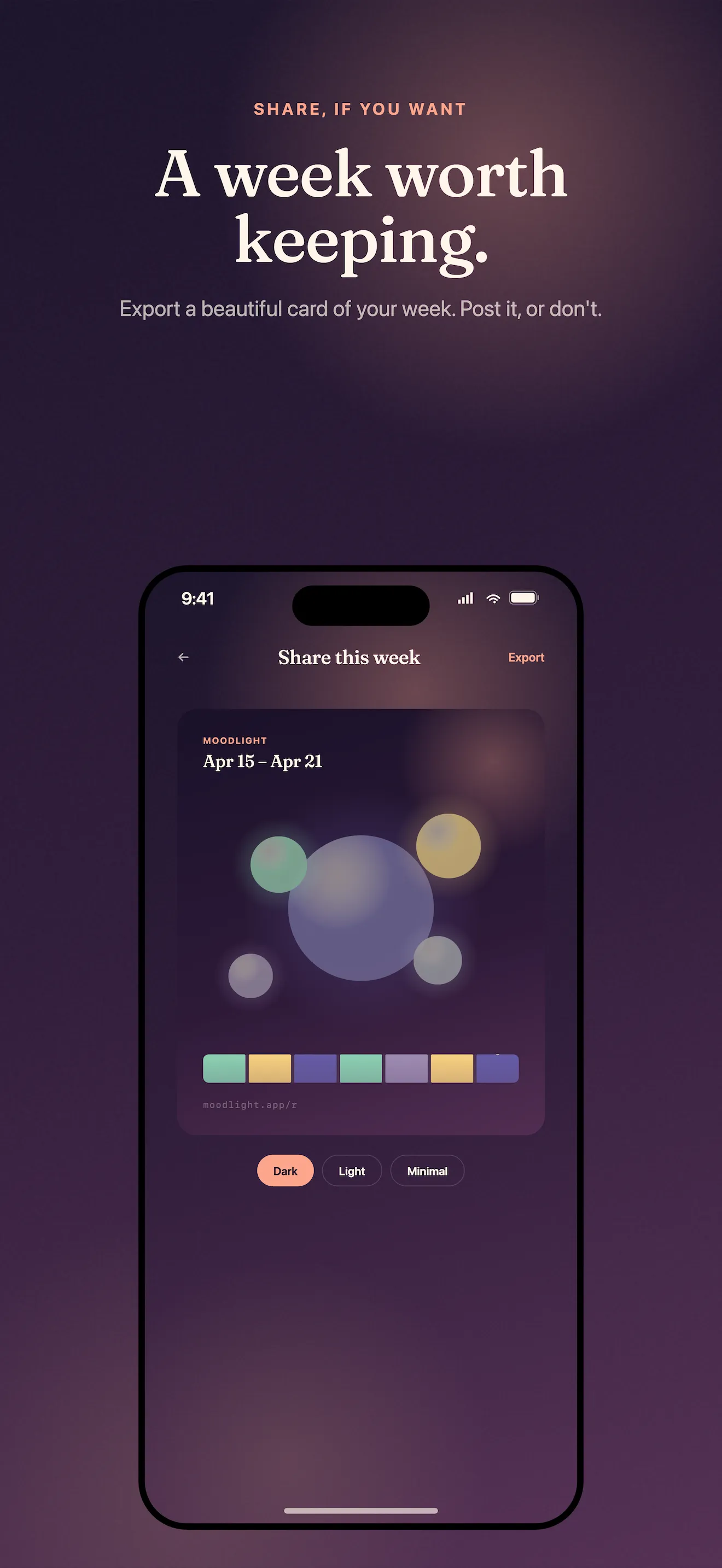
The real design magic happens in how MoodLight visualizes your data. Instead of a bar chart or a line graph, your week turns into a colored gradient—a visual strip that builds as you check in each day. Calm is soft blue, bright is warm yellow, heavy is a deep amber, off is cool grey, numb is a muted violet. By Friday, you're looking at a band of color that tells a story your words might not. You can see patterns. You can show it to a therapist. You can screenshot it and share it with someone close to you. The gradient transforms mood data from abstract numbers into something almost poetic—a picture of your inner weather, colored and flowing, without a single score in sight.
No Account, No Cloud, No Streak to Break
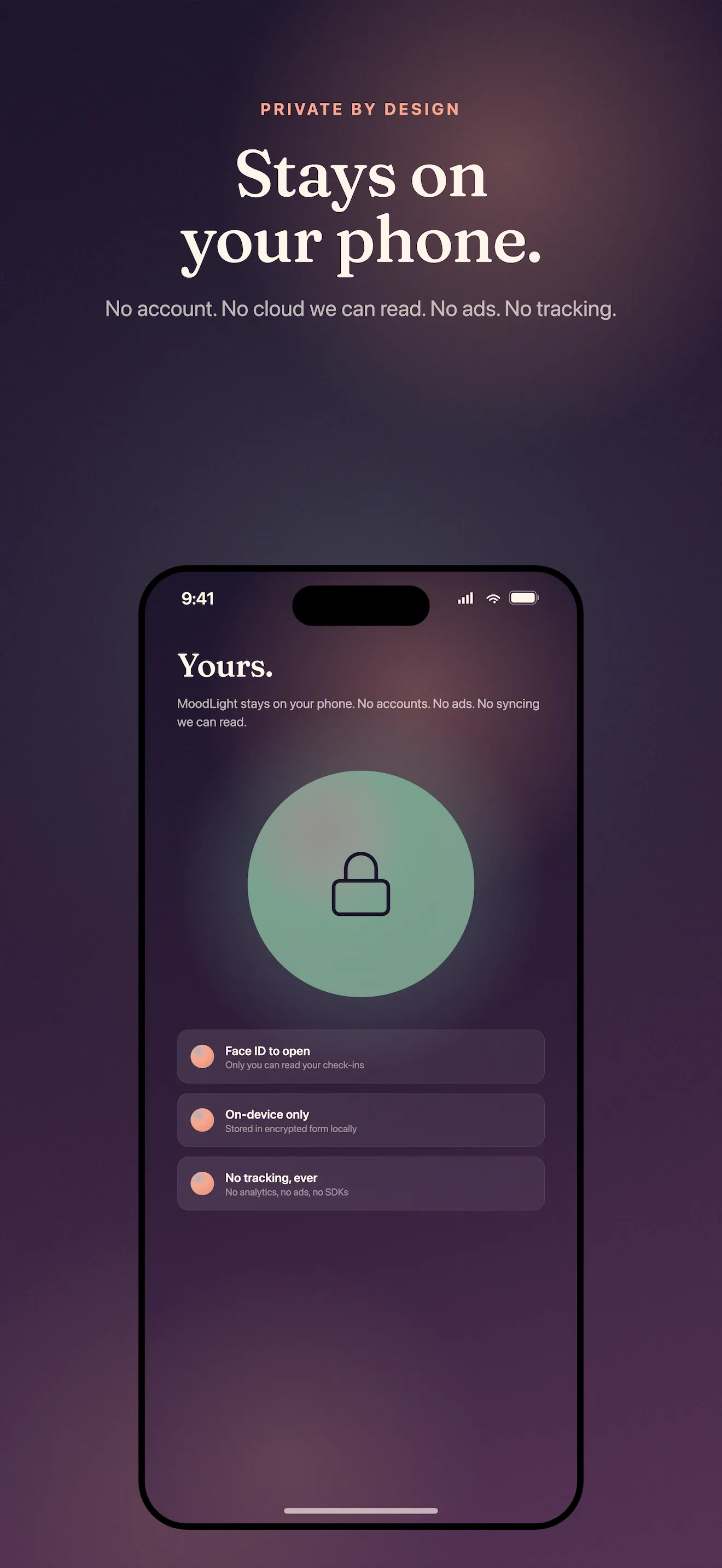
Here's where MoodLight's philosophy deepens. Most apps hook you with streak psychology. Miss a day and you break a chain. Your "100-day streak" vanishes. Suddenly the app feels punitive instead of supportive. MoodLight doesn't have streaks. It doesn't have an account. It doesn't sync to the cloud. Your check-ins live only on your device, never leaving your iPhone. This is both a design choice and a privacy promise. You own your mood data entirely. If you skip three days, nothing breaks. The app welcomes you back without guilt. And if you decide tomorrow to delete MoodLight, your data doesn't linger on a server somewhere, feeding an algorithm or vulnerable to a breach.
A Mood Map You Actually Want to See
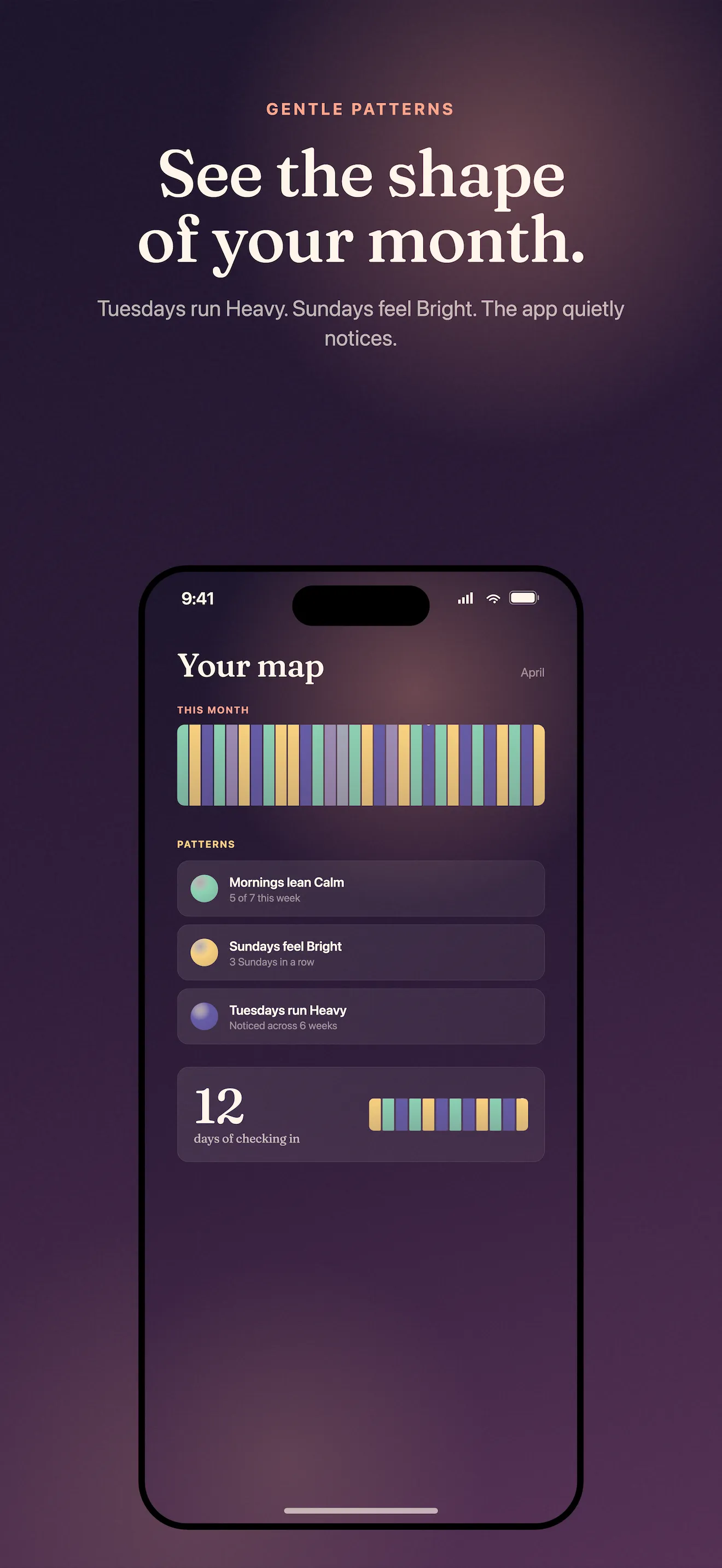
Over weeks and months, MoodLight builds a mood map—a visual calendar where each day is colored by the orb you selected. Unlike anxiety-inducing "streaks" or guilt-trip dashboards, this map is gentle. It shows you patterns without judgment. You start to notice that Mondays feel heavy, or that bright days cluster around time with certain people. You see that numb comes after off, predictably, and that calm arrives after you've rested. The map doesn't shame you. It informs you. And for many users, that pattern-recognition is the most valuable part of the app. It becomes the core of conversation with a therapist or a trusted friend. For more on building a sustainable check-in habit, see our MoodLight tips on quick check-ins that actually stick.
Shareable Without Oversharing
MoodLight includes soft, shareable mood cards—visual exports of your weekly gradient or monthly map that you can send to a therapist, a partner, or a close friend. The card shows color and pattern without forcing you into words. Some days that's all you need to say: here's what the week looked like. Here's the texture of my mood. No explanation required. The sharing is optional and intentional, never pushed by notifications or social pressure. It's a tool for connection on your terms.
This article was drafted with AI assistance and reviewed by a human editor before publishing.