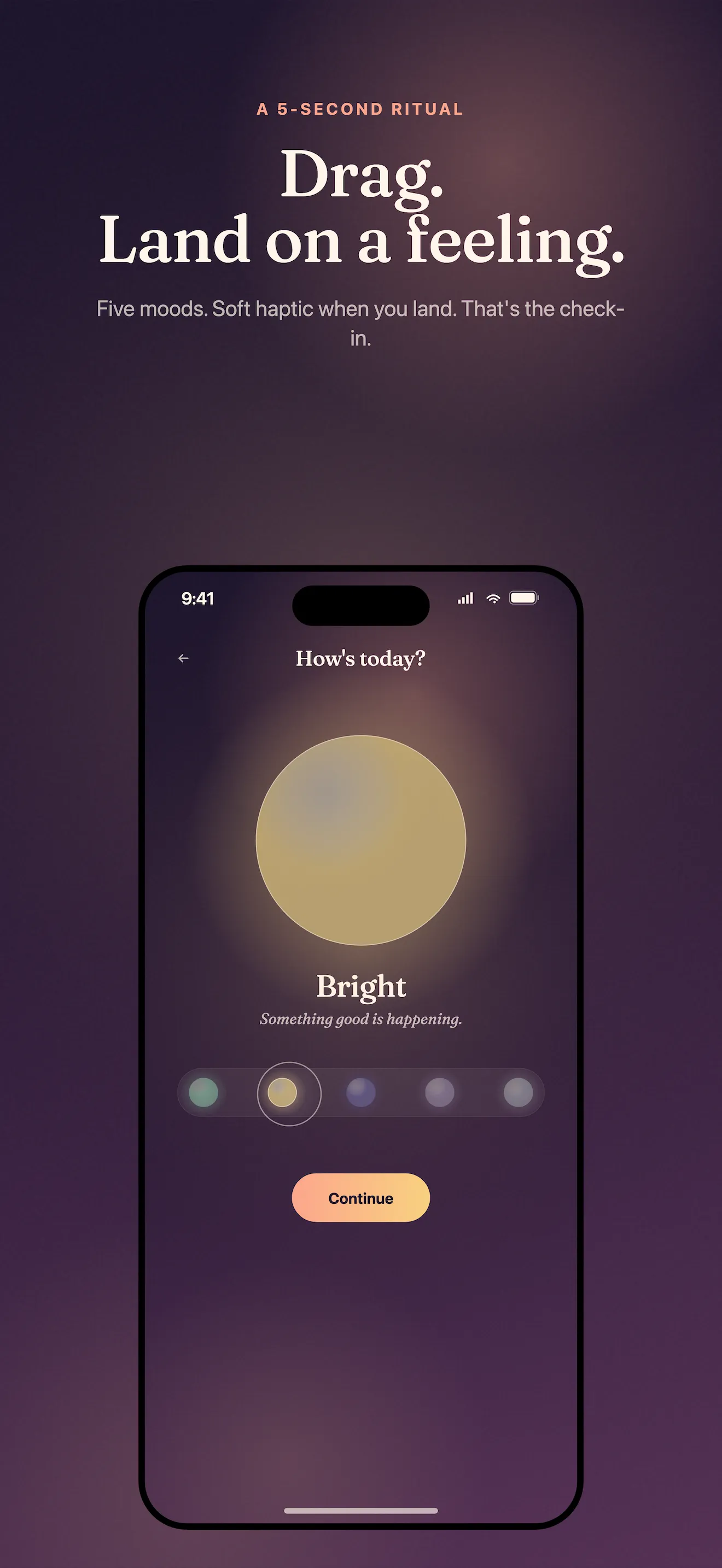
MoodLight asks one simple question each day: How are you, really? The answer lives in one of five orbs—calm, bright, heavy, off, numb—plus an optional note if you want to elaborate. That's it. No streak counter staring you down. No 1-10 scale creating comparison anxiety. Just thirty seconds of honest reflection. The challenge, then, isn't the app itself. It's building a habit that sticks without guilt, and turning a week of check-ins into something you actually want to look at. Here's how.
Check in at the same moment every day
Habit sticks when it's anchored to something that already exists in your routine. Pick a moment that's already fixed: morning coffee, lunch break, right before bed, the commute home. Not because MoodLight will punish you for missing a day—it won't—but because consistency makes the practice feel less like a chore and more like a ritual. You'll start noticing patterns faster when your check-ins cluster around the same time. And your mood gradient will be more honest: a Tuesday morning check-in genuinely looks different from a Tuesday night one.
Let your orb choice live in your body first
Don't overthink it. The five orbs—calm, bright, heavy, off, numb—map to real emotional states, not clinical categories. When you open the app, resist the urge to analyze. Instead, pause for a breath and feel where you actually are right now. Which color are you? Your first instinct is almost always the truest one. This is what separates MoodLight from traditional mood journals: you're not fitting yourself into someone else's framework. You're naming what's already true.
Your first instinct is almost always the truest one.
Use the optional note only when you need to
The one-line note is there if context matters. But it's optional for a reason. Some days, the orb is enough. You tapped numb, and that's the whole story. Other days—the ones where something specific triggered your mood—a sentence or two adds color to the gradient. "Didn't sleep," "great conversation with Sarah," "overwhelmed by email." Keep notes short. This isn't a journal entry; it's a breadcrumb. When you look back at your week, these notes will remind you why certain colors landed where they did.
Review your week before reviewing your month
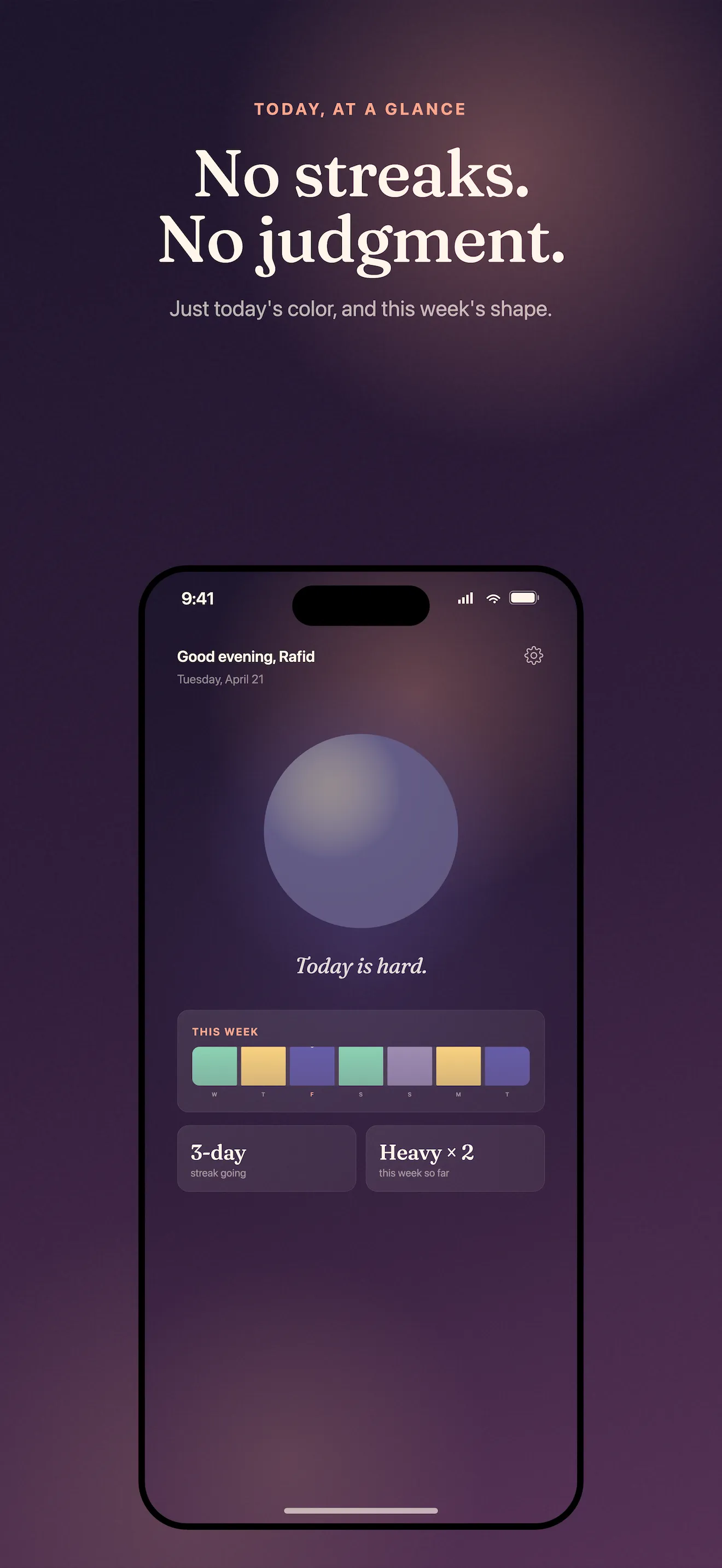
MoodLight shows you your mood as a gradient: seven days of color stacked into a visual story. This is where the app earns its name. Before you zoom out to the full month, spend a moment with your week. What jumps out? Did heavy cluster around a specific day? Did you ever hit calm twice in a row? The weekly view is intimate enough to feel personal, but wide enough to spot real patterns. Monthly maps are useful for therapists and long-term reflection, but your week is where the insight lives.
Share your mood card when you're ready to be honest
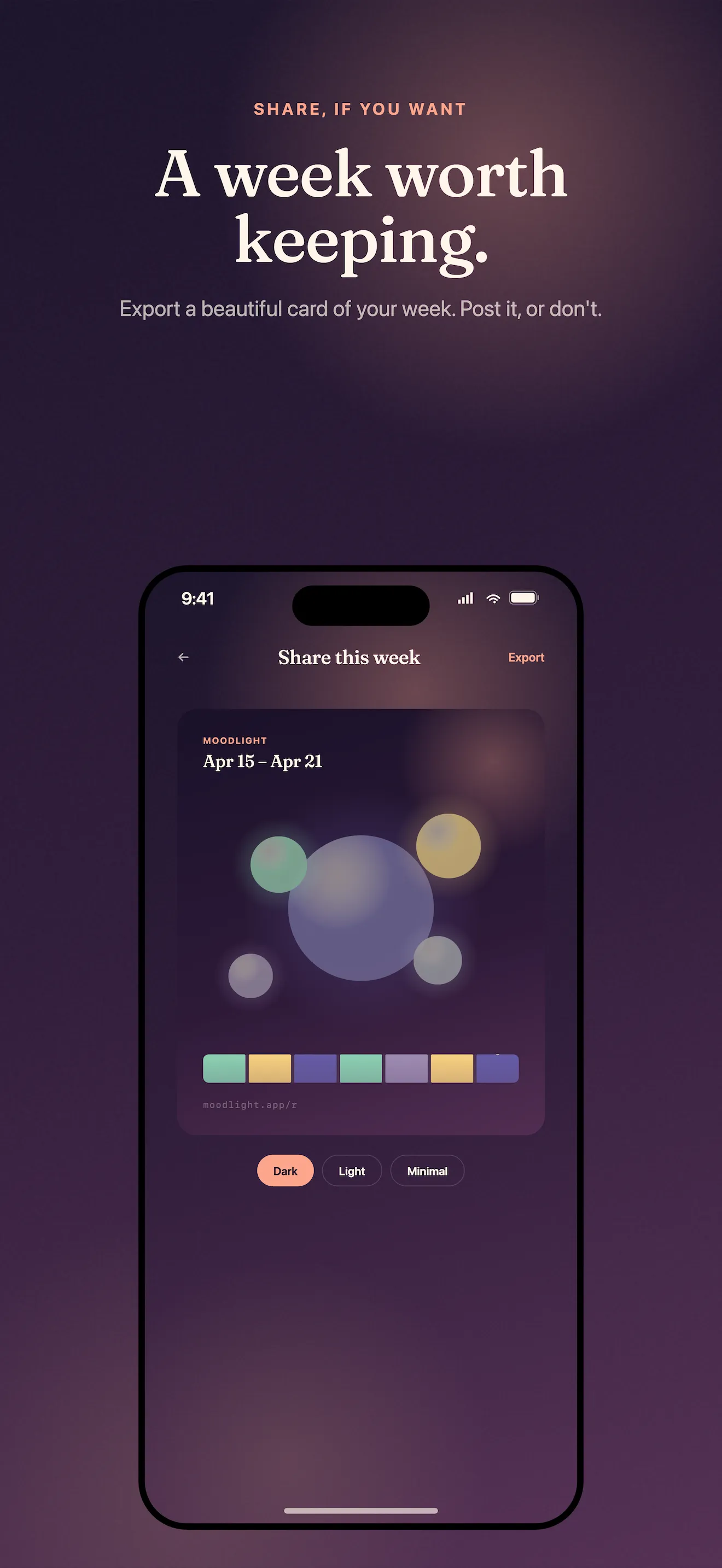
MoodLight lets you export a soft, shareable mood card from any week. This is useful in two ways. First, it gives you a reason to actually look at your gradient and sit with what it means. Second, it's a way to tell someone important—a therapist, a partner, a trusted friend—what your week actually looked like without having to explain it in words. No judgment in the image itself. Just color and honesty. You control when and with whom you share.
Trust that skipping a day won't wreck your habit
This is the secret weapon: MoodLight has no streak counter. You won't get a notification shaming you for missing yesterday. Your check-ins live only on your device, and the app never punishes gaps. This means you can actually sustain the habit. You miss a day, and when you come back, you just check in for today. No guilt spiral. No "well, I already broke it" mentality that kills other tracking apps. Your mood gradient will have a gap, sure. But gaps are honest too. They're part of your story. If you want to dive deeper into building consistency, explore MoodLight Tips: Quick Check-Ins That Actually Stick for more on sustainable habit formation.
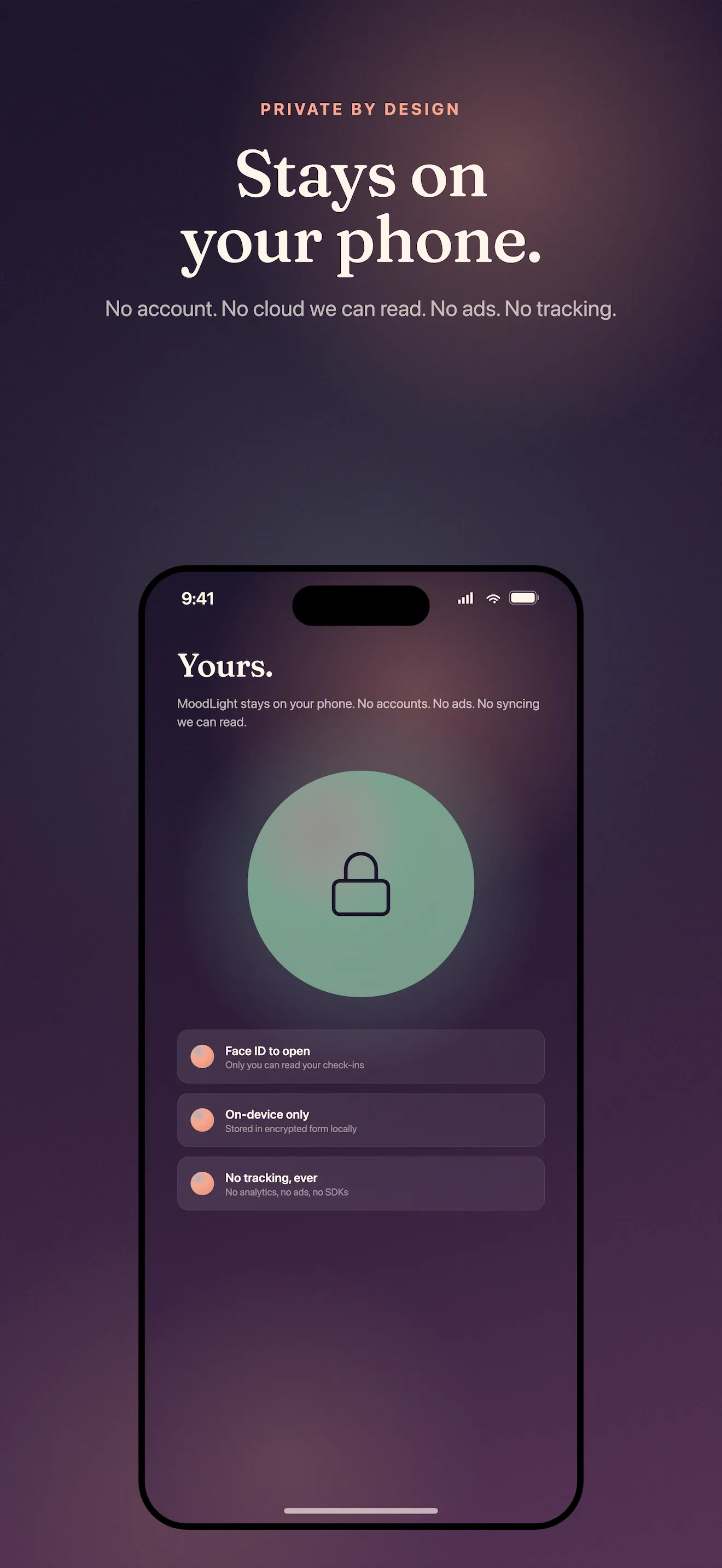
MoodLight works because it's designed for the way you actually experience your emotions. No scales that flatten nuance. No clouds that complicate privacy. No streaks that turn self-reflection into performance. Just five honest colors, thirty seconds a day, and a gradient that grows more meaningful as you use it. The best habit is the one you don't have to think about. Once you anchor your check-in to a daily moment and let yourself stay honest, you'll find yourself opening the app not because you have to, but because you want to know what color you are today. For more on the philosophy behind MoodLight's approach, check out The Five Orbs: How MoodLight Rethinks Daily Mood Tracking.
This article was drafted with AI assistance and reviewed by a human editor before publishing.