How do you track your mood without a 1-10 scale
Why do 1-10 mood scales feel wrong for daily tracking
A 1-10 scale forces you to rank a feeling before you've even named it. Was today a 4 or a 5? Is 'tired but okay' a 6? Most people freeze, guess, or quietly stop logging. The scale also invites comparison against yesterday's number, which turns a moment of self-check-in into a mini performance review. A good mood tracker for iPhone should remove that friction, not add to it.
What do you tap instead of a number
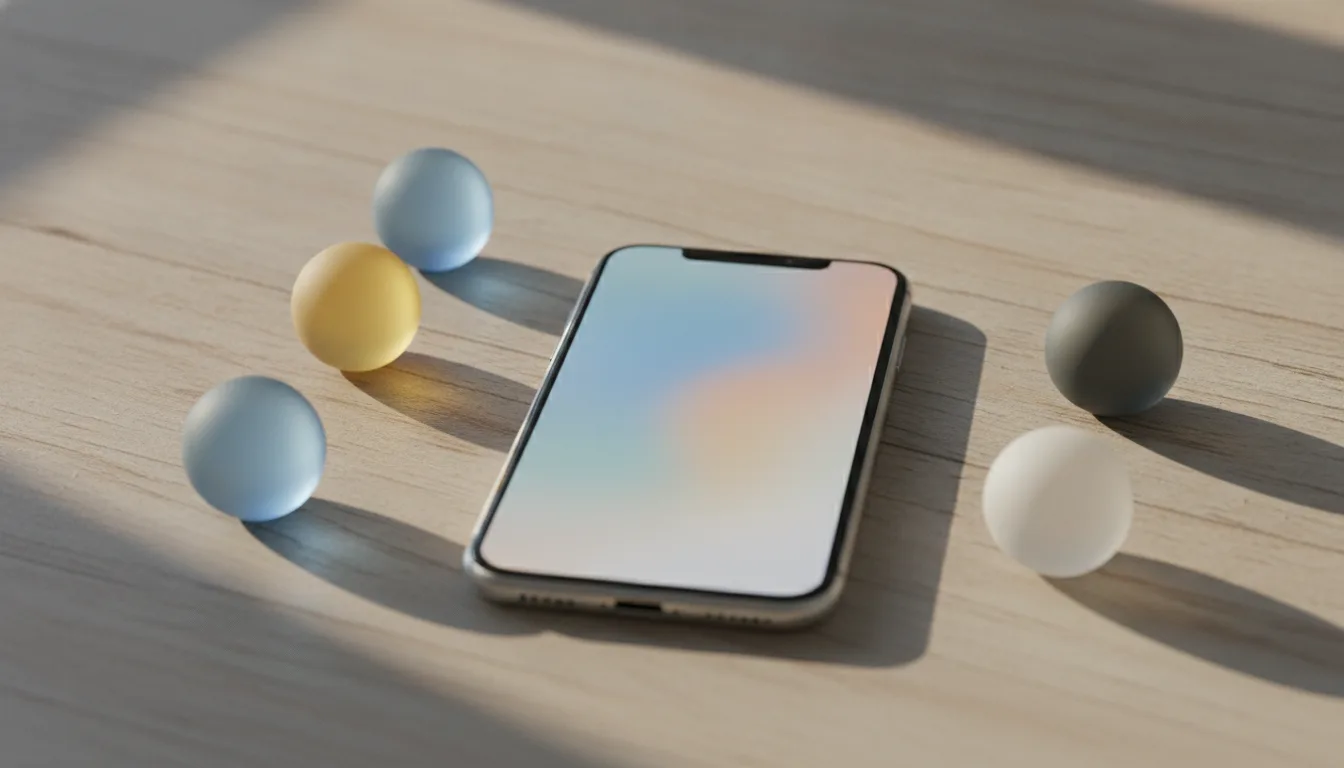
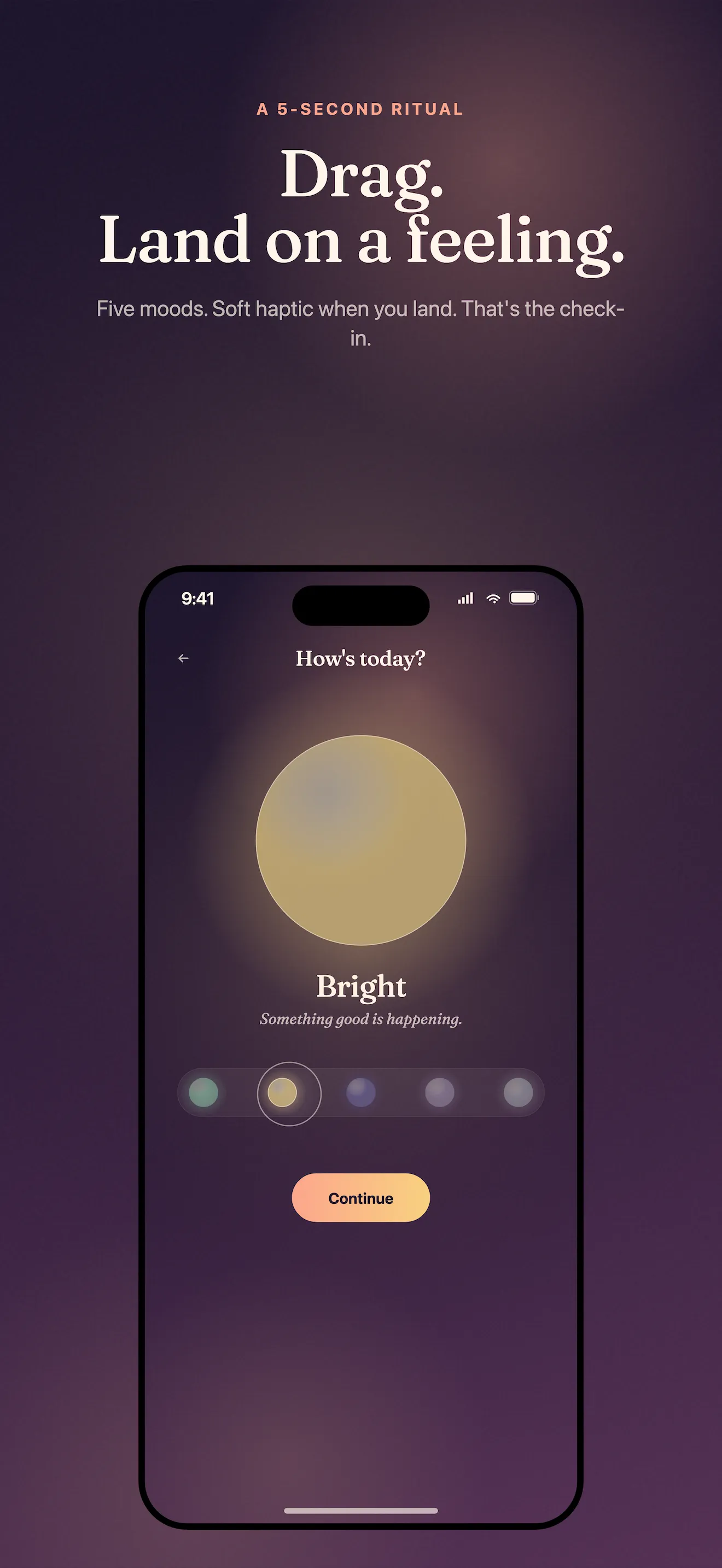
In MoodLight, you tap one of five orbs: calm, bright, heavy, off, or numb. These aren't clinical categories or a happy/sad binary — they're the vague, real states that most trackers skip entirely. 'Off' and 'numb' in particular describe days that don't fit neatly into a mood wheel but happen all the time.
How do you actually check in, step by step
Step 1: Open MoodLight
Step 2: Tap the orb that matches how you feel
Step 3: Add an optional one-line note
Step 4: Close the app
How do you see patterns over time without numbers
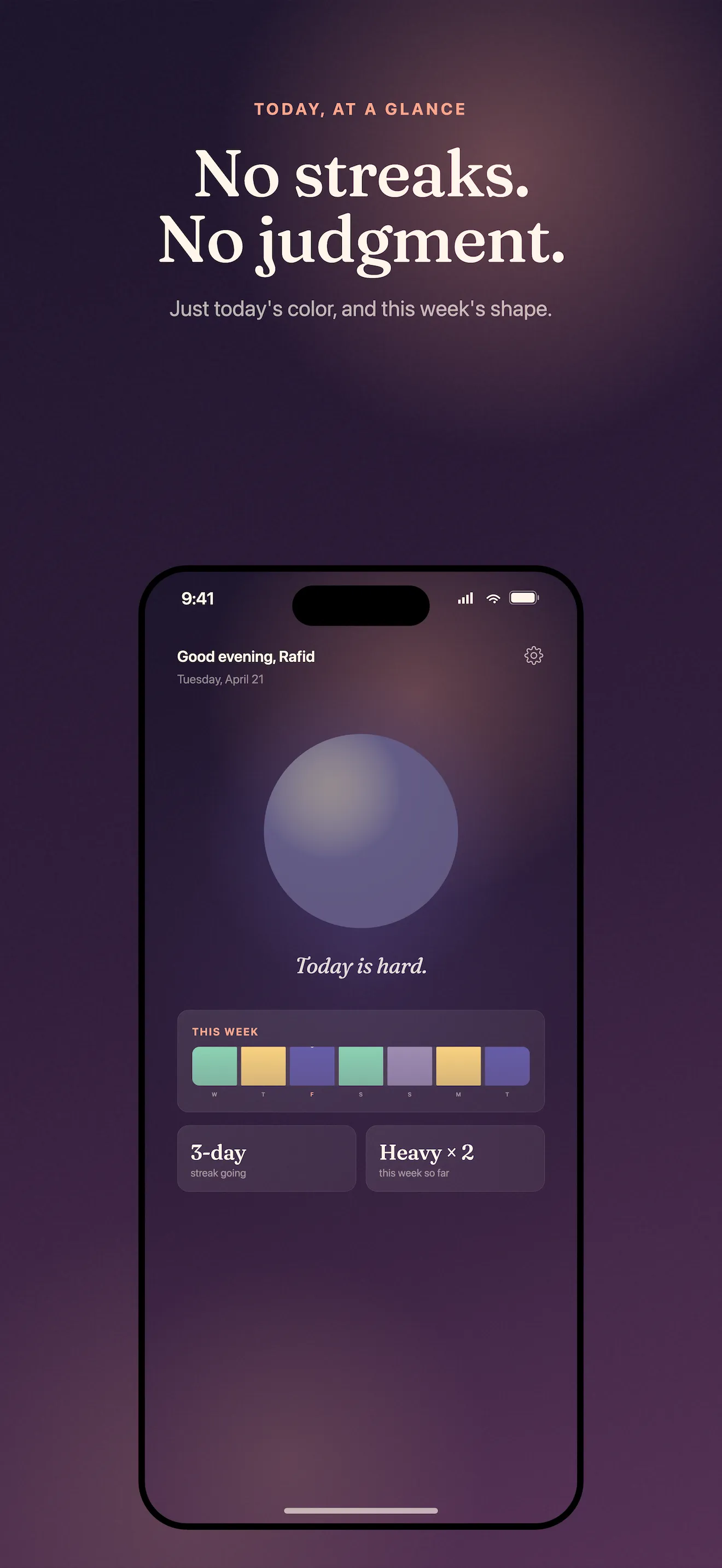
Each day's orb becomes one color in a strip that builds into your week, then your month. Instead of scanning a line graph for dips, you glance at a gradient and immediately see whether the last two weeks leaned heavy or bright. It reads more like a mood map than a spreadsheet — which is the point. For a walkthrough of setting this up well from day one, see the MoodLight setup checklist.
Is this actually private, or does it sync to an account
MoodLight has no account, no cloud sync, and no streak counter that guilts you for missing a day. Check-ins live only on your device. If you want to bring a pattern to a therapist, you export a soft, shareable mood card instead of handing over raw data or a login.
- Input
- 1-10 scale: a number you have to justify vs. MoodLight: one orb, no justification
- Vocabulary
- 1-10 scale: happy/sad or clinical wheel vs. MoodLight: calm, bright, heavy, off, numb
- Time per entry
- 1-10 scale: 1-2 minutes of deciding vs. MoodLight: about 30 seconds
- Streaks
- 1-10 scale: often gamified with streaks vs. MoodLight: none — skipping a day costs nothing
- Data storage
- 1-10 scale: frequently cloud-synced vs. MoodLight: on-device only
Common questions
Do I have to pick exactly one mood per day?
What if none of the five orbs match how I feel?
Can I go back and see old check-ins?
Is there a streak I can lose if I miss a day?
Can I share my mood history with a therapist?
Is my mood data stored online?
This article was drafted with AI assistance and reviewed by a human editor before publishing.