How to Build a Visual Schedule a Child Can Actually Run Alone
What goes on a picture-first routine chart, how many steps is too many, why the pictures have to come before the words, and how to hand the routine over so you stop being the one who runs it.
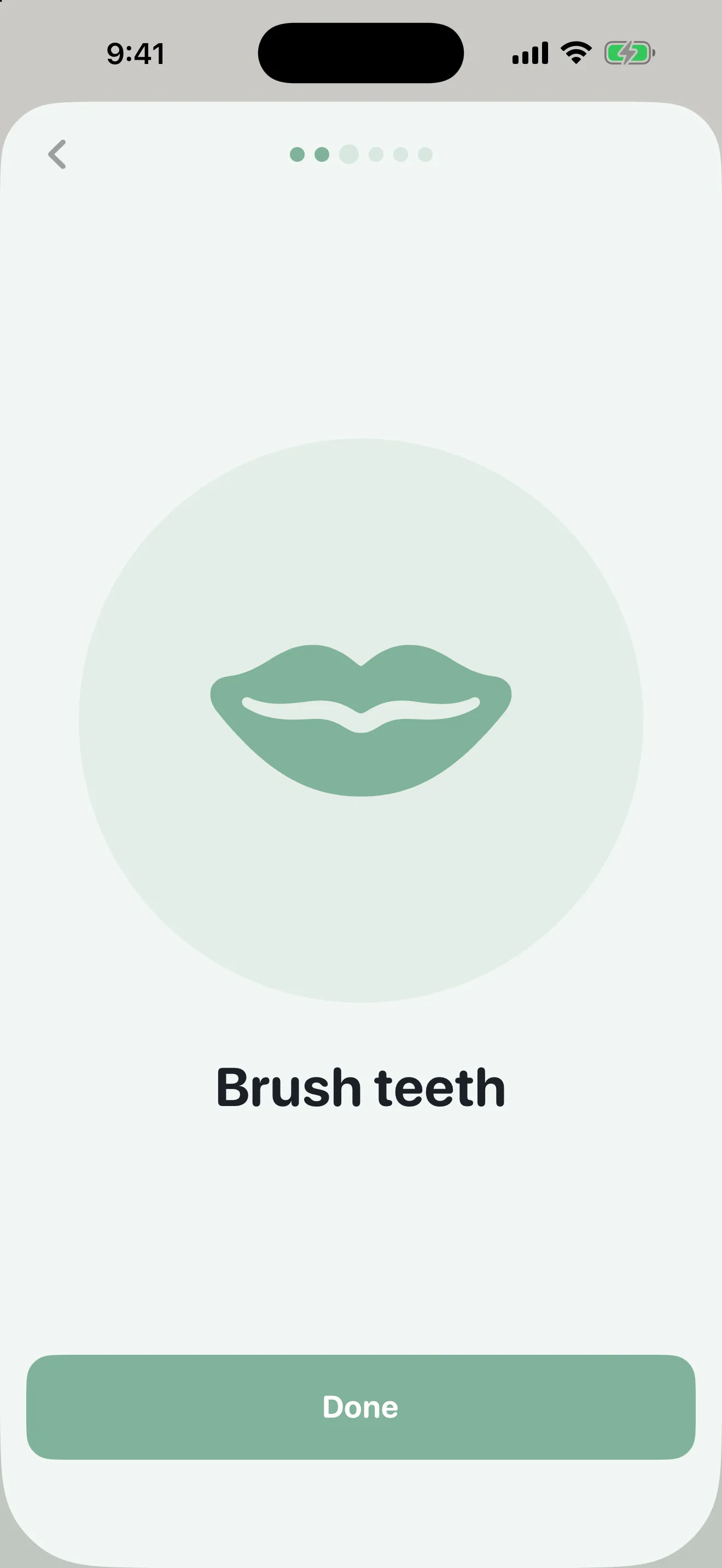
The point is handing the routine over
A visual schedule is not a reminder for you. It is a way of moving the sequence out of your head and into something your child can consult without asking. If you are still standing there reading the chart aloud, the chart has not done its job - it has just changed where you are standing while you nag.
That is the test to apply to anything you build: can the child get from the first step to the last without an adult in the room? Everything else - the stickers, the stars, the laminating - is decoration on top of that one question.
Pictures first, words second, always
A three-year-old cannot read "brush teeth", and a six-year-old who can read it is still slower at decoding it than at recognising a toothbrush. So the picture has to be the primary object on the screen or on the card, large enough to identify from across the room, and the word goes underneath as a support rather than as the instruction.
Keep the word to one or two syllables where you can. "Teeth" beats "brush your teeth". "Shoes" beats "put your shoes on". The child is matching a picture to a thing in the world; the text is there so they gradually learn the word, not so they can parse a sentence at 7am.
The strongest version of this is a photo of your actual objects - your bathroom, your child's backpack, the specific blue toothbrush. Generic icons work fine and are faster to set up, but for a child who is struggling to generalise, the real photo removes a translation step.
Five to seven steps, not fifteen
The most common mistake is granularity. A parent writes out every atom of the morning - go to bathroom, turn on tap, wet toothbrush, apply toothpaste - and produces a chart so long the child loses the thread and the parent gives up maintaining it.
Aim for five to seven steps for a routine. Each step should be a thing the child already knows how to do once they remember to do it, because a routine chart solves forgetting, not skill. If a step genuinely needs breaking down because the child cannot yet do it, that is a teaching task, not a chart task, and it wants your attention rather than a picture.
The order matters more than people expect. Put the step your child resists in the middle rather than at the end, so the routine does not habitually stall on its final item, and end on something easy and physical like shoes or backpack.
One step at a time, or the whole list?
Younger children and children who are easily overwhelmed do better with one step filling the screen and nothing else visible. There is nothing to scan, nothing to argue about, and no way to see how much is left - which for an anxious child is a feature rather than a limitation.
Somewhere around six or seven, many children flip. They want to see the whole list, know how much is left, and tick things off - the satisfaction moves from the individual step to the checklist. A schedule that can show the same routine either way, without you rebuilding it, saves you a rewrite when that switch happens.
Rewards: small, real, and priced in advance
Stars only work if they buy something. An open-ended points balance with no menu attached stops meaning anything within about a fortnight. Define three or four rewards, price them, and make the prices visible so the child can see what they are saving toward.
Keep the rewards small and real - picking the film, staying up fifteen minutes, choosing dinner on Friday, a trip to the park. Expensive rewards distort the whole system and turn the routine into a negotiation about money. The reward that works best is usually a decision your child would otherwise have to argue with you to get.
And do not take stars away as a punishment. The moment a chart can go backwards, it becomes a thing to be anxious about rather than a thing to run, and the child stops wanting to open it at all.
Where Starling fits
Starling is a picture-first routine chart built around exactly this: around 120 built-in step pictures plus your own photos, five-to-seven-step starter routines you edit rather than write from scratch, a focus mode and a list mode for the same routine, and stars that buy rewards you priced yourself.
It repeats on the days you choose so there is nothing to rebuild each week, it puts the next step on your Home Screen so the routine does not depend on anyone opening an app, and it has no failure states - a missed day is simply not completed. Nothing about your child leaves the phone. See the Starling product page for screenshots and the full privacy policy.