Bill tracking sounds simple until you actually try it. You've got credit cards with confusing cutoff dates. Utilities that bill on random cycles. Installments spread across months. Spreadsheets work until they don't. Calendar reminders get lost. And somehow, despite having all the information, late payments still happen. Different apps solve this differently. Some focus on pure automation. Others treat bills like a checkbox list. BillWise takes yet another path—one that treats staying on top of payments as something worth getting genuinely better at.
The main approaches to bill tracking
Most bill trackers fall into one of three camps. The first is the spreadsheet-plus approach: a nimble digital ledger where you log each bill manually and check it off. It's flexible and requires no automation overhead, but it lives and dies by your discipline. The second is the full-automation approach: connect your bank account, let the app ingest transactions, and it theoretically handles everything. This works great if your bills are predictable, but real life is messier—variable utility costs, credit card cutoff dates that don't match due dates, and installments that don't show up as transactions until they're already late. The third approach, still less common, is structured tracking with behavioral design—keeping the clarity of manual entry while layering in systems that actually motivate consistent follow-through.
Why automation alone isn't enough
The appeal of full automation is obvious: add your bank account once, forget about it, never miss a payment. In practice, though, automation has limits. Credit cards are the biggest pain point. A card's cutoff date (when transactions post to your statement) and its due date (when payment is actually due) are two different things. If you only track due dates, you don't know which transactions will hit this month's bill and which will roll to next month. Utilities vary wildly month-to-month depending on weather and usage. Installments might be on a different cadence from your other bills. And perhaps most important: automation doesn't build the habit of actually checking before you spend. It just catches you after the fact.
The best bill tracking combines clarity about what's due with genuine motivation to stay ahead of it.
Where BillWise differs
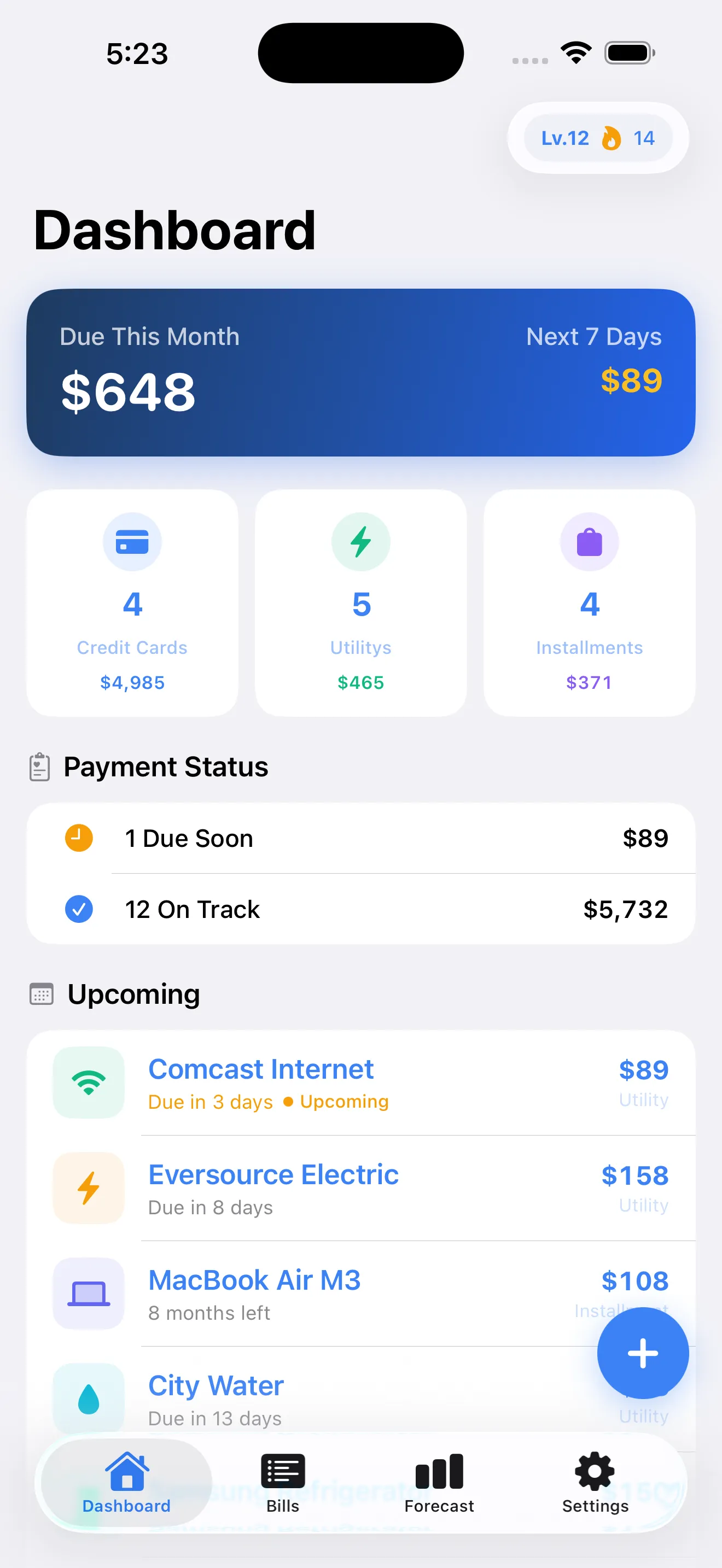
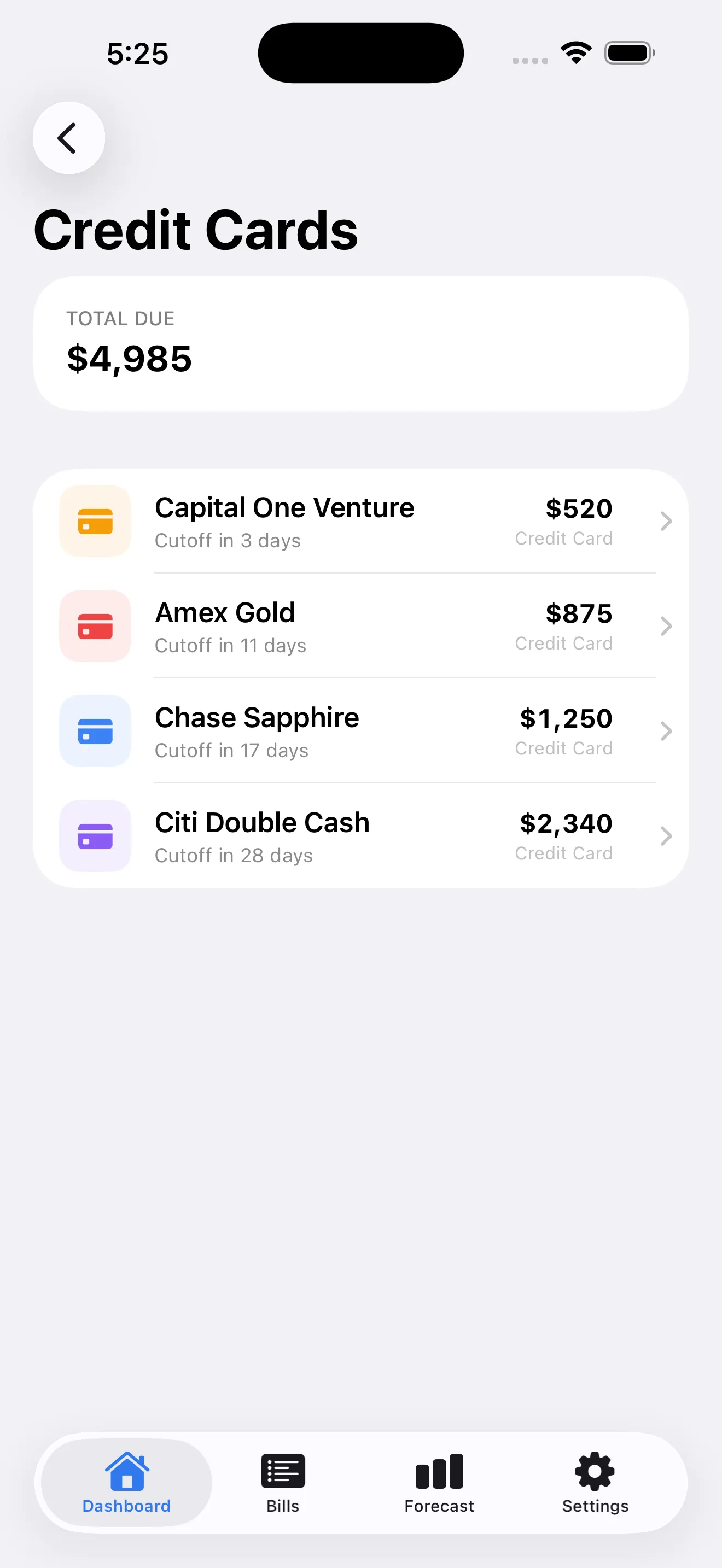
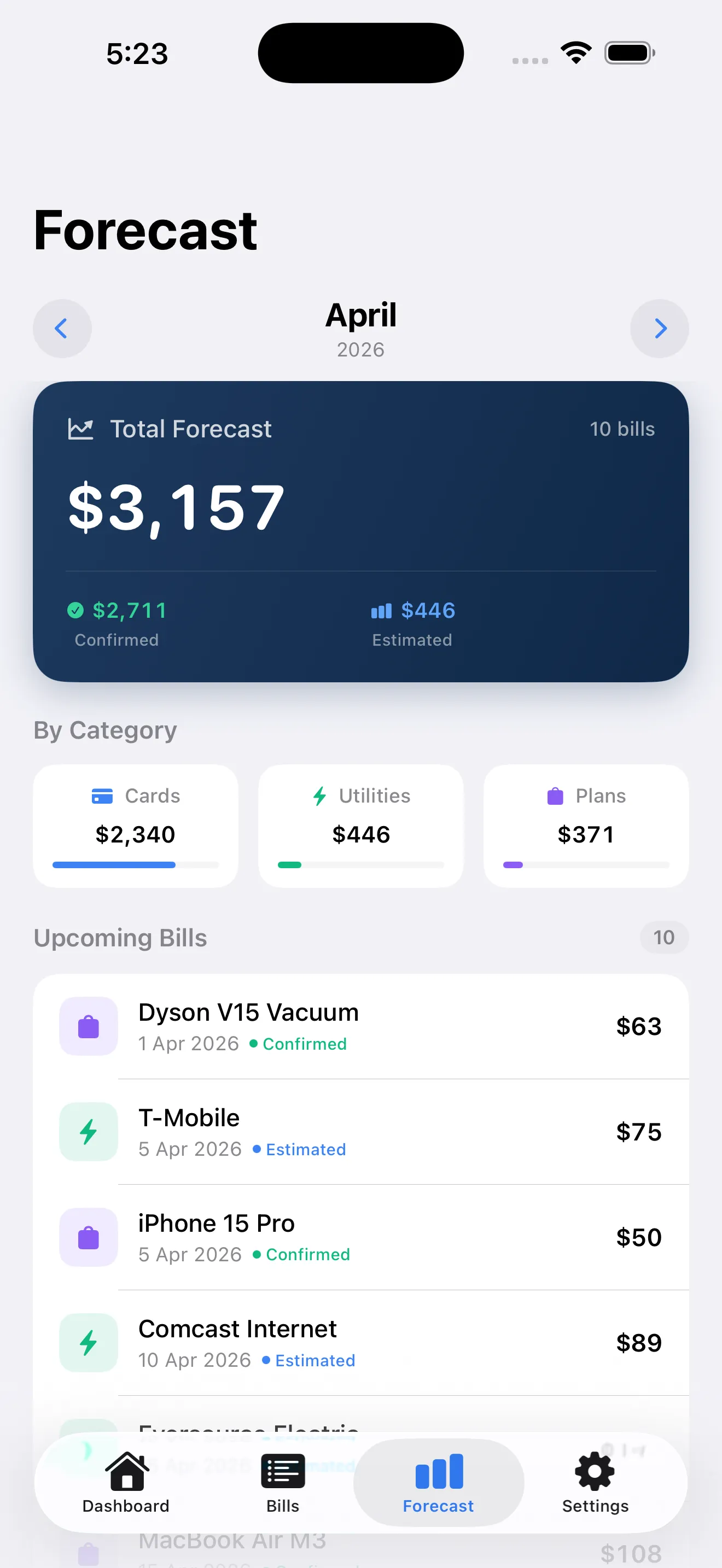
BillWise asks you to enter your bills, but it doesn't ask for your bank login. Instead, it gives you tools to actually understand your obligations. Cutoff-aware credit card tracking means you log the card once and see which purchases will land on this month's statement versus next month's. Payment forecasting shows you your spending shape across the next few months, so surprises are rare. And because you're taking the few seconds to log each bill, you're already in a better headspace about it than if it were a silent automation running somewhere.
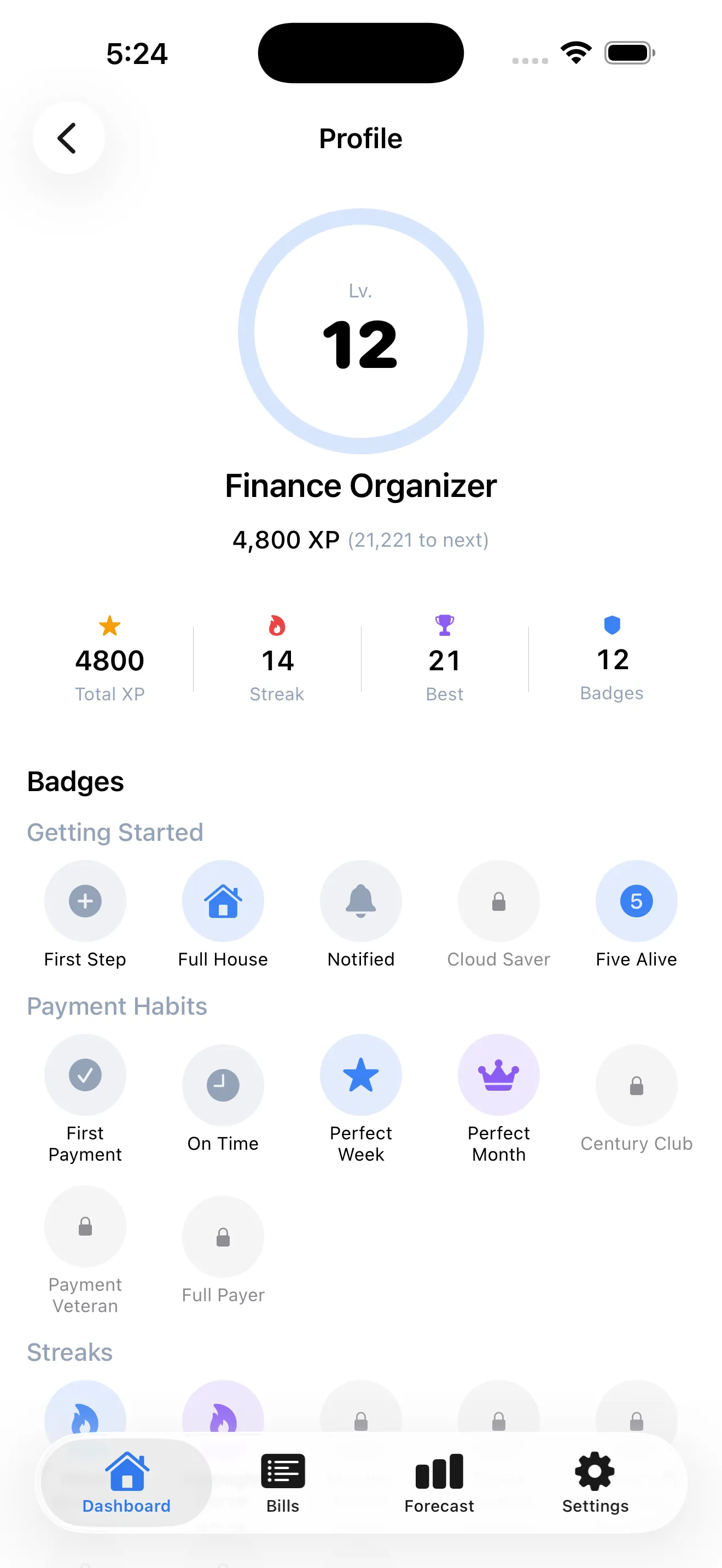
The second half of BillWise's angle is gamification—but not the cynical kind. You earn XP for paying on time, level up over time, and build a streak. This isn't about tricking you into compliance; it's about making the moment you do the right thing actually feel rewarding. If you're someone who has stayed on top of bills for years, that reward is already built in (the relief of not having late fees or damage to your credit). BillWise just makes it tangible. If you're someone who struggles with staying organized, it creates a small but real reason to sit down and check your upcoming payments each week.
Who this works best for
- Anyone with multiple credit cards and confusion about cutoff vs. due dates
- People who've missed bills before and want a safety net without giving up bank access
- Those who respond to structure and small rewards—gamification isn't gimmicky if you actually like it
- Anyone managing installments across different services without a unified view
- People who want forecasting, not just reactive transaction tracking
Getting started
If you're curious about how BillWise works in practice, our first-time setup guide walks through adding your first bill and earning your first level. For a deeper look at how the gamification actually lands, read how BillWise turns bill paying into a game.
This article was drafted with AI assistance and reviewed by a human editor before publishing.