Most bill trackers feel like chores. You log in when a payment reminder nags you, check a balance, and forget about it until next month. BillWise starts from a different premise: that bill management works better when you understand exactly what's due and when, and when there's a small reason to care about staying on top of it. The app isn't flashy. It's built around three core ideas—cutoff-aware credit card tracking, honest payment forecasting, and a leveling system that actually rewards financial responsibility instead of just gamifying for gamification's sake.
Who This Is For
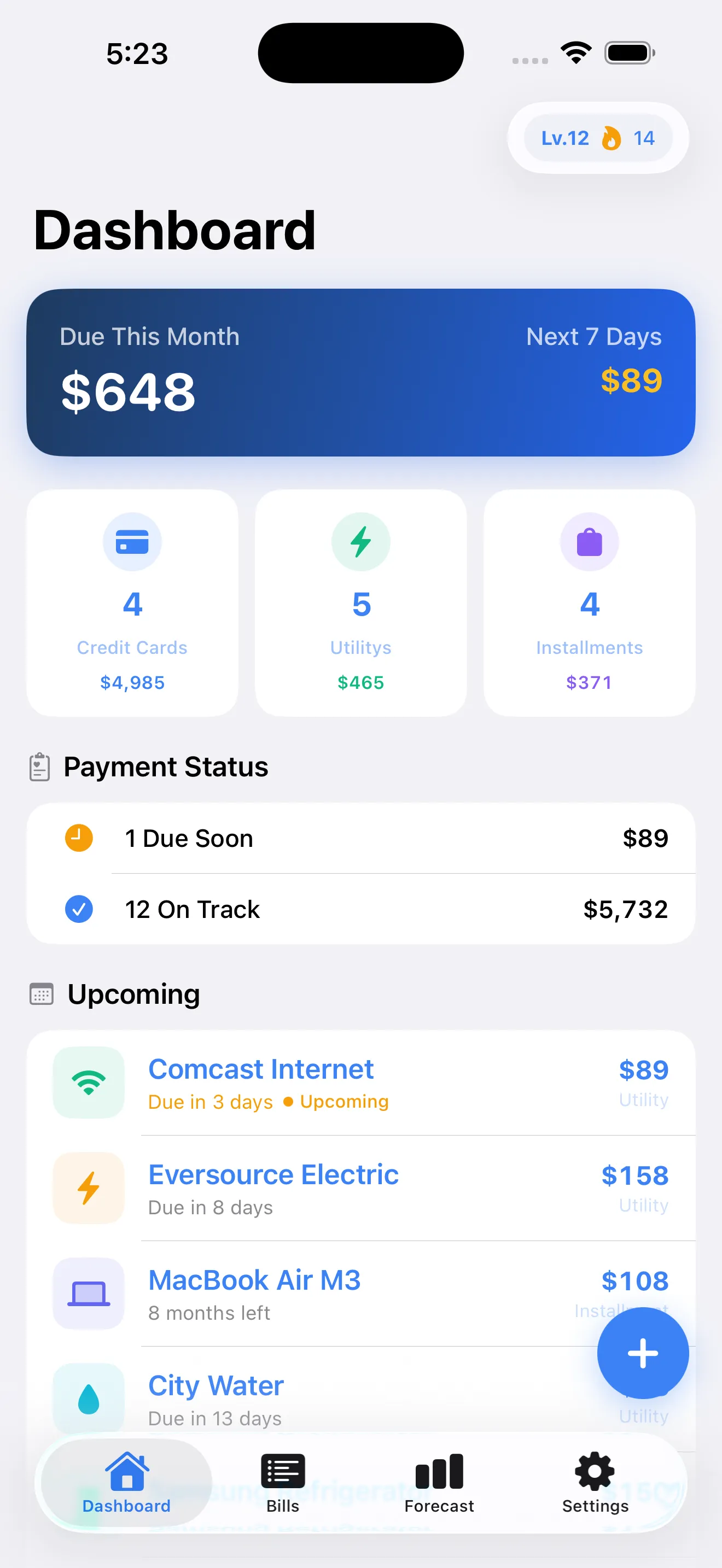
BillWise works best if you carry multiple credit cards, pay utilities on different schedules, or have installment payments you want to track in one place. It's particularly useful if you've ever missed a due date because you lost track of which card has which cutoff, or if you pay multiple bills across different apps and feel scattered. The app is also honest about its own scope: it's not a full budgeting suite like YNAB or a comprehensive financial dashboard. It focuses on one problem—knowing what's due, when, and not letting it slip.
What BillWise Does Well
Cutoff-Aware Credit Card Tracking
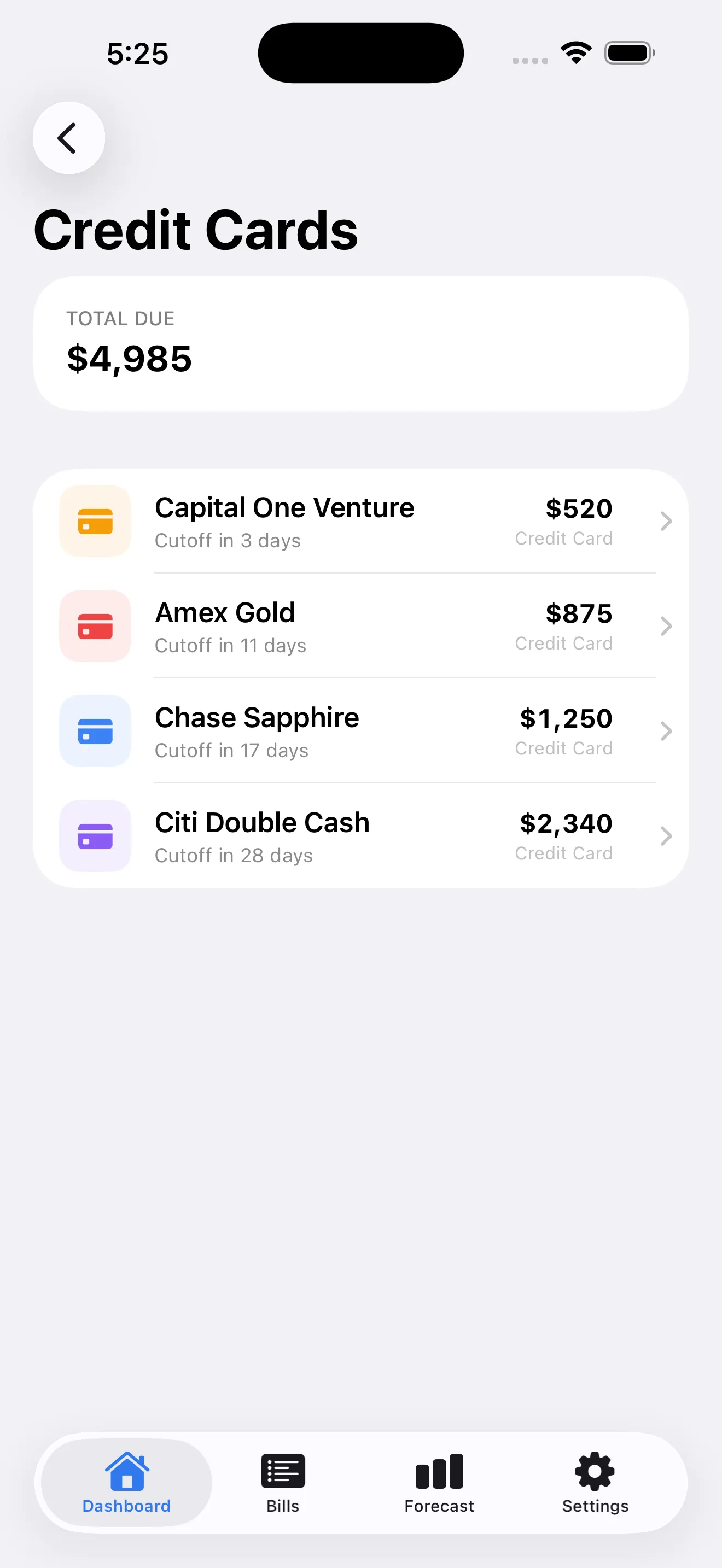
Most bill apps treat credit cards like any other payment. BillWise doesn't. It acknowledges that your card has a statement cutoff date and a separate due date, and that charges made after the cutoff won't show up on that bill. You add your cutoff day once, and the app automatically understands which transactions fall into which billing cycle. It's a small thing that removes a surprising amount of mental overhead—you're not wondering whether a purchase on the 28th will be due next month or the month after.
Payment Forecasting
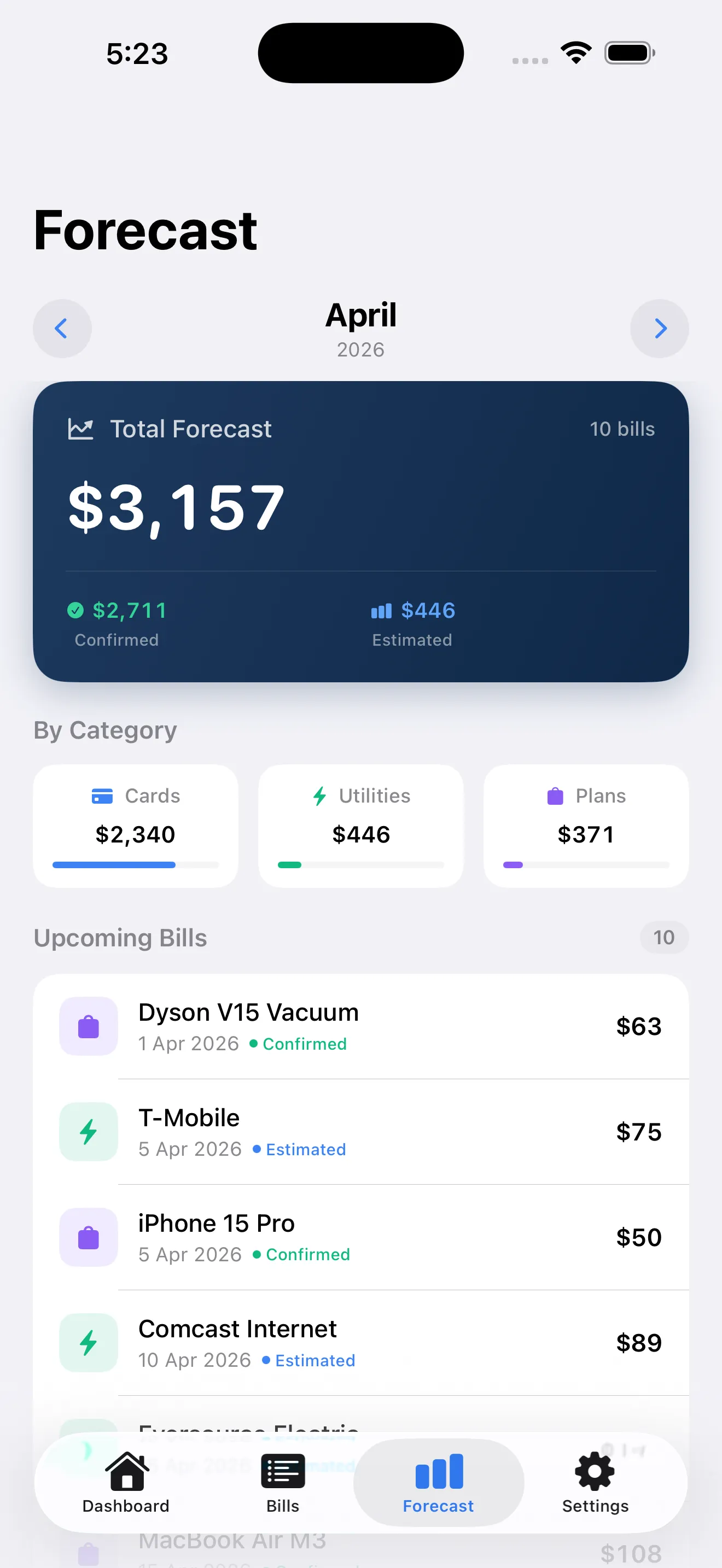
The forecast view shows you what you'll owe across the next few months. This is valuable not because it's novel, but because it's stripped of noise. You see the projected total for each month, broken down by type (credit cards, utilities, installments). It's the view you actually want to look at when you're wondering if you can afford a purchase this month or need to wait.
Gamification That Doesn't Feel Hollow
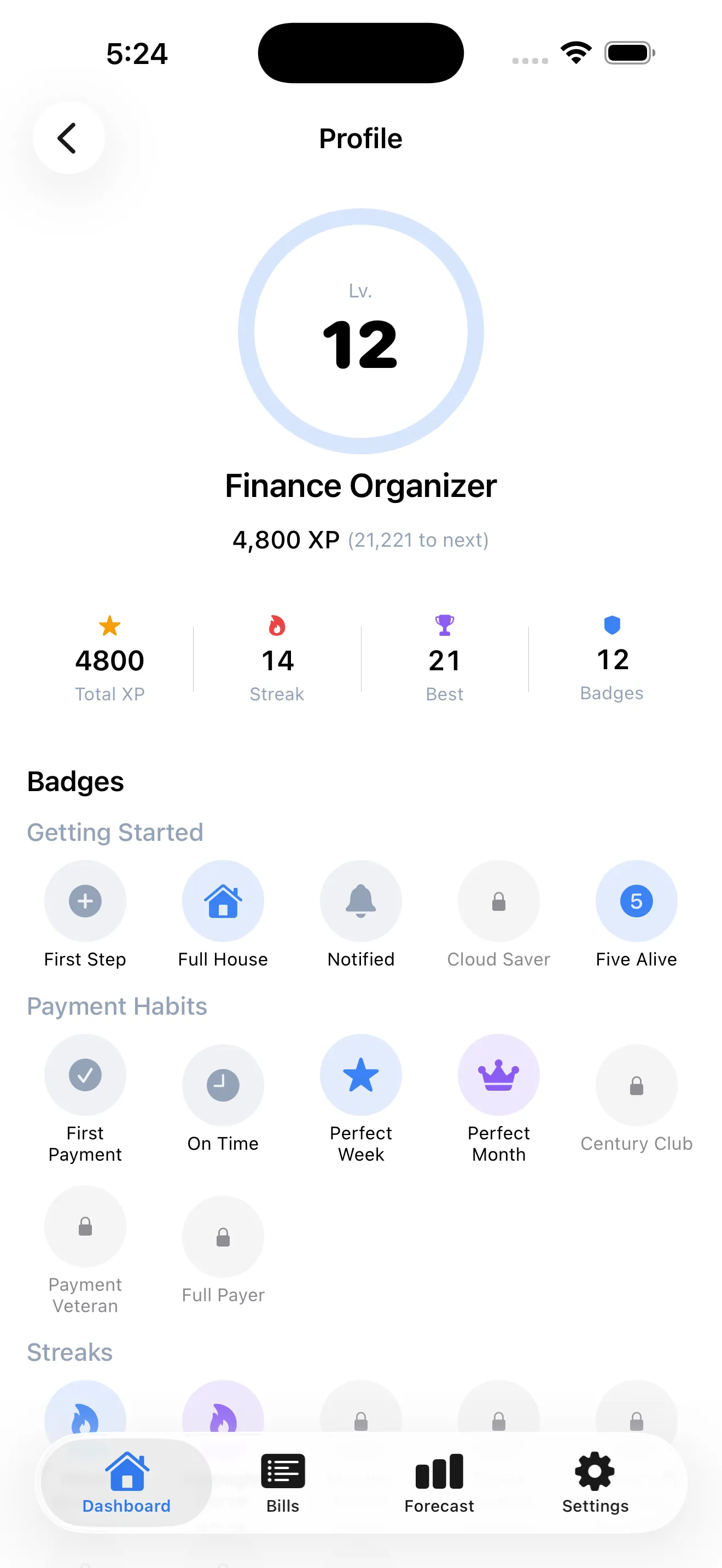
This is where BillWise separates itself from its competition. Paying your bills on time earns you XP, and accumulating XP gets you to the next level. You can build a payment streak, earn badges, and use streak shields to protect your progress if you slip. The key difference is that the rewards are tied directly to behavior you already want to do—paying bills on time. You're not grinding for points in a fictional economy. You level up because you paid your electric bill three days early, which is genuinely something to feel good about.
The gamification isn't a distraction from bill management—it's direct reinforcement for the financial behavior that matters.
Real Limitations
BillWise is free for up to five bills, but unlimited bills requires a premium subscription. If you have a modest number of recurring payments (most people do), the free tier is enough. The app also doesn't pull bill data from your bank or billers—you add payments manually. This is a trade-off: it's more work upfront, but it also means BillWise works with any biller, doesn't require API access, and won't confuse you with automatic categorization errors.
The app is focused and deliberately narrow. It doesn't integrate with budgeting, investment tracking, or broader financial planning. If you're looking for where BillWise fits compared to other bill tracking approaches, it's specifically the bill-and-payment layer of your financial life, not the whole foundation. There's also no web version—it's iOS only, which works if that's your primary device but limits access otherwise.
What Makes It Worth Using
If you've found yourself wondering whether you'll make a credit card payment deadline, or if you're juggling multiple bills and want a single place to see them all with realistic forecasts, BillWise is direct and purposeful enough to be worth the few minutes it takes to set up. Getting started is straightforward, and the free tier is genuinely functional for most people. The app respects your time and your intelligence—it doesn't pretend bill management is thrilling, but it makes it less likely you'll slip up.
The Bottom Line
BillWise is a rare tool that improves something mundane without being precious about it. It's not a financial revolution. It's a well-reasoned bill tracker that understands how credit cards actually work, helps you see what's coming, and gives you a genuine (if small) reason to care about staying on top of payments. For anyone tired of missing dates or using three different apps to track their obligations, it's worth trying.
This article was drafted with AI assistance and reviewed by a human editor before publishing.