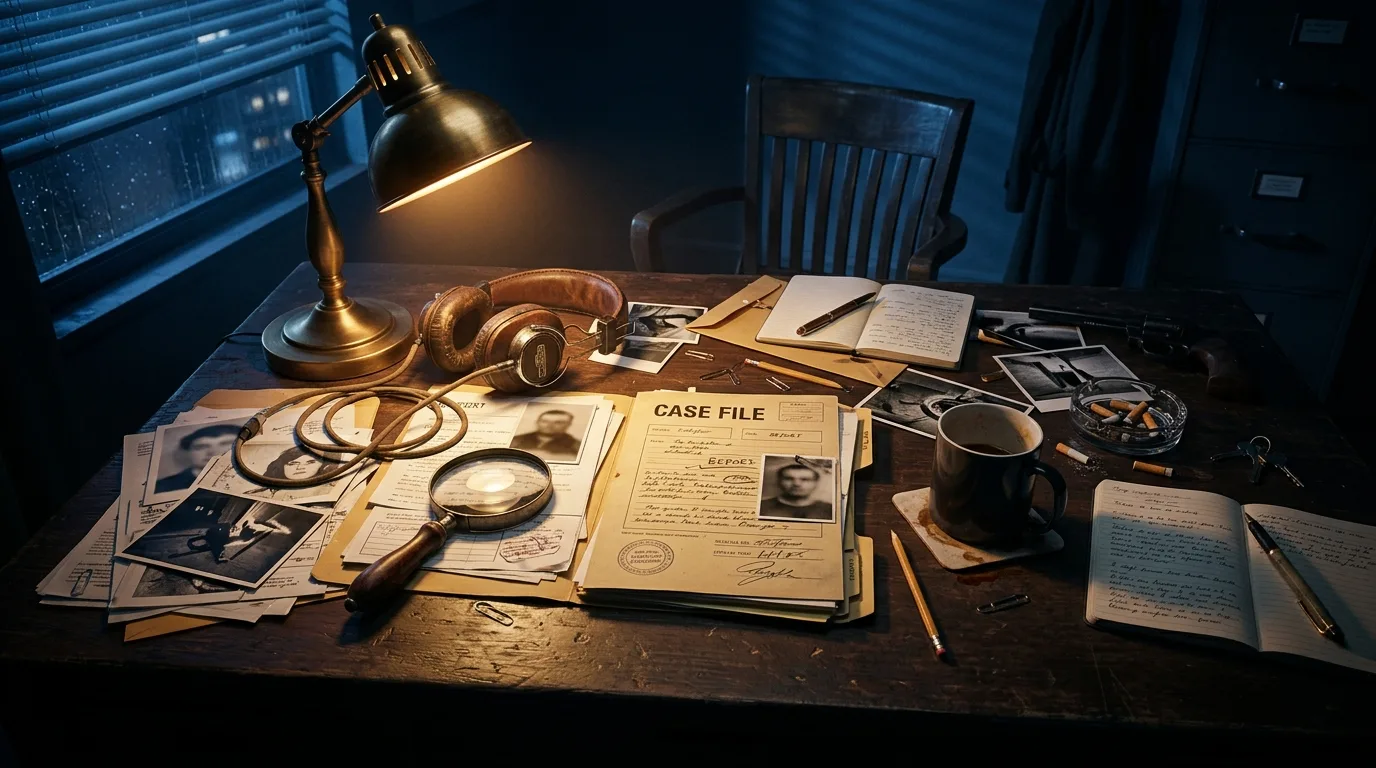
What You'll Have by the End of This Checklist
A full first week with Casefile Daily behind you: a daily ritual that fits your schedule, a working method for reading the grid without guessing, one streak in progress, and a clear answer to whether the archive or ad-removal unlock is worth it for you. Each day's ritual takes about five minutes.
- An iPhone with Casefile Daily installed
- Headphones or a speaker for the twelve-second narration
- A recurring time slot in your day for a five-minute ritual
- A notebook or notes app if you like tracking eliminations by hand
- Patience for exactly one case a day — no bingeing, no shortcuts
Day One: Listen, Then Solve

Step 1: Pick your ritual time, not just a ritual
A new case drops at midnight UTC for everyone, but your ritual time is personal. Pick a slot that already exists in your day — first coffee, last train, the minute before bed — and commit to opening Casefile Daily there for the next seven days. Readers who've swapped a doomscroll for this exact ritual describe the shift in this five-minute commute story.
Step 2: Listen before you look at the grid
Open today's case and let the narration play in full before you touch anything. It's twelve seconds of pre-recorded hardboiled voice with subtitles, built to set the scene, not to hide clues. Resist the urge to skip ahead to the grid — the atmosphere is part of the ritual, and rushing it teaches you nothing about the case.
Step 3: Read the whole grid before marking anything
Scan every suspect, category, and clue once, top to bottom, before you make a single mark. You're looking for the shape of the puzzle, not the answer yet. Most first-week frustration comes from marking too early on partial information.
Step 4: Eliminate, don't guess
Work the clues in order and cross off what's proven impossible before you commit to what's true. Every case is verified for exactly one valid solution, so if you follow the logic step by step, there's no accidental wrong answer waiting for you. If you feel yourself guessing, stop and reread the last clue instead.
Step 5: Lock in one answer and close the case
Once the eliminations leave a single suspect standing, confirm your answer. You'll see immediately whether the case is closed correctly — there's no partial credit and no ambiguity, because the puzzle was built around one provable outcome.
Turn It Into a Streak

Step 6: Share your streak, not the spoiler
After closing a case, share your streak count if you want to keep a friend or group honest about showing up daily. The share is built to show progress, never the solution, so you can post it without ruining today's case for anyone still working it.
Step 7: Catch up with the archive if you miss a day
If a day slips — travel, a bad night, life — the case archive lets you replay any past case rather than leaving a gap in your streak logic. It's a one-time unlock, not a subscription, and it's the difference between a broken habit and a paused one. See how the archive fits into the bigger picture in this guide to daily logic mystery apps.
Step 8: Decide on the one-time unlocks by day seven
By the end of your first week you'll know whether you want the ads gone, the archive open, or both. Both are one-time purchases, not recurring charges, so there's no clock forcing the decision — but deciding early means day eight starts with the app exactly how you want it.
Common questions
What happens if I fall behind on my streak?
Your streak reflects consecutive daily solves, so a missed day breaks it going forward. The archive unlock lets you go back and play cases you skipped, which won't restore a broken streak but keeps you from missing the story or the puzzle itself.
Do I need a subscription to keep playing?
No. Casefile Daily runs on a free daily case with optional one-time unlocks for removing ads or opening the archive — no recurring payment either way.
Will the narration give away the answer?
No. The twelve-second narration sets mood and context; the actual clues live on the deduction grid, so listening carefully helps with atmosphere, not shortcuts.
Is it okay to write on paper while I solve?
Yes, and many players prefer it. Tracking eliminations by hand can make the logic easier to follow, especially in your first week before the grid's rhythm feels familiar.
This article was drafted with AI assistance and reviewed by a human editor before publishing.