Loopd addresses a problem most households live with every day: how do you keep everyone on the same page without turning into a nag? The app layers shared task lists with gamification—XP, streaks, leaderboards, achievements—to make coordination feel less like management and more like a shared endeavor. It's aimed at families, couples, roommates, and friend groups who want a better way to divvy up responsibilities and stay aware of what's happening. The result is something that genuinely feels different from generic to-do apps, though it works best when everyone in your Circle actually engages with it.
What Loopd does uniquely well
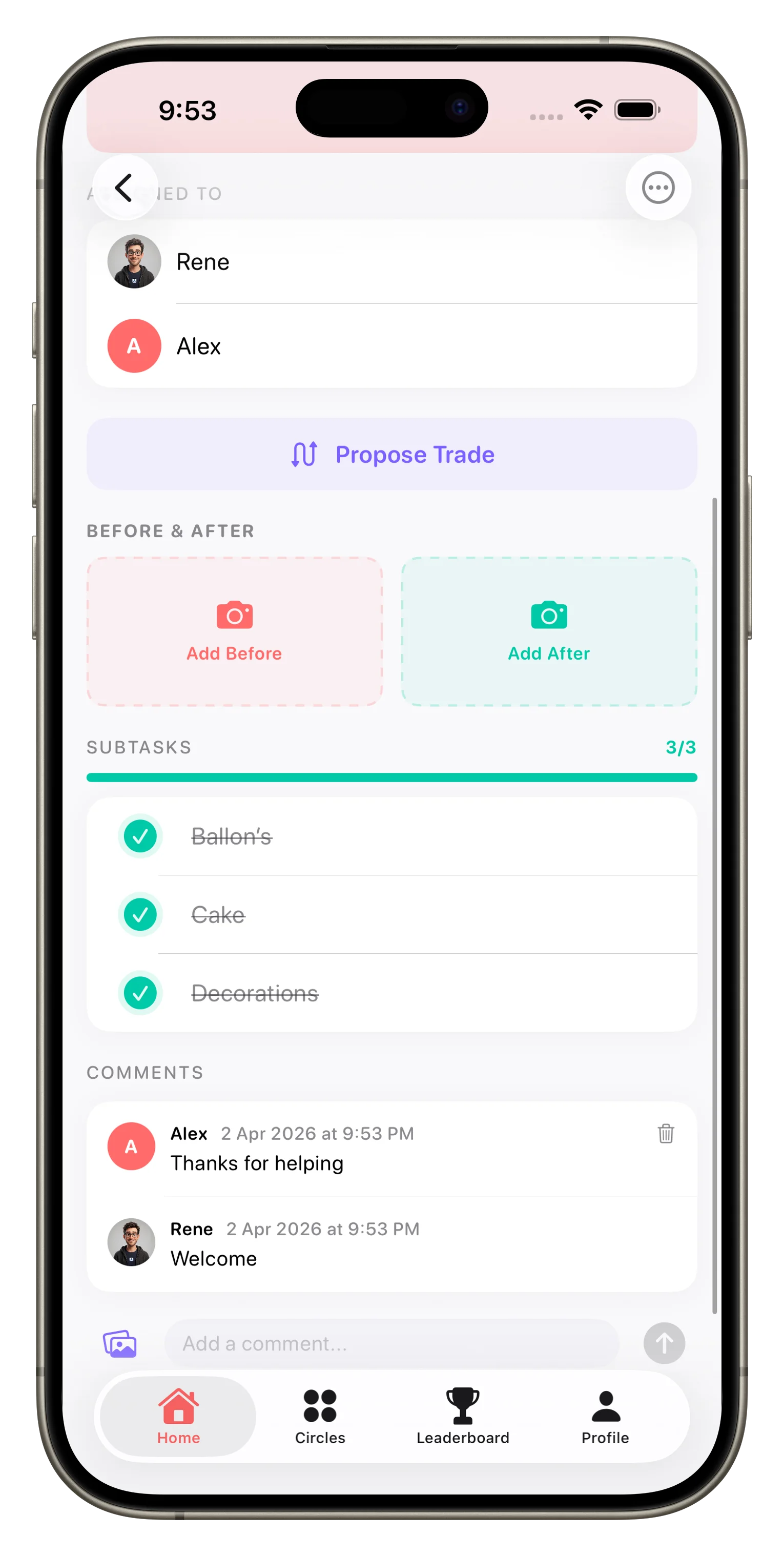
The core strength is context. Loopd doesn't just sit in your pocket as an abstract task manager. It combines shared lists, real-time updates, photo attachments, location-based reminders, and in-context chat so you can see tasks, comment on them, and coordinate without jumping between apps. When someone marks a grocery item bought or uploads a photo of a finished project, everyone sees it immediately.
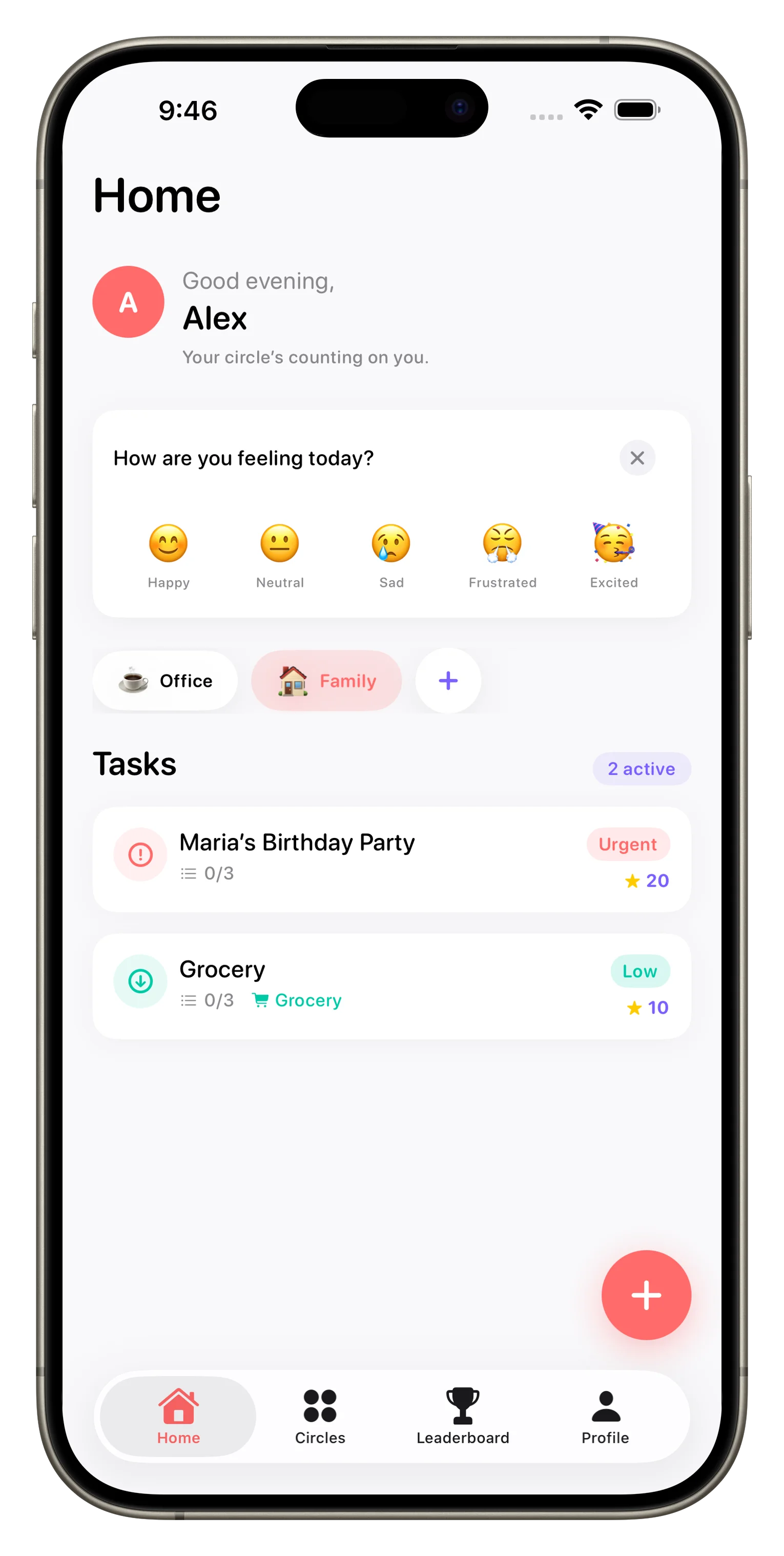
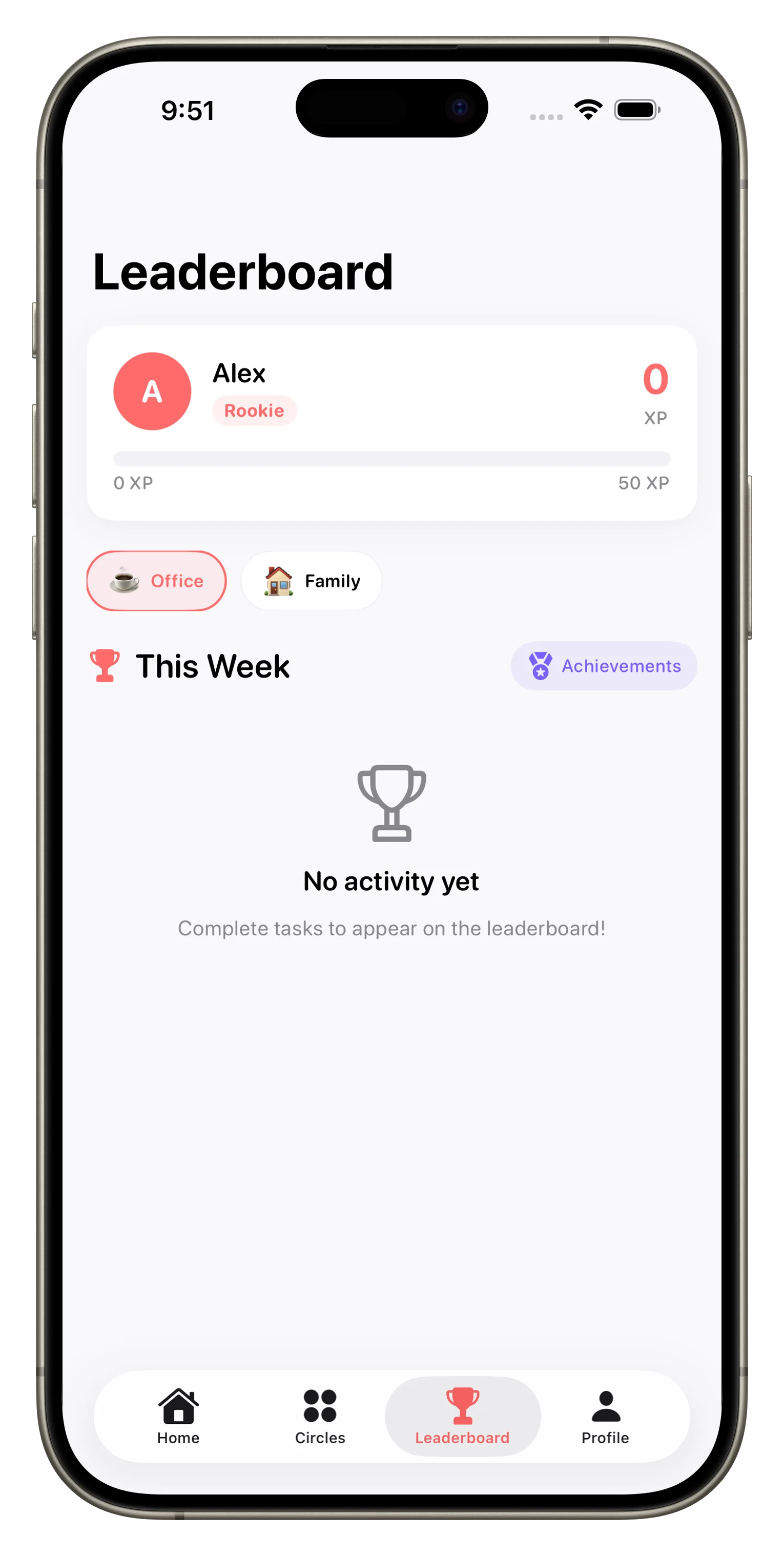
The gamification layer is the part that sets Loopd apart. Rather than treating points and badges as window dressing, the app weaves them into the interface so naturally that they feel earned rather than hollow. You get XP for completing tasks, build streaks, climb a leaderboard, and unlock achievements. It's not aggressive—the game mechanics don't feel forced—but they're present enough to nudge hesitant roommates or kids toward following through.
Loopd doesn't just assign chores. It creates a shared sense of progress and accountability that feels collaborative rather than punitive.
Circles—the app's term for groups—are flexible. You create one per household, friend group, or project. Each Circle can have its own tasks, members, and communication stream. For families, this means one Circle for home chores and another for planning a vacation. For roommates, one shared space keeps everyone aligned.
Who this is for
- Families with kids old enough to be responsible for tasks but who need a gentle push to follow through
- Couples who want to coordinate household duties without turning into a nag/nag-ee dynamic
- Roommates who share expenses, chores, or group projects and need a single source of truth
- Friend groups planning events or managing shared responsibilities
- Anyone frustrated by forgetting who was supposed to do what, or how to prove they did it
Loopd is less suited to people who want a purely personal to-do manager, or to households where buy-in is low. If half your family refuses to open an app, gamification won't fix that. It also assumes basic iOS literacy; the interface is intuitive enough for most people, but it's not designed for very young children or for groups unfamiliar with phones.
The gamification in practice
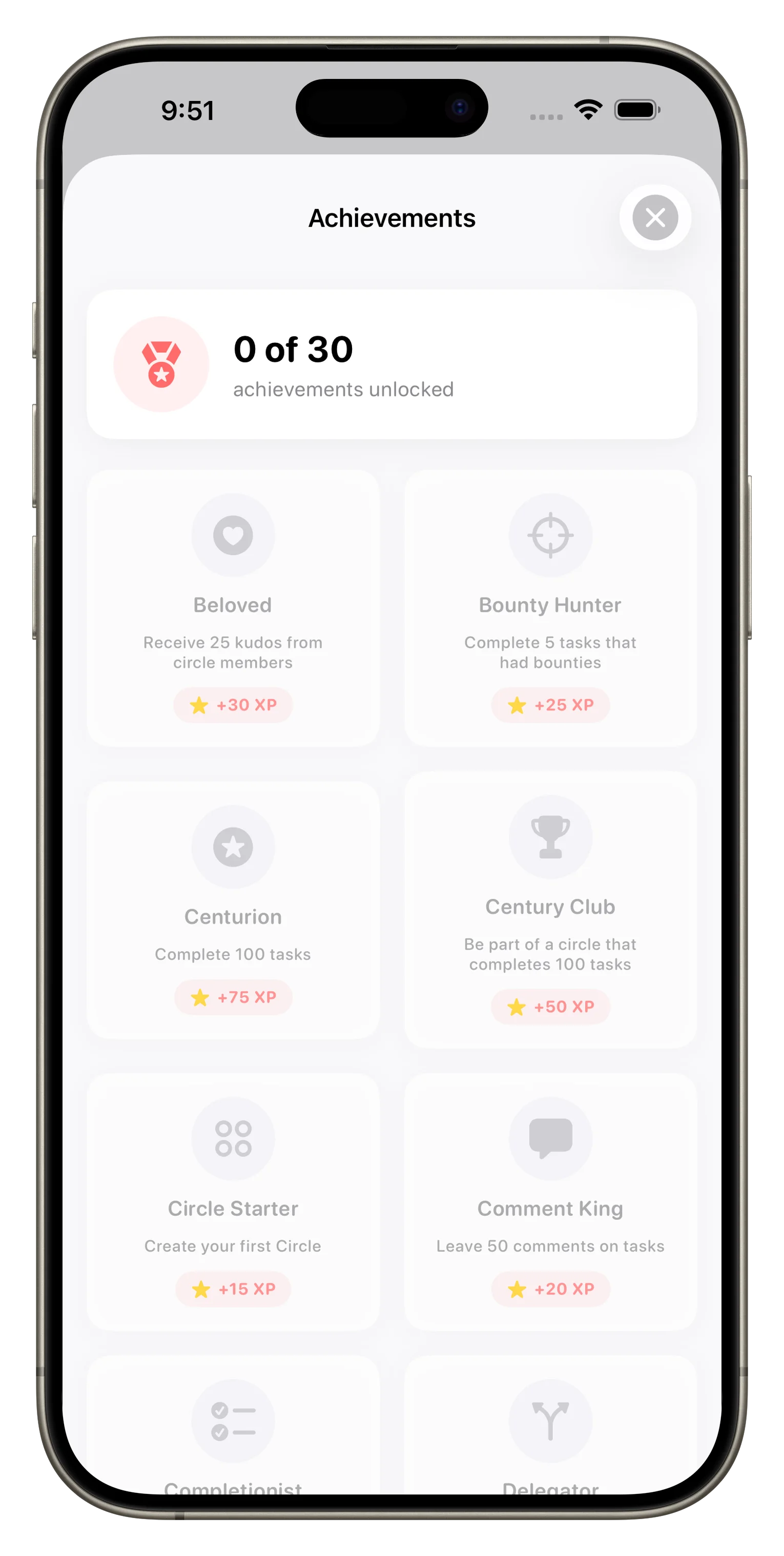
XP, streaks, and leaderboards could feel cheesy. In Loopd, they mostly don't. Completing a task nets you points. Seven-day task completion streaks build credibility. Achievements unlock as you hit milestones—things like "First Comment" or "Weekday Warrior." The leaderboard is there, but it's gentle; the app doesn't shame you for being at the bottom. Instead, it creates a lightweight competitive instinct that sometimes tips a teenager from "I'll do it later" to "I'm doing it now."
The subtlety matters. If you're the parent trying to motivate a reluctant kid, or a roommate tired of passive-aggressive notes, Loopd gives you a mechanism that feels like fun rather than punishment. It's not magic—a truly unmotivated person won't care about XP—but it genuinely shifts the tone from "you have to" to "let's see who can do better."
What requires compromise
The free tier is quite generous—one Circle with up to three members and 20 active tasks—but it's also enough to bump against limits quickly in a household of four or more. The Plus plan removes those caps and adds location-based triggers and templates. Family plan adds shared billing and parental controls, which matter if you're coordinating across a real household. Pricing isn't outrageous, but it's one more subscription to weigh.
Unlike some task apps, Loopd doesn't integrate with your calendar or larger automation ecosystems. You can't route emails into tasks, sync with Google Tasks, or automate repeating chores at the system level. That keeps the app simpler, but it also means you're manually creating and updating everything. For families juggling multiple tools, that friction is worth considering.
How it stacks up
- Real-time collaboration
- Excellent—photo attachments, comments, live status updates
- Gamification
- Strong and well-integrated—XP, streaks, leaderboards, achievements
- Flexible grouping
- Good—Circles for different groups, unlimited on Plus
- Calendar integration
- None—tasks exist only in Loopd
- Automation
- Basic—location reminders and templates, no email routing
- Price
- Generous free tier; Plus and Family plans required for larger households
If you're comparing Loopd to other family task apps, the gamification is its secret weapon. Most family apps treat tasks as pure logistics; Loopd treats them as a reason for friendly competition and shared achievement. That shift in tone—from "you forgot again" to "nice streak"—is what makes it work better for tension-prone households. For more detail on how the mechanics come together, read how Loopd turns family coordination into a game.
Our takeaway
This article was drafted with AI assistance and reviewed by a human editor before publishing.