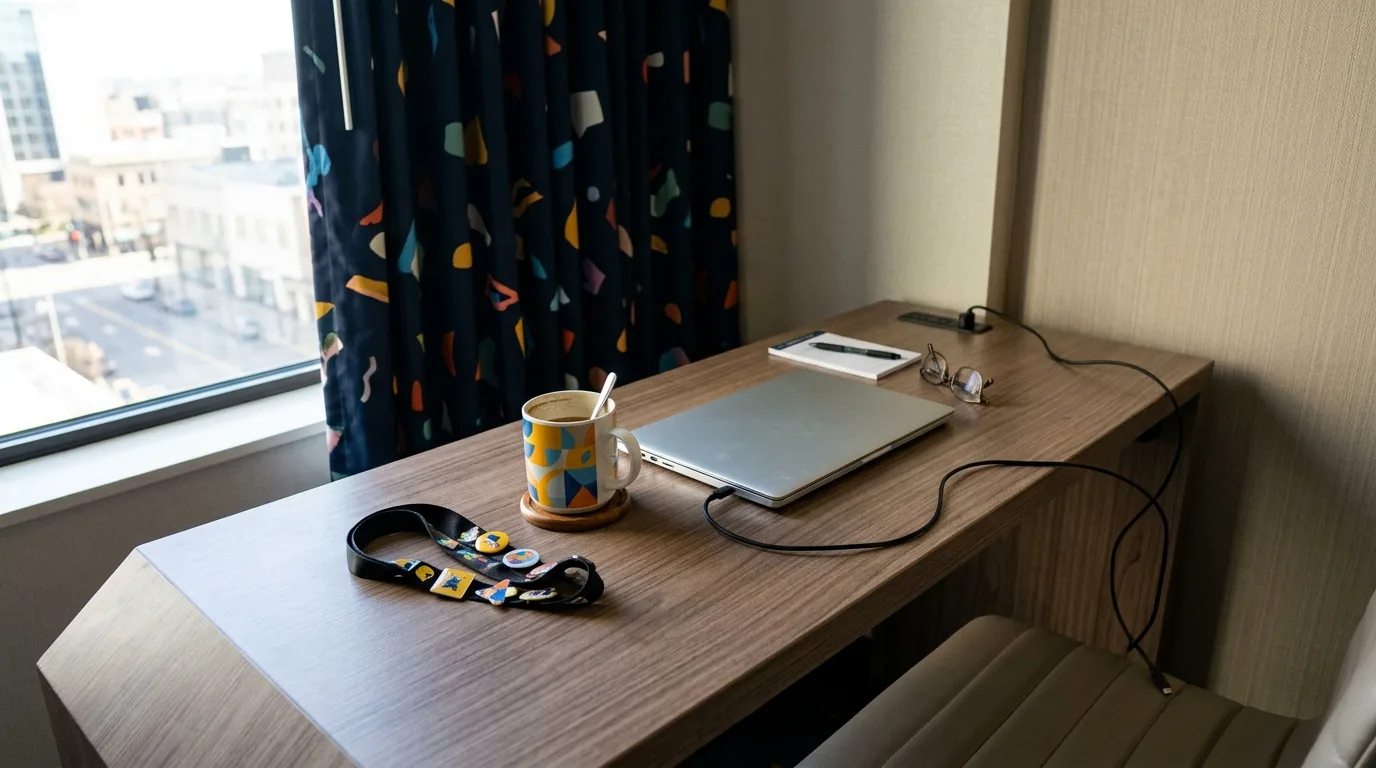
Priya had the packing cubes zipped and the boarding pass saved to her phone, and she still couldn't leave the kitchen. Her flight was at six the next morning, three days at a conference, and the whole time she'd be gone, someone else would have to get a four-year-old and a seven-year-old dressed, fed and out the door without her narrating every step from the doorway the way she always did. Her husband was capable. Her kids were not, in her mind, capable of doing anything without her saying it out loud first. That was the part that kept her standing at the counter at eleven at night, rewriting a list nobody would read.
The Guilt of Packing for a Trip While the Chart Stays Home
The fridge already had a routine chart on it, the laminated kind with dry-erase boxes, but it only worked when Priya was standing next to it pointing. Take it away and the chart became wallpaper. Her husband loved the kids fiercely and had approximately no patience for narrating seven steps in sequence before coffee. She'd tried leaving him detailed notes before short trips and come home to find the notes untouched on the counter and everyone in the same clothes from the day before, technically fed, technically fine, but nothing like the mornings she ran.

What she wanted wasn't a better note. It was a routine that didn't need a narrator at all, one where the instructions lived somewhere other than her own memory and her own voice. She'd read a bit about why sticker charts stop working after the first two weeks and recognized the pattern immediately: the chart wasn't the problem, the dependency on an adult running it was.
Building a Routine That Runs Without a Narrator
She found Starling two nights before the flight, mostly out of desperation, and set it up in the time it took her tea to go cold. She added both kids, picked the starter morning routine, and deleted the steps that didn't apply to her house. Wash face, get dressed, eat breakfast, brush teeth, shoes on, backpack. Every step showed as a picture first, so her four-year-old, who reads nothing yet, could look at the screen and know what came next without anyone telling her. The seven-year-old preferred to see the whole sequence at once, so Priya switched his to list mode and left hers in the single-step focus view.
The routine repeated itself on the days she chose and didn't need to be rebuilt or re-explained. Finished steps earned stars, the stars fed a bird in something called the Nest, and Priya had already decided what the stars would eventually buy: a trip to the park, an extra bedtime story, nothing that cost money. None of it needed her husband to log in or set anything up again once the frame was in place. It just needed him to hand over the phone and stay out of the way, which was closer to what he was actually good at.
She wasn't trying to make the mornings run better. She was trying to make them run at all without her in the room.
What My Husband Found on the Fridge (and What He Didn't Need)
He texted her a photo on the second morning, not of the kids, just the phone propped against the fruit bowl, screen showing a cartoon shirt for step three of four. No caption. She understood it anyway: he hadn't had to say a word. The four-year-old had walked herself through washing, dressing and breakfast by tapping the screen after each finished step, and the seven-year-old had run his own list from the counter while eating cereal, checking off boxes like it was a game he was winning. Neither kid had needed him to explain what came next, because the chart already had, in pictures, before either of them could read the word for it.

That was the whole shift. The routine wasn't smarter than the laminated fridge chart because of any particular feature. It worked because a chart a kid can run alone stops depending on which adult happens to be standing in the kitchen that morning. Her husband didn't need her notes because there was nothing left for him to narrate.
The Nest Kept Growing While I Was in a Different Time Zone
By the third day, Priya checked in from the conference hallway between sessions, not out of worry anymore but out of something closer to curiosity. The bird in the Nest had grown a little, which meant the stars had kept adding up without her prompting a single one of them. Her daughter, when Priya called that night, wanted to talk about the bird before she wanted to talk about anything else, which felt like proof the system had become hers rather than something done to her.
There was no account for Priya to check in on, no dashboard, nothing tracked outside the phone in her husband's pocket. That had actually mattered to her when she was choosing between apps, more than she expected it to. She didn't want a service quietly building a profile of her kids' bedtimes and brushing habits while she was away. Starling didn't sign up, didn't ask for an email, and didn't send anything anywhere. It just sat on the phone and did its one job.
What This Trip Actually Changed
Priya came home to a kitchen that looked lived-in rather than abandoned, laundry actually done, kids in different clothes on different days, small things that told her the mornings had happened without her holding them up. The laminated fridge chart came down within the week. It hadn't done anything wrong exactly, it just needed her voice attached to every box, and she was done being the voice.
If you're building your own version of this from scratch, the fuller guide to visual schedules a child can actually run alone walks through the setup logic in more depth, and the checklist pieces are worth a look if you want the steps laid out plainly before you touch anything.
Common questions
Does the routine still work if a different adult is in charge that day?
What happens to the routine while a parent is traveling?
Is there anything to check on remotely while away?
This article was drafted with AI assistance and reviewed by a human editor before publishing.