You both agreed to split housework fairly. But one of you still wakes up thinking about whether the kids have clean clothes, whether the fridge needs restocking, whether someone should book the car service. That's mental load—and it almost never splits evenly by accident. FairShare moves it out of the realm of vibes and into the realm of cards. Each card owns one household responsibility from start to finish: conceive it, plan it, execute it. One person. Explicit. That's how invisible work becomes visible and fair.
The Problem: Mental Load Hides in the Gaps
Chore charts don't capture mental load. You can assign "clean the kitchen" to Monday and "laundry" to Wednesday, but you can't see who's holding the mental weight of knowing the kitchen needs cleaning, remembering when laundry is due, or deciding whether tonight's dinner plan still works. One partner often becomes the household operations manager without anyone naming it that way. They carry the cognitive and emotional burden of keeping everything running—and burnout follows.
Mental load isn't the doing. It's the thinking, deciding, and remembering that happens before and after the doing.
This hidden work comes from three places. Conceive: noticing or deciding that something needs doing. Plan: figuring out when, how, and with what resources. Execute: actually doing the task. A fair split means both partners own cards—not splitting tasks, but owning the thinking too.
How Ownership Cards Work
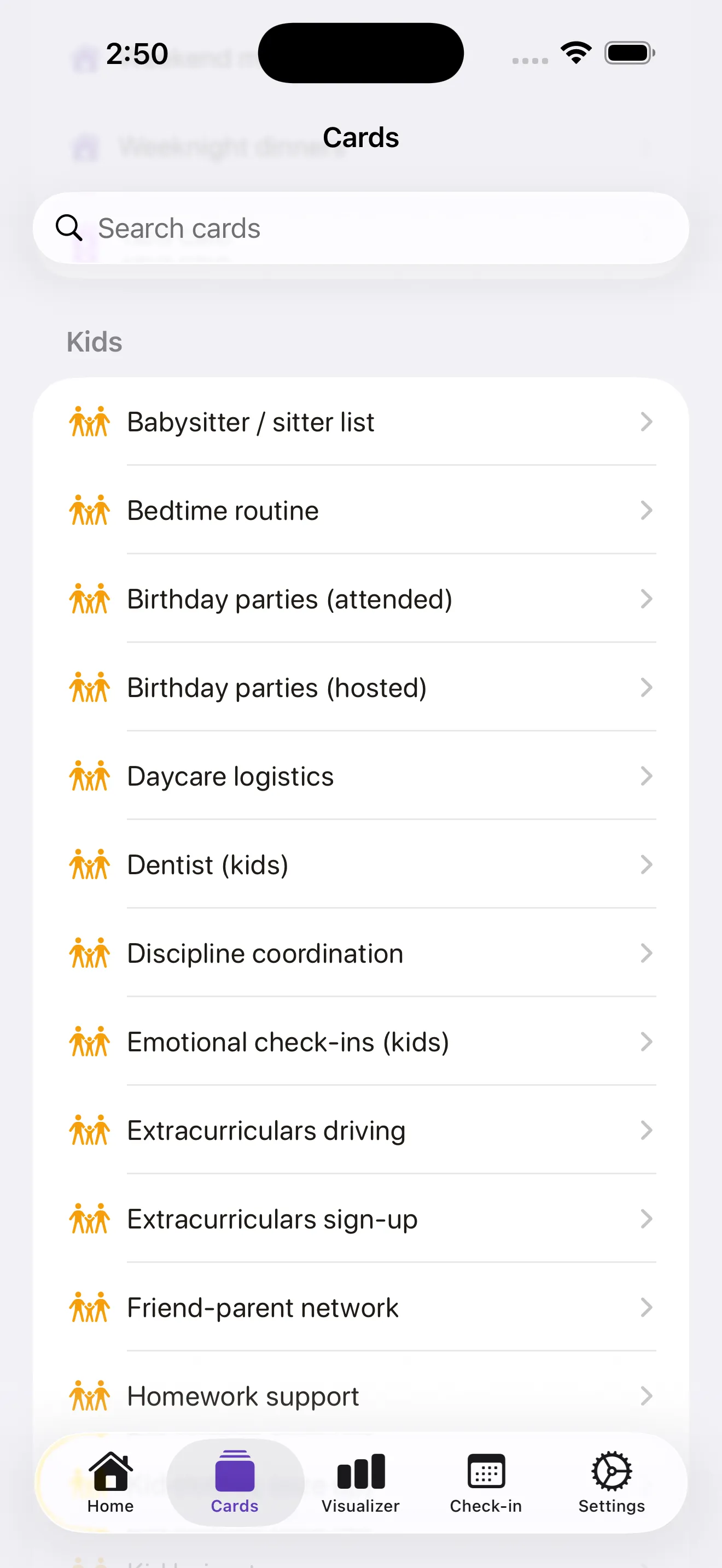
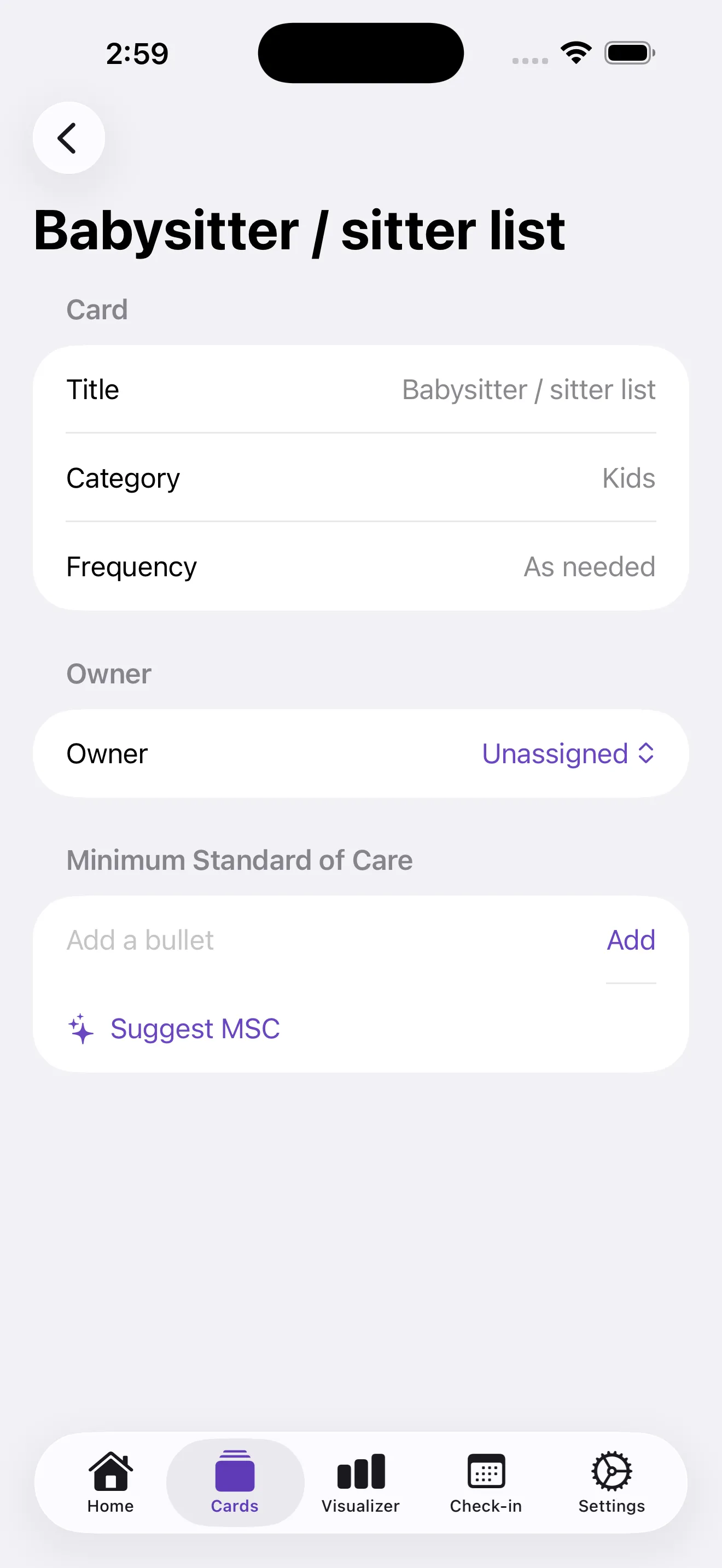
Each card in FairShare represents one household domain. You might have "Kids' Schedules," "Meal Planning," "Home Maintenance," "Finances," or "Social Calendar." What matters is that one person owns each card—they conceive needs, plan solutions, and execute tasks. Your partner owns different cards. The ownership is visible, countable, and renegotiable.
Conceive: Who Notices What Needs Doing?
This is the first and often invisible layer. If you own "Kids' Schedules," you notice when soccer season ends and a new activity is needed. You track who has dentist appointments and whether camp forms are due. Your partner doesn't have to think about it—they trust you're tracking it. That's the conceive layer. Without naming it, the person holding it gets exhausted before the first task is executed.
Plan: Who Figures Out How?
Once you've conceived the need ("we need groceries"), planning means deciding what to buy, whether to order online or go to the store, fitting it into the week, checking dietary restrictions, and setting a budget. The owner of the card does this thinking. This is where many couples lose the plot—one person does the planning, the other gets asked "what should we buy?" and then follows someone else's decision. Ownership means you plan; your partner trusts your judgment or you renegotiate.
Execute: Who Does the Work?
This is the visible part. Someone shops, cooks, schedules, or repairs. But execution without conceiving and planning is just following orders. Ownership means you're in charge—you may delegate the doing to your partner, or you may do it yourself, but either way, you're responsible for the outcome.
Making Invisible Work Visible
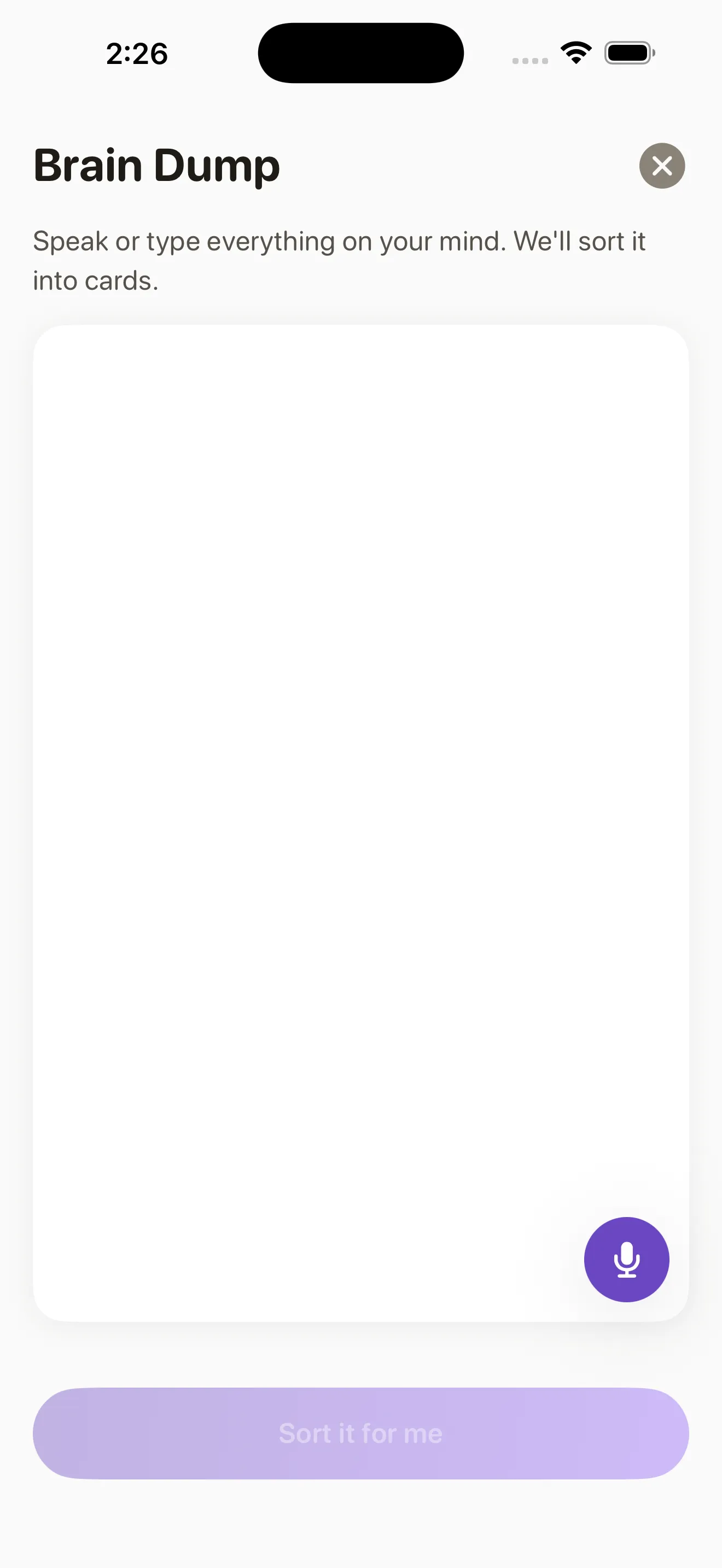
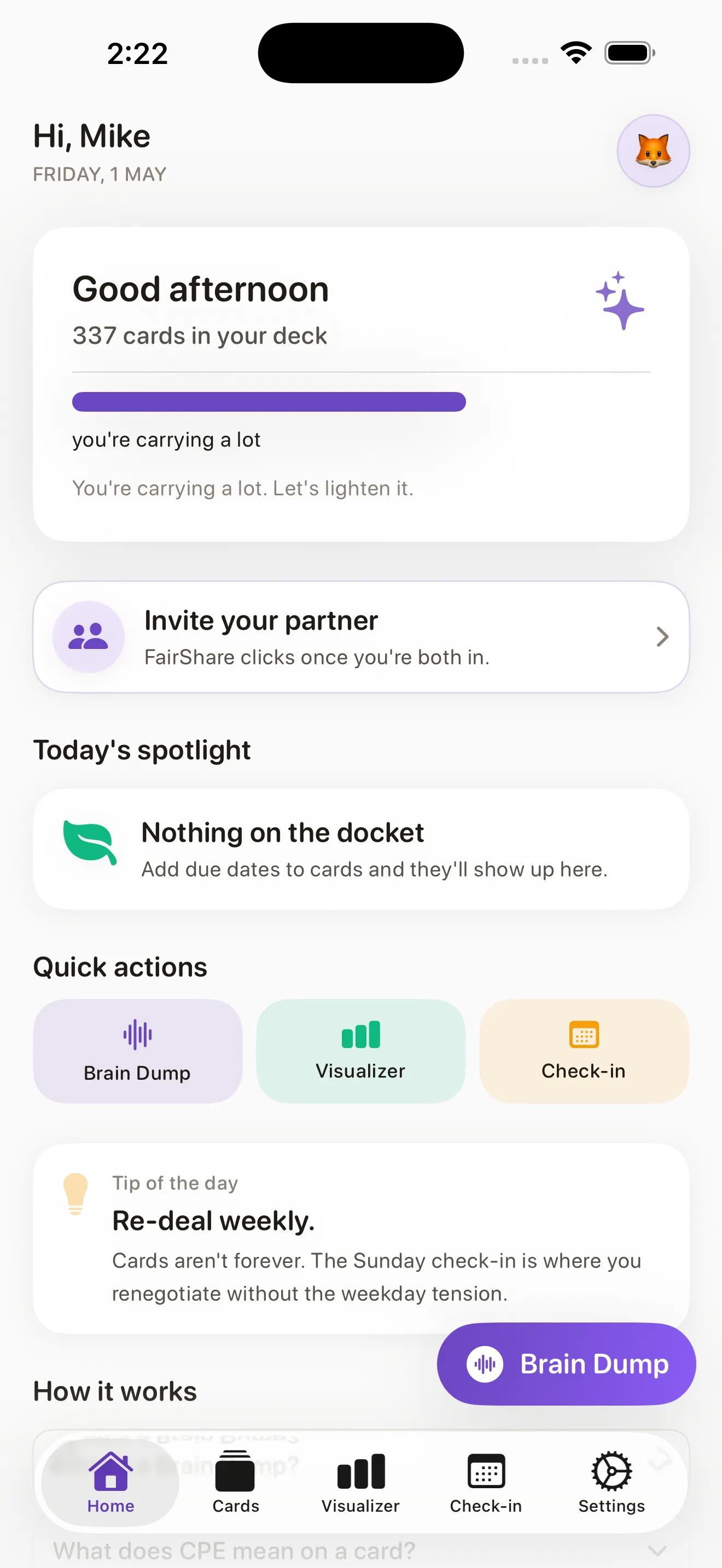
FairShare includes a Brain Dump feature that intercepts stray thoughts before they become mental load. You notice something ("the shower caulk is peeling")? Dump it into the app. The AI helps route it to an existing card or suggest a new one. Over time, you see what's on each person's mental plate—not just today's tasks, but the ongoing cognitive weight of each domain.
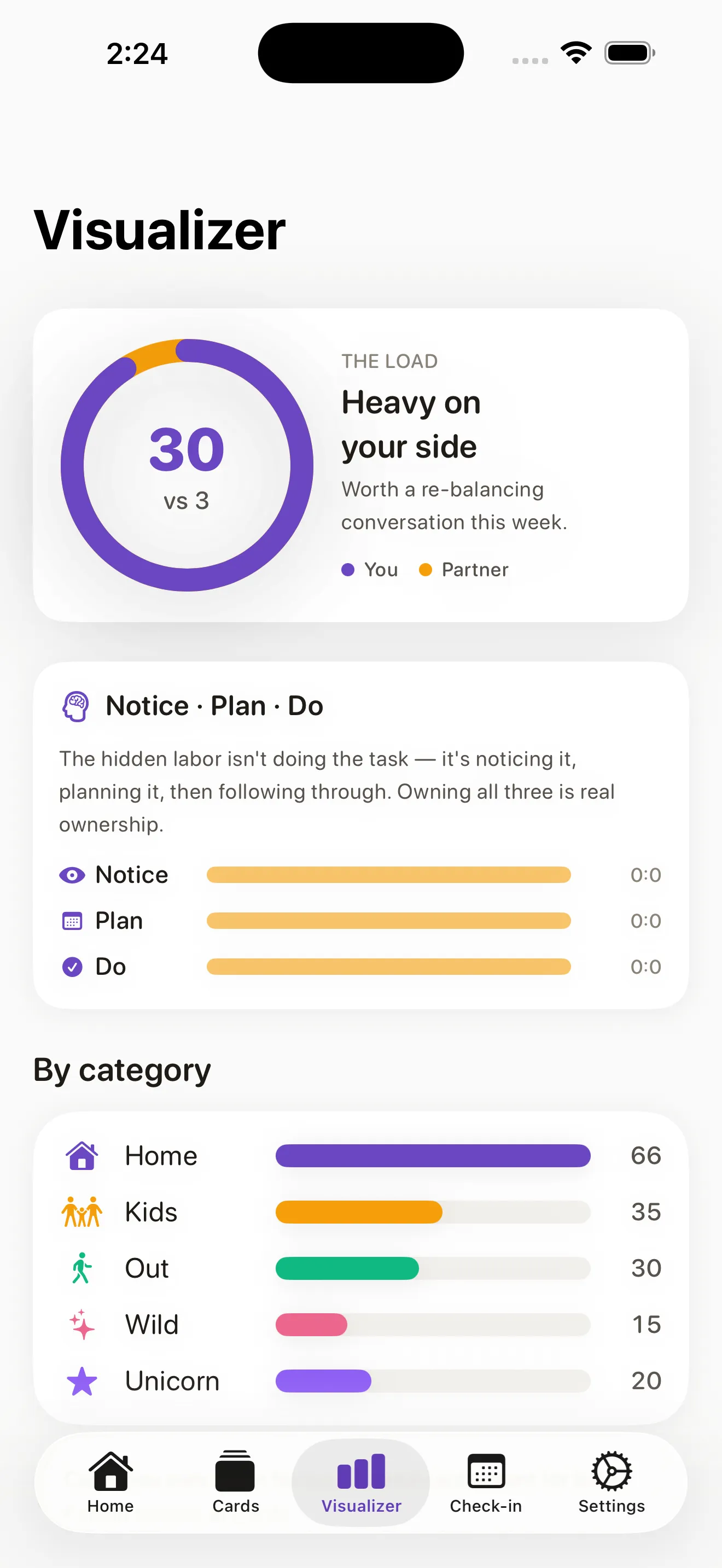
The Visualizer then shows the imbalance in real terms. If one partner owns 60% of the cards, or if one person's cards require daily thinking while the other's are monthly, that becomes clear. Visibility is the first step to fairness. You can't fix what you can't see.
Weekly Check-Ins Keep Ownership Alive
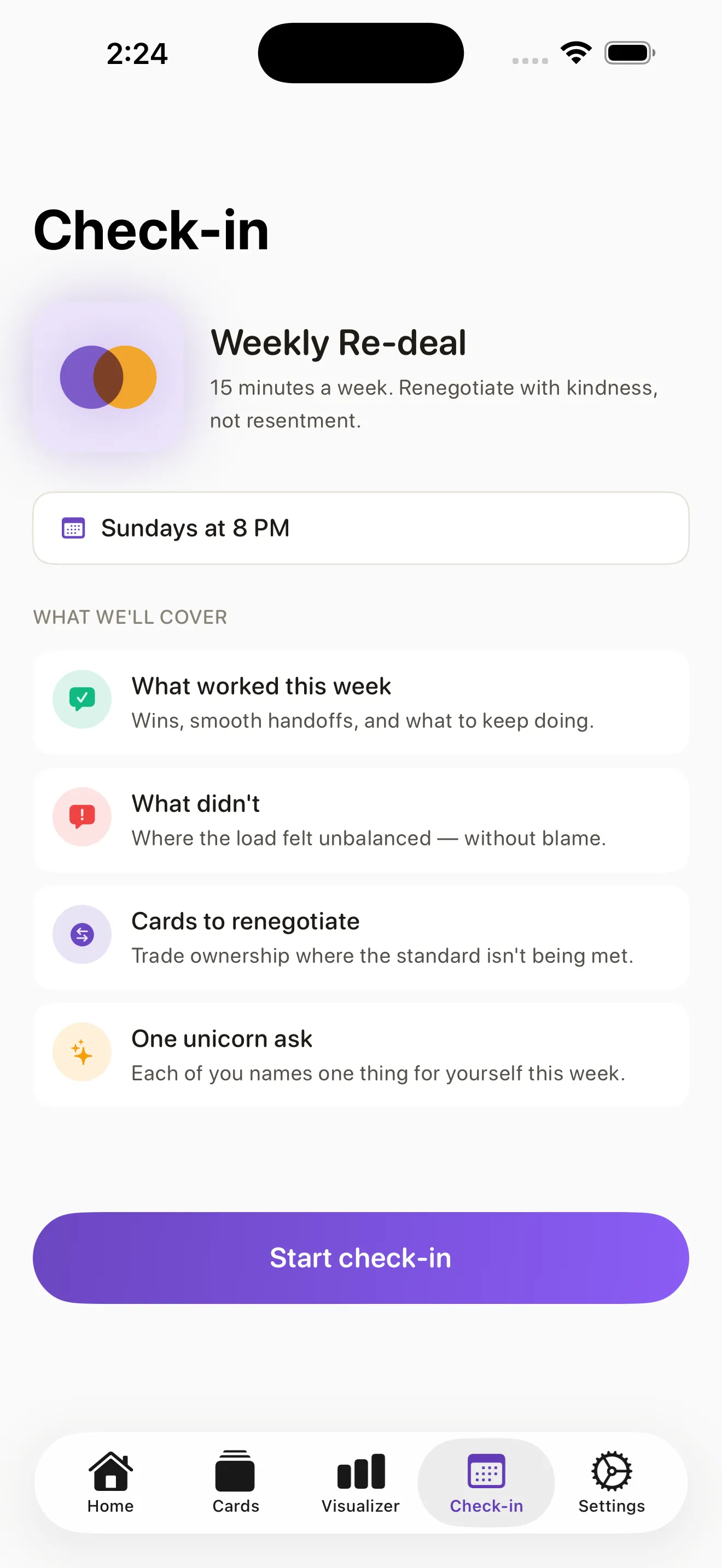
Life changes. Kids age out of activities, work gets busier, or someone's capacity shifts. FairShare includes a weekly check-in rhythm—short prompts that surface what shifted, what swaps might help, and whether it's time to renegotiate who owns what. These check-ins prevent couples from drifting into the old pattern where one person's mental load silently grows until resentment hits.
Building Your First Deal
FairShare guides you through household setup with questions about your life context: Do you have kids? Work from home? Shared finances? Based on your answers, it suggests a starting set of cards. You and your partner then customize them together. One person takes "Kids' Morning Routine," another takes "Home Maintenance," another takes "Bills & Budget." You name each card, agree on what conceive, plan, and execute mean for that card, and start. The initial setup takes about 20 minutes, not hours.
- Chore chart
- Who does the task today?
- Mental load cards
- Who owns the thinking and decision-making?
- Result
- Visible ownership prevents resentment
Why This Matters
Most household management tools are task-focused. FairShare is ownership-focused. That's the core design philosophy. It's not about getting more done—it's about getting done more fairly by naming who's responsible for the thinking, not just the doing. When both partners own roughly equal mental load, both partners get to rest. Both get to forget about the task and trust that the other is tracking it. That's a sustainable, fair partnership.
This article was drafted with AI assistance and reviewed by a human editor before publishing.