
Party games come in two distinct flavors. Some hand out a device to each player, each one running their own instance. Others pass a single phone around the group, one player at a time. Both work. Neither is objectively better. But the design choices behind each shape how the game feels, who can join, and what kind of trust—or lack thereof—drives the fun.
The App-Per-Player Model
When each player has their own device, information stays private by default. Your phone shows your role, your clues, your private knowledge. No one else sees your screen unless you deliberately hold it up. This model powers many trivia games, word builders, and competitive apps where hidden information matters but doesn't need to be questioned.
The trade-off is obvious: you need multiple devices in the room. If you have four players, you need four phones or tablets that can run the game. Battery management becomes a factor. And the social loop changes—everyone's heads-down, scrolling their own screen, rather than watching and reading each other.
The Phone-Pass Model
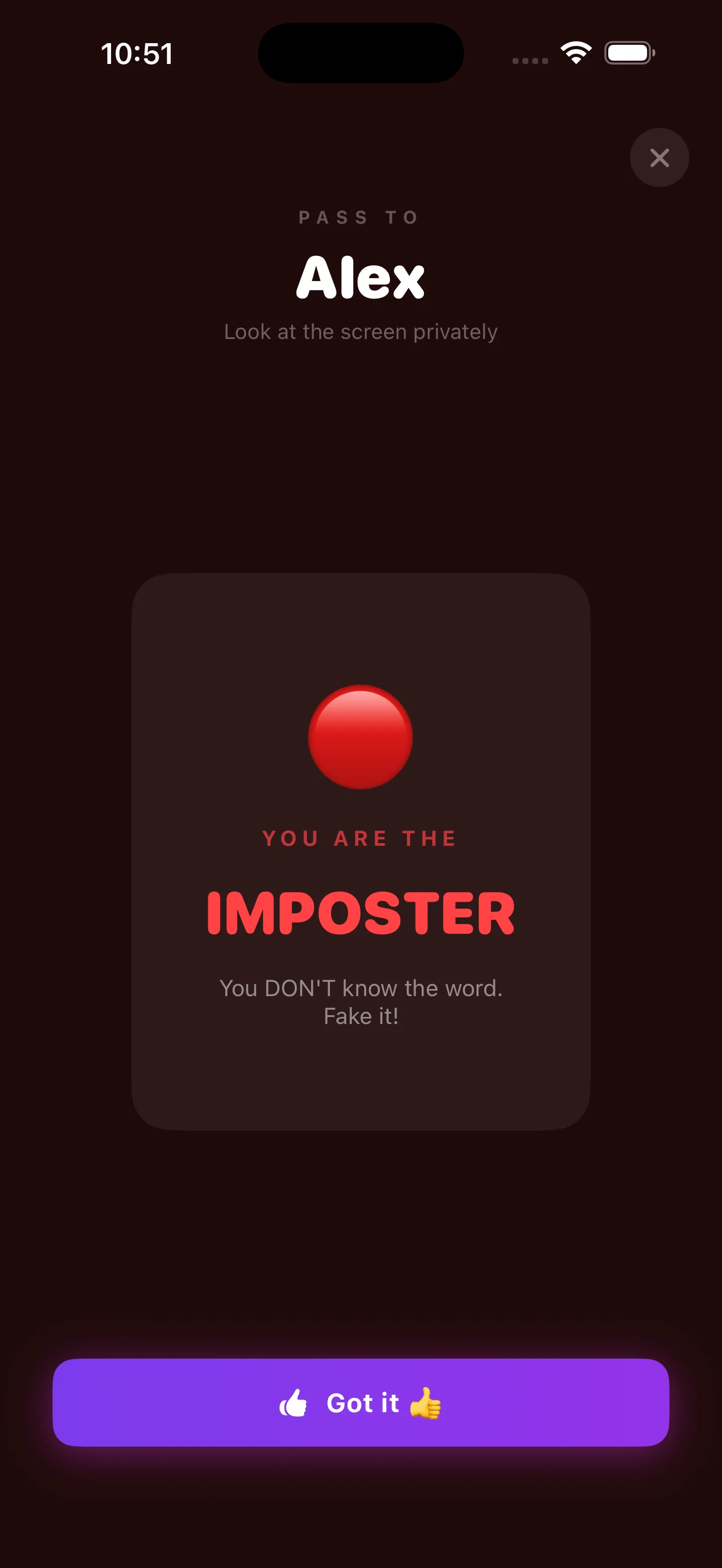
A single phone or tablet moves around the table. Each player takes a turn holding it, sees their secret information, then passes it along. Everyone else watches—or pretends not to. There's a physical moment of vulnerability: you hold the device, the game reveals your role, and every face at the table is watching for a reaction.
The friction of passing one phone is the entire point. It creates a natural reading opportunity for everyone else.
This is where the psychological layer kicks in. A game like this one—where one player is the imposter and everyone else knows the secret word—lives or dies by how well players can bluff and how keen others are at spotting a lie. The phone-pass mechanic makes that impossible to avoid. You can't hide your reaction. You can't pretend you didn't see something. The group's attention is already on you.
When Device Scarcity Isn't a Problem
Phone-pass games also solve a practical constraint: accessibility. If someone's phone is dead or they didn't bring one, they can still play. Family gatherings, road trips, casual hangouts—you grab one device everyone already has and start. No setup. No accounts. No waiting for someone to update their app or check their battery.
- One device handles 3–10 players
- No internet connection needed
- Works entirely offline
- Zero friction for casual groups
- Physical pass-and-watch creates natural reading opportunities
The Role of Social Deduction
Social deduction games—where players identify hidden roles, impostors, or liars—depend on reading faces and hearing arguments. They're built on the idea that humans are bad at lying and good at spotting inconsistencies when they're paying attention. The phone-pass model amplifies this. Everyone's watching the same moment. Everyone sees the same expression. The bluffing happens in real time, at the table, not through private screens.
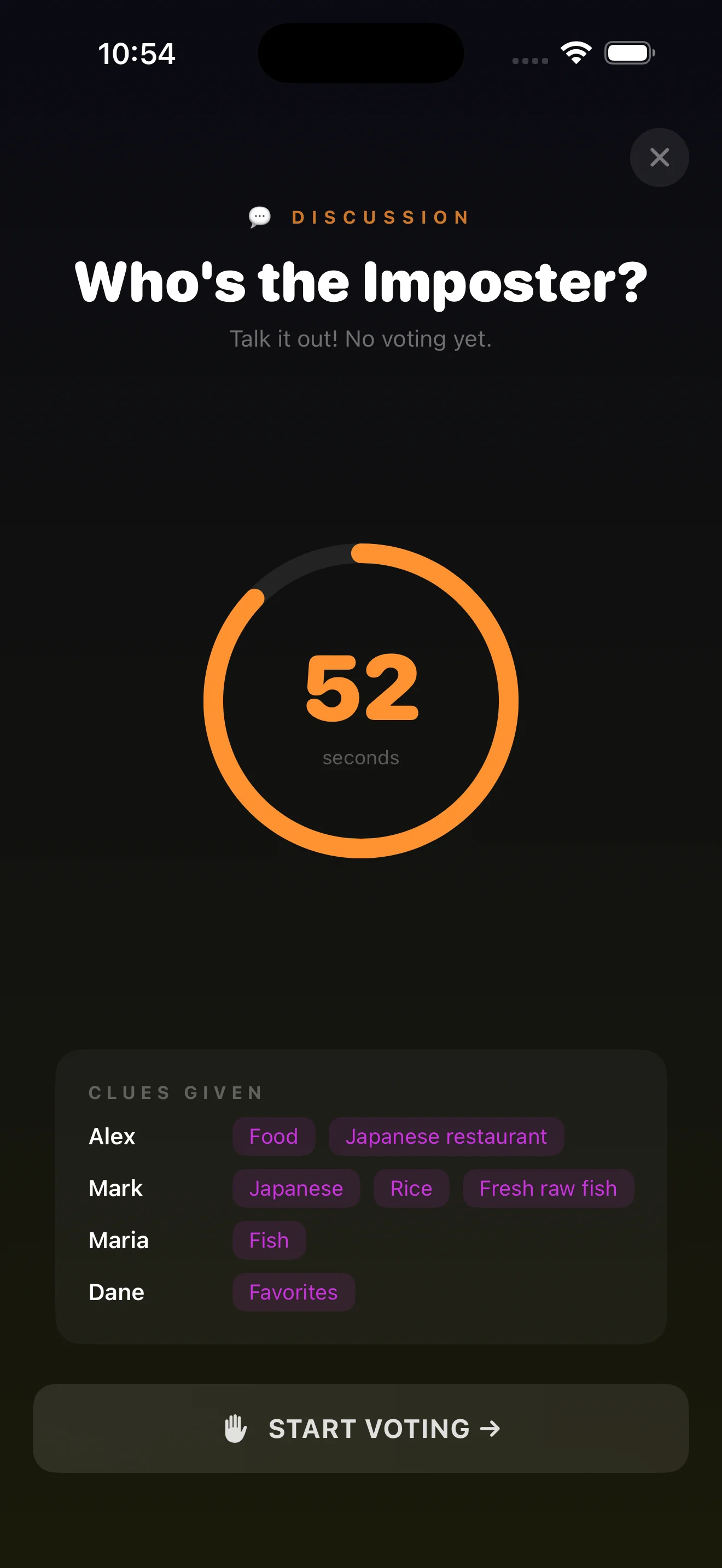
This is why phone-pass social deduction games often feel more tense than app-per-player alternatives. There's nowhere to hide. The device moves, your role is revealed, and the group immediately begins reading you.
Comparing the Models Side by Side
- Device Requirement
- App-Per-Player: Multiple devices. Phone-Pass: One device.
- Setup Time
- App-Per-Player: Install, login, sync. Phone-Pass: Open, add names, start.
- Internet Needed
- App-Per-Player: Often required. Phone-Pass: Can be fully offline.
- Information Privacy
- App-Per-Player: Built-in. Phone-Pass: Depends on player discretion.
- Group Attention
- App-Per-Player: Fragmented. Phone-Pass: Unified on one moment.
- Bluffing & Reading
- App-Per-Player: Minimal. Phone-Pass: Central to gameplay.
Where Phone-Pass Wins
Social deduction and imposter mechanics are tailor-made for phone-pass. The genre depends on telling lies and spotting them, and you can't do that as effectively when players are staring at separate screens. Phone-pass games also work best in intimate settings: a dinner table, a living room, a group on a road trip. Everyone's close enough to watch reactions. Everyone's engaged with the same moment.
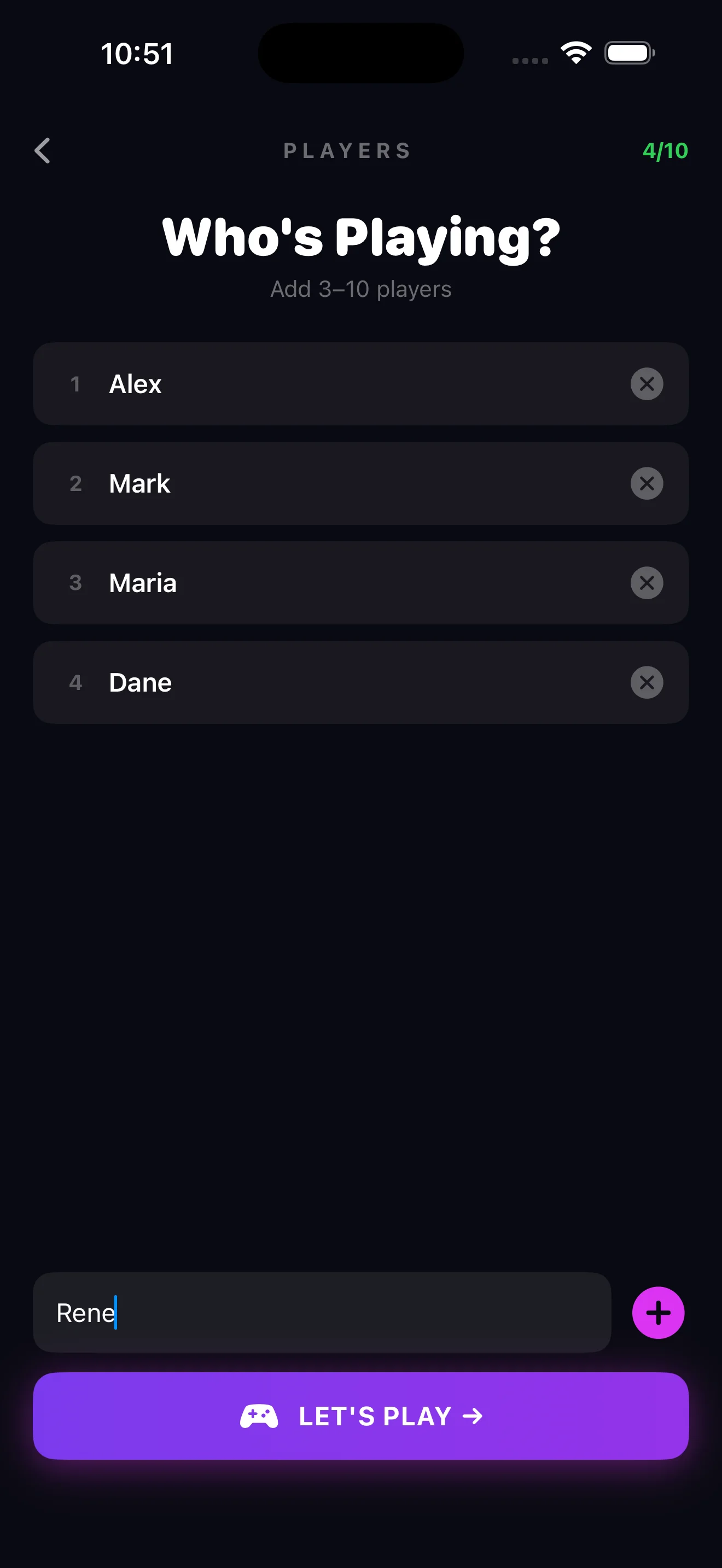
For casual game nights and families, phone-pass also removes friction. No one's phone needs to be fully charged. No one's app needs to be up to date. The game works entirely offline. And it works the same on someone's five-year-old iPhone as it does on the latest model. Discover tips for maximizing your gameplay in our guide to spotting fakers and winning.
Where App-Per-Player Makes Sense
App-per-player games shine for competitive trivia, word building, and turn-based strategy where players make independent choices and information is meant to stay private. They also work better for larger, distributed groups or casual play where people might drop in and out. And if everyone at your gathering happens to have a phone and Wi-Fi, app-per-player avoids the "pass it around" rhythm entirely.
For more on how phone-pass social deduction actually works in practice, check out how Blend In turns one phone into party chaos.
The Bottom Line
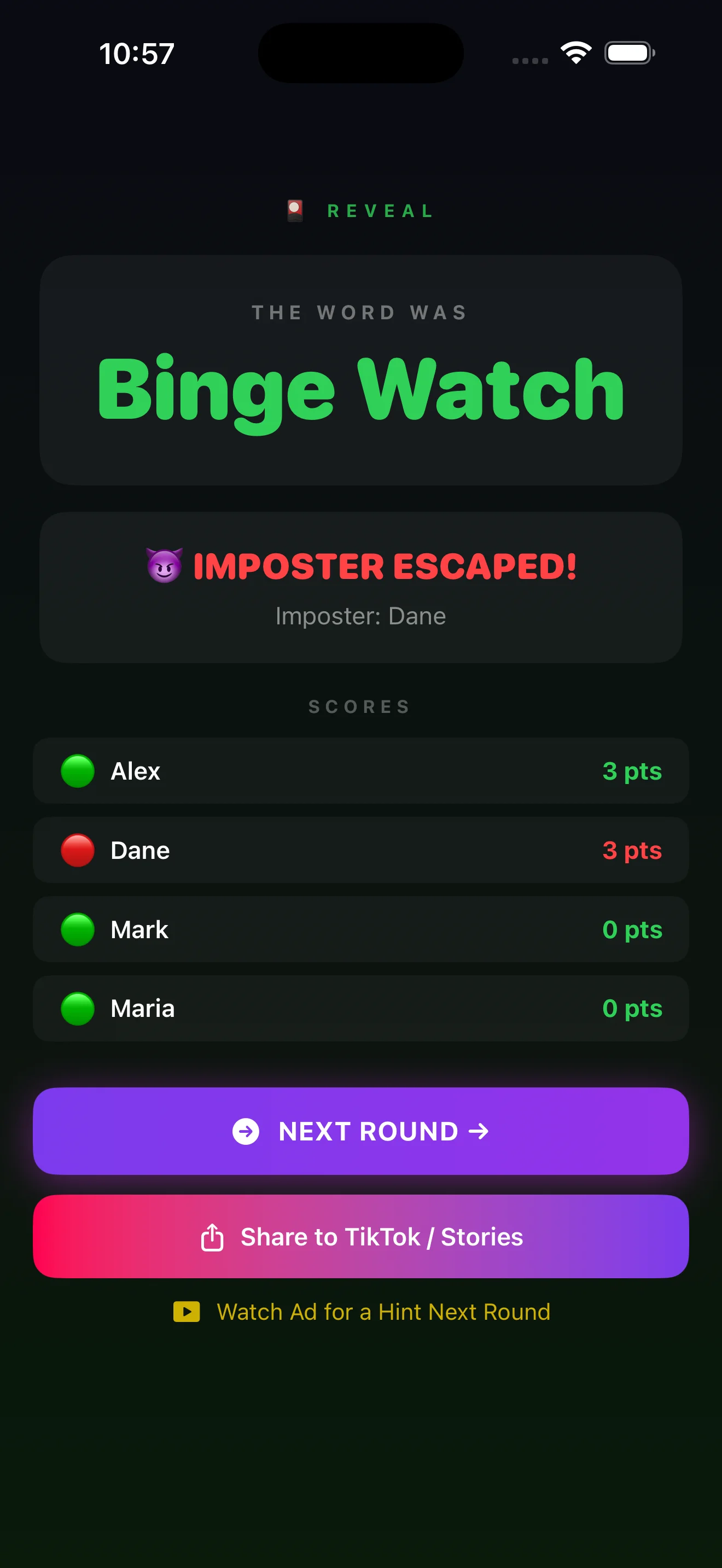
Phone-pass and app-per-player aren't competing formats. They're tools for different kinds of games. Social deduction games—where the fun comes from reading people and spotting lies—work best when everyone's watching the same moment. That's where phone-pass thrives. It's simpler to set up, works offline, and puts the entire group's attention on the moment that matters: watching someone react to learning they're the imposter.
This article was drafted with AI assistance and reviewed by a human editor before publishing.