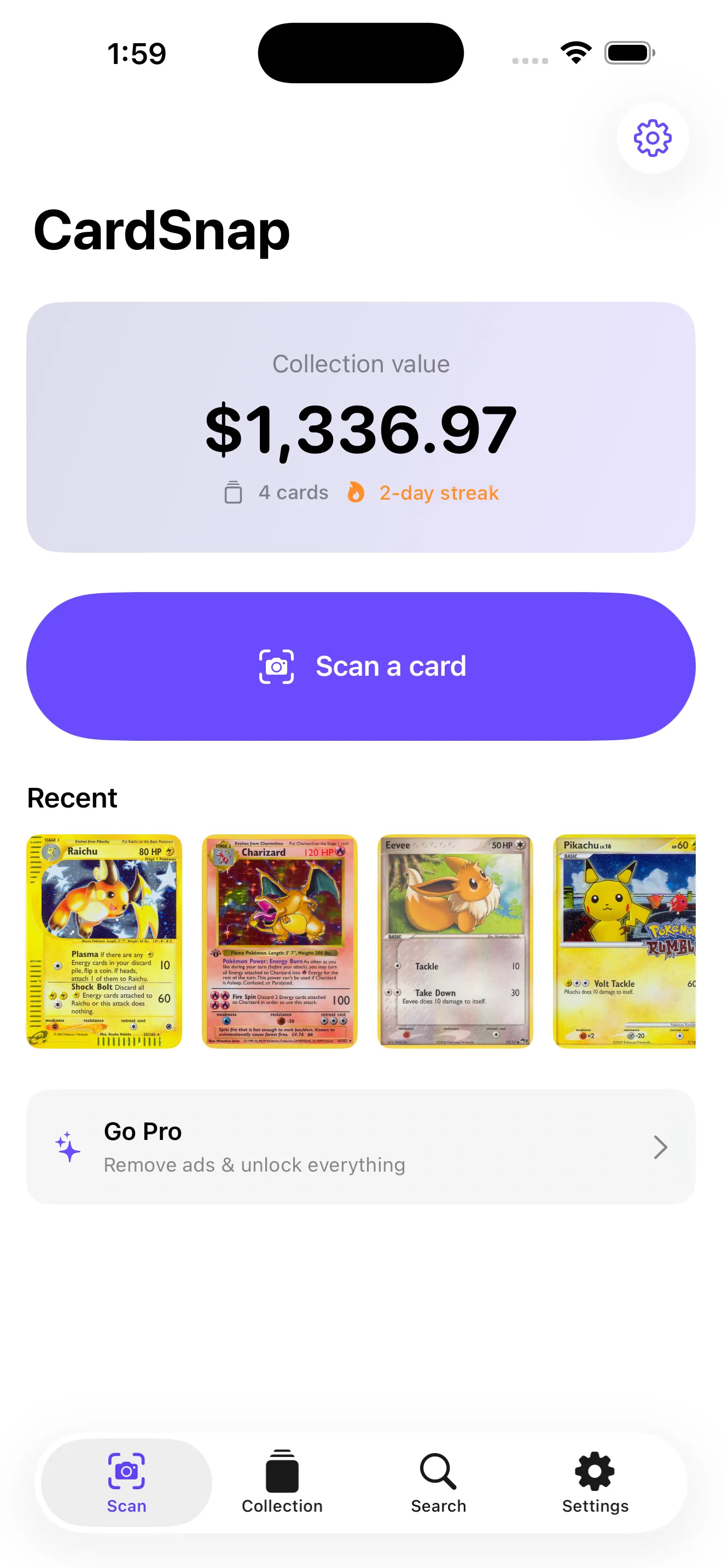
If you're sitting on a binder full of Pokémon cards and have no idea what they're worth, CardSnap does one thing exceptionally well: it shows you. Point your camera at any card, and within seconds you'll see its market value from TCGplayer and Cardmarket. No account required. No paywalls before your first scan. It's the kind of focused tool that feels almost obvious in hindsight — yet it solves a real friction point for collectors of any experience level.
Who This Is For
CardSnap is built for three overlapping groups. If you're a casual collector rediscovering old cards, you want quick answers without friction. If you're more serious about the hobby, you need reliable pricing and the ability to track a large collection. And if you're considering selling cards but aren't sure what they're worth, this app saves you hours of manual lookups. There's no gatekeeping here — the free tier is genuinely useful, and the paid tier unlocks features (like graded card values and price alerts) for people who want deeper tools.
Scanning That Actually Works
The core feature — camera-based card recognition — is the most impressive part. CardSnap uses on-device machine learning to identify cards without uploading images to a server, which means your collection stays private and scans work offline. In practice, it's fast. Point the camera, tap the shutter, and the app identifies the card and fetches its pricing. We tested it on cards across multiple sets and eras, and recognition was reliable even on worn cards with visible creasing.
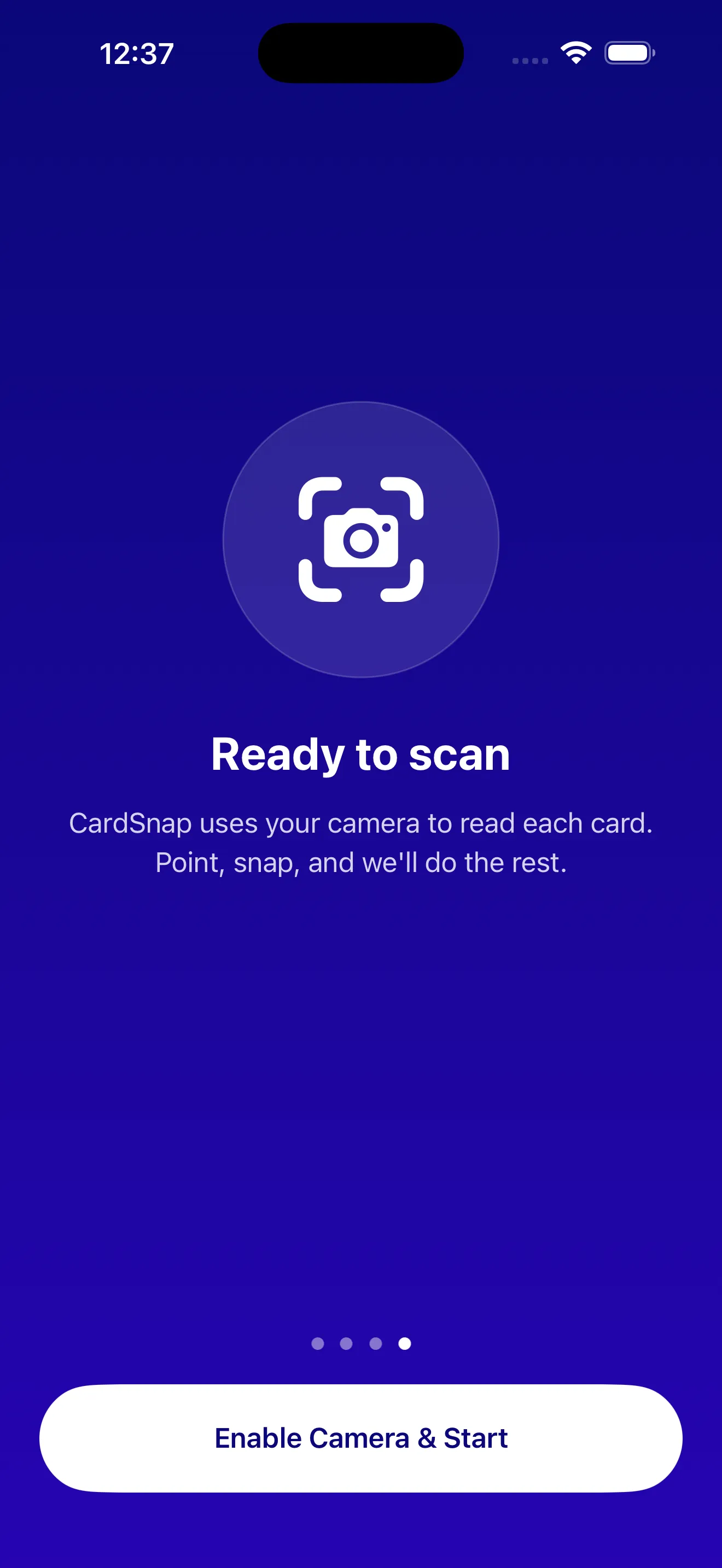
The scanning interface is straightforward and the recognition works on worn cards — a small detail that matters when you're checking condition-dependent valuations.
Pricing That Reflects the Market
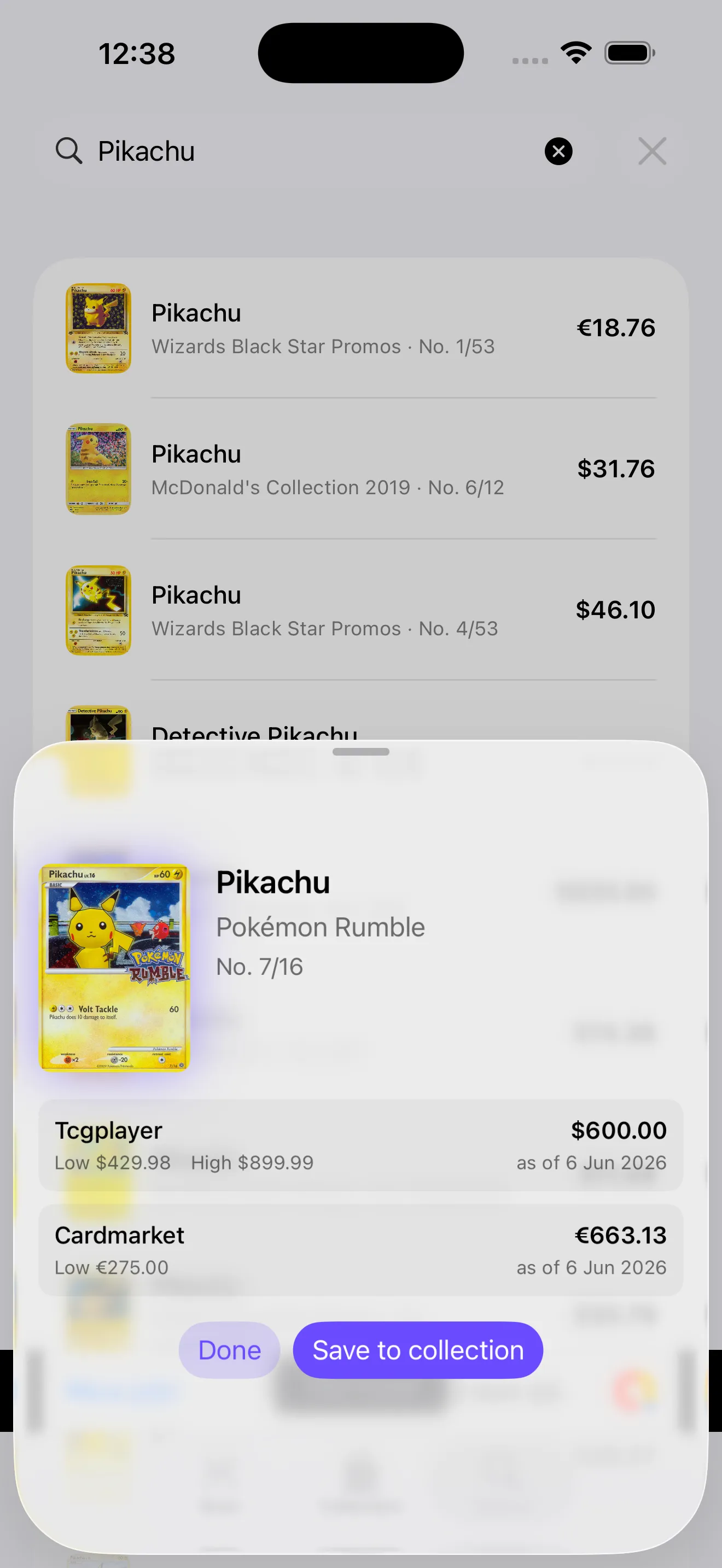
CardSnap shows you three price points — low, market, and high — from both TCGplayer and Cardmarket, each timestamped with an "as of" date so you know how fresh the data is. This matters because card prices fluctuate daily based on actual sales, not arbitrary algorithms. You're seeing real listings from the platforms most collectors actually use. The app doesn't pretend to predict the future; it shows you what cards are selling for right now.
Collection Tracking and Insights
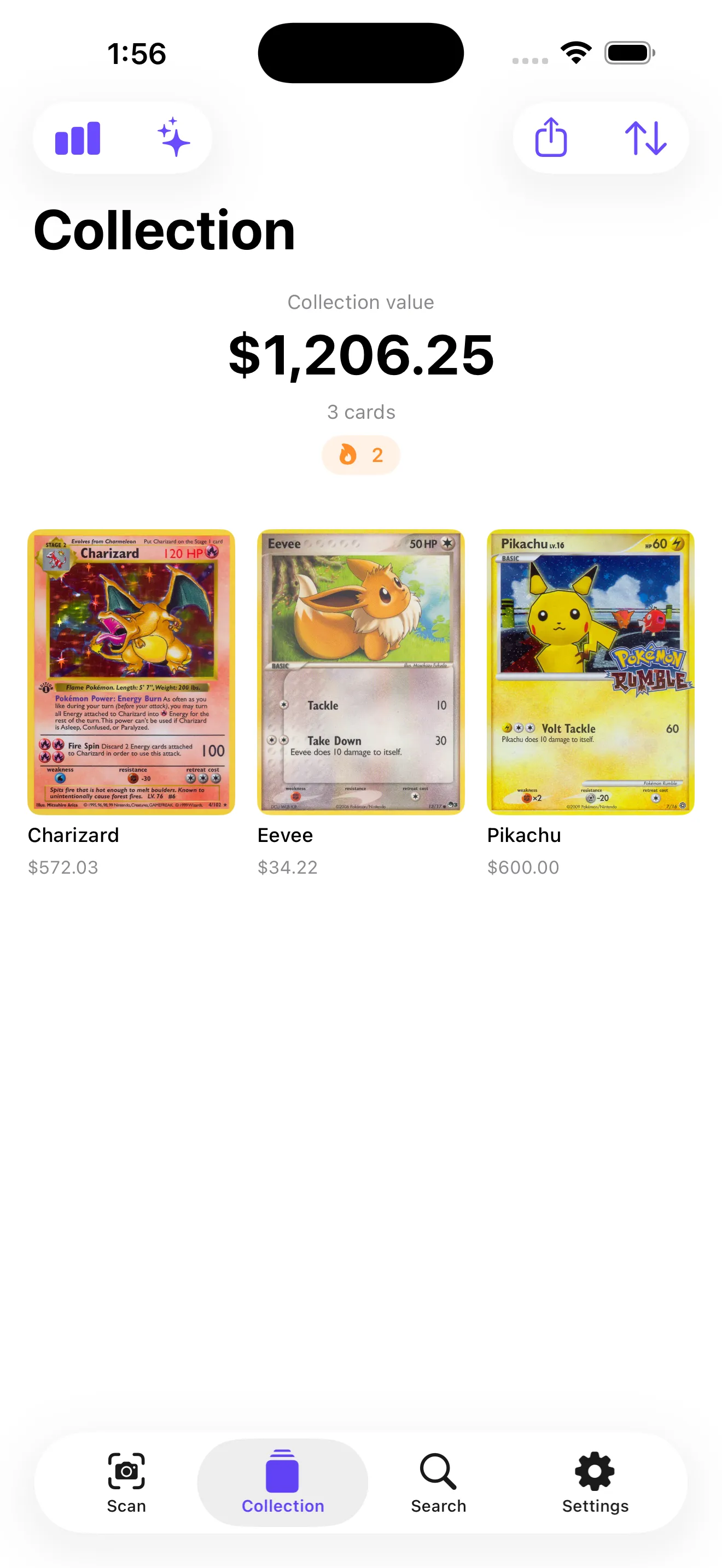
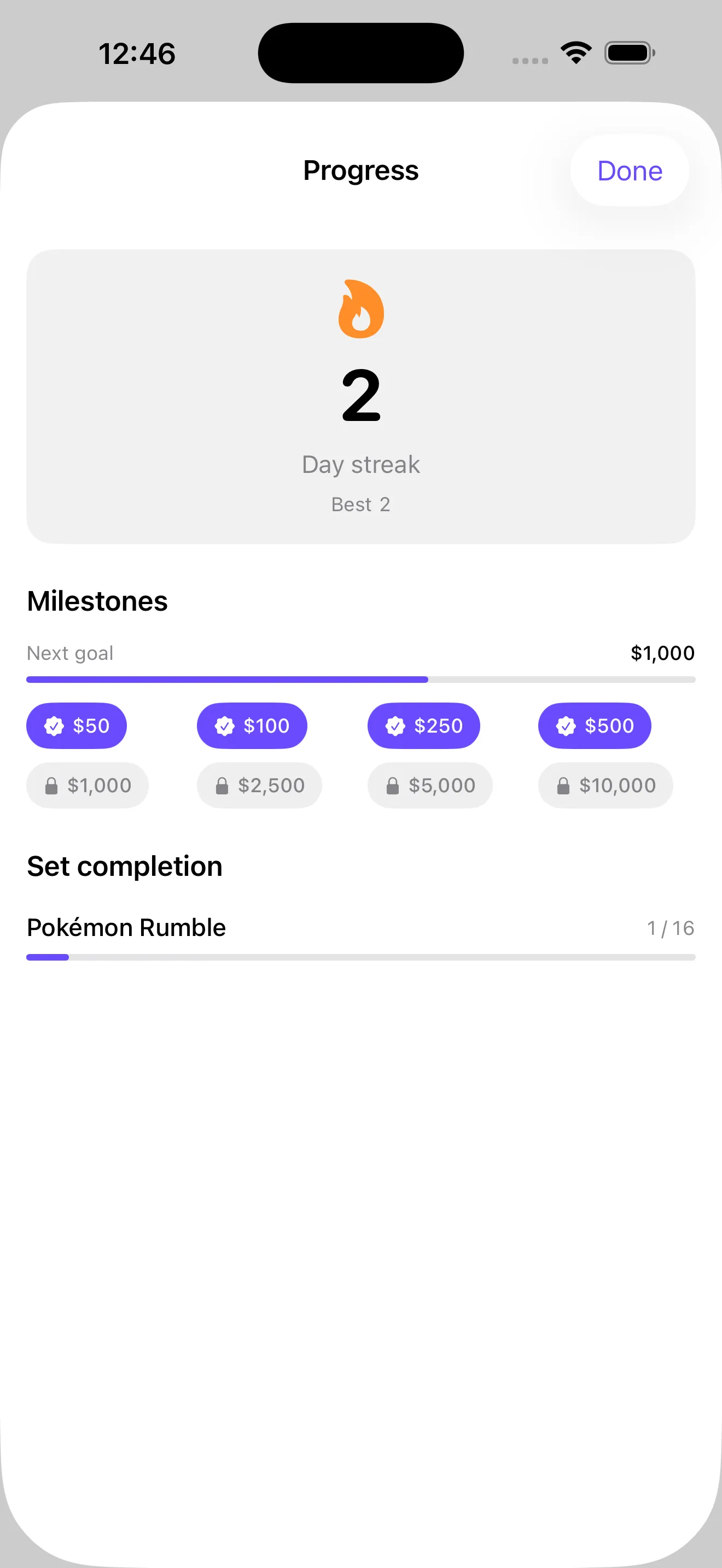
Beyond scanning, CardSnap lets you build a digital collection. Save cards as you scan them, and the app automatically calculates your total collection value based on current market prices. You can organize by set, filter by condition, and even see how close you are to completing specific sets. There's also a progress tracker that rewards you with streaks and value milestones — small motivational touches that make the collection-building process feel more engaging than a spreadsheet ever could.
Free vs. Premium
The pricing model is straightforward. Scanning and text search are completely free — no limits, no ads before your first scan. The premium tier removes ads and unlocks unlimited collections, price history, graded card values (PSA and CGC), price alerts, and CSV export for spreadsheet work. If you just want to scan a few cards occasionally, you never need to pay. If you're serious about managing a large collection or tracking individual cards over time, the paid option justifies itself quickly.
Caveats and Limits
CardSnap is excellent at what it does, but it's worth understanding what it doesn't do. It relies on TCGplayer and Cardmarket data, which means pricing is only as current as those platforms' updates. Very rare or misprinted cards might not scan correctly the first time (though you can always search manually). The app also doesn't grade cards or assess condition automatically — that's up to you. For serious collectors doing condition-based valuations, you'll still need to input that metadata yourself. And if you're looking for historical price tracking or predictive analytics, you'll need the paid tier. For most people, though, these are reasonable tradeoffs for a tool that's this straightforward to use.
If you're evaluating CardSnap as part of a broader collecting strategy, you might also find our guide on valuing your Pokémon collection and other available methods helpful for understanding the full landscape of tools and techniques.
This article was drafted with AI assistance and reviewed by a human editor before publishing.