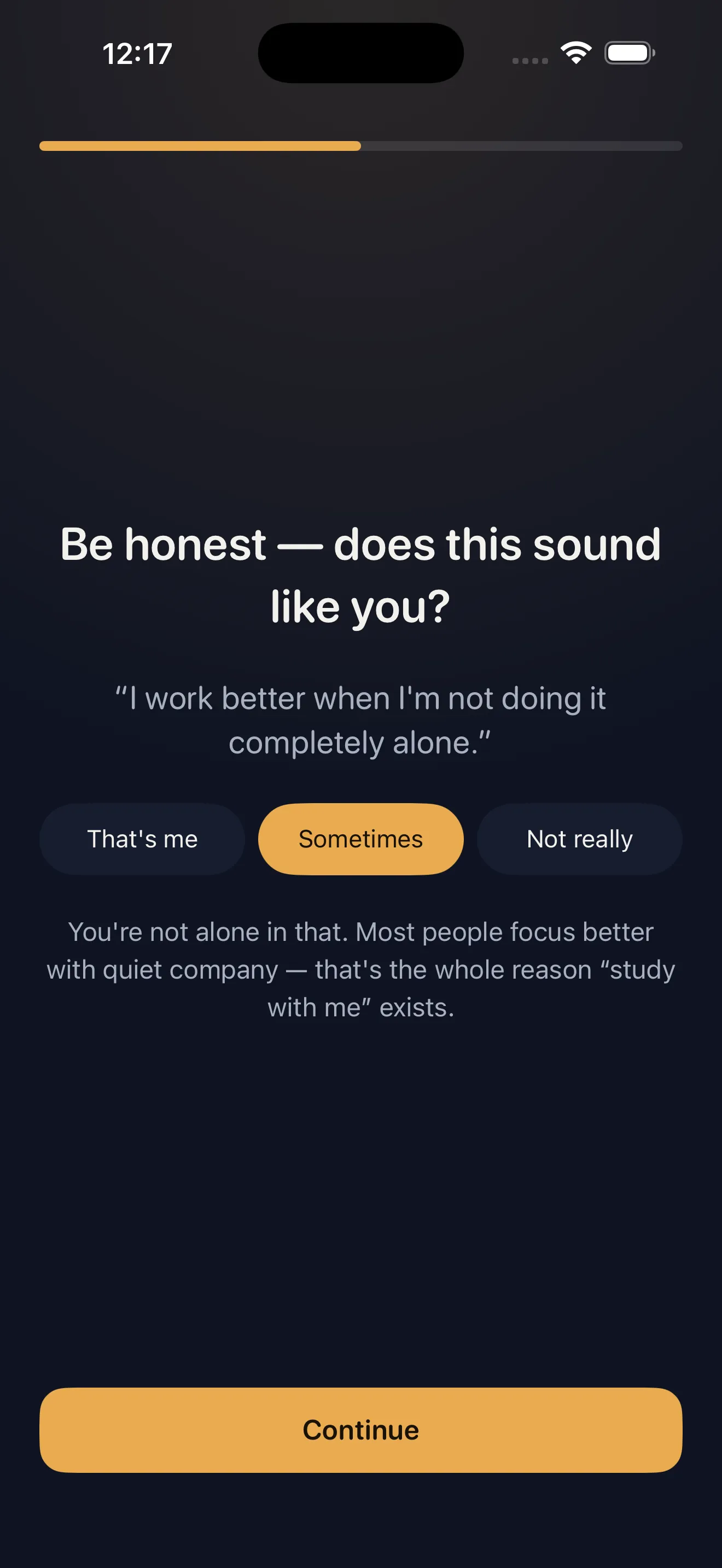
You know the feeling: you sit down to work and immediately feel alone with the blank page. Something shifts when someone else is working nearby—even silently. For years, students and professionals have chased that sense of company through study groups, coffee shops, and increasingly, through apps. But the options have been fragmented. Some are video calls that demand camera anxiety and scheduling. Others are timers that feel mechanical. A few are social networks disguised as productivity tools. Locked In takes a different path: it delivers the psychological lift of ambient presence—a warm companion checking in on you, on demand—without the friction of matching, waiting, or performing for a camera.
The focus landscape: four approaches
When you're looking to improve concentration, the apps you find fall into a few distinct categories. Straight timers (like the Pomodoro technique made digital) give you a clock and nothing else. Co-working platforms connect you live with strangers or friends via video, demanding both setup and a presentable state. Social focus apps layer feeds and follower counts on top of your work session, turning focus into performance. And then there are study companions—a newer category that borrows the emotional scaffolding of presence without the overhead.
Why presence matters more than you think
The research on this is solid. Simply knowing someone else is working nearby improves focus and reduces procrastination. It's called social facilitation—your brain works better when it knows it's not alone. The catch: that presence has to feel genuine, not staged. A video call with a stranger can actually add anxiety (you're being watched). A timer feels cold. A social feed turns your work into content. What you really want is the ambient sense that someone cares how you're doing, without surveillance or performance pressure.
You don't focus better alone. But you also don't focus better on camera.
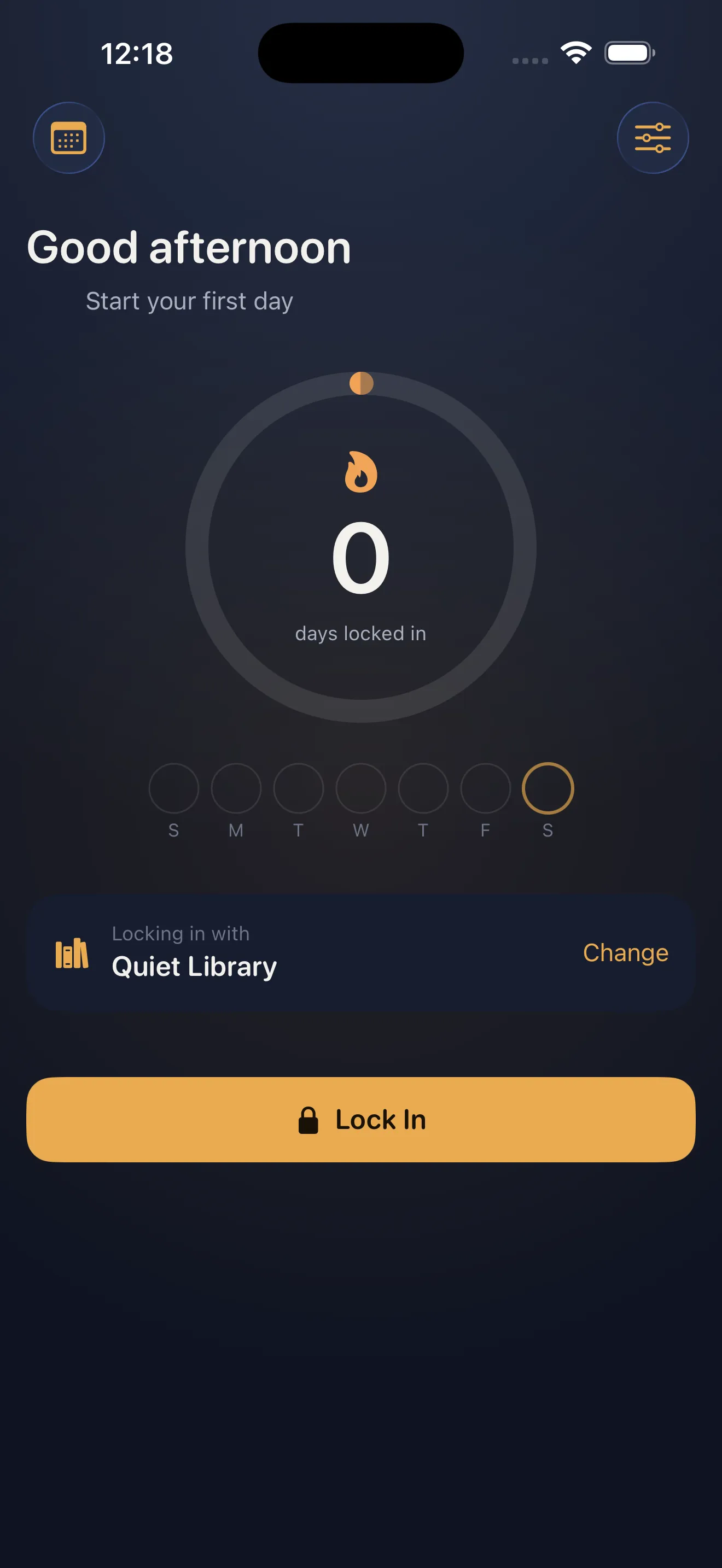
Where Locked In fits: the ambient companion model
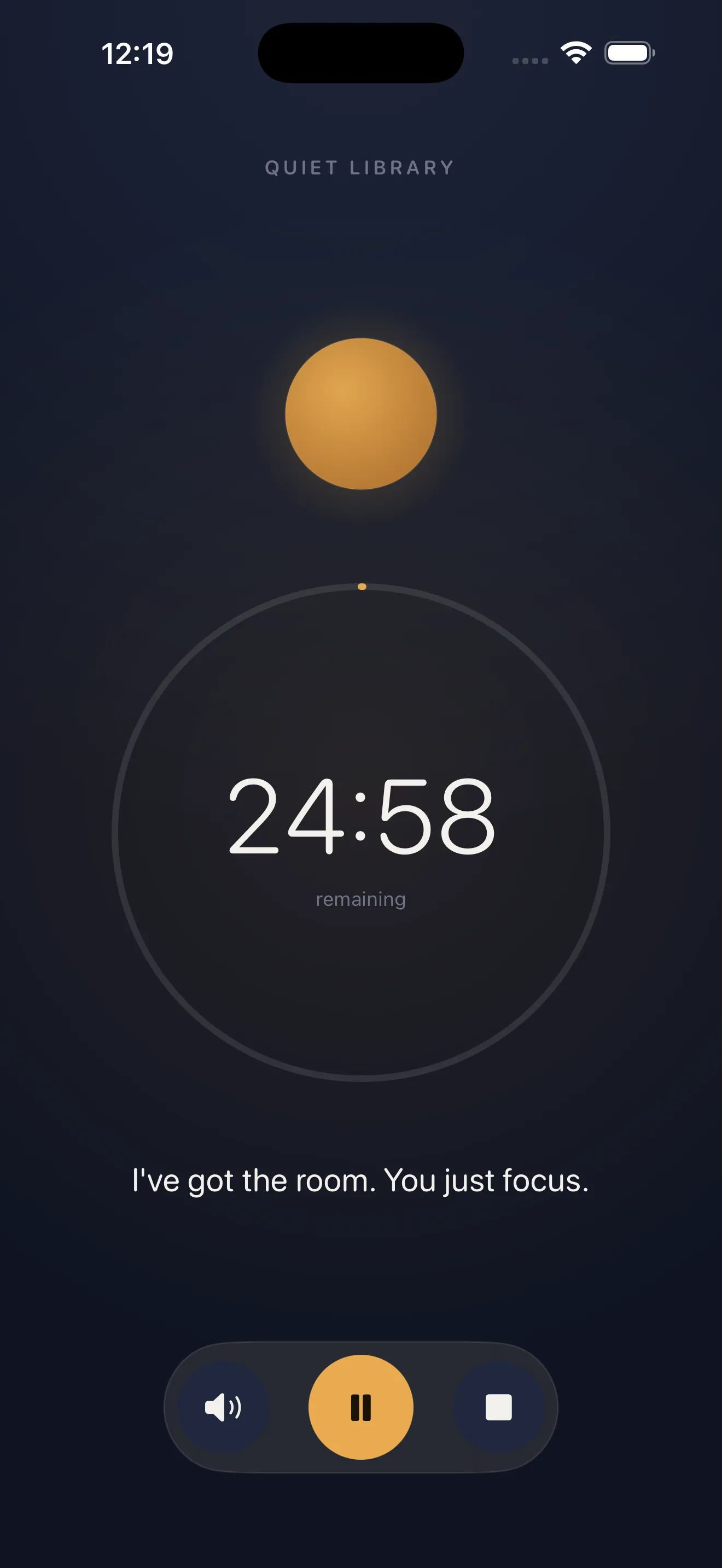
Locked In is built around one core mechanic: you pick a vibe (think Quiet Library, Rain Desk, Cafe, Late Night), set your time, and start. A warm companion is there with you. They check in along the way. No camera. No waiting for a match. No algorithm deciding who you study with. You just tap, lock in, and work. The vibe anchors the session—it's the emotional container—while the companion provides the human element without the friction. Sessions stay on your device by default; your streaks are yours alone. This is the ambient companion approach: presence without performance, company without coordination.
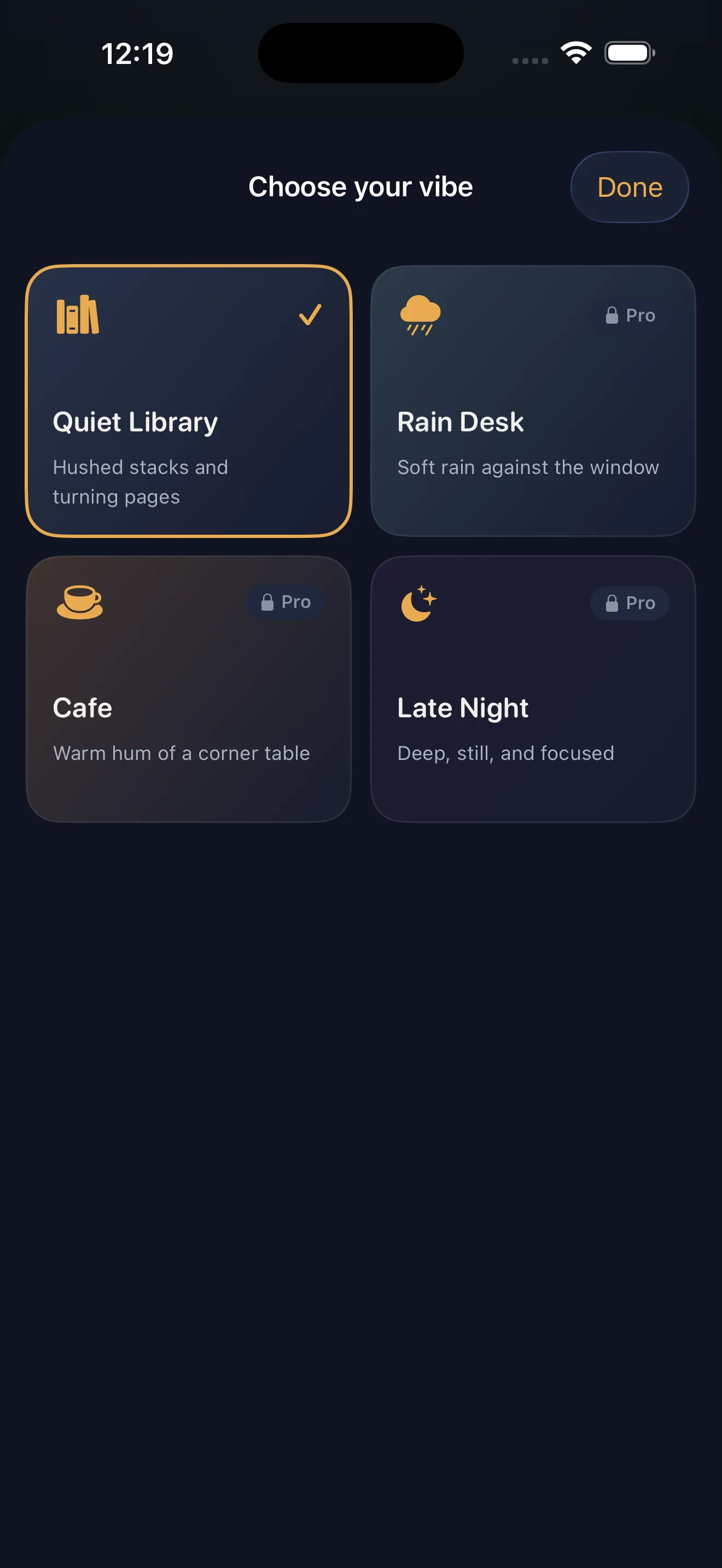
How it compares to other focus methods
- Timers (e.g., Pomodoro apps)
- Mechanical. Good structure, zero social element. Works for some; isolating for others.
- Video co-working
- Real presence, real anxiety. Setup friction, camera anxiety, scheduling needed. Genuine but effortful.
- Social focus apps
- Presence plus community, but feeds and follower counts turn work into performance. Engagement over focus.
- Ambient companions (Locked In)
- Presence without performance. Always on-demand. No scheduling, no video, no feeds. Company built in.
The key difference is activation energy. A timer requires zero setup but offers zero human connection. Video co-working offers real connection but demands scheduling and mental load. Social focus apps are always available but make your focus visible and competitive. Locked In splits the difference: it's always available like a timer, it offers genuine presence like a video call, but it removes the friction and performance pressure that come with both.
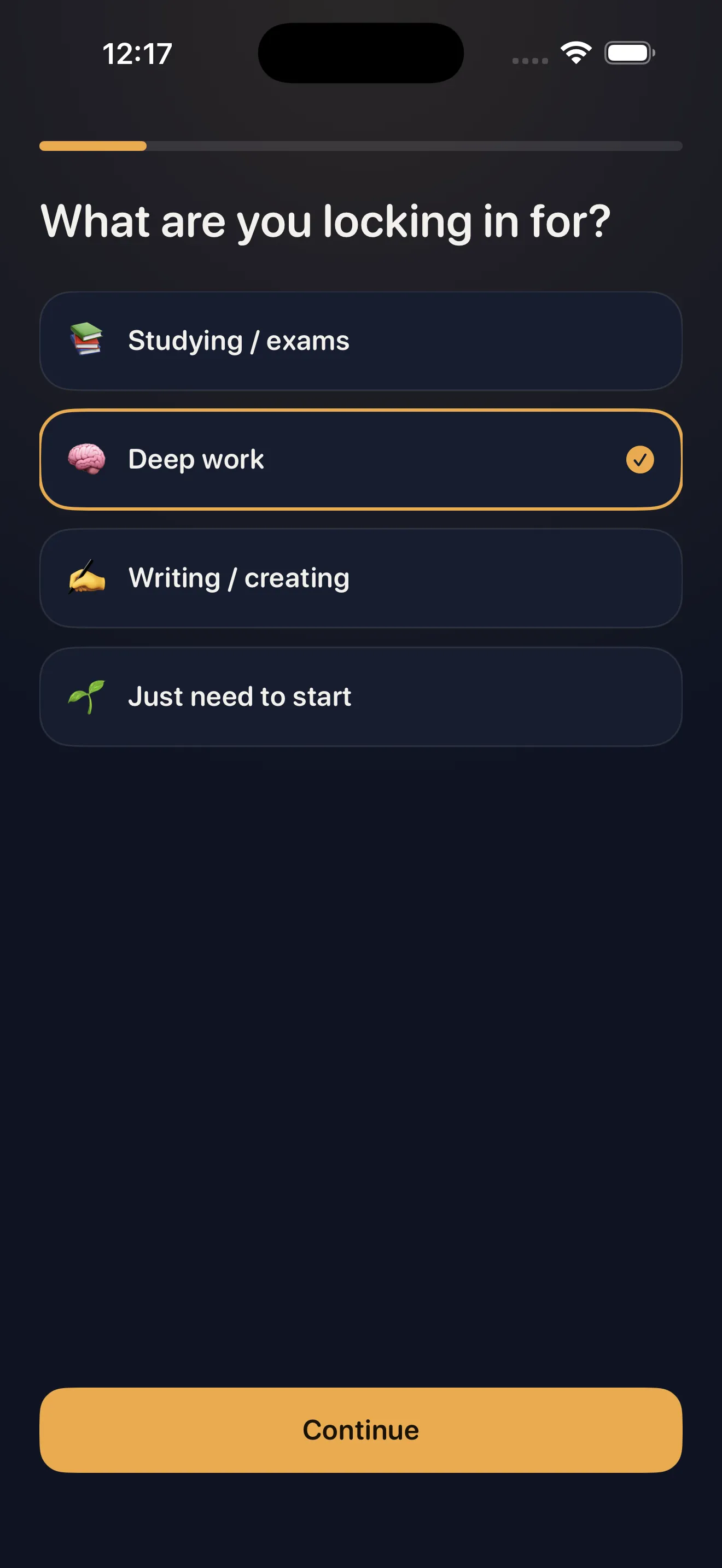
What the core loop gives you
Every app that wants you to return needs a core loop. Locked In builds its around four pieces. A full timer keeps you accountable. Vibes keep you emotionally grounded. A companion's check-ins remind you that someone cares. And streaks—the daily locked-in log—give you proof that you're building a habit. The entire loop is free forever. No paywalls on timers, no premium vibes, no gated streak counts. A Live Activity and home screen widget mean you can see your progress without opening the app. It's designed to be there, not intrusive.
Why privacy matters in a focus app
When you're in a vulnerable state—struggling to focus, trying to build a habit—the last thing you want is an audience. Locked In treats your work as private by default. Sessions, notes, and streaks live on your device. No feeds watching your progress. No followers celebrating your wins. No data sold to optimize engagement. If you sign in (optional, only for cross-device sync), you're only syncing with yourself. This approach is unusual in apps built to keep you coming back, but it's the only way to preserve the psychological safety that makes ambient presence work.
Privacy by default isn't a feature—it's respect for why you're here in the first place.
If you're new to the app, the Locked In for Beginners guide walks through how to pick your first vibe and set up your streak. Or, if you want to understand the workflow deeper, the step-by-step walkthrough covers everything from your first session to building momentum over time.
Who this approach serves best
- Students who focus better with company but hate video calls or social pressure
- Remote workers and freelancers who miss the ambient presence of an office
- Anyone building a focus habit and wanting accountability without an audience
- People who like timers but find them emotionally hollow
- Those who value privacy and want their focus to stay their own
This article was drafted with AI assistance and reviewed by a human editor before publishing.