Blend In strips social deduction down to its essence: one iPhone, one secret word, and nine other people trying to figure out who's lying. There's no app per player, no Wi-Fi requirement, no accounts to create. Just pass the phone, trust no one, and watch friendships crack under the pressure of bluffing. The genius is in the constraints. By forcing everyone to play on a single device, Blend In creates natural friction that makes the game faster, more social, and genuinely harder to fake your way through.
The Single-Phone Design Philosophy
Most party games ask everyone to pull out their own phone. Blend In refuses. This decision isn't a limitation—it's the entire design. When the same device cycles through all 3 to 10 players, every interaction becomes visible to the group. Your pause before giving a clue. Your reaction to someone else's guess. The milliseconds of hesitation when it's your turn to vote. All of it happens in front of an audience that's actively reading your tells.
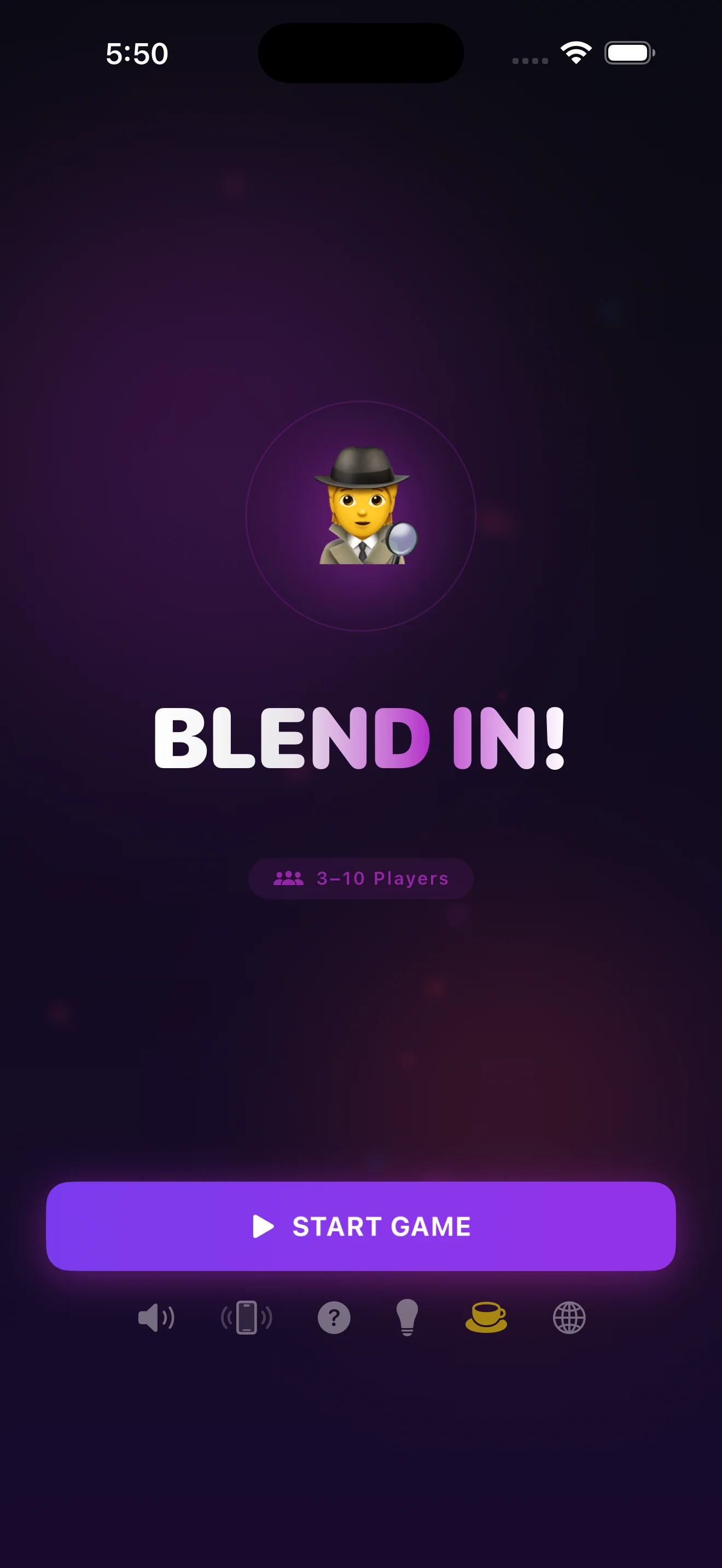
Compare this to traditional imposter games played across multiple devices. Players can privately text, coordinate, or check the time without anyone knowing. Blend In eliminates those escape routes. When you hand someone the phone to give your clue, they see exactly what you saw. They watch you hand it over. They can smell your uncertainty.
The phone becomes an amplifier of human behavior—your hesitations, your confidence, your terrible lying.
How a Round Actually Plays
Each game starts with player setup. You enter 3 to 10 names, and Blend In randomly assigns one player as the imposter. Everyone else gets the real word.
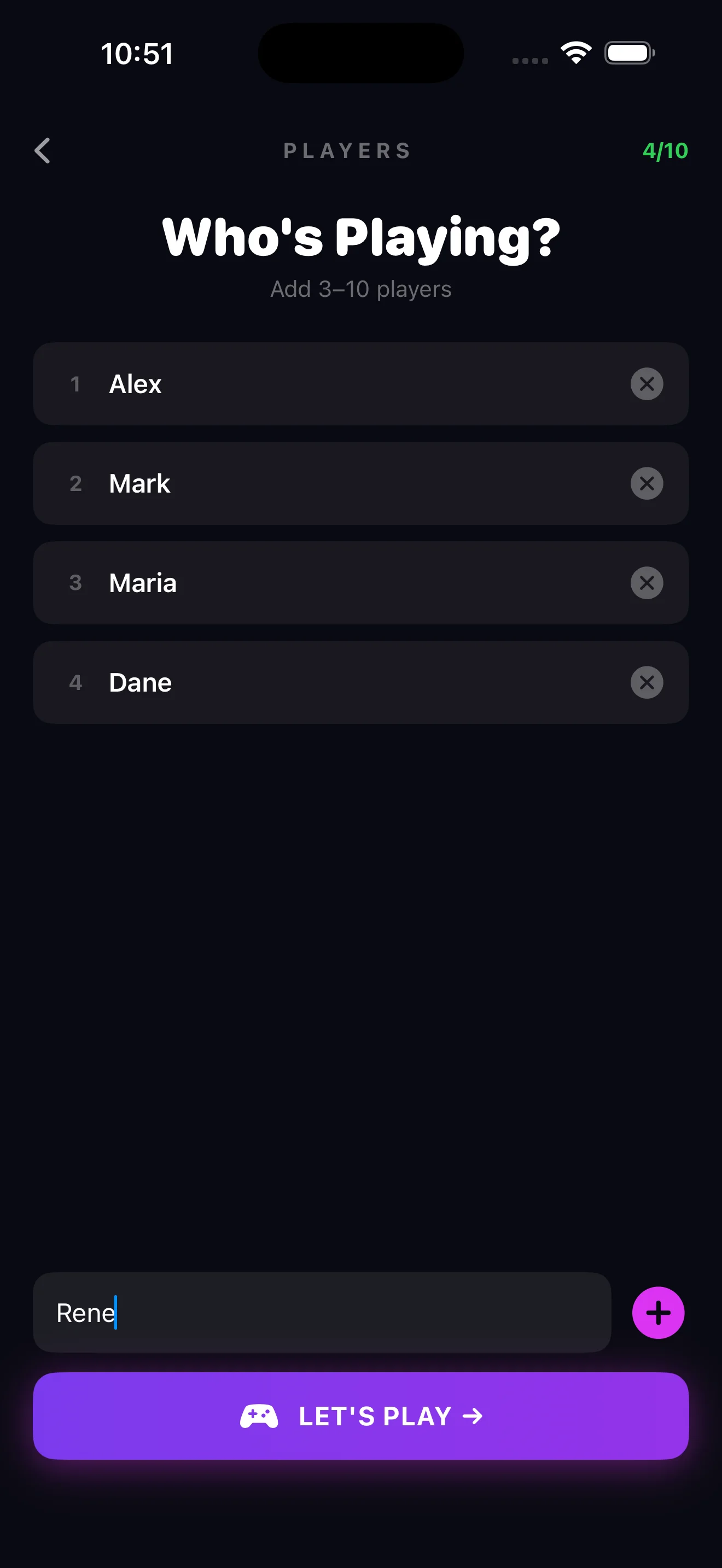
The Secret Distribution
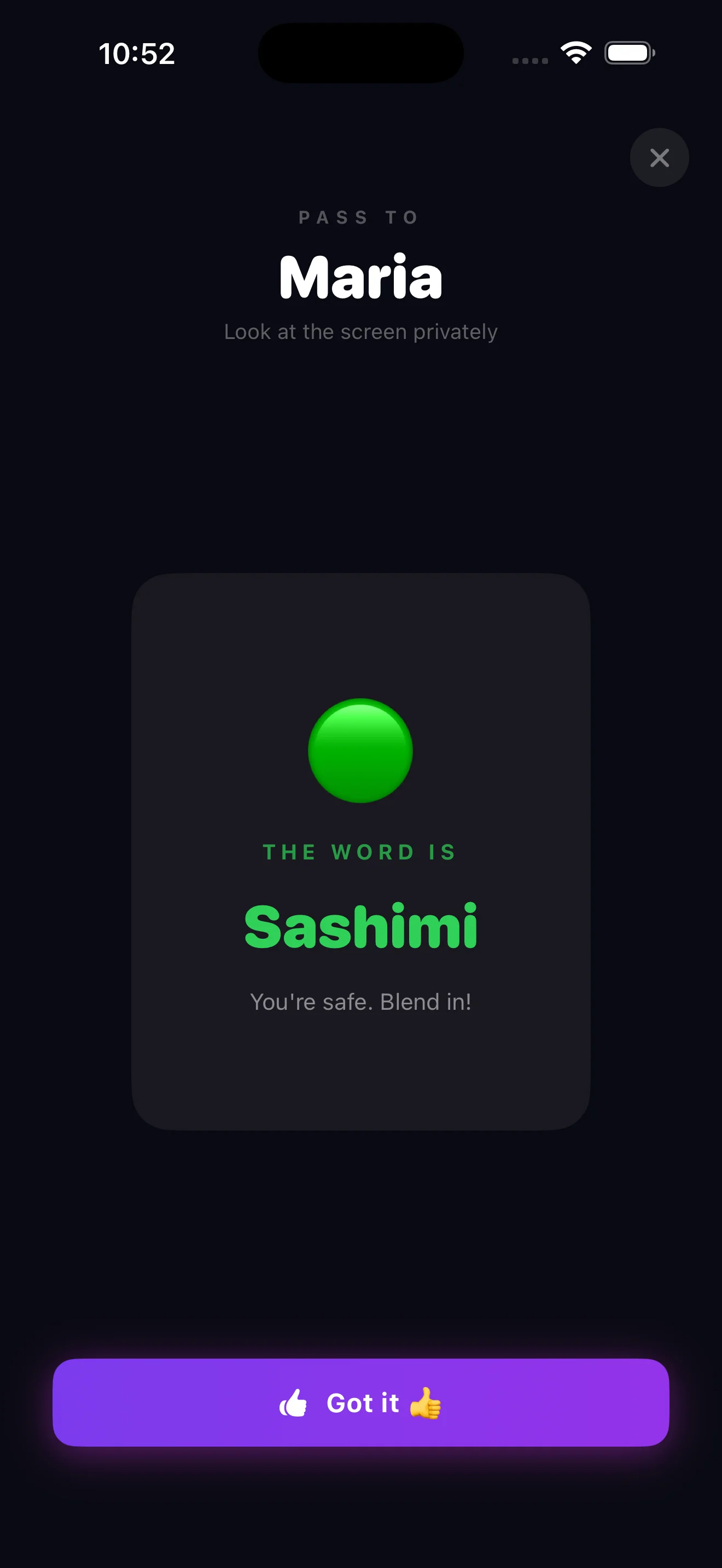
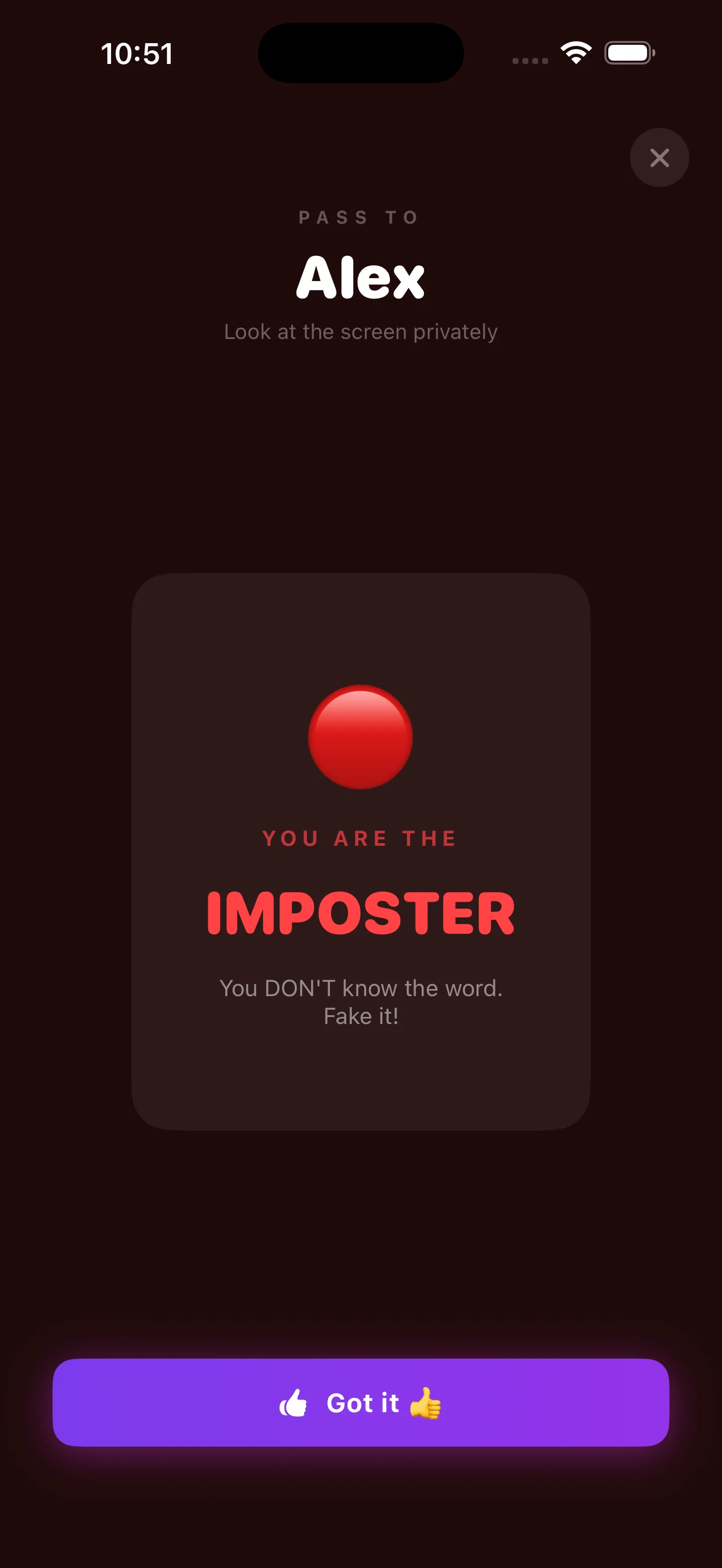
The phone passes around the circle. Each player gets a few seconds alone with it to see their role. Safe players see the word—say, 'pizza.' The imposter sees nothing, or a hint so vague it's almost useless. The imposter's job is to survive the round without being voted out. Everyone else's job is to give clues without making it so obvious that even the faker can guess it.
Clue Rounds with Pressure
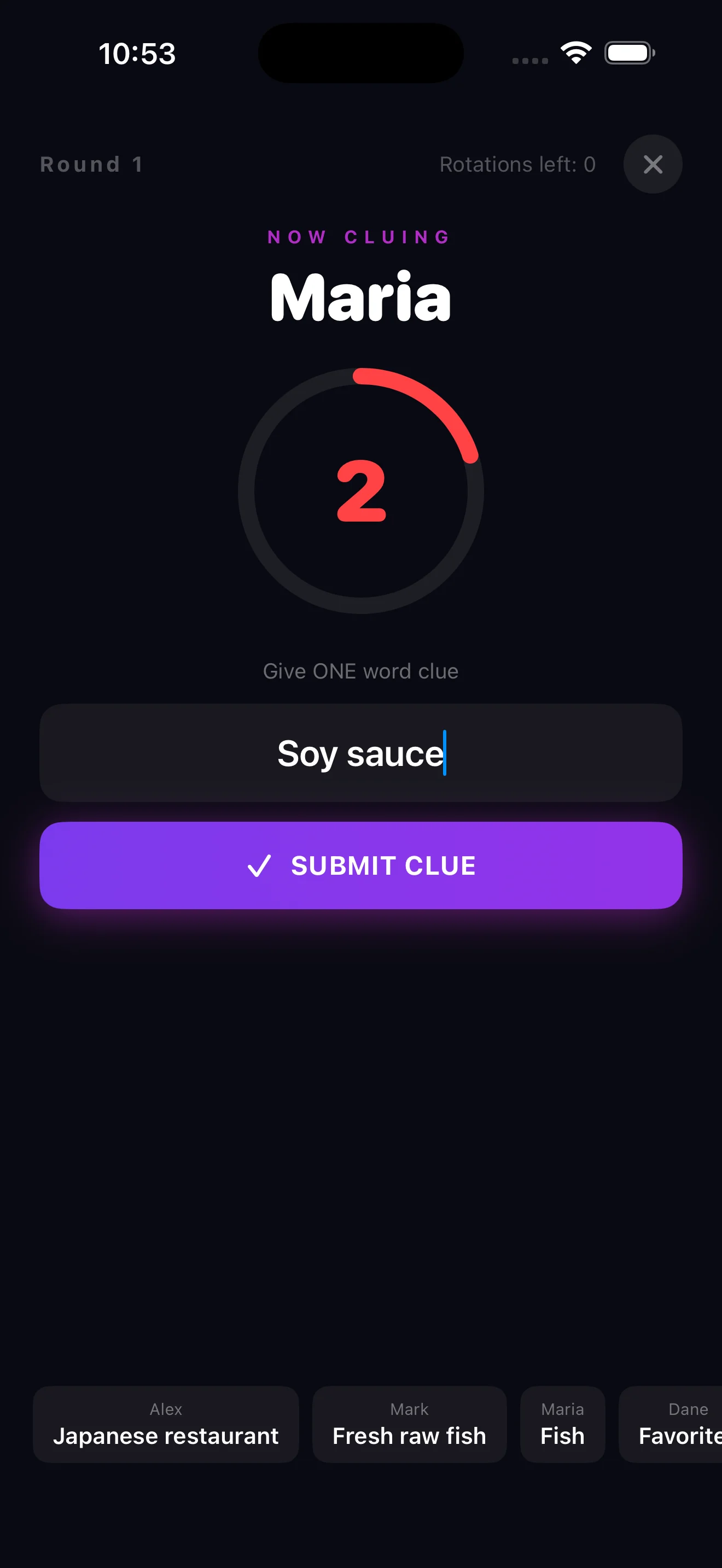
Once everyone knows their role, the clue phase starts. A timer counts down—usually 30 to 60 seconds per person. Each player gives one clue. Safe players try to hint at the real word without being so direct that the imposter can guess it on the next turn. The imposter needs to give a clue that sounds plausible but vague enough to not tip anyone off.
Discussion and Voting
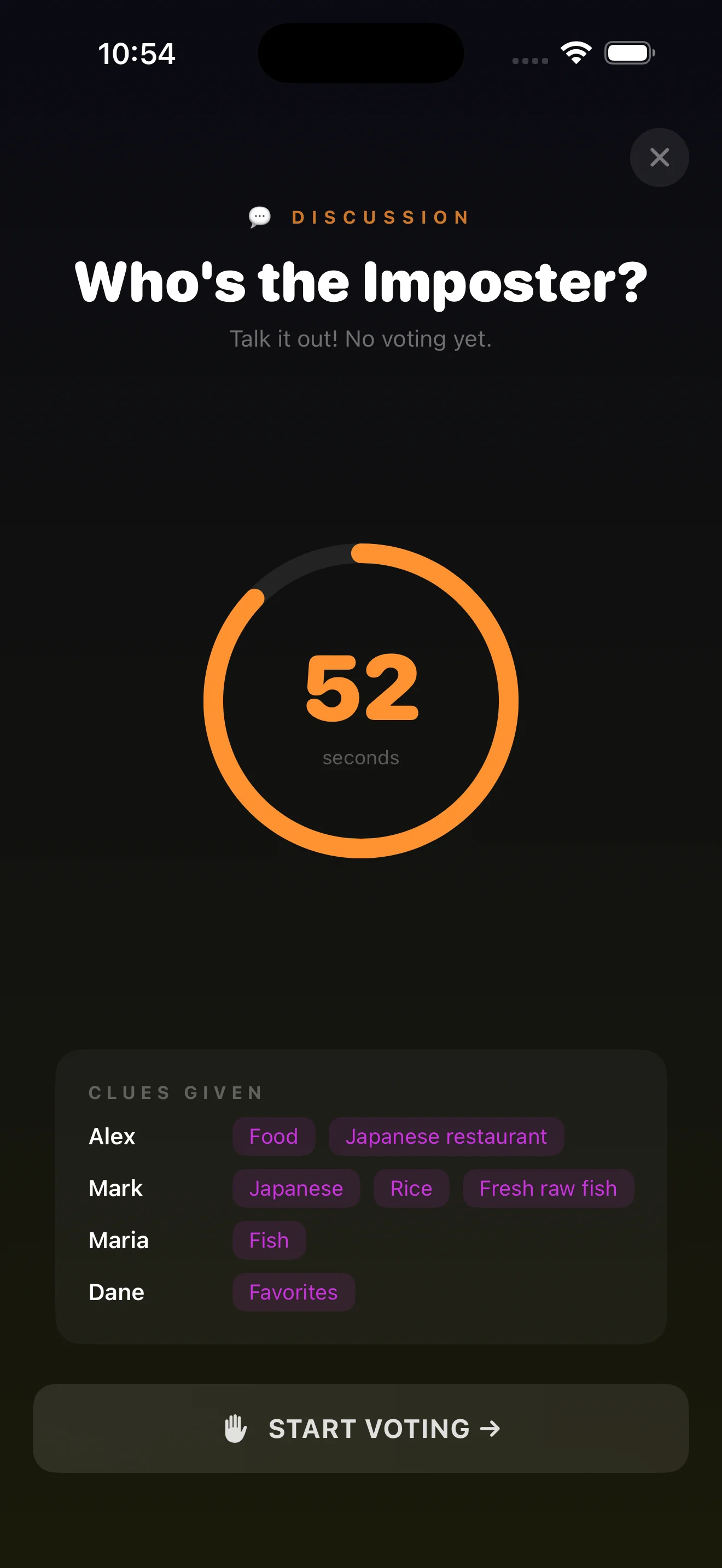
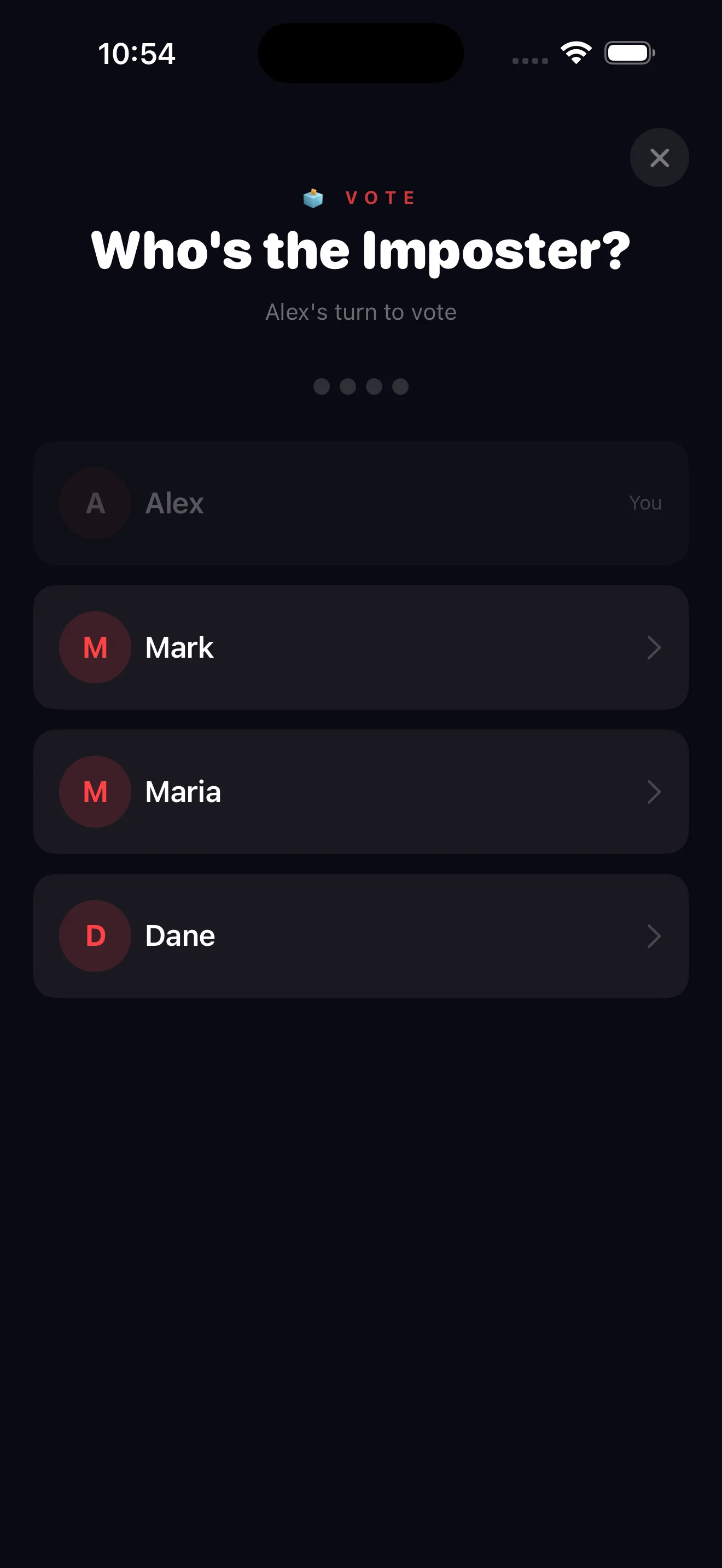
After all clues are in, the table opens up. People argue. Someone says, 'That clue made no sense—it has to be Alex.' Someone else defends themselves. Accusations fly. Then Blend In moves to voting. Everyone votes on who they think the imposter is. Majority rules.
Scoring and Replay Value
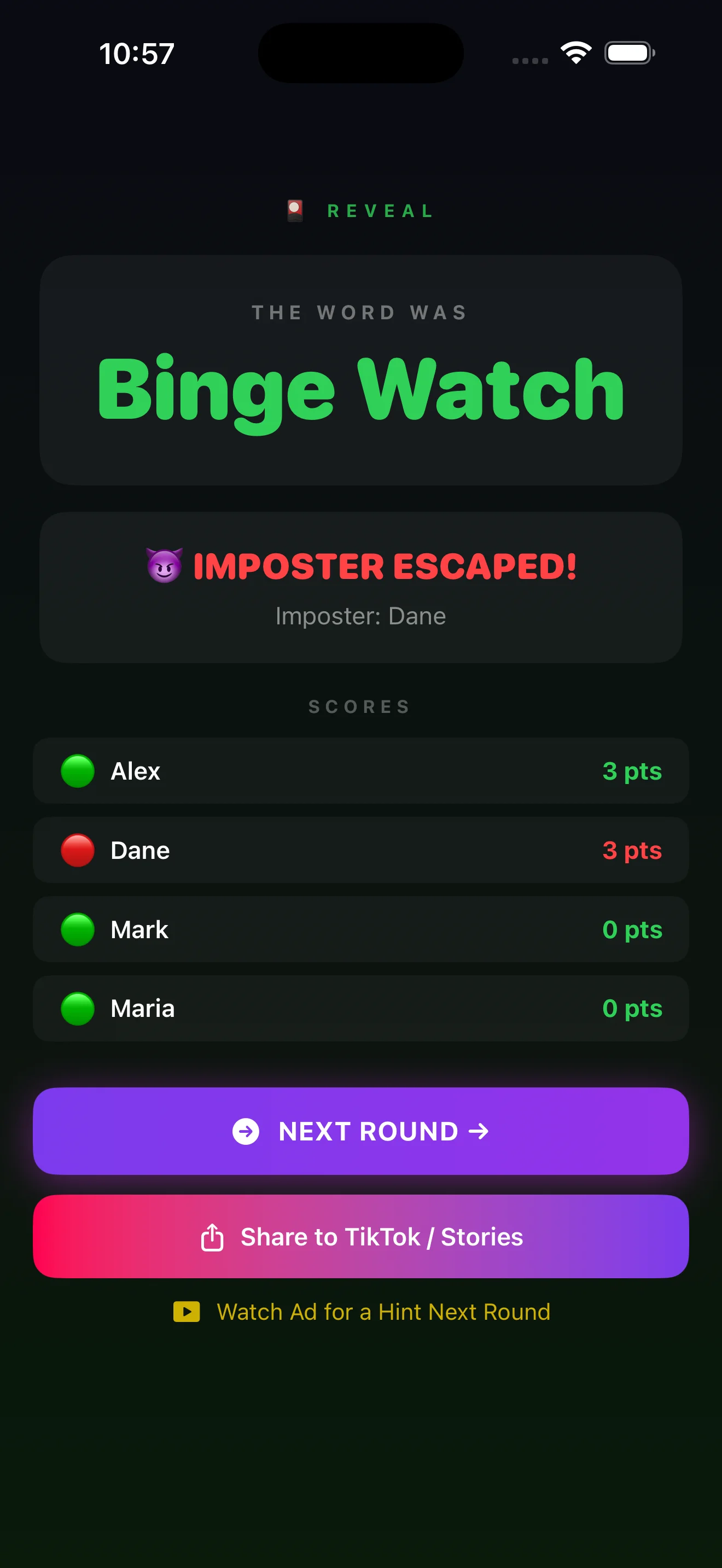
The reveal happens instantly. If you voted out the imposter, safe players earn points. If the imposter survives, they get the points. The scoreboard rolls, and the game offers to loop you back to the start with a fresh word from the same category.
Word Packs and Replayability
Blend In ships with five free word packs: Food & Drinks, Movies & TV, Countries & Cities, Animals, and Sports. Each pack contains 100+ words. That's 500+ unique prompts with no internet required. The variety matters because once your friend group has played 'pizza' three times, 'pizza' becomes a known quantity. Fresh words keep the meta from calcifying.
For more strategic tips on how to survive as an imposter or spot the faker, check out our guide to mastering Blend In. If you're curious about how the design philosophy compares to other party games, we've also explored phone-pass versus app-per-player dynamics.
Zero Internet, Maximum Trust Destruction
Blend In works completely offline. No Wi-Fi needed. No account creation. No tracking. This is deliberate. A party game should work the moment you open it, in a basement with no signal, at a cabin with no data plan, anywhere humans gather. The absence of infrastructure is also the absence of friction.
The best party game doesn't need the internet. It needs trust—and the permission to break it.
Why This Design Works for Real Parties
Blend In doesn't ask your party to sit quietly staring at phones. It asks them to sit together, pass one phone, and talk. The phone is just the arbiter—it holds the secret and keeps score. Everything that matters happens in conversation. This is why it works as well on a road trip (one phone, passing hands) as it does at a dinner table with ten people. The format adapts to the setting because the format is just one shared screen and a lot of human interaction.
This article was drafted with AI assistance and reviewed by a human editor before publishing.