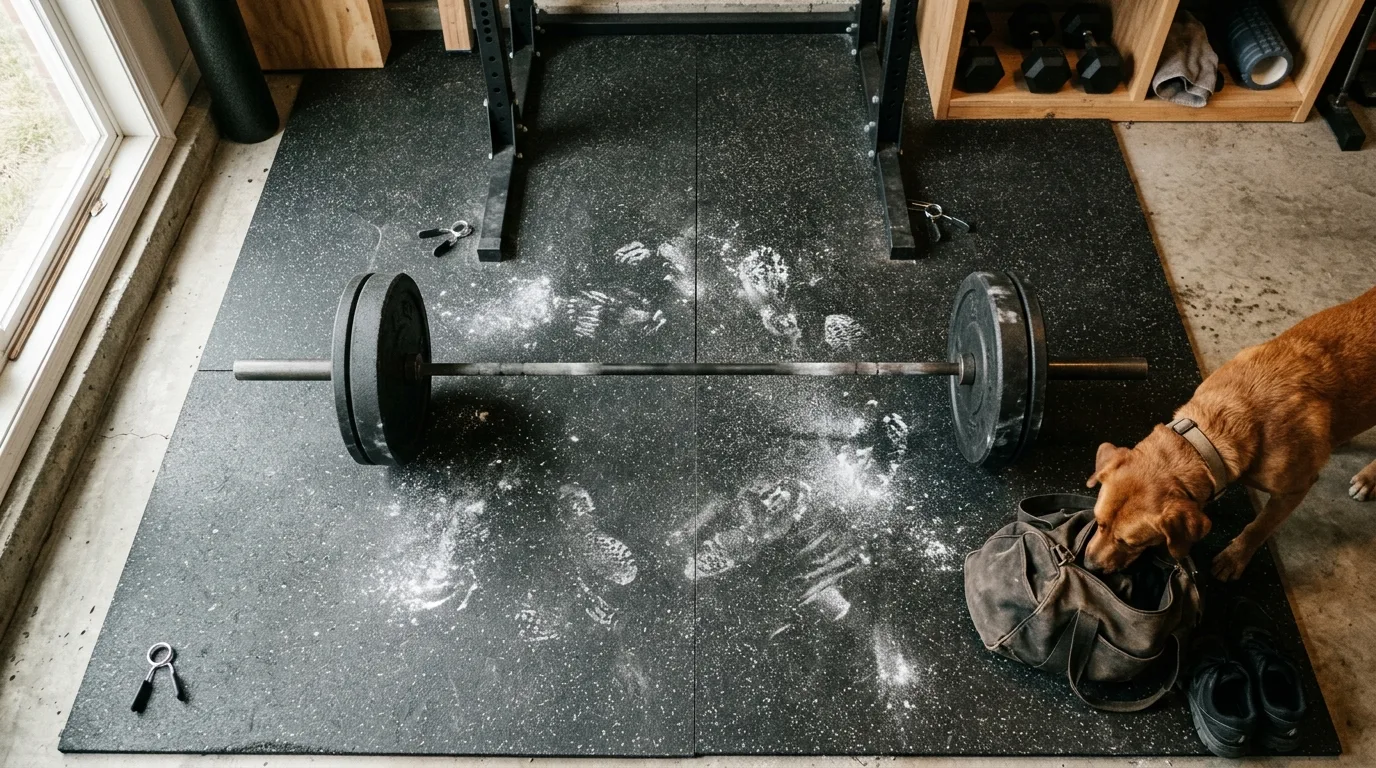
How do you know if your lift is actually good
How do you know if your bench press is good
A bench press is good relative to a specific population, and the only honest way to know where you stand is to check it against people who actually competed. Most of the numbers people repeat — "1.5x bodyweight is good," "225 is the mark" — come from nowhere in particular. They ignore bodyweight, sex, and age, all of which move the bar a lot. A percentile built from sanctioned meet results does the comparison properly: it places your number inside a real distribution and tells you the share of lifters you're ahead of, not a folk rule someone repeated at the gym.
What makes a good squat different from a good bench or deadlift
Squat and deadlift standards sit on different curves than bench because the lifts recruit different leverage and different populations of competitors train them unevenly. A lifter who is elite on deadlift is often merely solid on bench, and that's normal, not a red flag. This is why a single percentile number per lift matters more than a rule of thumb that tries to cover all three with one multiplier. Checking each lift separately, and then looking at the composite, gives you an honest picture instead of a flattering average.

How to check your lift's percentile in under a minute

Step 1: Choose your lift
Step 2: Enter the numbers
Step 3: Read the result
Step 4: Let it save itself
How is the percentile actually calculated
The percentile comes from real, verified results pulled from sanctioned powerlifting meets, not an estimate or a formula someone derived once and never revisited. Those curves are checked against published norms to within a close margin, then shipped inside the app as precomputed data, so a lookup never needs a network connection. If you want the full breakdown of where the numbers come from and why they're trustworthy, this guide to strength standards walks through it, and this piece on judging any lift covers how percentile itself works as a concept.
How do you know if you're getting stronger, not just heavier
You know you're actually progressing when your percentile rises over time, not just your raw number. Bodyweight tends to creep up alongside strength, and a bigger lift can quietly mean you're standing still or even losing ground relative to your new weight class. Percentile drift tracks that placement across every check you've done, so the line you're watching is the honest one — progress against a population, not just a heavier plate on the bar.

A number alone answers nothing. Compared to the right population, it answers everything.
What's the best way to check if a lift is good
The best way to check is whichever method actually uses real competition data instead of guesswork, and for most people that rules out rules of thumb and most online calculators. Here's how the common options stack up.
- 1.5x bodyweight rule
- Ignores sex, age, and lift type entirely. Fast, but not honest.
- Generic online 1RM calculator
- Estimates a max from reps, not whether that max is good. Different question.
- Ask a coach or gym buddy
- Useful gut check, but based on whoever they've personally trained.
- Benchmark
- Percentile against 1.8 million judged meet lifts, computed offline, no account needed.
Common questions
Is a 225 lb bench press good?
Do I need to log every workout to use Benchmark?
Does Benchmark work without an account or internet connection?
Is checking my squat and deadlift free, or just bench?
How accurate are the percentiles?
What is percentile drift and why does it matter more than PRs?
If you're new to reading a percentile result at all, the beginner's guide is a good place to start before your first check, and the full breakdown of what a 100 kg bench actually means sits in this resource.
This article was drafted with AI assistance and reviewed by a human editor before publishing.