Marcus had a problem that most people never talk about: he was good at his job, but he was bored between meetings. The mornings were the worst. He'd scroll mindlessly through his phone, half-awake, waiting for his brain to catch up with the calendar. Then one day, a friend sent him a link. Casefile Daily. A new murder every day, solved in five minutes with nothing but logic. No ads until he opened the app the first time. No subscription. Just a hardboiled detective voice, a grid, and a puzzle that had exactly one right answer. Three months later, Marcus hasn't missed a single day.
The Problem: Coffee Without Purpose
Marcus's mornings followed a pattern. Wake up. Shower. Coffee. Phone. And then—nothing. Fifteen minutes of his brain on autopilot, swiping through social feeds and news apps that left him feeling emptier than when he started. He wasn't looking for more to do. He was looking for something good to do in the time he was already spending. He wanted a ritual that felt less like consumption and more like achievement, even if that achievement was small.
The Setup: Listen, Then Solve
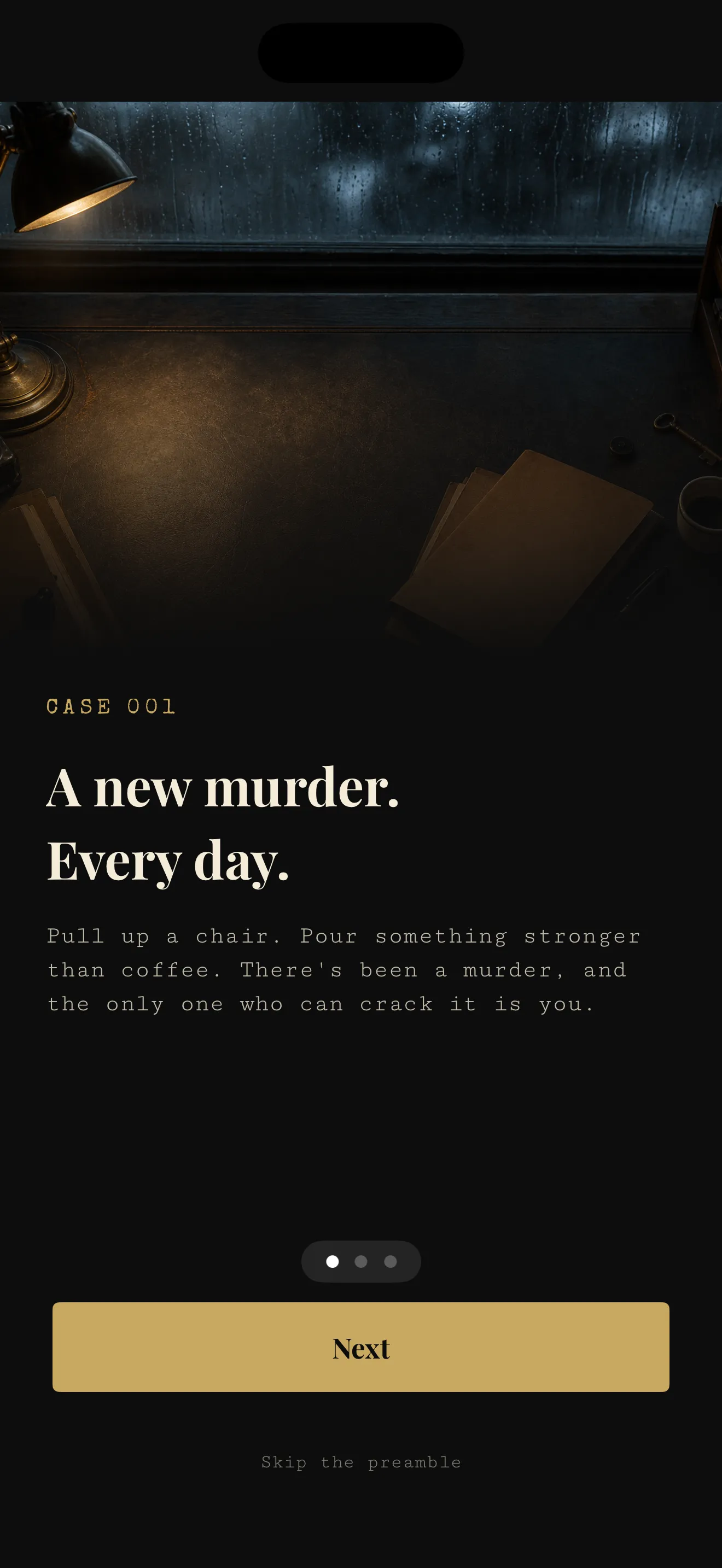
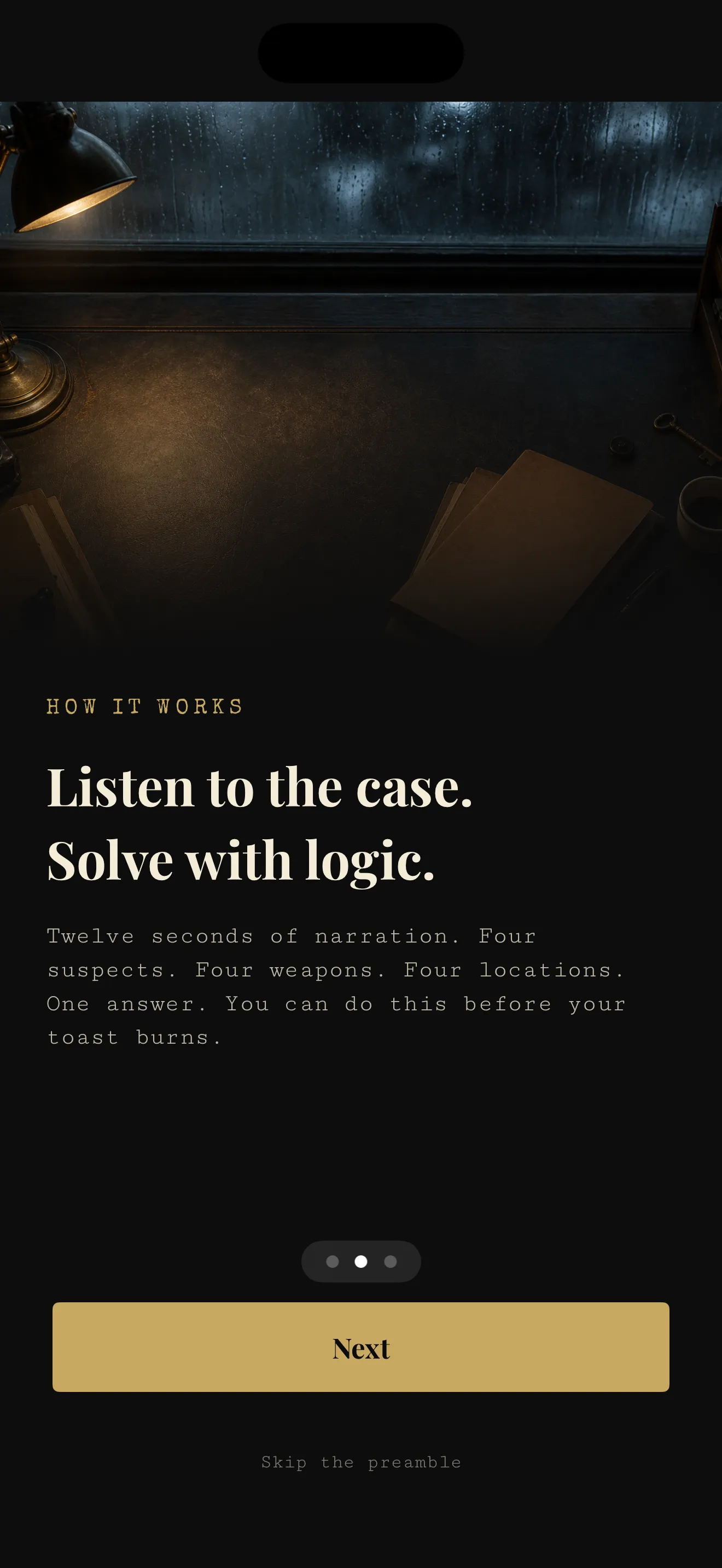
The first time Marcus opened Casefile Daily, a voice met him immediately. Twelve seconds of noir narration, pre-recorded and atmospheric, setting a scene that felt less like a puzzle game and more like the opening of a detective novel. A case. A few suspects. A grid of clues. That's all he got. Then the voice stopped, and the logic puzzle appeared on screen. No tutorial. No hints. No way to brute-force the answer by guessing randomly—there was only one correct solution, and the grid forced him to find it through pure deduction.
That constraint was the magic. No randomness. No luck. Marcus couldn't second-guess himself into the right answer. He had to actually think, marking what he knew and eliminating what he didn't, until the grid revealed the truth. It took four minutes the first time. Five the next. By week two, his brain had learned the rhythm.
The Pattern: Daily at Midnight
What kept Marcus coming back wasn't just the puzzle itself. It was the rhythm. Every day at midnight UTC, a new case dropped. Not a new case every time he opened the app—the same case for everyone, every day, worldwide. That meant when Marcus solved Wednesday's murder on Wednesday morning, he was solving the same puzzle everyone else was. By Thursday, a new one was waiting. No backlog to work through. No infinite scroll of cases. Just one a day, like a newspaper horoscope or a daily crossword in print.
The constraint wasn't limiting—it was liberating. One puzzle a day meant Marcus couldn't get lost in it. He solved it and moved on.
The Social Part: Streaks Without Spoilers
By week three, Marcus had solved thirty cases in a row. He'd taken screenshots of his streak and sent them to friends without thinking twice—the app made it simple to share just the number, not the answer. That mattered. He could brag without spoiling the puzzle for anyone who hadn't opened the app yet. His group chat filled up with friends comparing streak counts, each one sitting in their own morning quiet, solving their own version of the same mystery.
If Marcus ever wanted to replay an old case or explore the full archive, he could unlock that permanently with a one-time purchase. Same with ad removal. But the core game—one new case every day, forever—came built in. The noir mystery delivers every morning, and the structure itself keeps it from becoming just another app demanding his attention.
Why This Works for Morning People (and Night Owls Too)
Marcus isn't the only one who benefits from this rhythm. The logic, narration, and noir combine to solve a murder every day in a way that works for anyone with five minutes and the desire to think cleanly. Early risers use it to wake their brains. Night workers use it as a wind-down. The case is the same for everyone, but the ritual is personal. That's the difference between a puzzle game and a puzzle that becomes part of your life.
This article was drafted with AI assistance and reviewed by a human editor before publishing.