
Every couple eventually asks how to split household chores fairly, and most answers involve a whiteboard, a chore chart, or a passive-aggressive group text. FairShare takes a different route. Instead of dividing tasks, it divides ownership — building on the Fair Play method to make the invisible work of noticing, planning, and remembering just as visible as the execution. That distinction turns out to matter more than any chart ever could.
What Problem Is FairShare Actually Solving?
Chore charts fail for a predictable reason: they only capture the last step of a task. By the time "buy detergent" appears on a list, someone has already noticed the bottle was low, decided it needed replacing, and remembered to add it. That noticing and planning — the mental load — is invisible labor, and it's almost always carried by the same partner, even in households that consider themselves equal. FairShare's whole design starts from that observation.
Rather than a task list, FairShare organizes household responsibility into cards, each covering Conceive, Plan, and Execute — CPE for short. Whoever holds the card owns the entire loop, not just the doing. That single design choice is what separates FairShare from nearly every other household app on the App Store, and it's the reason FairShare makes mental load visible in a way spreadsheets and shared calendars generally don't.
How to Split Household Chores Fairly With Cards, Not Charts
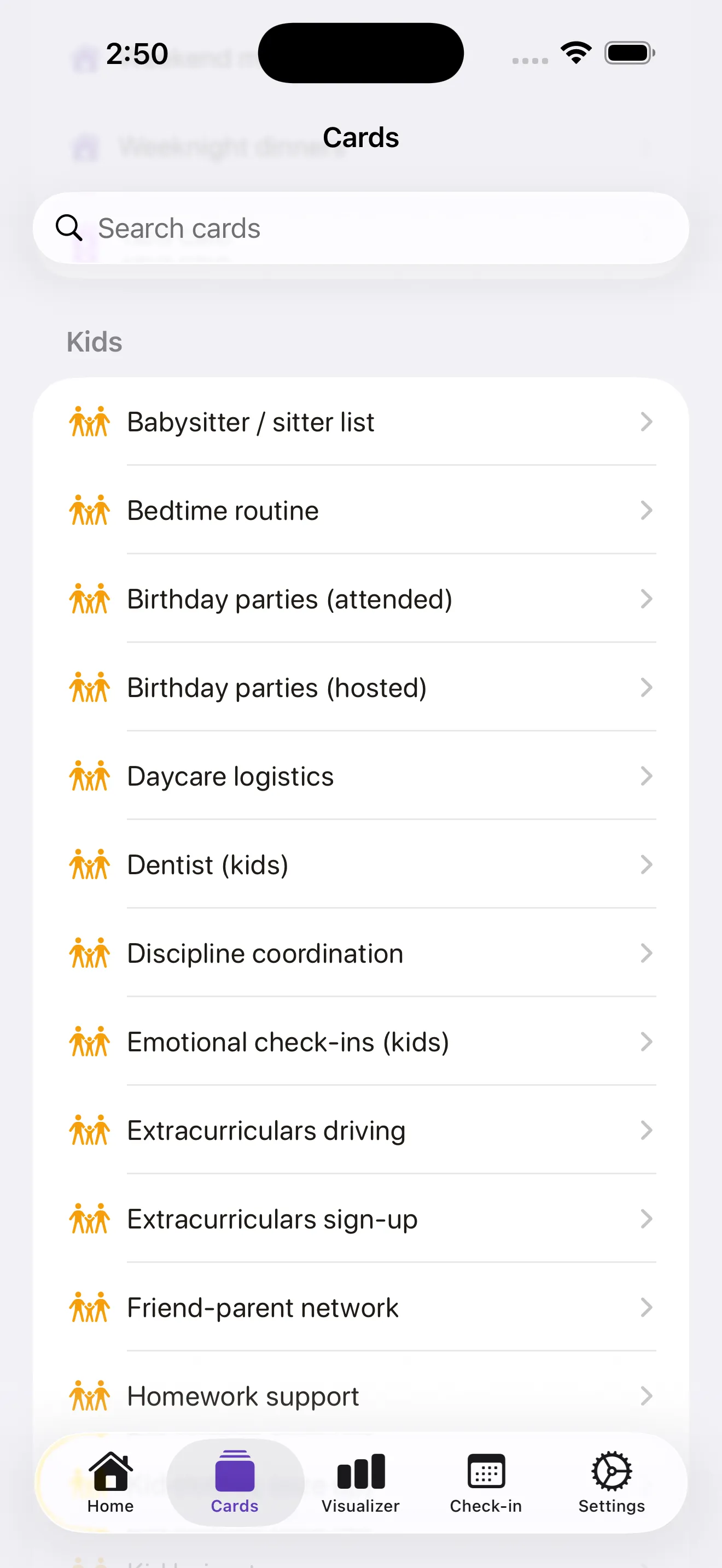
Every FairShare card has a title, a Minimum Standard of Care (MSC), a cadence, and a CPE weighting. That MSC detail sounds small, but it does real work: instead of one partner silently deciding what "clean kitchen" means and being disappointed when the other partner's version falls short, the standard gets written down and agreed to up front. Couples argue about the workload itself, not a hidden disagreement about what the finished job should look like.
New households start with a guided First Deal — a structured negotiation, not a blank card list dumped on you to sort out alone. You pick a household type first (dual parent, blended, co-parenting, multi-gen, roommate, or solo), which shapes which starter cards and language actually make sense for your situation. If you want a full walkthrough of that setup flow, the FairShare setup checklist covers it step by step.
Brain Dump: Getting the Noise Out of Your Head
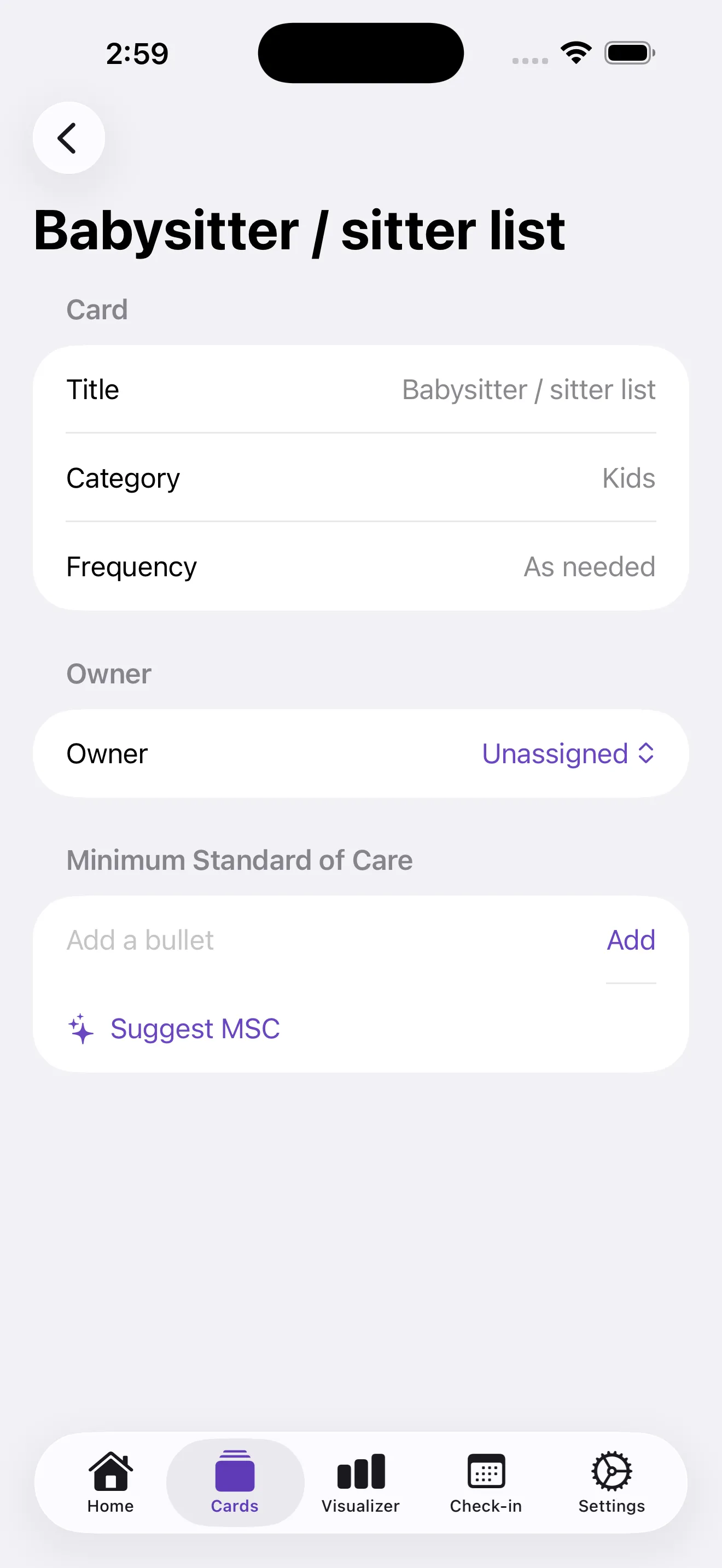
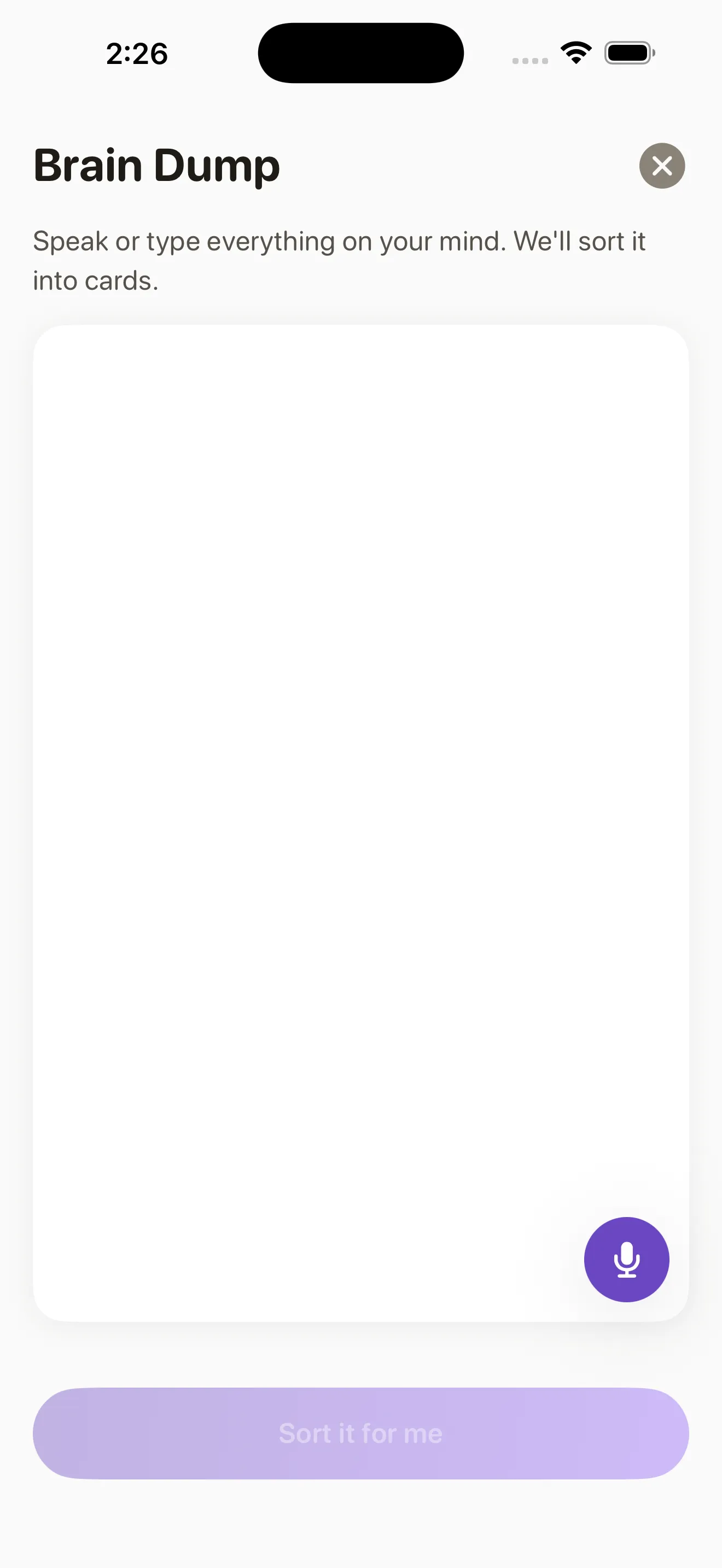
The feature that sells the app's whole premise is Brain Dump. You speak or type whatever's rattling around your head — kid's dentist appointment, the dog's vet refill, the in-laws visiting next month — and FairShare's AI interceptor sorts that stream-of-consciousness into proposed cards, categories, and suggested owners. Nothing gets created automatically; you approve every card before it becomes real, which keeps the system from feeling like it's making decisions about your household behind your back.
By the time a task lands on a to-do list, the hard part — noticing it, planning it — is already done. FairShare is built to catch that part.
It's worth noting the privacy handling here, since a feature that listens to your unfiltered thoughts deserves scrutiny. Speech processing is prioritized on-device via Apple's Speech framework where possible, cloud payloads avoid unnecessary personal data when cloud parsing is needed, and recordings aren't retained after transcription. Version 2.0.3 adds full data export and one-tap delete-all, so nothing about your household is locked in.
The Visualizer and Weekly Check-Ins
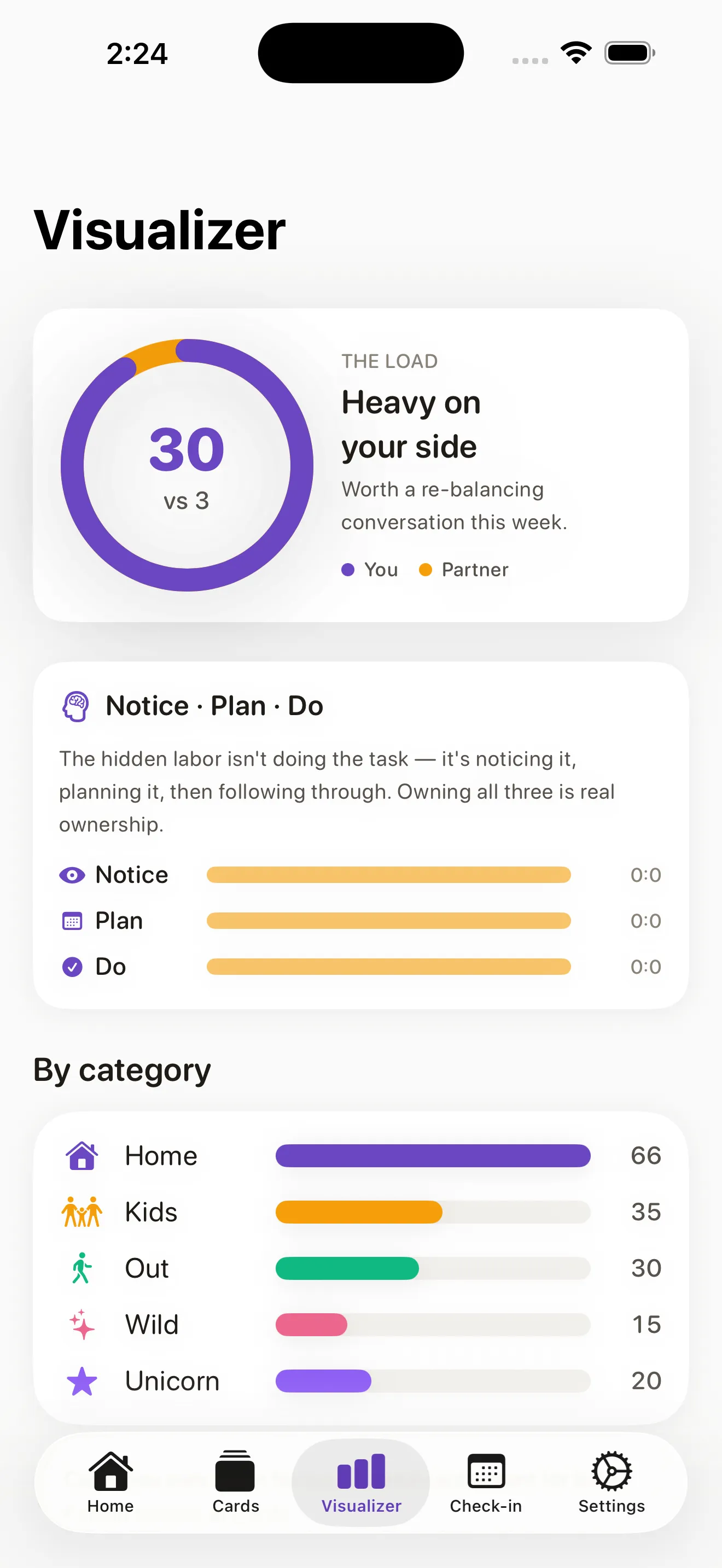
Cards only solve half the problem — the other half is keeping the split honest over time. FairShare's Visualizer renders your household's load as a heat map: mental load versus raw card counts, which cards have gone dormant, check-in streaks, and unicorn-card health (the cards nobody wants but someone has to own). It's the single view that answers the question couples usually can't answer honestly on their own: who's actually carrying more, this month, not in theory.
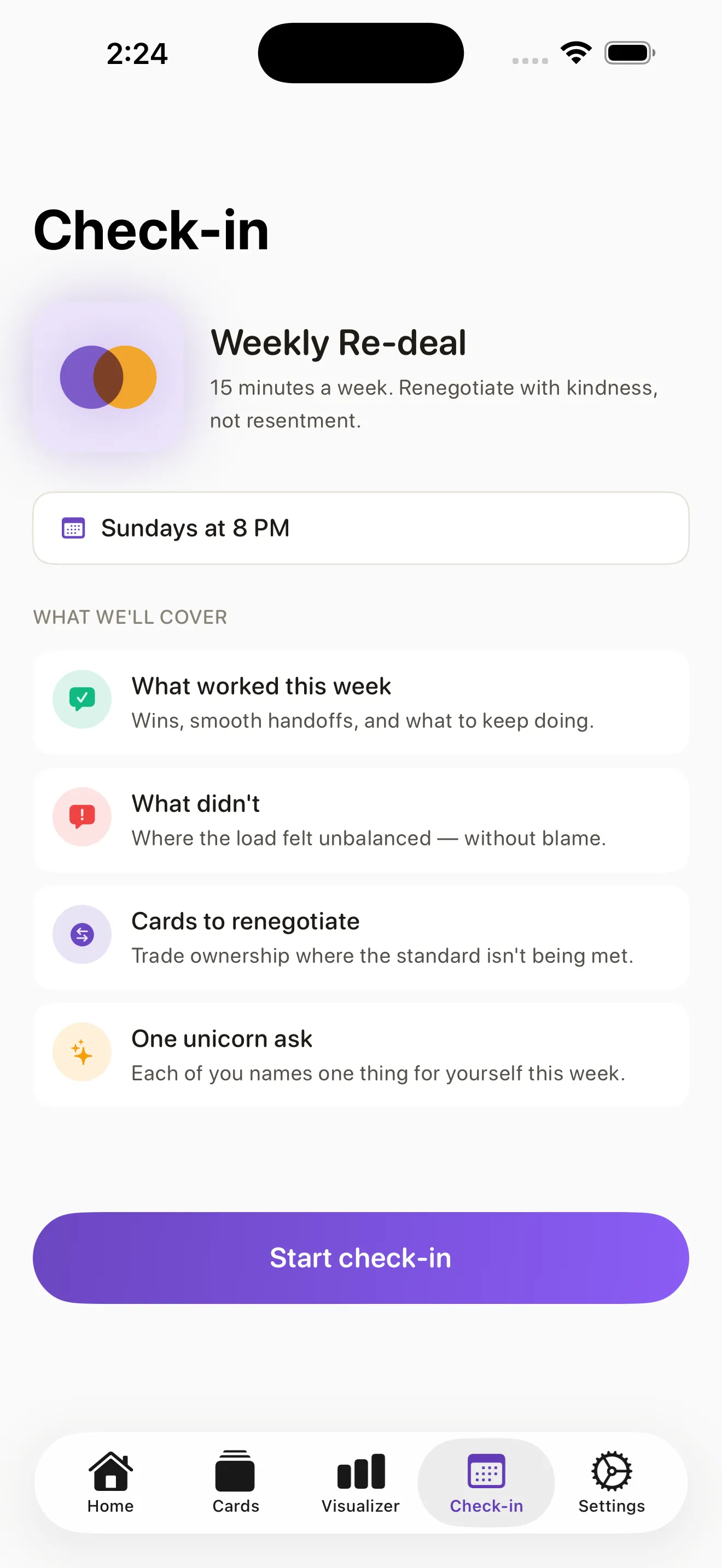
Weekly check-ins are the maintenance rhythm — short, guided fifteen-minute sessions covering what shifted, what cards should swap, and whether any MSC needs renegotiating. The point is to make small adjustments routine instead of letting resentment build until it becomes a fight. If you want a broader framework for the negotiation side of this, how to split mental load fairly with your partner walks through the underlying Fair Play thinking in more depth.
Who FairShare Is Built For
- Couples ready to negotiate ownership explicitly, not just divide tasks by whoever's less busy that week
- Blended and co-parenting households that need custody-adjacent cards, shared paperwork, and read-only visibility for a co-parent
- One partner starting solo — Brain Dumping and stabilizing a board before sending an invite once the rhythm feels sustainable
- Anyone who has read Fair Play and wanted a living version of it instead of a static deck of cards on the kitchen counter
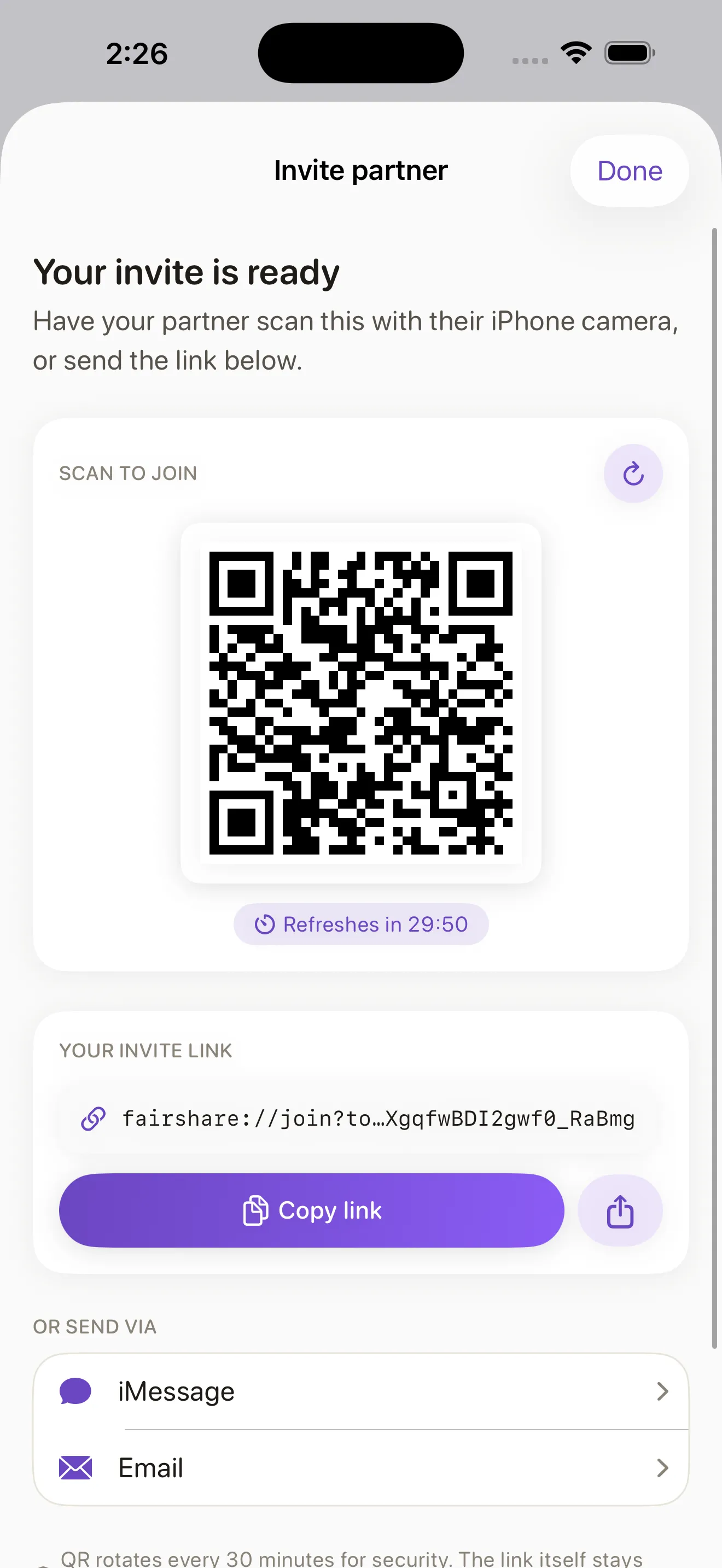
Inviting a partner is handled through universal HTTPS links that open the app directly if it's installed, with a Safari fallback and a custom URL scheme backup so the invite doesn't die in a group chat. It's a small technical detail, but it's the kind of thing that determines whether a partner actually joins or quietly ignores a link for three weeks.
Caveats
FairShare asks for real buy-in from both partners, and the First Deal negotiation can surface friction that a chore chart would have politely ignored — that's the point, but it's not always comfortable. The full experience sits behind FairShare+ at $8.99/month or $59.99/year, so households on the fence should try the free tier and Brain Dump first before committing. And if one partner isn't willing to engage with the framework at all, the app's structure won't fix that on its own; it needs at least one person willing to sit through a First Deal.
- Core unit
- Ownership card (Conceive, Plan, Execute) vs. individual tasks
- Negotiation model
- Guided First Deal, then weekly 15-minute check-ins
- Capture method
- Brain Dump voice/text interceptor with approval before card creation
- Visibility
- Visualizer heat map of load distribution and card health
- Price
- Free to download; FairShare+ $8.99/month or $59.99/year
For a slower, more guided introduction to the whole system, FairShare for beginners is a useful companion read before your first check-in.
This article was drafted with AI assistance and reviewed by a human editor before publishing.