
Most bill trackers assume the hard part is math. Add up what you owe, subtract what you have, done. But for a lot of people, the hard part isn't arithmetic — it's the dread of opening a banking app at all. Crashout Calendar was designed around that second problem, and almost every choice in it, from the missing login screen to the pastel calendar grid, traces back to one belief: you can't calm someone down by showing them more numbers in red.
The real problem is timing, not ignorance
People who avoid their bills usually aren't confused about how much they owe. They know. What they're missing is a low-stakes way to see the shape of the month — which bills land before payday, which ones can wait, where the tight week is. The Federal Reserve's most recent household survey found that 28% of U.S. adults either didn't pay all their non-credit-card bills in full or had real difficulty paying them in the prior month, and that number climbs to 24% among adults aged 18 to 29 who didn't pay everything in full at all, versus 16% of adults overall according to the Fed's 2025 survey. That's not a knowledge gap. It's a cash-flow timing problem, and it deserves a calendar, not a spreadsheet.
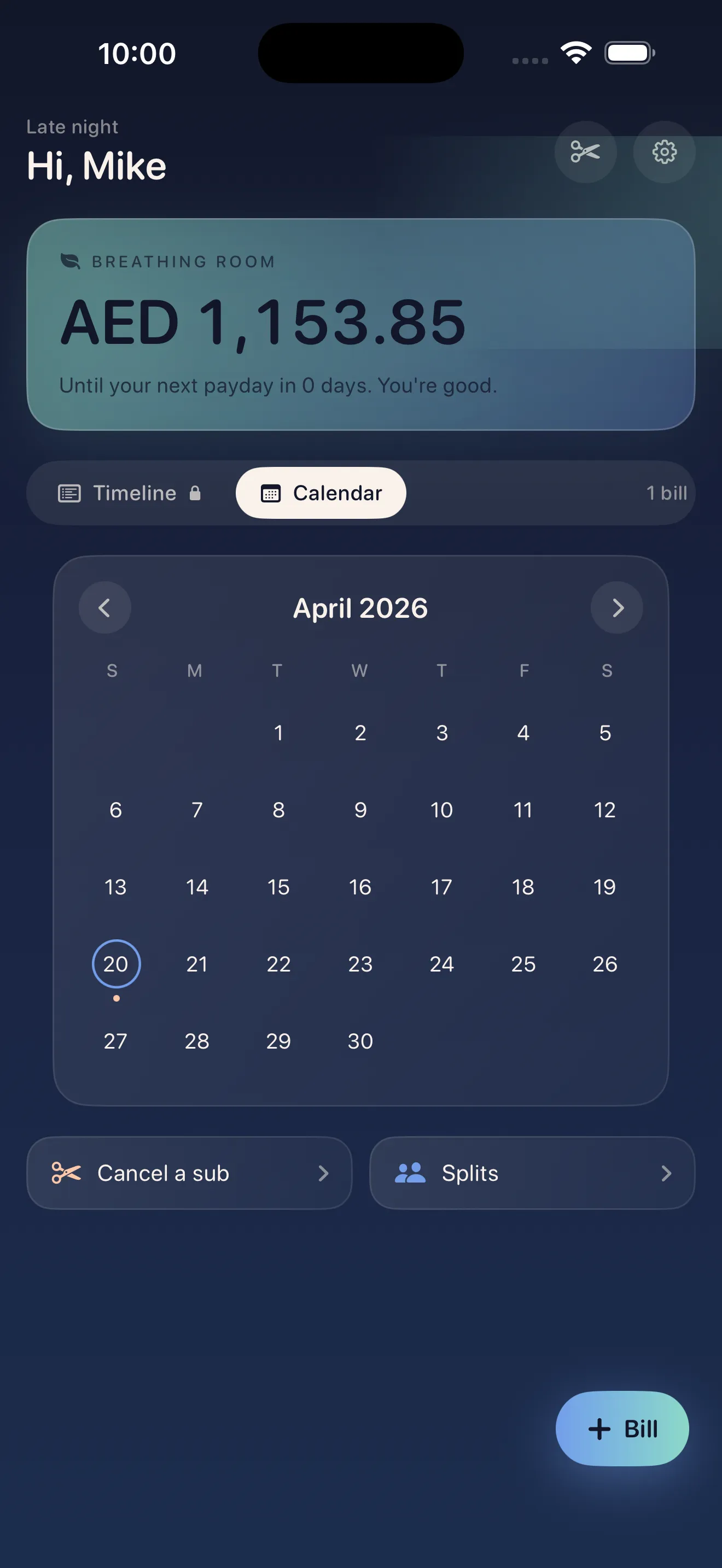
Why Crashout Calendar refuses to see your bank balance
Plenty of finance apps ask for bank credentials so they can auto-import transactions. It's convenient, but it also means a third party is watching your account in real time, and that surveillance feeling is exactly what triggers the panic-scroll for a lot of users. Crashout Calendar takes the slower, more deliberate route: you add bills yourself, everything lives in local storage on your device, and there's no Plaid connection, no credentials, no cloud sync required to use the app. It's a small trade of convenience for control, and for the audience this app is built for, that trade is the whole point.
Visibility should feel like opening a curtain, not like being watched.
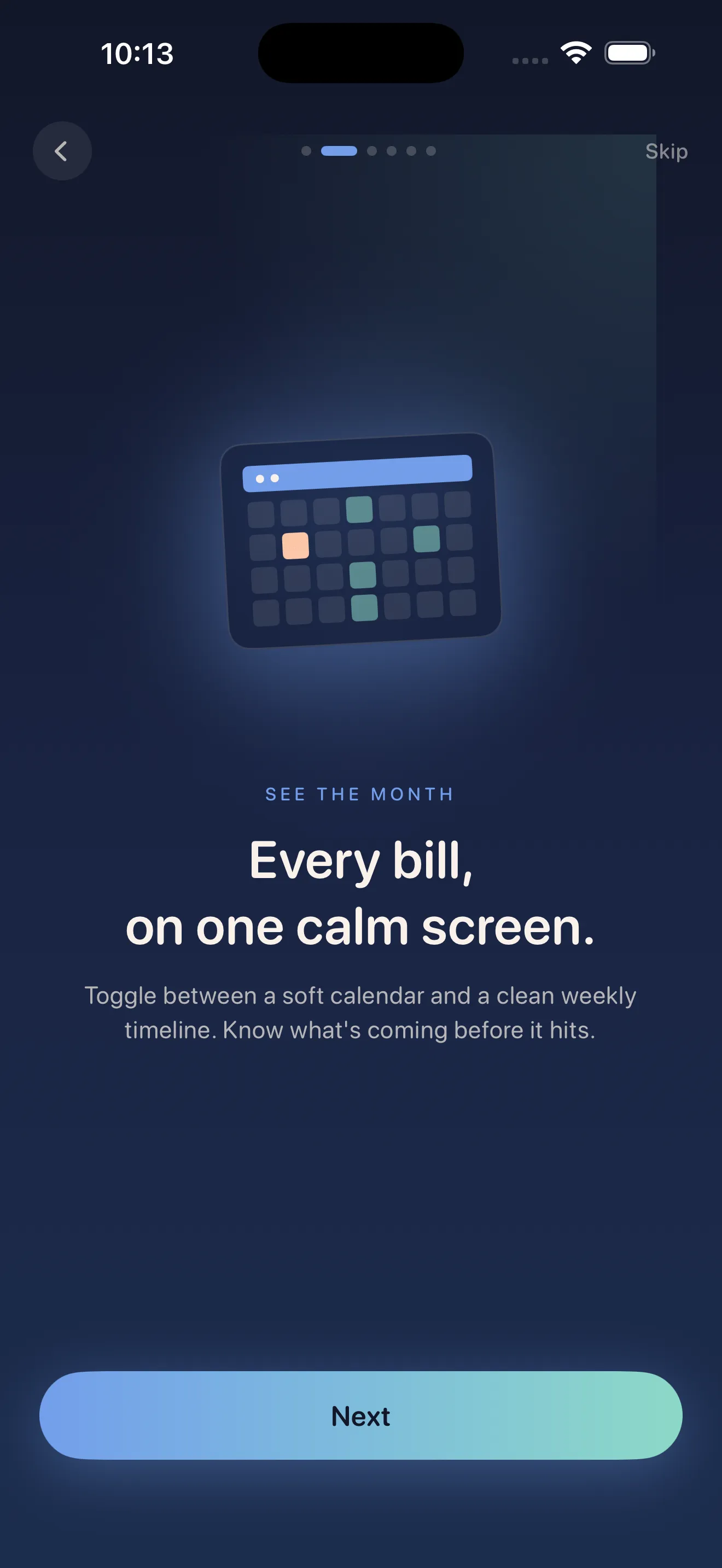
Breathing room: the number that actually matters
Instead of a balance that updates every time you buy coffee, Crashout Calendar surfaces one calmer number: your breathing room until payday. It's a reframe as much as a feature. Rather than a running tally that can spike anxiety with every notification, it answers a single, specific question — how much slack do I have before the next bill lands. That framing matters because the people who struggle with bills tend to already be managing the timing manually. The same Fed survey found that among adults who struggled to pay bills, 48% cut back on other spending and 48% shifted the timing of payments to cope in the prior month alone. Crashout Calendar just makes that timing visible before it becomes a scramble.
Cancel guides, because subscriptions still fight back
Knowing you're paying for something you don't use is only step one. Actually canceling it is a separate, often maddening task, and regulators have been tracking just how bad it's gotten. The FTC logged nearly 70 consumer complaints a day in 2024 about negative-option and recurring-subscription practices, up sharply from 42 a day in 2021 per the FTC's own reporting. The rule meant to fix this, the federal Click-to-Cancel requirement, was vacated by the Eighth Circuit in July 2025 on procedural grounds, so the burden of canceling is still squarely on the subscriber. That's why Crashout Calendar builds step-by-step cancel guides directly into the app for Netflix, Spotify, Hulu, HBO, Disney+, and fifteen more services, with no concierge fee attached. It's not a workaround for a broken system so much as an acknowledgment that the system isn't getting fixed soon.
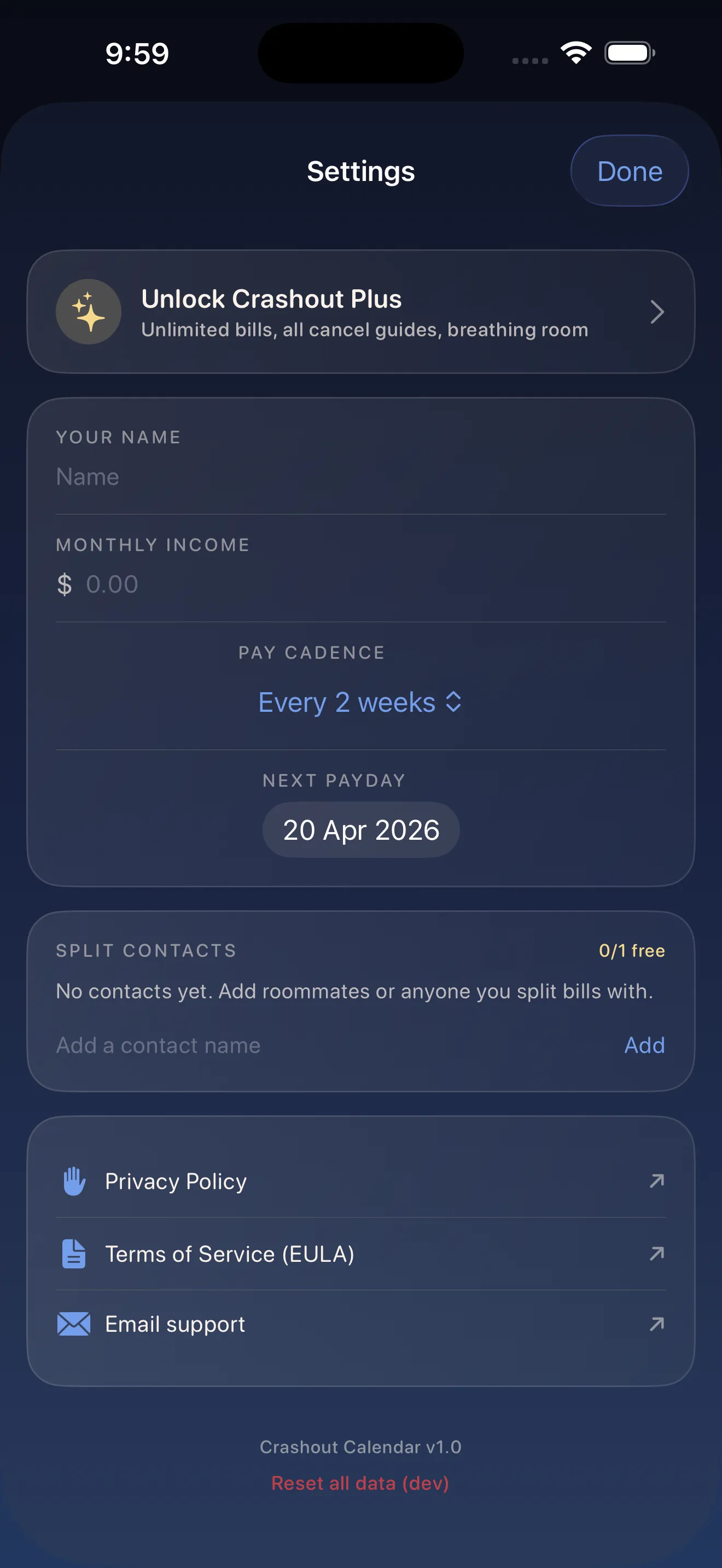
Splitting bills without the group chat spiral
Shared bills come with their own kind of dread — the awkward reminder text, the passive-aggressive Venmo request. Crashout Calendar's split feature is designed to move that math out of the group chat and into a shared, neutral view instead. Combined with quick entry that uses smart categorization and recurrence detection to speed up the typing, most people can add a full month of recurring bills, roughly eight of them, in about three minutes. The goal isn't just speed for its own sake — it's getting the tedious setup out of the way fast enough that the calm part of the app, the calendar and the breathing room number, is where you actually spend your attention.
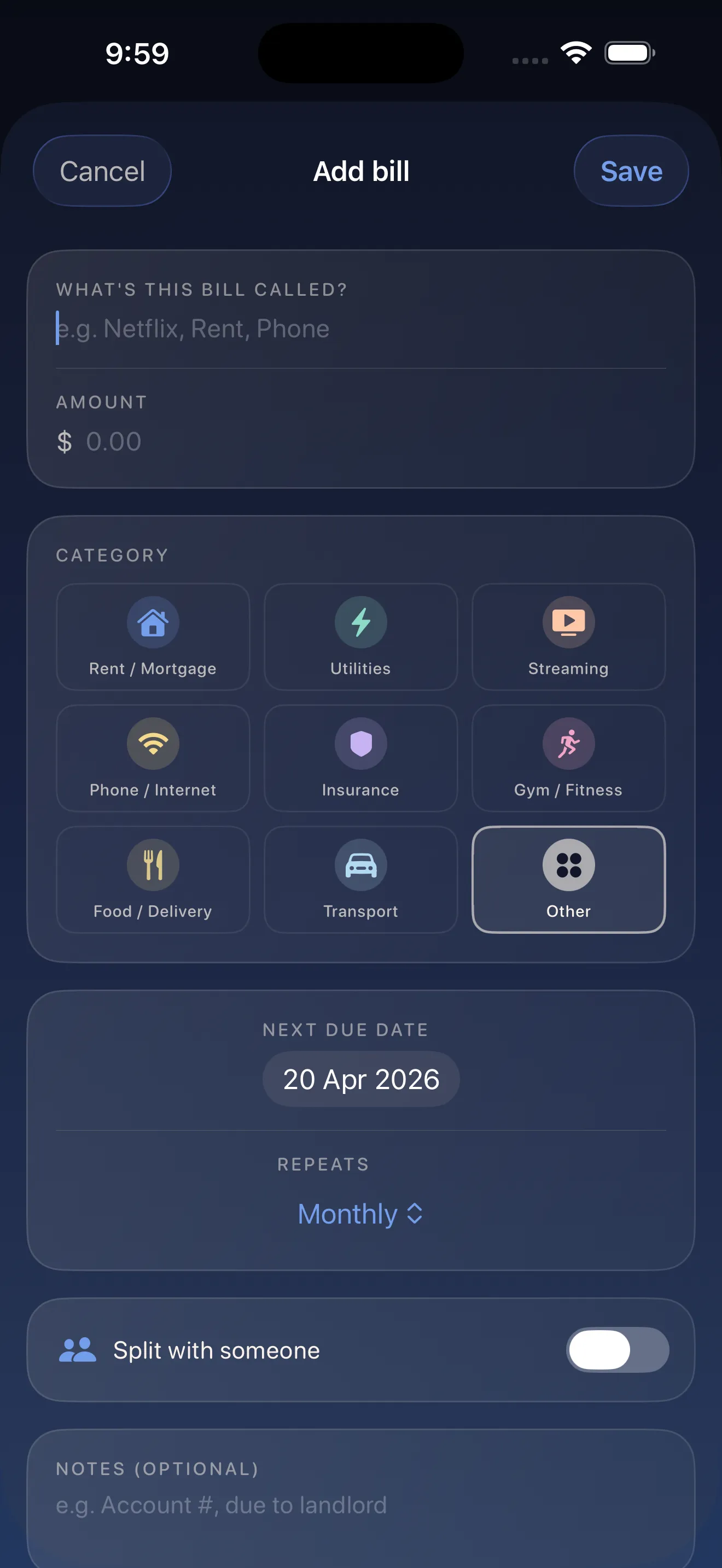
If you're setting things up for the first time, the guide to what makes a bill tracker actually kind walks through the specific design choices worth looking for, and our beginner's guide to Crashout Calendar covers the first-week setup in more detail.
This article was drafted with AI assistance and reviewed by a human editor before publishing.