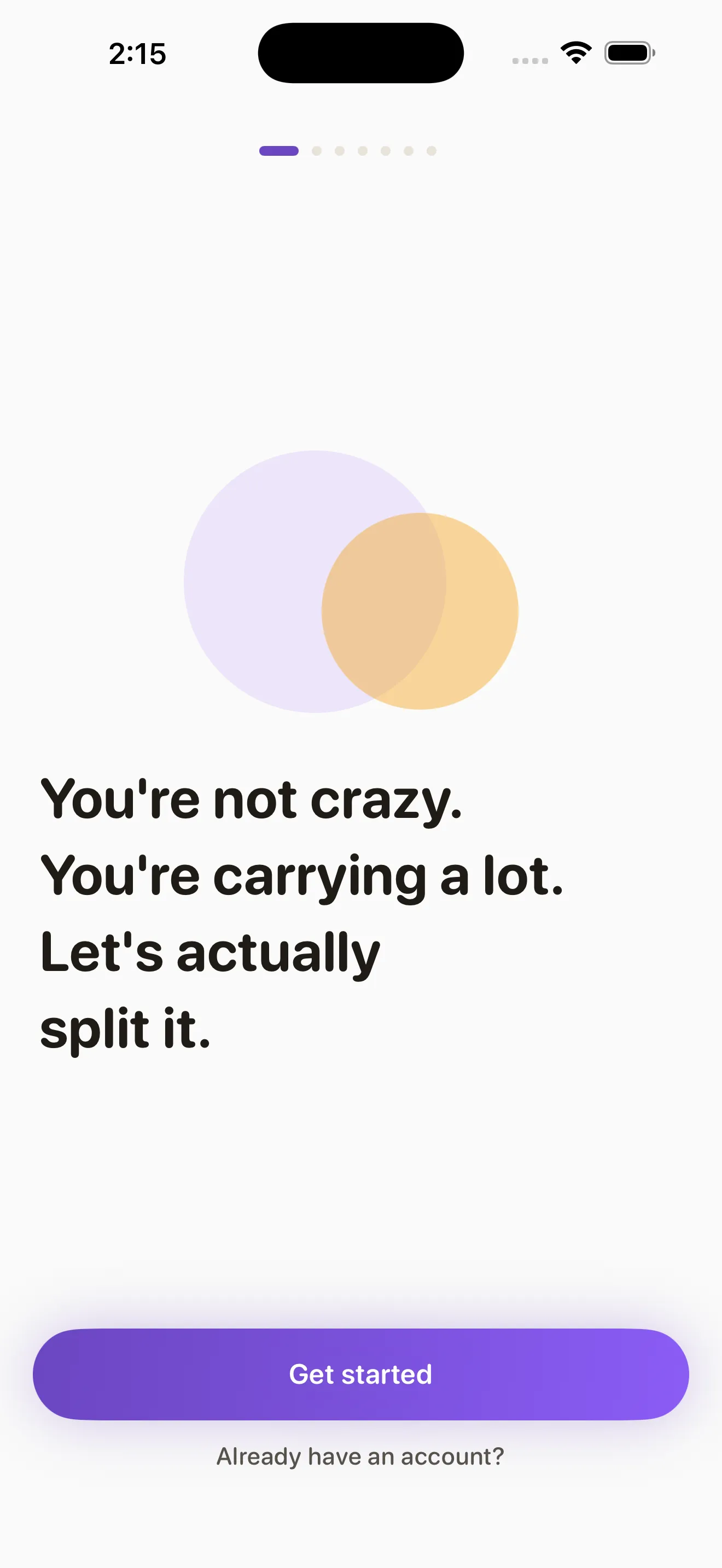
Most household apps focus on tasks: who does the dishes, who walks the dog. FairShare starts further upstream. It's built around the mental load—the thinking, planning, remembering, and deciding that happens long before anyone actually does the work. If you've felt responsible for knowing what needs doing, tracking who agreed to do it, and checking whether it actually got done, FairShare names that burden and gives you a way to redistribute it fairly with your partner.
Who is this for
FairShare is designed for couples sharing a household who recognize that one person usually carries disproportionate invisible work. It's for people who've read Fair Play by Eve Rodsky, or at least know the feeling: one partner intuitively knows what the kids need for school, which bills are due, when groceries are running low, and what the house looks like to guests. The other partner may be willing and capable, but doesn't think to check. That gap isn't laziness. It's ownership. FairShare makes ownership explicit.
You'll get the most from this app if you and your partner are both willing to spend 10–15 minutes a week on a structured check-in, and if you're open to naming who owns what. It's not a tool for conflict resolution, though good design can reduce conflict. It's a tool for clarity and fairness.
What it does uniquely well
Ownership from Conceive through Execute
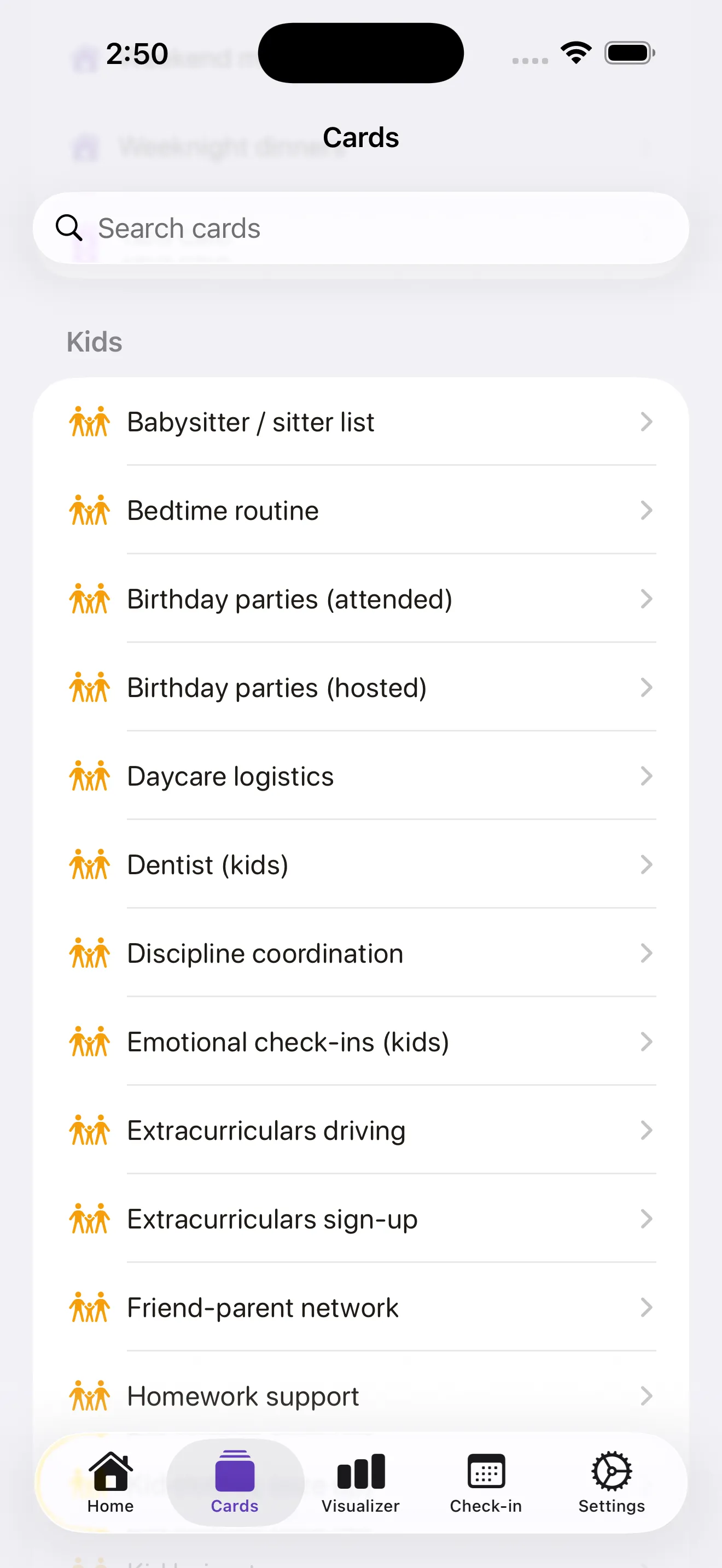
Most household apps stop at the task level: "Take out the trash." FairShare wraps each responsibility in three layers: Conceive (noticing the need), Plan (figuring out when and how), and Execute (actually doing it). When you assign a card—say, "Kids' school supplies"—one partner owns all three. That person decides when supplies run low, researches what's needed, and buys it. Or they delegate or negotiate. But the ownership is unmistakable. No more assuming the other person will notice when backpacks are getting bare.
Brain Dump: Capturing thoughts without friction
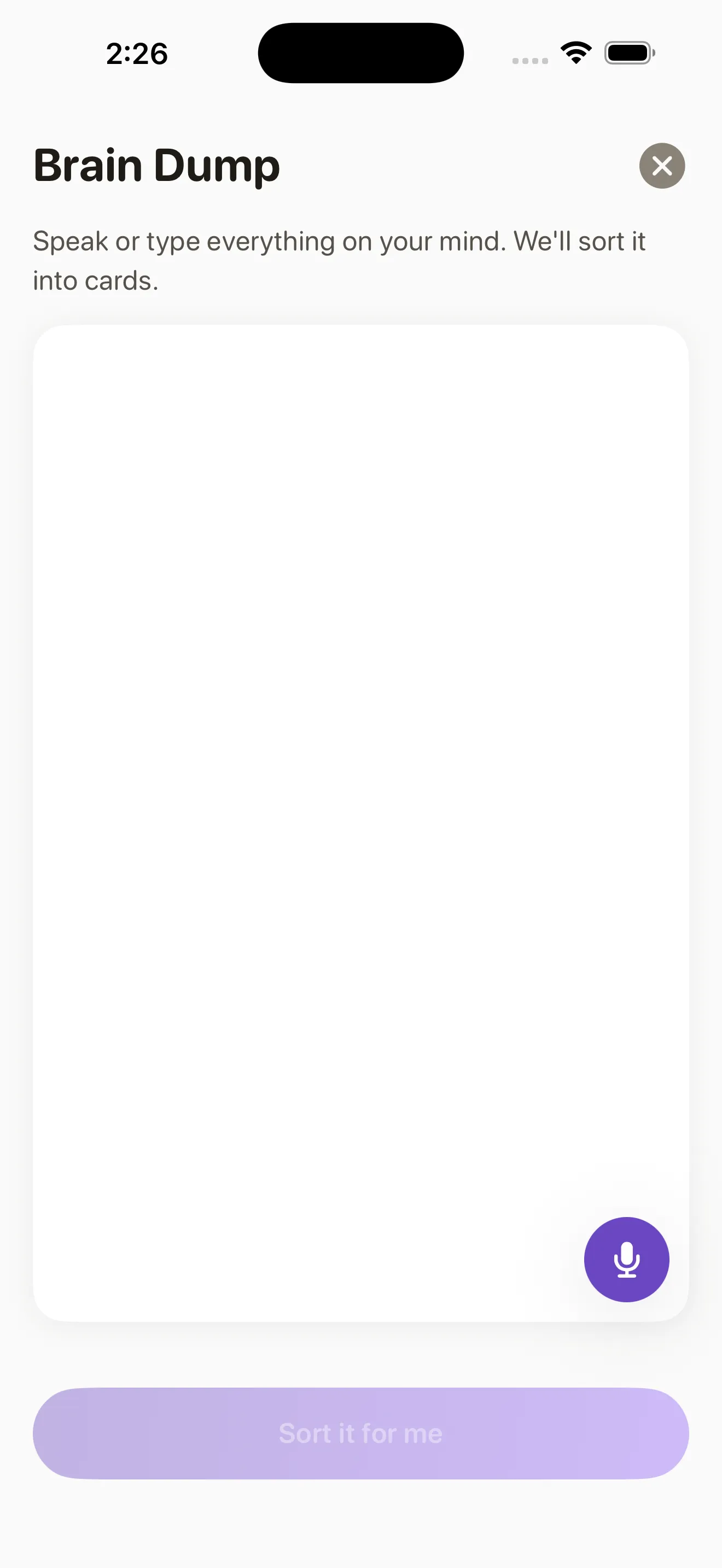
The app includes a "Brain Dump" feature—a text field where either partner can quickly capture a thought or need without trying to assign it on the spot. "Car needs an oil change," "Mom's birthday is in three weeks," "Kitchen tile is loose." You dump it in, and the app (with some AI help) tries to route it to the right card or suggest a new one. This is powerful because it lowers the barrier to capture. You're not deciding ownership mid-thought; you're just getting it out of your head. The check-in process is when you actually sort and assign.
Weekly check-ins that prevent resentment buildup
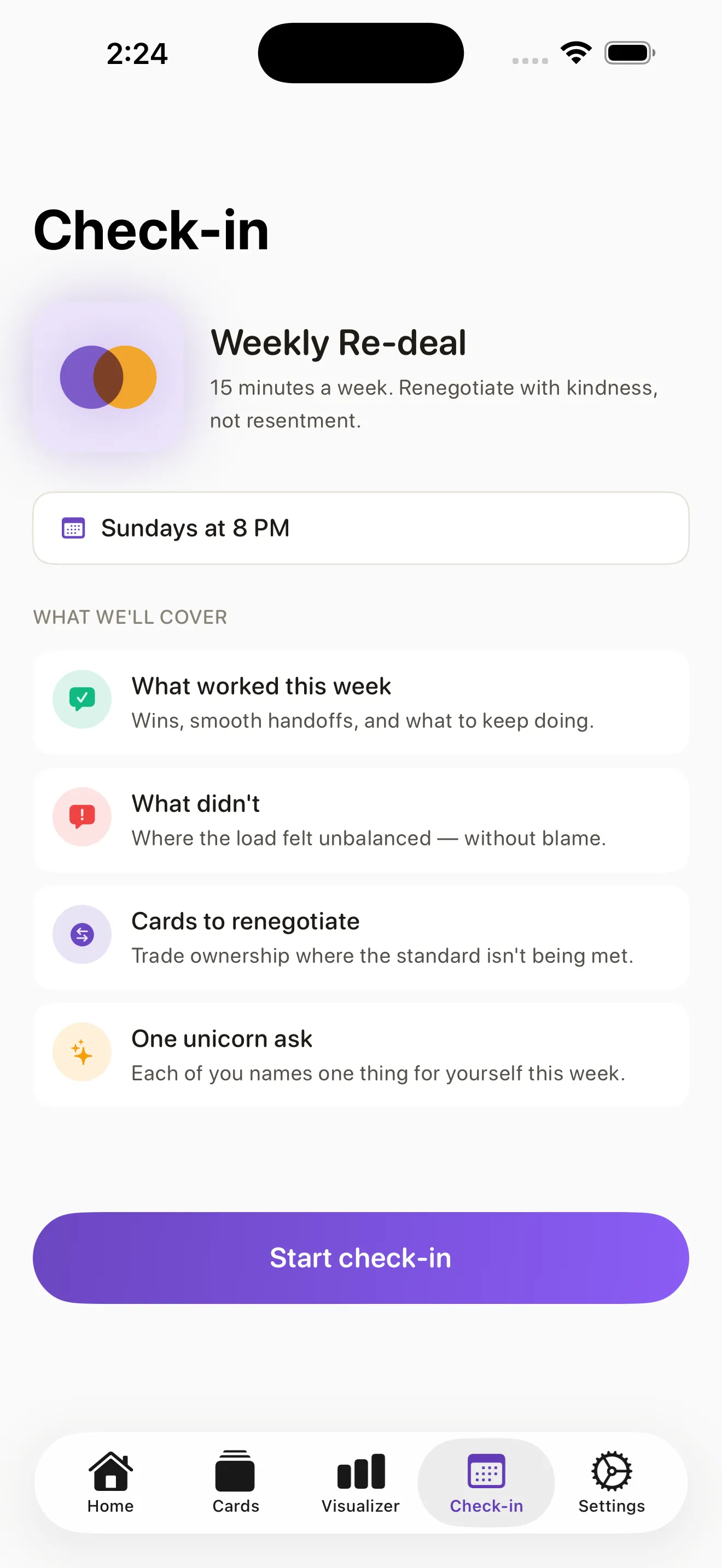
Once a week, the app prompts you and your partner separately (or together) to reflect: What shifted? Did any swaps happen? Are there updates to your MSC (Minimum Shared Contribution)? Do any cards need to be renegotiated? These aren't open-ended couple's therapy prompts. They're structured questions that take 5–10 minutes and give you a rhythm for talking about fairness before it becomes a fight. The check-in is the heartbeat of the app.
Visualizer makes imbalance tangible
Numbers help. The Visualizer shows you, at a glance, how many cards each partner owns and what percentage of the mental load that represents. If one person owns 70% of household ownership, that's not a feeling—it's a fact. You can't argue with the data, which sometimes opens conversation in a way that pure emotion can't.
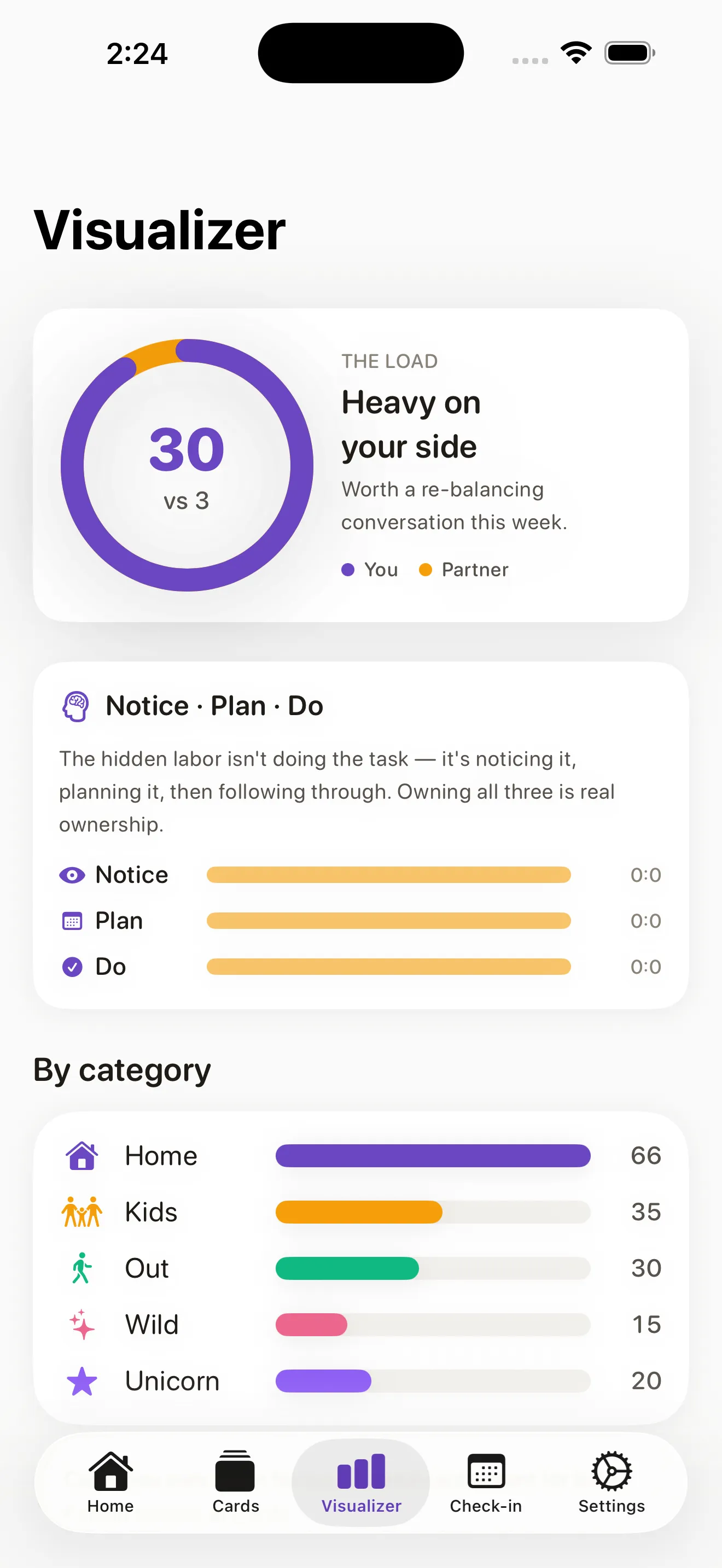
Most household apps focus on tasks. FairShare starts further upstream: the thinking, planning, and remembering that happens long before anyone does the work.
What works less well
FairShare is built on Fair Play principles, which are excellent—but they're also sophisticated. The app assumes you and your partner have time to learn the model and buy into it. If one person is skeptical or reluctant, this app won't make them convert. It's a tool for couples who are already committed to fairness; it amplifies that commitment. It doesn't create it.
The Brain Dump AI is helpful but imperfect. Sometimes it routes items to cards in ways that feel off. You'll need to review and adjust. That's a minor friction point, but it's there.
The app is also couples-focused. If you live with roommates, extended family, or a larger household, the current setup may not fit your dynamics. FairShare does support different "household types" during setup, but the core model is strongest for two-person partnerships.
Design and experience
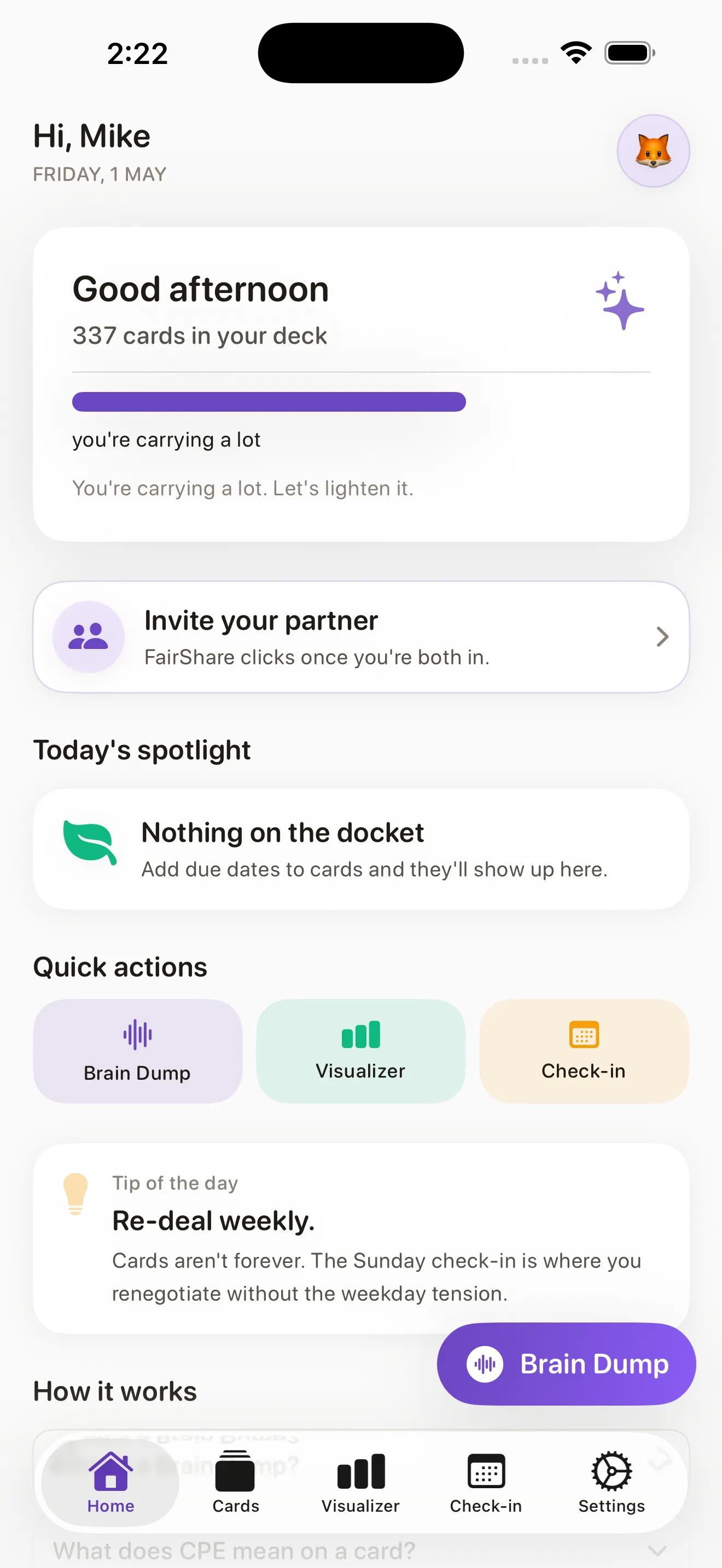
The interface is clean and purposeful. Every screen has a job, and nothing feels cluttered. Onboarding walks you through household type, names, life context, and inviting your partner. You can send an invite via a universal link, which works whether or not the recipient has the app installed yet. The weekly check-in flow is especially well-designed: clear prompts, room for notes, and a sense of ritual without feeling heavy.
The bottom line
FairShare is a thoughtfully designed app for couples who want to split household mental load fairly. It's not a task manager pretending to be psychology. It's a structure for naming ownership, capturing needs, and checking in weekly. If you've felt like you're holding the mental load of your household, or if you want to ensure you're pulling your weight, this app will make your conversations clearer and fairer. You can read more about how to get started in our FairShare setup checklist, or learn more about how FairShare makes mental load visible.
This article was drafted with AI assistance and reviewed by a human editor before publishing.