
Most household apps ask who did the chores. FairShare asks who owns the invisible work—the noticing, planning, remembering, and worrying that happens before and after the visible task. If you've ever carried the mental load of a household alone, FairShare's mental load app model offers a clearer way forward. This guide walks you through its core tools and how to actually use them.
Start With a Brain Dump, Not a Task List
The moment that changes how people think about FairShare is the Brain Dump. When your mind is full—3am spinning with school forms, groceries, appointments, car maintenance, and half-formed household thoughts—you can open the app and say or type everything in one messy stream. The AI interceptor turns that chaotic mental unload into suggested household cards. You stay in control; the app suggests structure, but you review and approve before anything lands on your board.
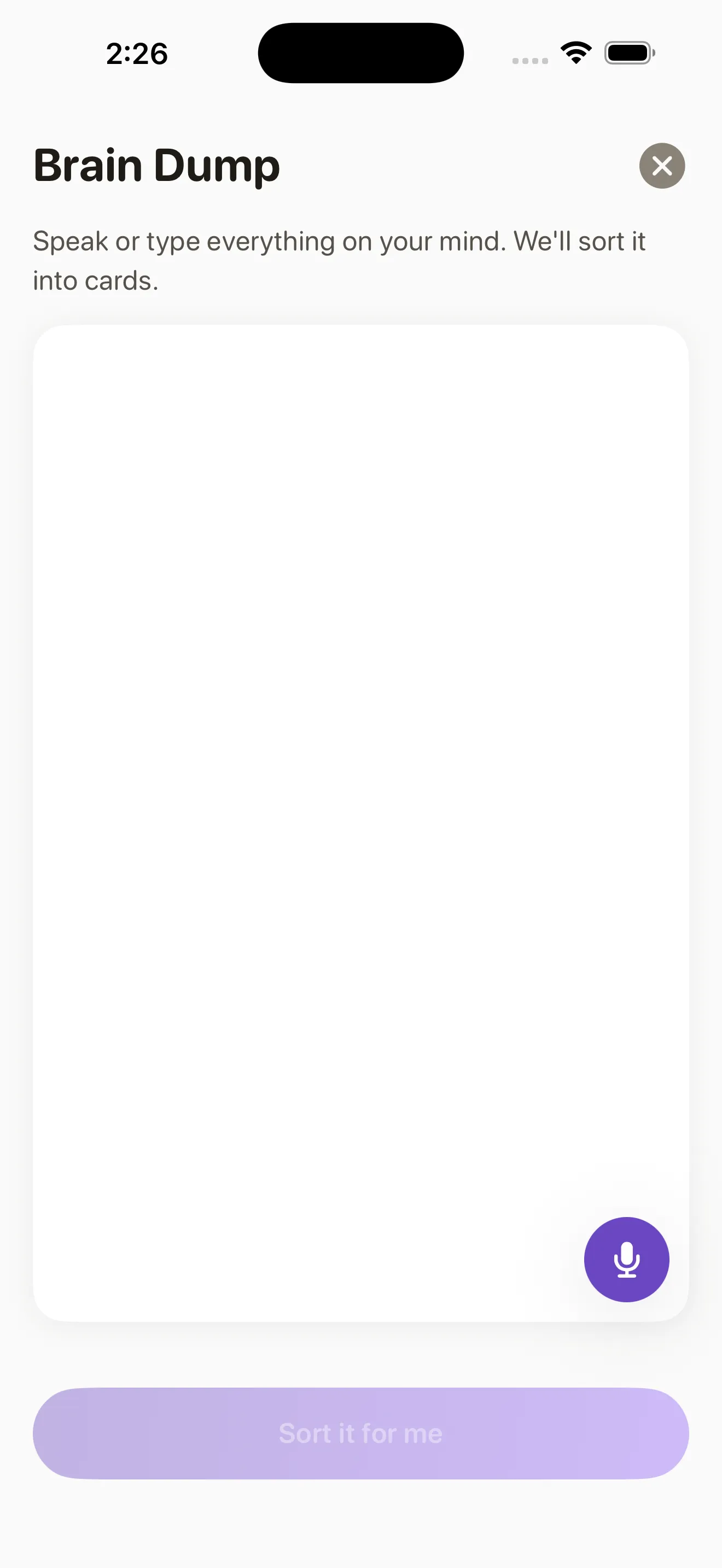
This first offload matters more than automation. Many people find immediate relief: "It's not just in my head anymore." The Brain Dump is where the invisible becomes visible. You're not organizing a checklist; you're externalizing the background anxiety that one person has been carrying alone.
Own the Full Arc: Conceive, Plan, Execute
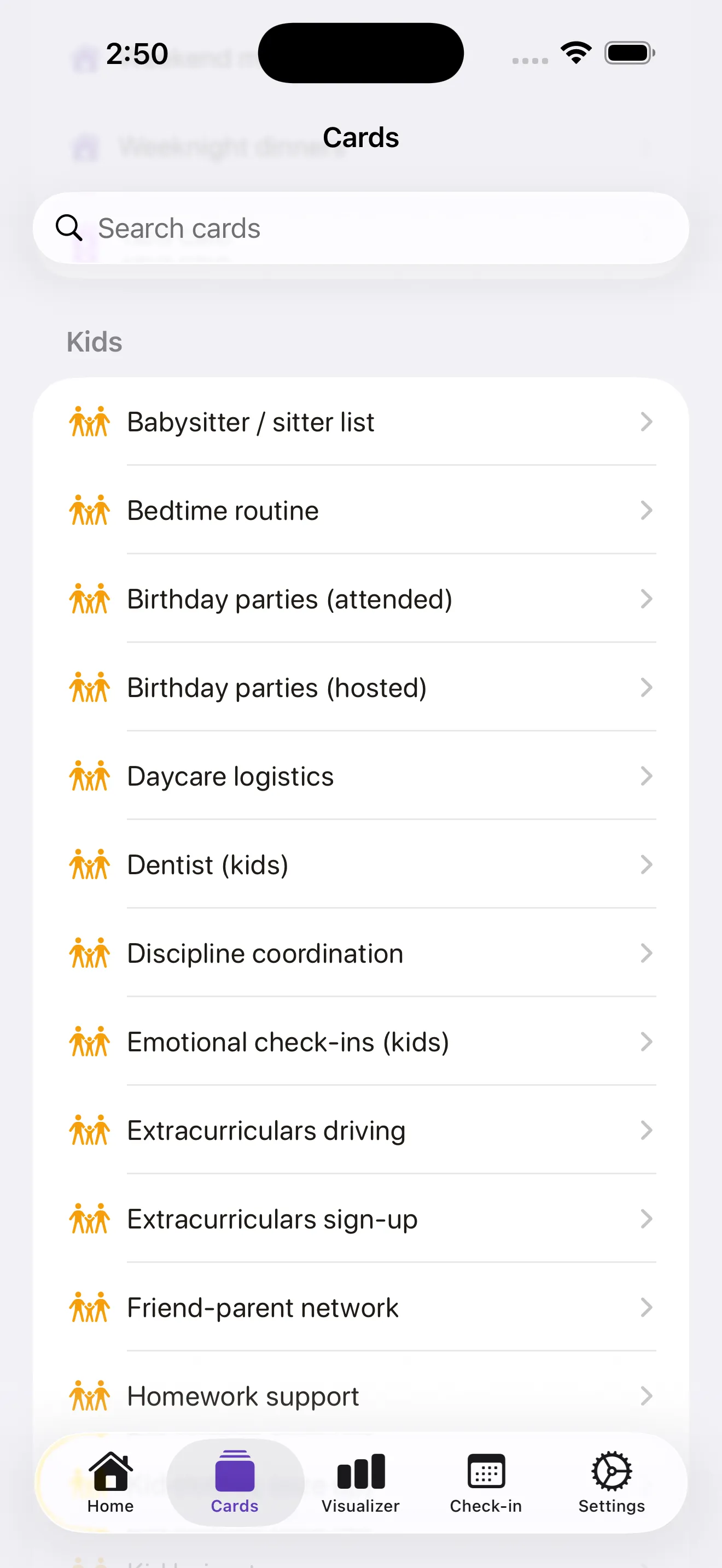
Most household mental load app approaches split work by task. FairShare splits it by ownership across the full arc of responsibility. Each card covers Conceive (noticing something needs to happen), Plan (figuring out how), and Execute (doing it). A card called "Child Dentist" doesn't just mean "take them to the appointment." It means noticing the appointment is due, finding the dentist, checking insurance, booking the visit, preparing the child, and knowing when the next one should happen. One person owns all of it—or it's explicitly shared with clear handoffs.
The reason this matters is simple: splitting a task by vibes never works. "You do the shopping and I'll meal plan" sounds fair until one person still has to check if staples are low and the other gets blamed for forgetting details. With FairShare's card model, ownership is explicit. Responsibility doesn't split by mood or convenience; it lives with one person or is consciously shared with clear boundaries.
Clear ownership stops the recurring fight of 'I did it' versus 'but not the way we needed.'
Set a Minimum Standard of Care for Each Card
Every card should include a Minimum Standard of Care (MSC)—a clear definition of what "done well" actually means for that responsibility. Without it, resentment builds around invisible expectations. If someone owns groceries, the standard might be: shopping once a week, keeping staples stocked, and checking requests before the trip. If someone owns school forms, the standard might be: reading notices within two days, tracking deadlines on a shared calendar, and submitting forms without reminders.
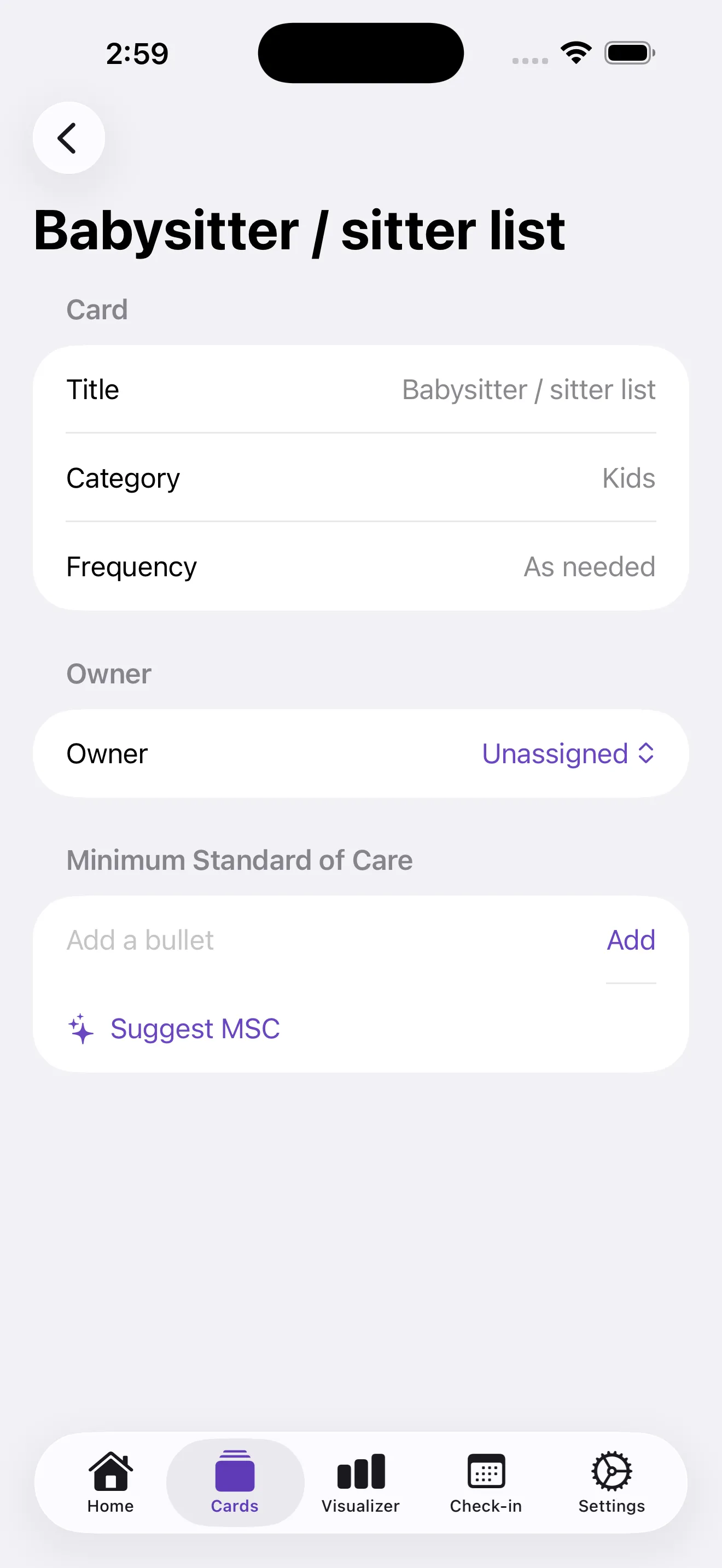
The MSC is where FairShare moves from "fair" into sustainable. It's the difference between "I took care of it" and "I took care of it the way we agreed matters." When both people know what the standard is, the work becomes measurable, which stops the debate before it starts.
Use the Visualizer to See (and Name) Imbalance
One of the most powerful moments in FairShare happens when you look at the visualizer. After you've mapped your cards and owners, the app shows how the household load is actually distributed. Sometimes that means a partner finally sees what has been invisible for years: one person owning dozens of cards while the other owns only a few. The visualizer makes it impossible to argue that the load is balanced when it isn't.
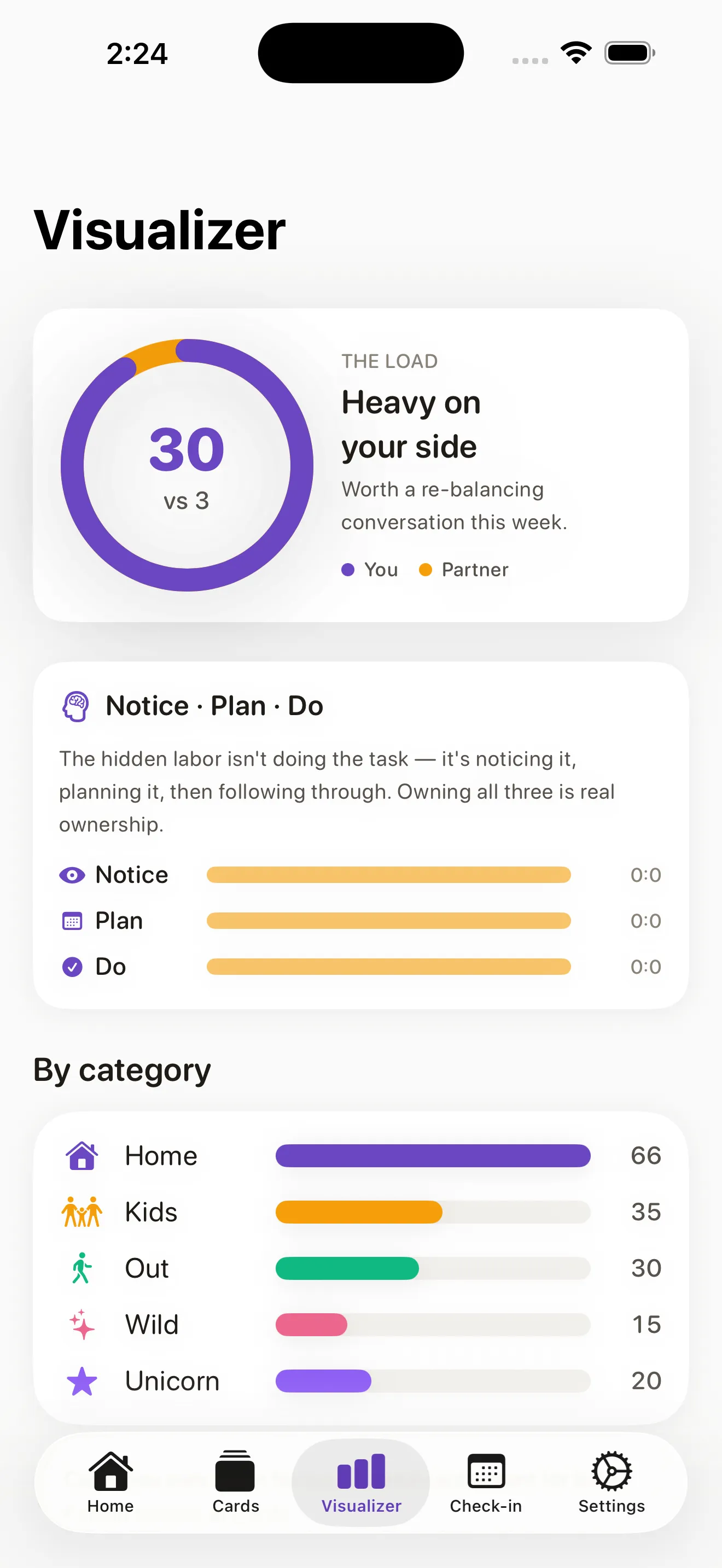
The frame matters here. The visualizer is not designed to blame. It's designed to start a conversation: "This is where we are today. Now let's decide where we want to be." That distinction—from accusation to negotiation—is what allows households to actually change. When both people can see the data, the conversation shifts from "You don't do as much" to "How do we rebalance this together?"
Have Your First Deal: The Card-by-Card Conversation
FairShare guides households toward a real first conversation about ownership. Instead of arguing in the middle of a stressful moment, sit down with the board and walk through each card together. For each one, ask: Who owns this today? Is that working? Should this stay, move, pause, or be shared? What does "done" mean? What standard would prevent future resentment?
- Agree on who owns each card
- Define the Minimum Standard of Care
- Decide how often the responsibility cycles (daily, weekly, monthly, as-needed)
- Name any support the owner needs
- Set up a reminder or check-in rhythm if it helps
This first deal is the anchor. It's not perfect and it doesn't have to be permanent. But it gives the household a shared baseline to work from and adjust as life changes. It also surfaces assumptions: maybe one person thought laundry was a daily task and the other thought weekly was fine. The conversation makes those invisible expectations visible.
Lock In a Weekly Check-In Rhythm
Households are not static. Kids get sick. Work changes. Holidays arrive. A new baby resets everything. A card that was manageable last month may be impossible this month. FairShare's weekly check-in is designed to catch that shift before resentment hardens.
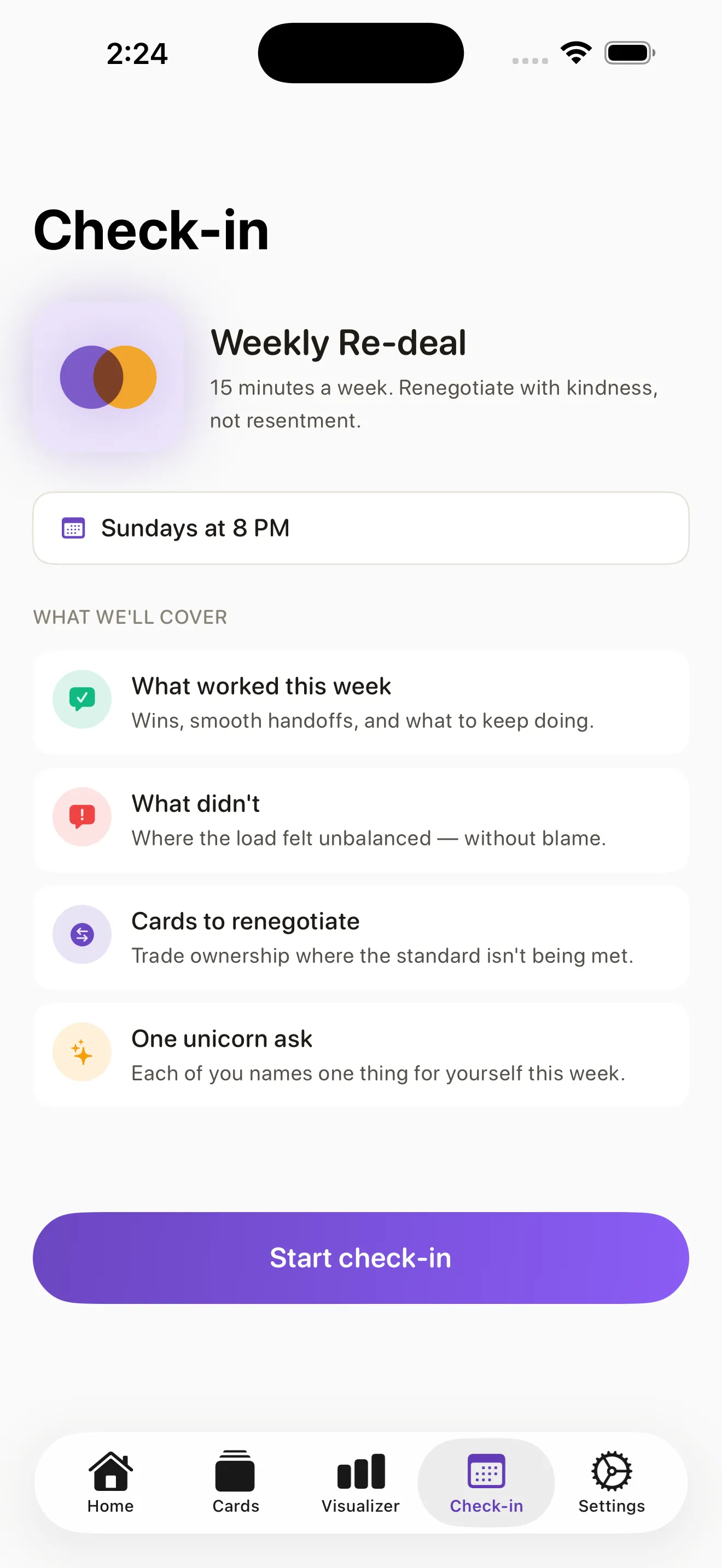
The weekly check-in is brief and practical: What went well? What needs to shift? Are any cards being dropped? Does an owner need more support? Should an MSC change? These prompts turn potential conflict into a regular, low-stakes conversation. By the time something is clearly broken, you've already named it and adjusted together. Weekly check-ins keep the system alive between bigger changes, so you're not waiting for a fight to renegotiate.
Tailor the Household Type to Your Living Situation
FairShare doesn't assume one version of household. The app supports two-parent homes, same-sex couples, single parents, co-parents, blended families, roommates, multigenerational households, and solo users. Each household type has its own card categories and ownership model. Fairness looks different for everyone, and FairShare gives each shape of household a structure to define what fair means for them specifically. Understanding how to make mental load visible depends on naming your household context first.
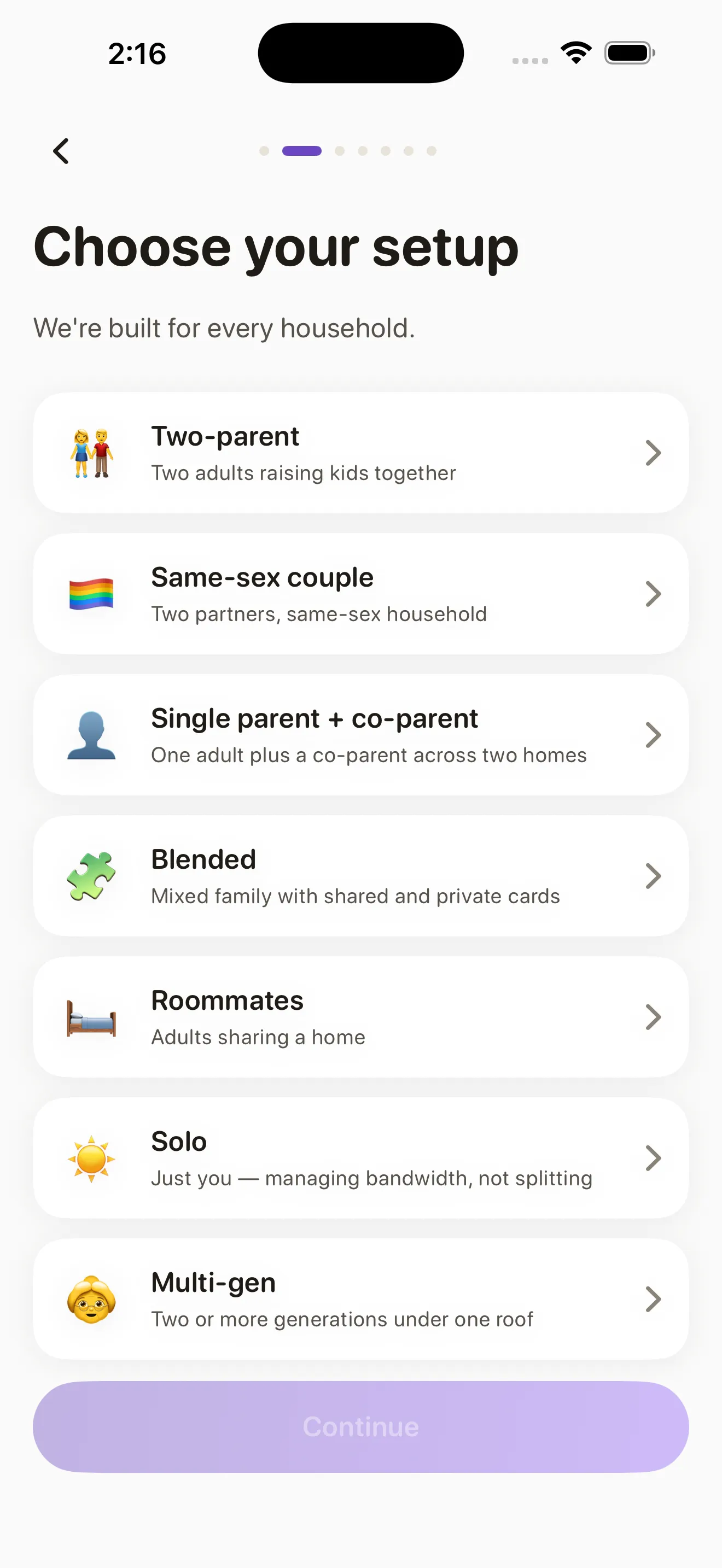
For co-parents, that might mean shared kid-related cards without sharing an entire home board. For solo parents, it might mean using FairShare to protect personal time and manage capacity. For roommates, it means clear ownership without passive-aggressive notes. The structure adapts; the principle stays the same.
One person does not have to be the system.
This article was drafted with AI assistance and reviewed by a human editor before publishing.