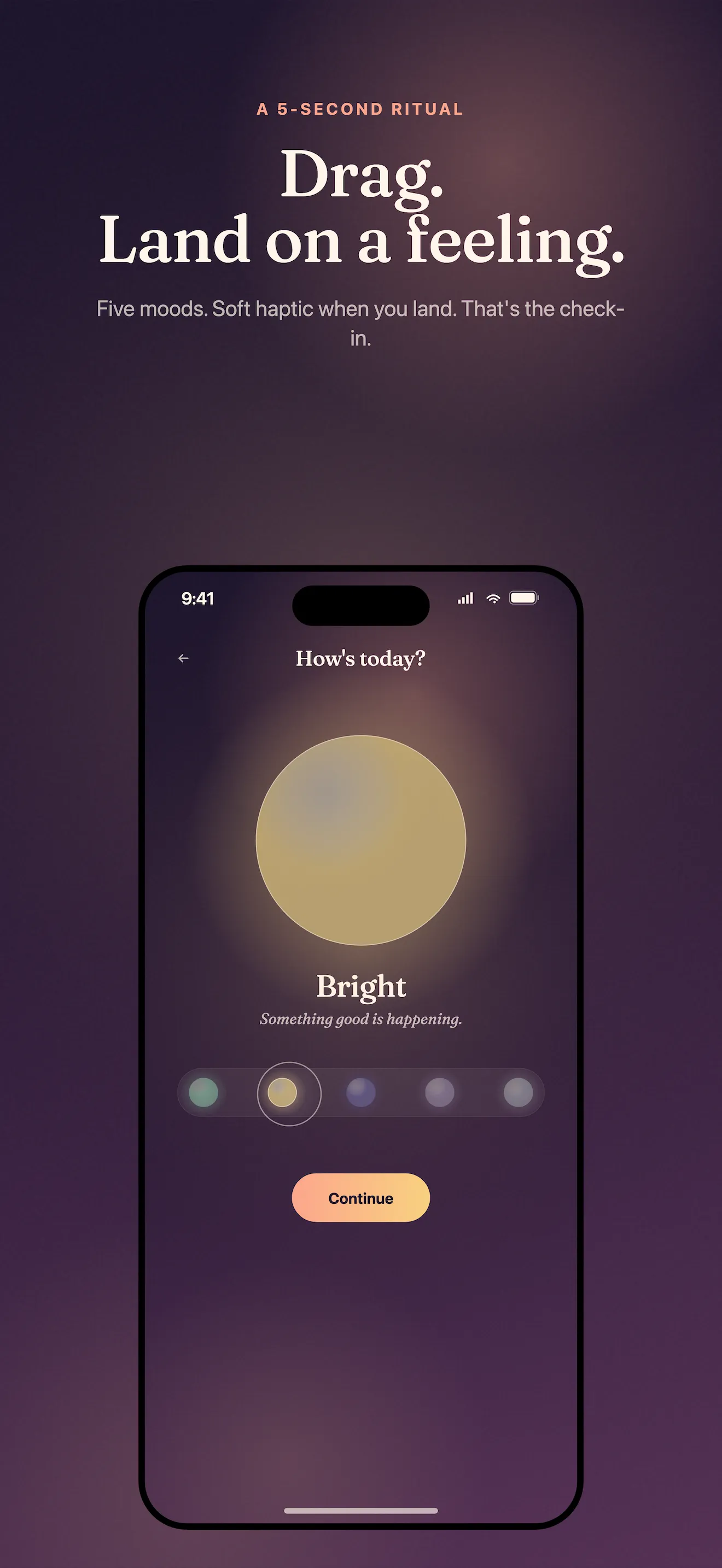
MoodLight works because it doesn't ask you to perform. There's no 1-10 scale, no streak to maintain, no judgment baked into the interface. Just five orbs—calm, bright, heavy, off, numb—and thirty seconds of honest reflection. But even the gentlest tools need a rhythm. Here's how to make your daily check-in feel natural, not like another task.
Find Your Anchor Time
The best time to check in is the time you'll actually do it. For some people, that's morning coffee. For others, it's right after work or before bed. MoodLight doesn't care when—it only cares that you pick a moment that already exists in your day. Anchor your check-in to something you never skip: brushing your teeth, closing your laptop, walking the dog. The orb will be waiting, and thirty seconds won't derail anything.
No streak means no guilt. Miss a day, and tomorrow is just another day.
Use the One-Line Note Sparingly
The optional note field is powerful precisely because it's optional. You don't need to explain your mood every time. Some days, the orb says enough. But when you do write—a word, a phrase, a sentence—you're creating a tiny anchor point in your week. Three months later, reading "sleepless night" next to a heavy orb tells you more than any journal entry. Write for your future self, not for completeness.
Watch Your Gradient, Not Your Numbers
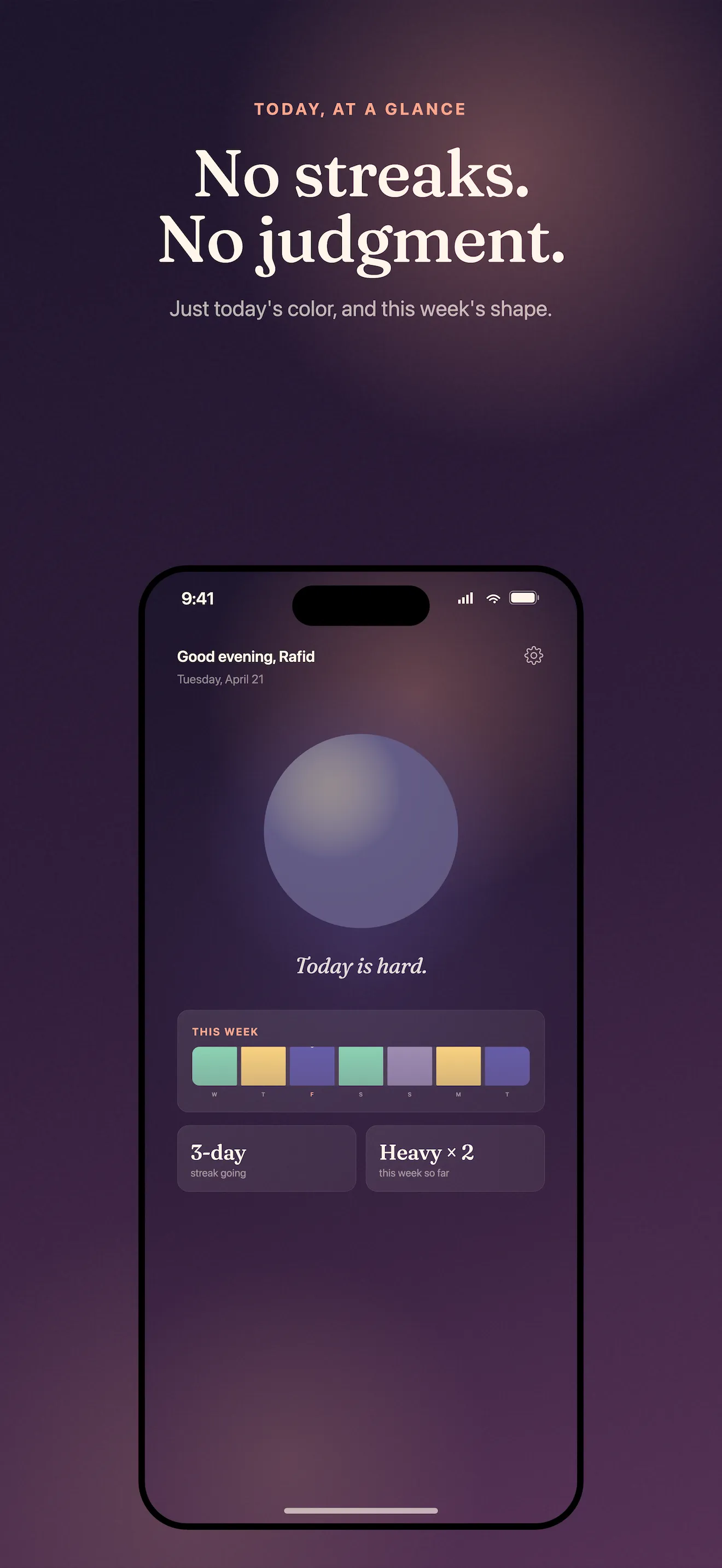
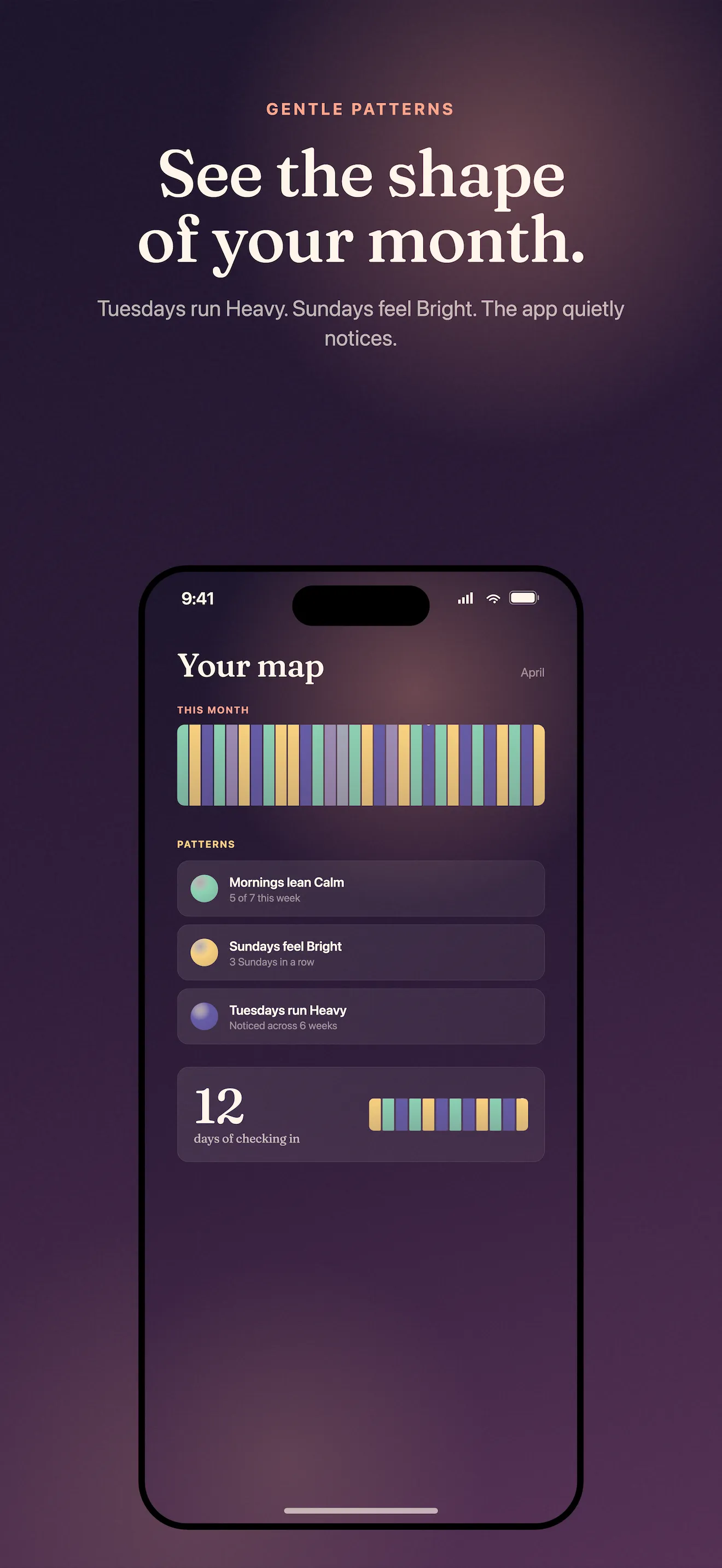
After a week, MoodLight renders your moods as a colored gradient. This is not a score. It's a portrait. Looking at a week of heavy and off orbs followed by bright and calm days tells a story that a spreadsheet never could. Instead of tracking "how many good days" you had, notice the pattern. Are you heavy on Mondays? Bright after you exercise? Let the gradient teach you about yourself without the arithmetic.
Share Only What Feels Right
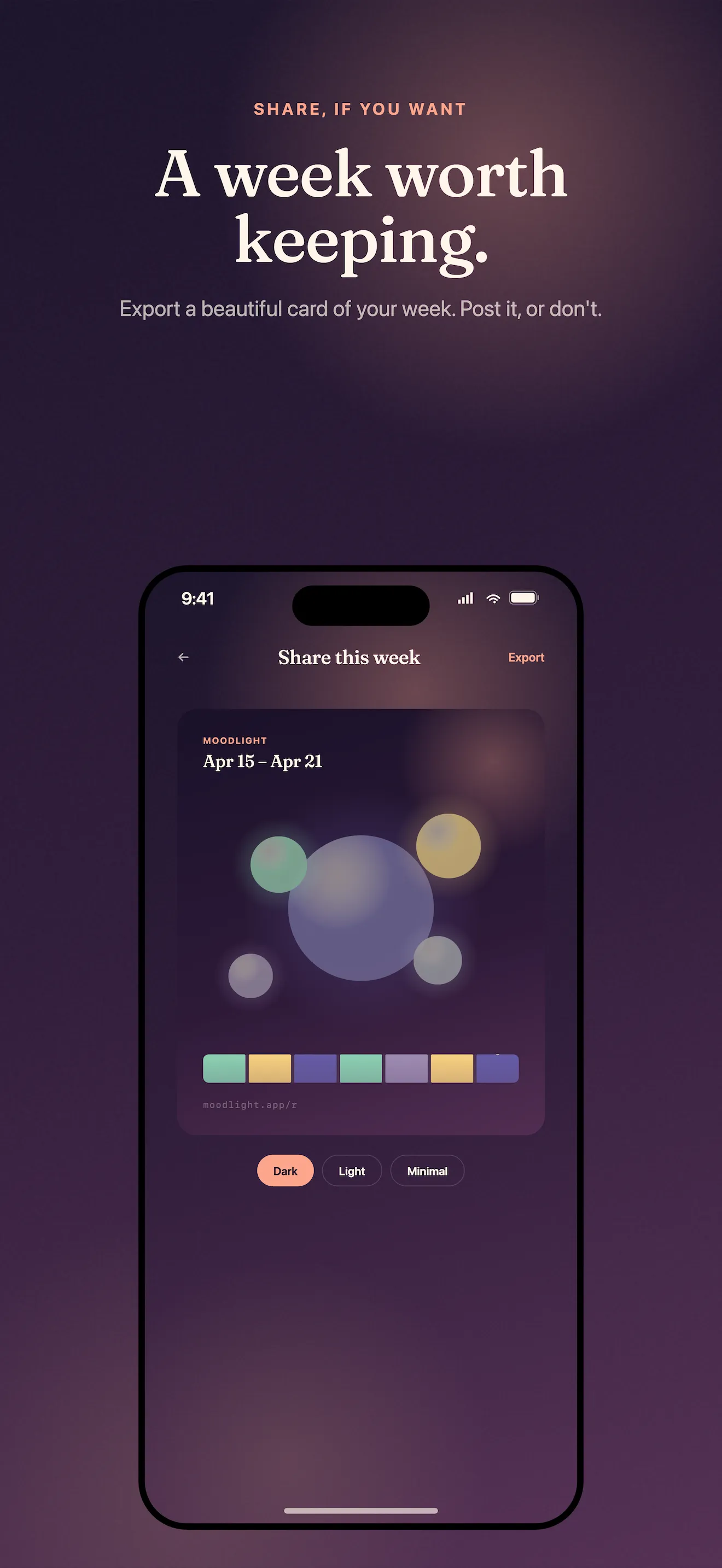
MoodLight lets you export soft, shareable mood cards—beautiful enough to send to a therapist or a trusted friend, if you want to. But sharing is entirely up to you. Your check-ins live on your device only. No cloud, no account, no algorithm watching. You own your data, which means you control what gets seen and by whom. Use the export feature when it serves you, and leave it alone when it doesn't.
Reframe Skipped Days as Normal
You'll miss days. You'll open MoodLight at 11 p.m. and wonder if it's worth checking in. You'll forget entirely. And that's fine. Unlike other apps, MoodLight doesn't punish you for gaps. There's no badge, no streak counter, no shame. When you come back—whether it's the next day or a week later—your space is exactly as you left it. This design choice is intentional: a mood tracker should never become another source of anxiety. Getting started with MoodLight means accepting that consistency comes from gentleness, not guilt.
Bring Your Gradient to Therapy or Reflection
If you talk to a therapist or a close friend about how you're doing, MoodLight's visual record is a gift. Instead of trying to remember if you had "a good month," you have a colored gradient. You can point and say, "I was heavy most of October, then something shifted." The gradient becomes a language for feelings that are hard to articulate. MoodLight's five orbs rethink how we name our moods, and that clarity matters in deeper conversations.
This article was drafted with AI assistance and reviewed by a human editor before publishing.