How does MoodLight work?
Most mood trackers ask you to grade your day like a school assignment: pick a number, rate your happiness, don't miss a day or the app will remind you that you failed. MoodLight was built by people who got tired of that. It's five orbs, thirty seconds, and a week that turns into color instead of a chart full of guilt. Here are the questions people actually ask before and after they download it.
What is MoodLight and how does it work?
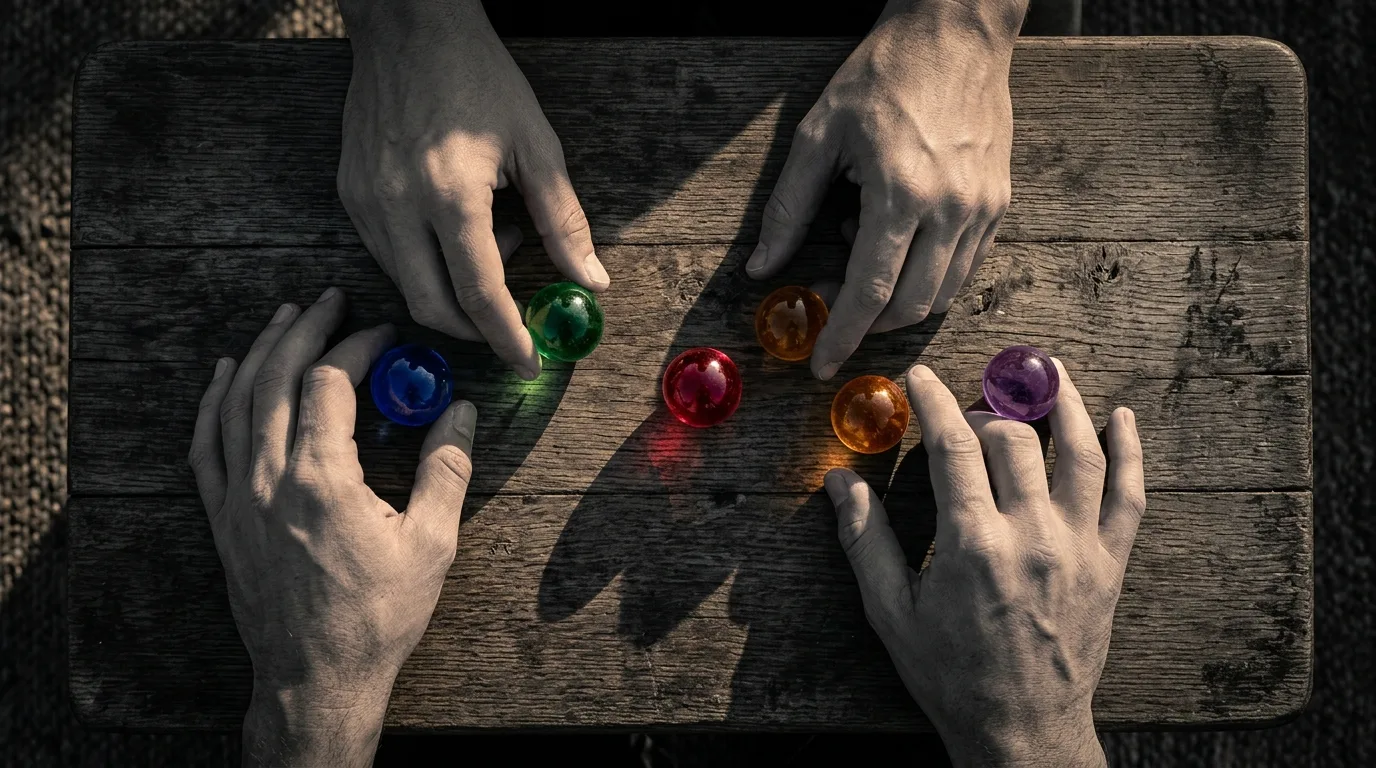
MoodLight is a mood check-in app that replaces scales and streaks with five colored orbs — calm, bright, heavy, off, and numb — that you tap once a day. You can optionally add a single line of text if something feels worth naming, but nothing forces you to write a paragraph or justify how you feel. That tap-and-done design is deliberate: it's faster than typing a single sentence into any other journal, which means it survives on the days you're too tired or too flat to open a bigger app. Those daily taps stack into a week-long gradient, so instead of scrolling a list of numbers you see your week as a strip of color, calm blending into heavy, bright bleeding into off. Read more in how MoodLight works as a daily mood tracker.
Why doesn't MoodLight use a 1-10 mood scale?
MoodLight skips the 1-10 scale because numbers turn feelings into a performance you can fail at. A 4 feels like a bad grade, a 7 invites comparison to yesterday's 8, and neither number tells you anything true about what the day actually felt like. The five orbs — calm, bright, heavy, off, numb — describe real emotional states instead, including the flat, foggy, disconnected ones that most trackers don't have a box for. There's no happy/sad binary and no clinical mood wheel to decode; just the states people actually reach for when a friend asks how they're doing and they're being honest. The reasoning behind this is laid out fully in why MoodLight ditched the 1-10 scale for five orbs instead.
Is MoodLight private and does it require an account?
MoodLight doesn't require an account, and your check-ins live only on your device, never on a cloud server tied to your identity. There's nothing to sign up for, nothing to sync, and nothing for a company to lose in a breach, because there's no account to begin with. That matters most on the days the honest answer is 'off' or 'numb' — the states people are least likely to want floating around on someone else's server. If you do want to share something, MoodLight makes a soft, shareable mood card you choose to send, rather than syncing your whole history anywhere by default.
Can I use MoodLight without worrying about breaking a streak?
Yes — MoodLight has no streak counter, so skipping a day doesn't reset anything or shame you back into the app. A lot of habit and journaling apps quietly turn self-care into another obligation, where missing one day feels like losing progress. MoodLight was built the opposite way: there's no number counting your consecutive days, no badge you lose, no notification guilting you for the gap. If you check in twice a week or every single day, your gradient just reflects that; it doesn't punish the pattern. New users can see what a realistic first week looks like in the MoodLight beginner's guide.
What can I actually do with my mood data in MoodLight?
Your check-ins become a mood map you can look back over a week or longer, plus soft, shareable cards you can send to a friend, a partner, or bring straight into a therapy session. Instead of reading a spreadsheet of numbers, you see color patterns — long stretches of heavy, a bright week, a run of off days worth mentioning out loud. That's often more useful in a therapy conversation than trying to remember how last Tuesday felt, because the gradient does the remembering for you. For a broader look at what any mood tracker should offer before you commit to one, see this guide to choosing a mood tracker app for iPhone.
- Check-in method
- MoodLight: tap one of five orbs. Traditional trackers: rate 1-10 or fill a mood wheel.
- Time per entry
- MoodLight: ~30 seconds. Most journaling apps: 2-5 minutes of typing.
- Streaks
- MoodLight: none, no penalty for gaps. Habit-style trackers: streak counters that reset on a missed day.
- Account required
- MoodLight: no account, no cloud sync by default. Most apps: sign-up required to save data.
- States covered
- MoodLight: calm, bright, heavy, off, numb. Standard scales: happy-to-sad spectrum only.
- Sharing
- MoodLight: optional shareable mood cards. Most trackers: export raw charts or none at all.
A number asks you to grade yourself. An orb just asks you to point at what's true.
Common questions
Do I need to check in every day for MoodLight to be useful?
What does 'numb' or 'off' mean as a mood option?
Can I write more than one line per day?
Is my mood data backed up anywhere?
How is this different from a regular journaling app?
Can I bring my MoodLight history to a therapist?
If you want to see the full case for this approach, start with what MoodLight is and why it skips scores and streaks, or browse every MoodLight article for deeper dives into specific features.
This article was drafted with AI assistance and reviewed by a human editor before publishing.