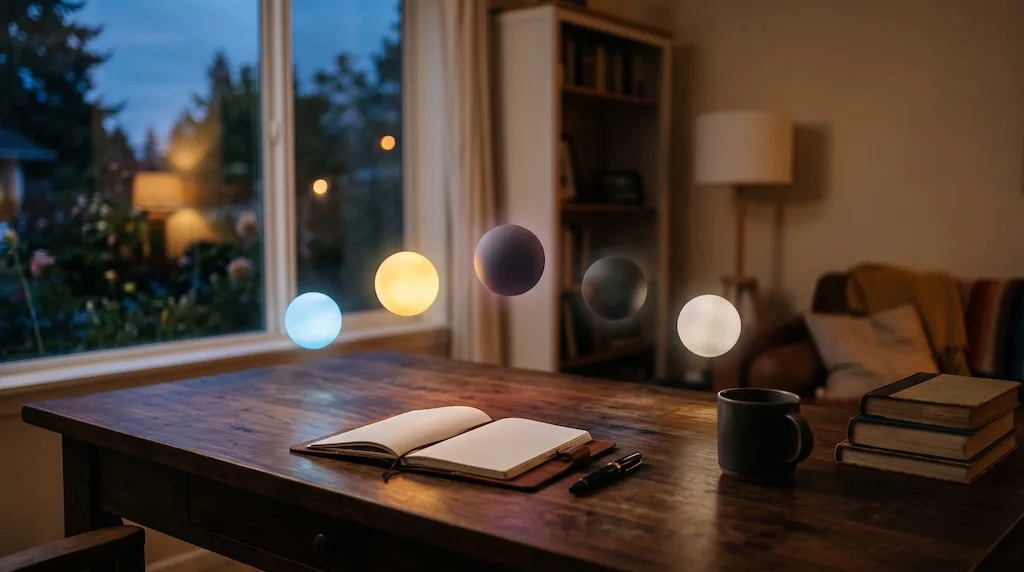
Most mood trackers ask you to rate your day on a scale of 1 to 10. It sounds neutral, even scientific. But sit with the question for a second and it starts to feel absurd. Is a bad day a 3 or a 4? Does a 7 mean you're fine, or that you're performing fine? Numbers force a precision that feelings don't actually have. MoodLight was built on a different bet: that most of us can't rate our inner state, but we can recognize it — instantly, wordlessly — if we're shown the right shapes.
The problem with the 1-10 scale
A number scale looks objective, but it hides a lot of quiet friction. First there's the calibration problem: your 6 today isn't your 6 from last month, because your baseline shifts and you have no fixed reference point. Then there's comparison anxiety — a low number can feel like a failing grade, something to explain or fix. And numbers flatten states that aren't actually the same. Feeling flat and empty is not the same as feeling sad, but on a 1-10 scale they often land in the same low range. Tracking your mood without a scale isn't a gimmick — it's an attempt to fix a real mismatch between the tool and the thing it's measuring.
Five orbs, not two moods
Most simple mood apps default to happy or sad, maybe with a neutral face in between. That's not enough resolution for how days actually feel. MoodLight uses five states instead: calm, bright, heavy, off, numb. Calm and bright are both good days, but they're not the same good — one is settled, the other is energized. Heavy and off are both hard days, but heavy has weight and off has drift. Numb is its own thing entirely: not sad, not calm, just absent. It's the state most trackers have no word for, which is exactly why so many people find it the most useful orb in the set.
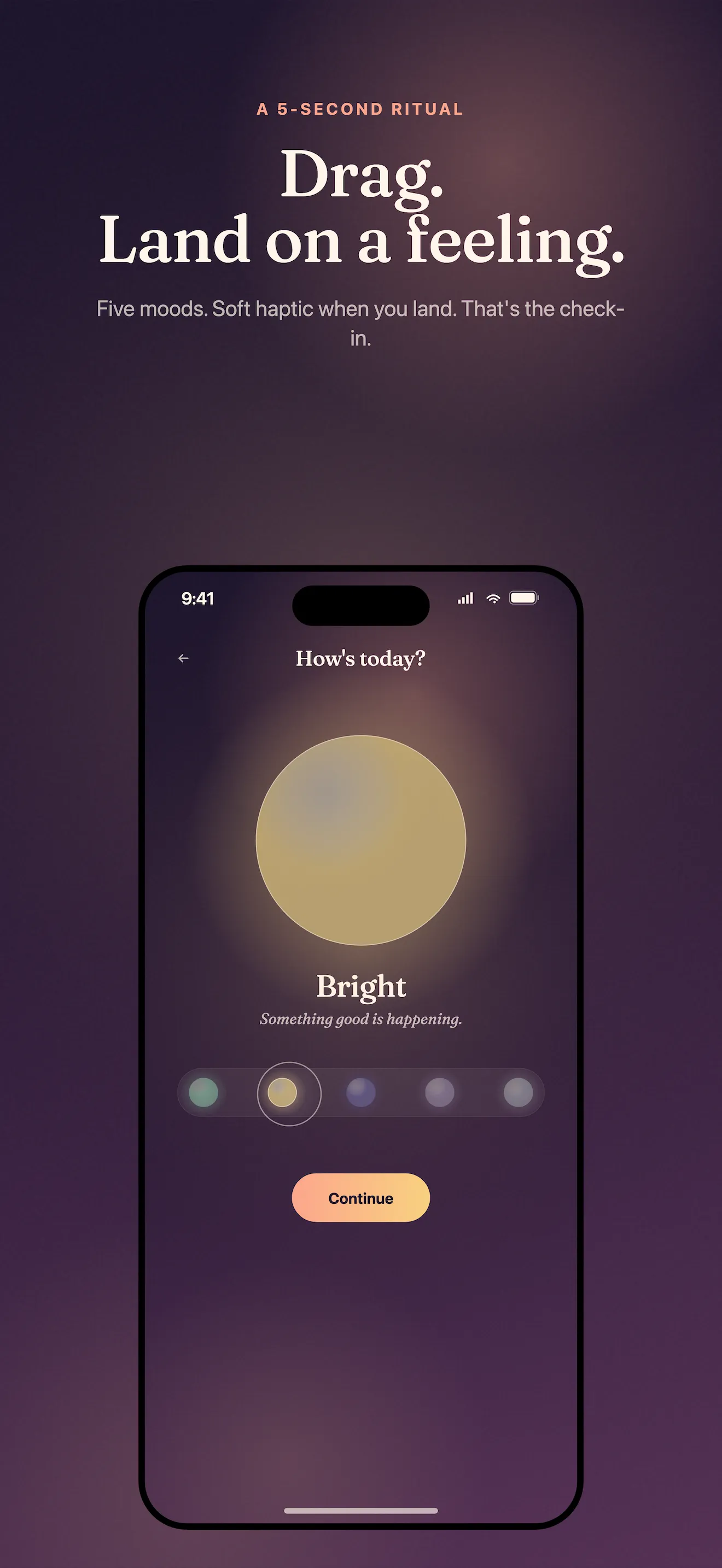
Calm and bright are both good days. They're just not the same good day.
Each orb carries its own color, and that color is doing real work. Calm reads as a cool blue, bright as warm yellow, heavy as a deep gray-purple, off as muted charcoal, numb as a washed-out pale tone. You don't have to think about what these mean — your eye already sorts warm from cold, saturated from dull, before your brain gets involved. That's the entire design principle behind the MoodLight check-in: let color carry the nuance that a number never could.
Thirty seconds, then done
A check-in is a single tap on an orb, plus an optional one-line note if something specific is worth remembering. That's it. No mood wheel with forty emotion words to scroll through, no clinical questionnaire, no multi-screen flow. It's genuinely faster than typing one sentence into a normal journal app, which matters more than it sounds like it should — a habit that takes ten seconds survives a busy week. A habit that takes three minutes doesn't.
- Tap the orb that matches how you feel right now
- Add a short note only if you want to — it's never required
- Close the app. There's nothing else to fill in
Your week, rendered as color
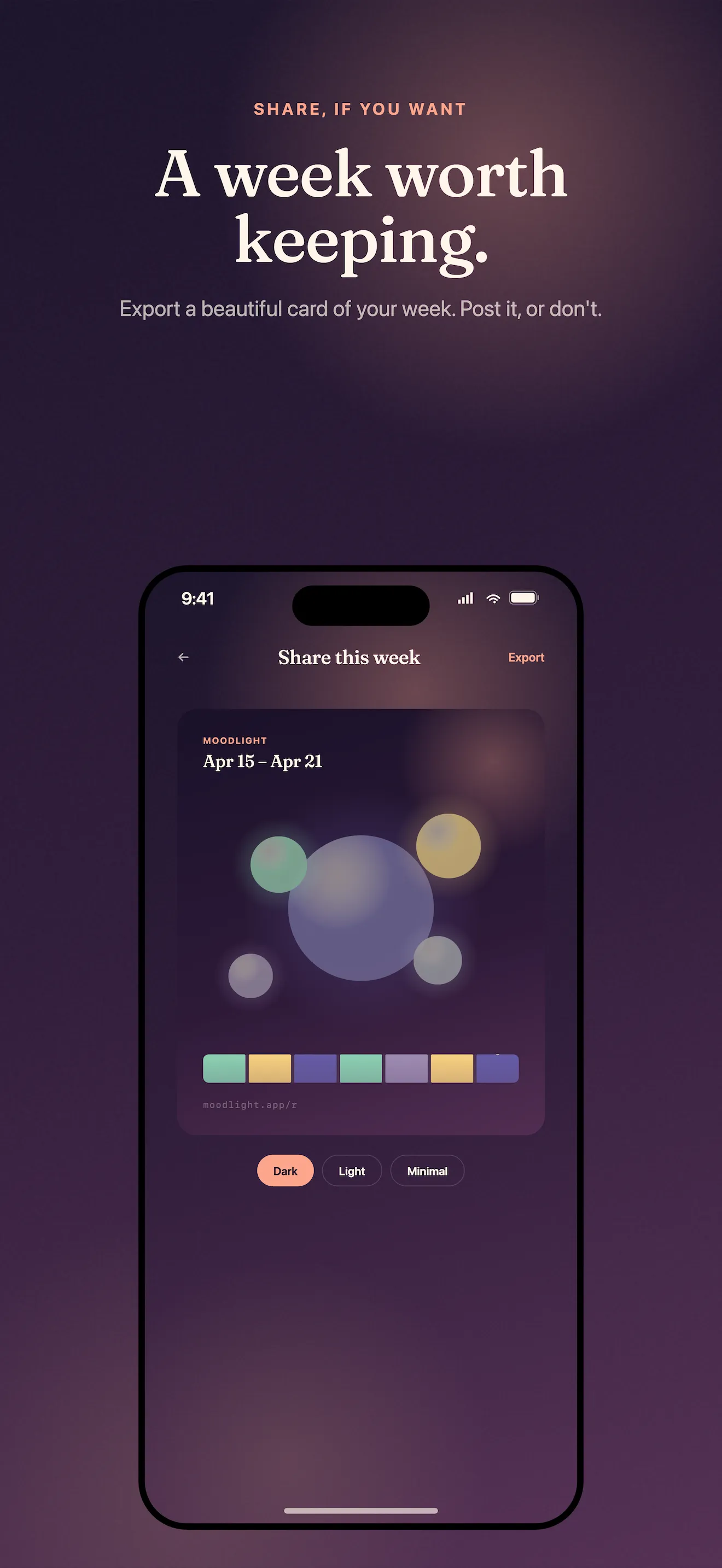
Individual check-ins are quick, but the real payoff shows up when they accumulate. Instead of a bar chart or a table of numbers, MoodLight turns a week of orbs into a soft color gradient — a strip you can glance at and read the shape of your week in half a second. A stretch of blue and yellow tells a different story than a smear of gray. You don't have to interpret an axis or remember what a 4 meant three Tuesdays ago. The color just shows you.
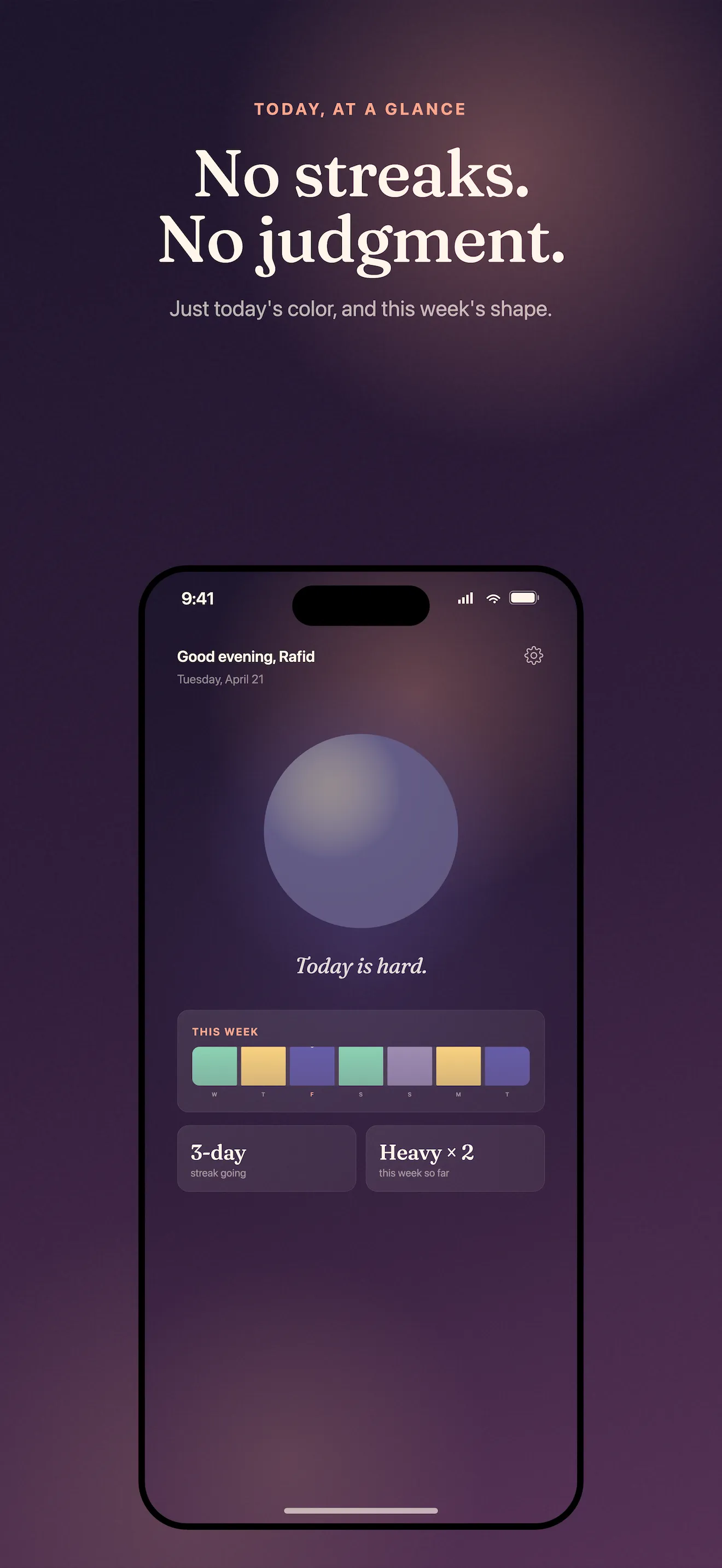
Zoom out further and the monthly mood map does the same thing at a larger scale — a calendar grid where every day is a color instead of a number. Patterns that are hard to spot day-to-day, like a rough week every month or a slow stretch of gray, become visible almost immediately. It's the kind of pattern that's genuinely useful to notice, without ever feeling like you're being graded on it.
No streaks, because guilt isn't a mood tool
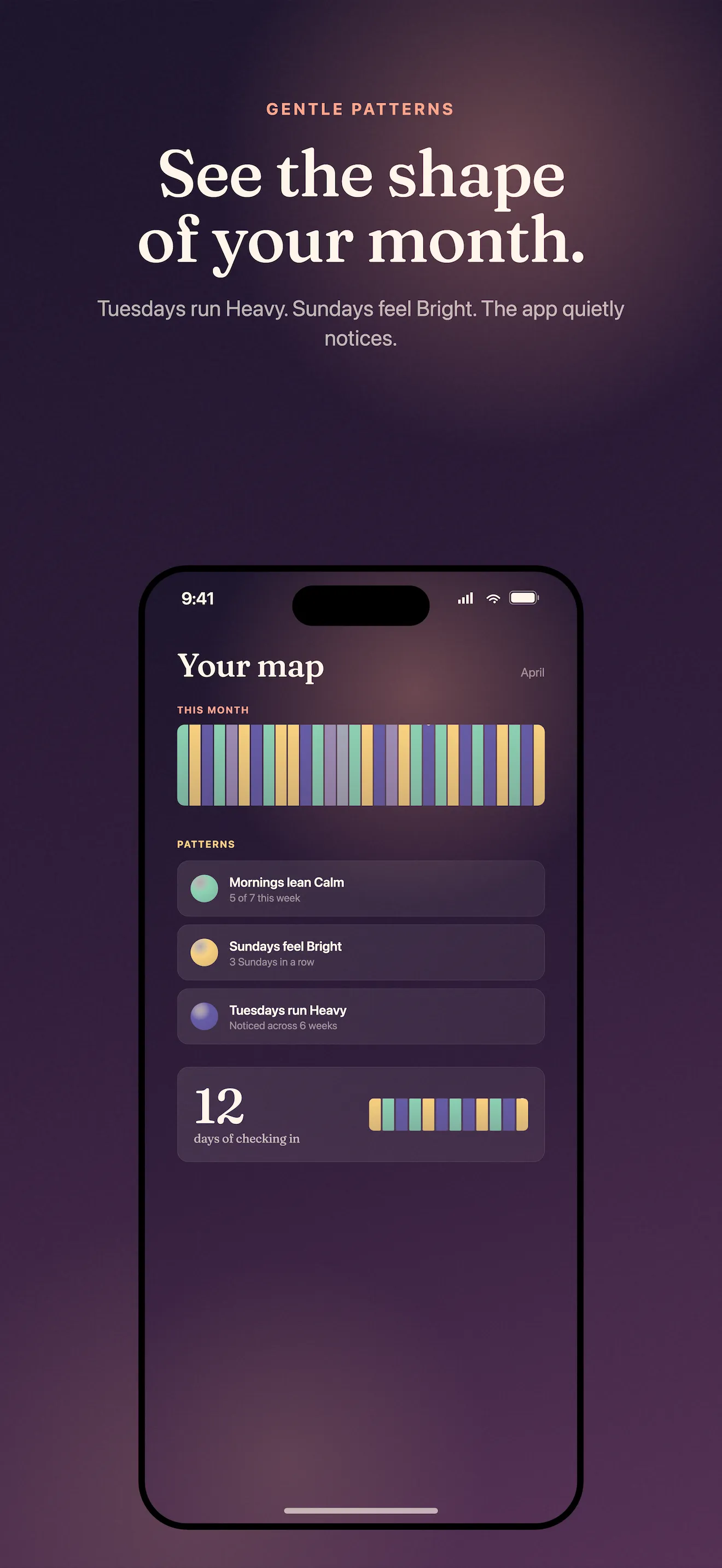
Streak counters work well for habits like drinking water or doing pushups, where the goal is consistency for its own sake. They work badly for mood tracking, where skipping a day usually means something real happened — you were too tired, too busy, or genuinely not okay. Punishing that with a broken streak turns a tool meant to help you understand yourself into another source of low-grade guilt. MoodLight has no streak counter at all. Miss a day, miss a month, come back whenever — the app has no memory of your absence, only of the days you actually checked in.
Private by design, not by policy
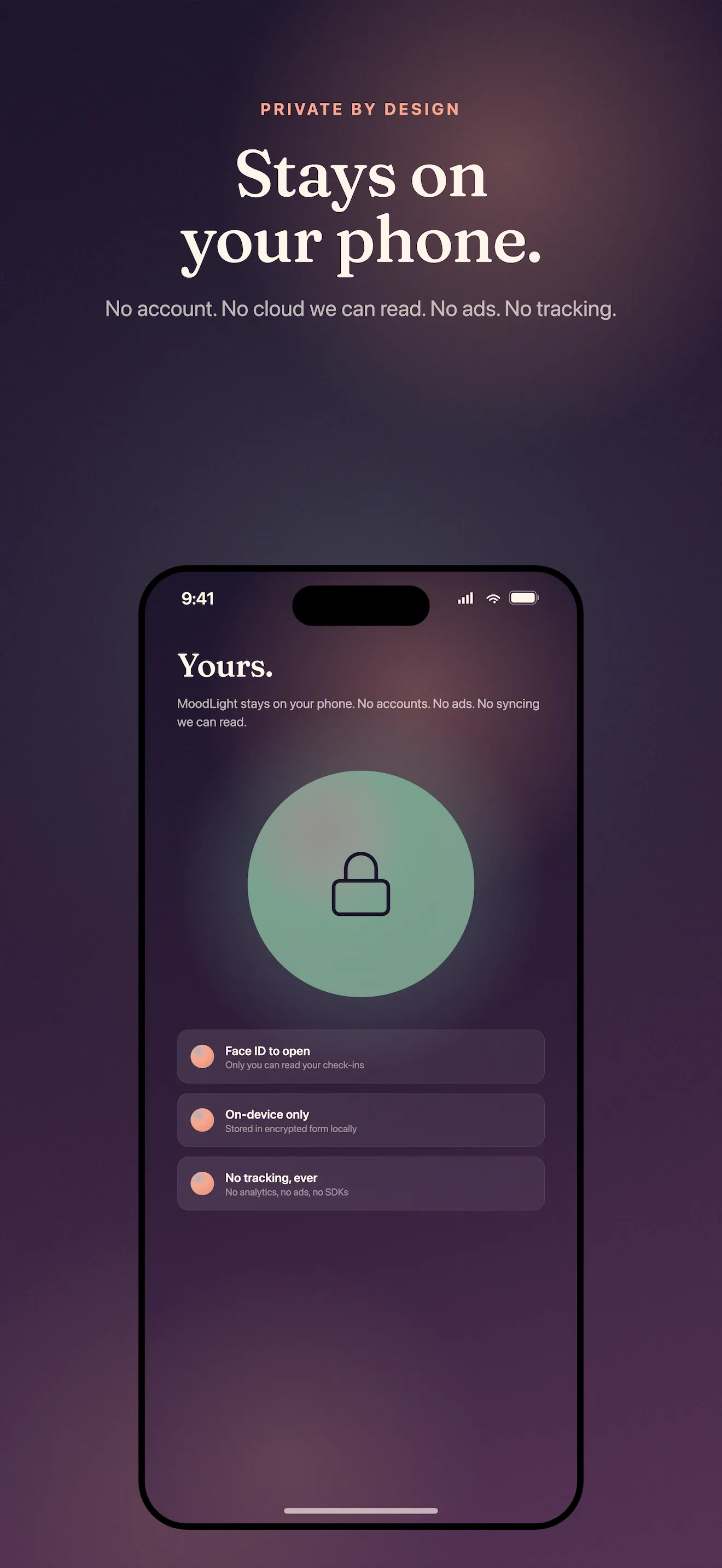
There's no account to create and no cloud sync to configure. Every check-in lives only on your device. That's a meaningful distinction from apps that promise privacy through a settings toggle or a policy document — here it's a structural fact, not a promise you have to trust. Mood data is some of the most personal information you can log, and the simplest way to protect it is to never let it leave your phone in the first place.
Can I share my mood data with a therapist?
If you're just getting started, the beginner's guide to your first week walks through what to expect from the first few check-ins, and the setup checklist covers the handful of things worth doing before day one. Both are short reads, in keeping with the app's whole philosophy.
Common questions
Why five orbs instead of a mood wheel with more options?
What does the 'numb' orb mean if I'm not sad?
Does MoodLight sync across devices?
What happens if I skip several days?
For a broader comparison of what a good mood tracker should offer on iPhone, the mood tracker app resource guide lays out the questions worth asking before you pick one. And if the orb-versus-scale question interests you specifically, mood tracking without guilt goes deeper into that comparison.
This article was drafted with AI assistance and reviewed by a human editor before publishing.