Party games fall into a few distinct categories, each designed around a different constraint. Some assume everyone has their own phone or tablet. Others rely on a single shared screen. A few—like Blend In!—pass one phone around the group. These aren't just different implementations of the same idea. They shape how the game feels, how fast it plays, and whether it actually keeps people talking to each other.
The multi-device model
Most digital party games assume everyone brings a phone or can borrow one. Apps like Jackbox titles (Quiplash, Fibbage, Trivia Murder Party) pioneered this approach: one TV, one "audience" phone, and individual phones for each player. You're all in the same room, but your screens stay separate until the reveal.
This model has a clear advantage: players can think and type without others watching their face. It removes the pressure of performing live while you compose your answer. For word games and comedy-heavy prompts, that separation is often essential. But it also creates natural friction. Everyone has to install the app. Someone needs to host, troubleshoot WiFi, and manage a game code. And there's a baseline tension between what's happening on personal devices versus what's shown on the shared screen.
The shared-screen approach
Some party games put everything on a TV or projector. Trivia, drawing, and turn-based games work here—everyone watches the same content, and players call out answers or take turns on a remote. It's inclusive for non-gamers and keeps the energy collective. But it's also limiting. You need to be tied to a screen. Gameplay tends toward either very short rounds or a lot of downtime while you wait for your turn.
One phone, all players
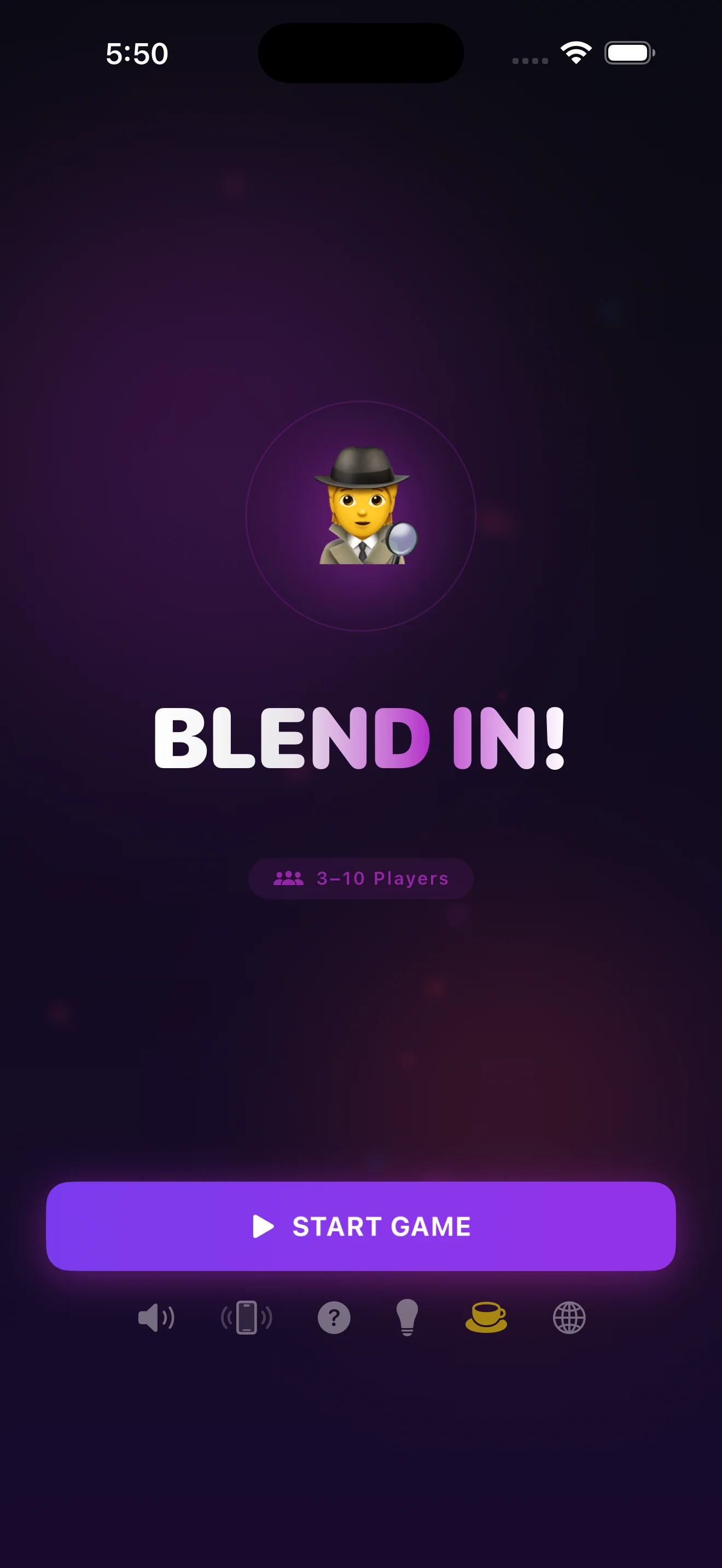
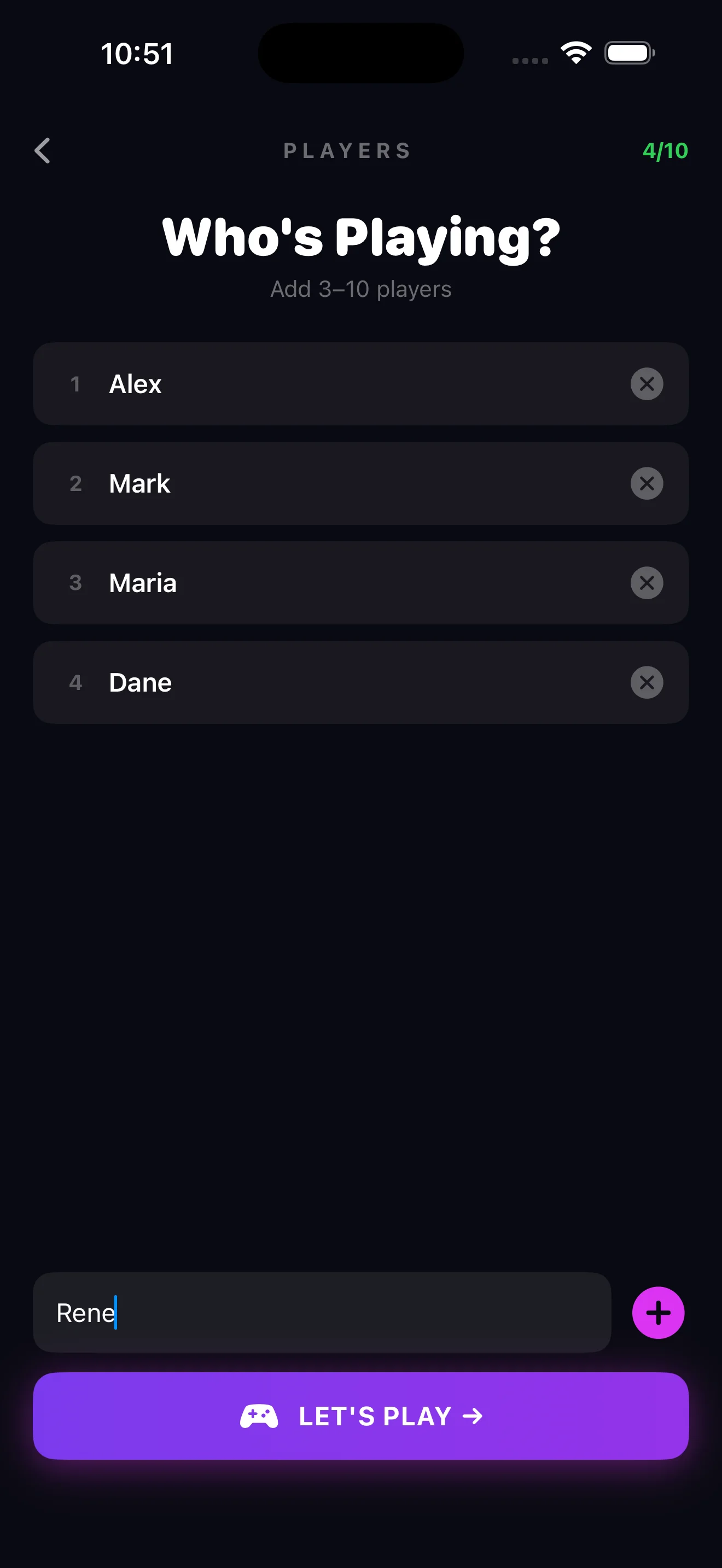
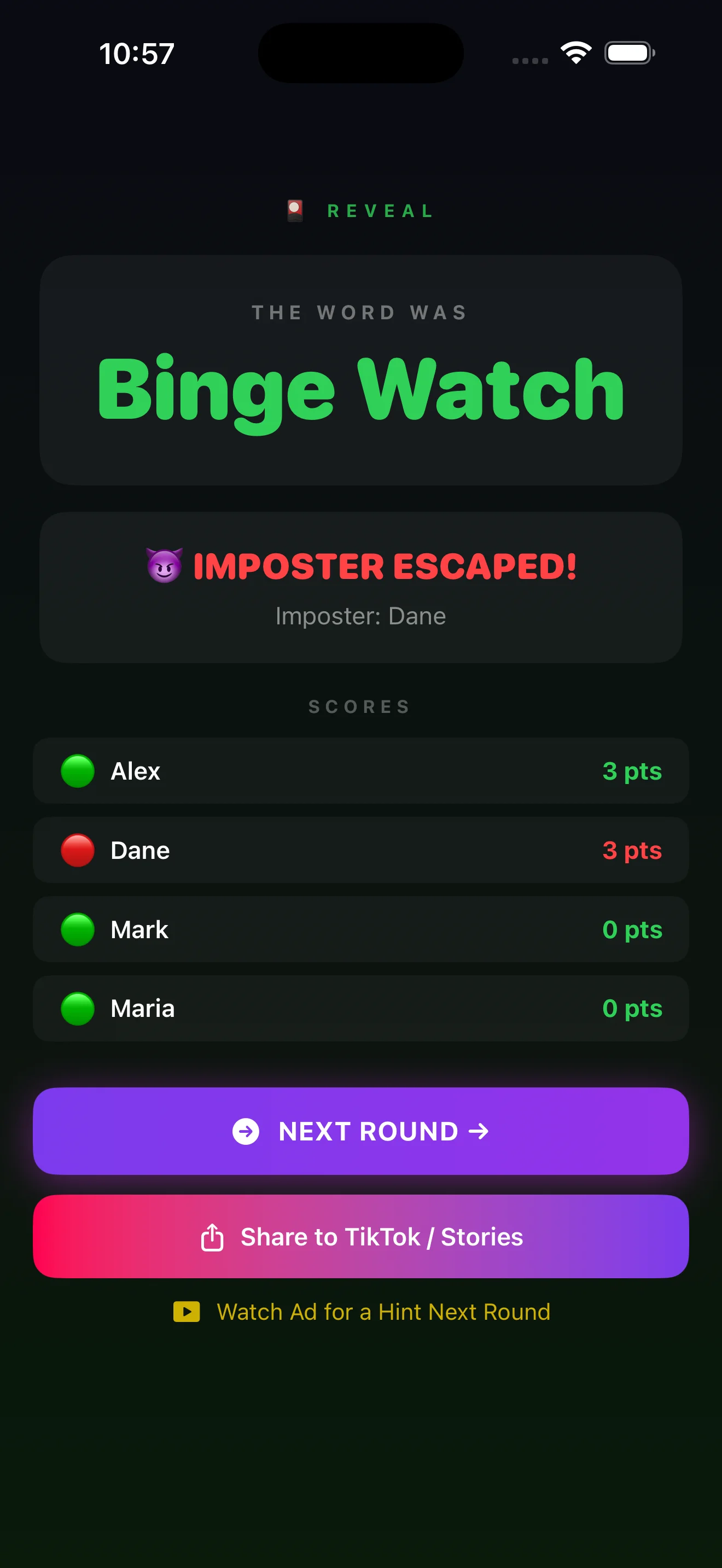
The phone-pass model is rarer but powerful. One device moves around the group. Each player gets a turn or a moment on the screen before passing it on. Blend In! operates here: players add their names, then the phone passes to each person to reveal their secret role. No one sees anyone else's screen. No extra devices needed. No setup beyond hitting Start.
One phone means no install friction, no WiFi trouble, and everyone's forced to stay in the same room, paying attention to the same conversation.
Why one phone changes the social dynamics
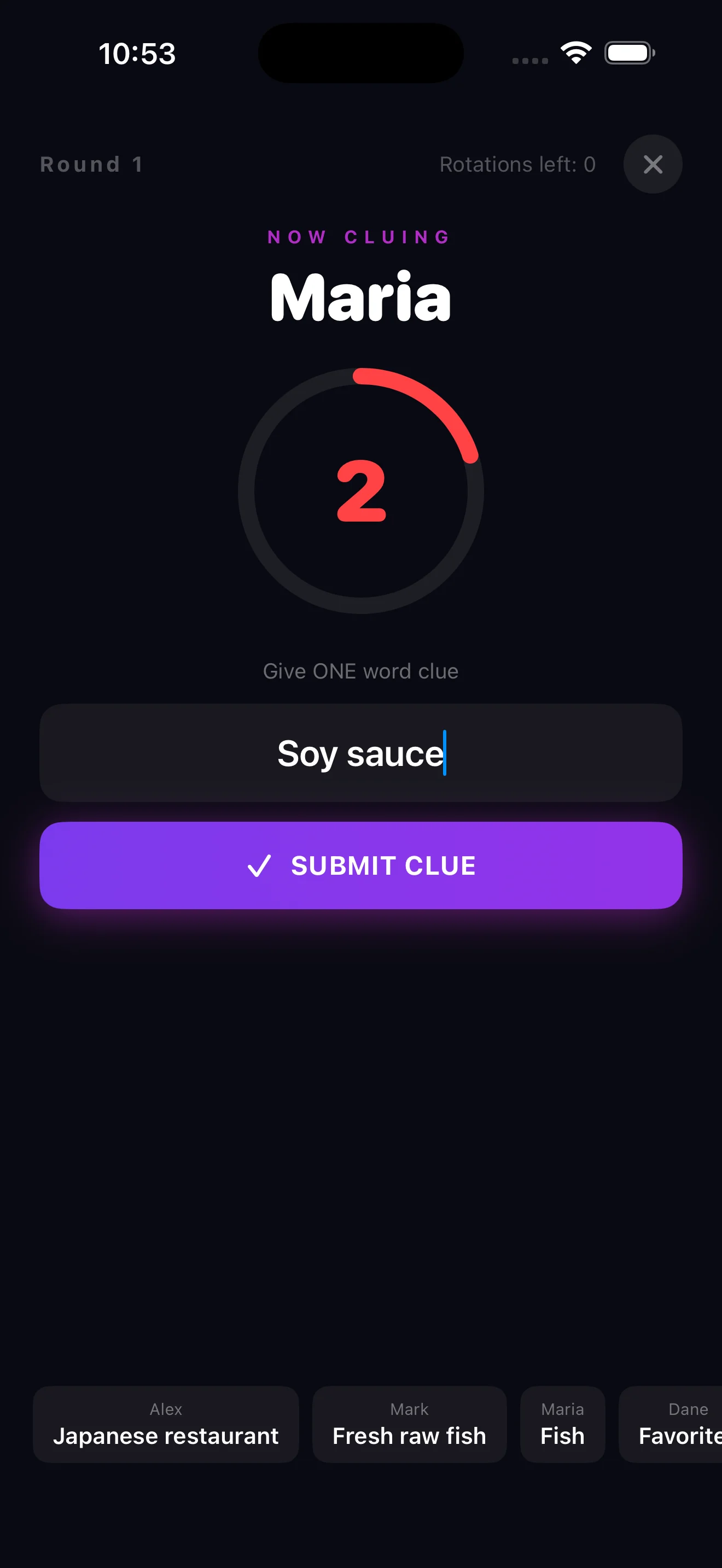
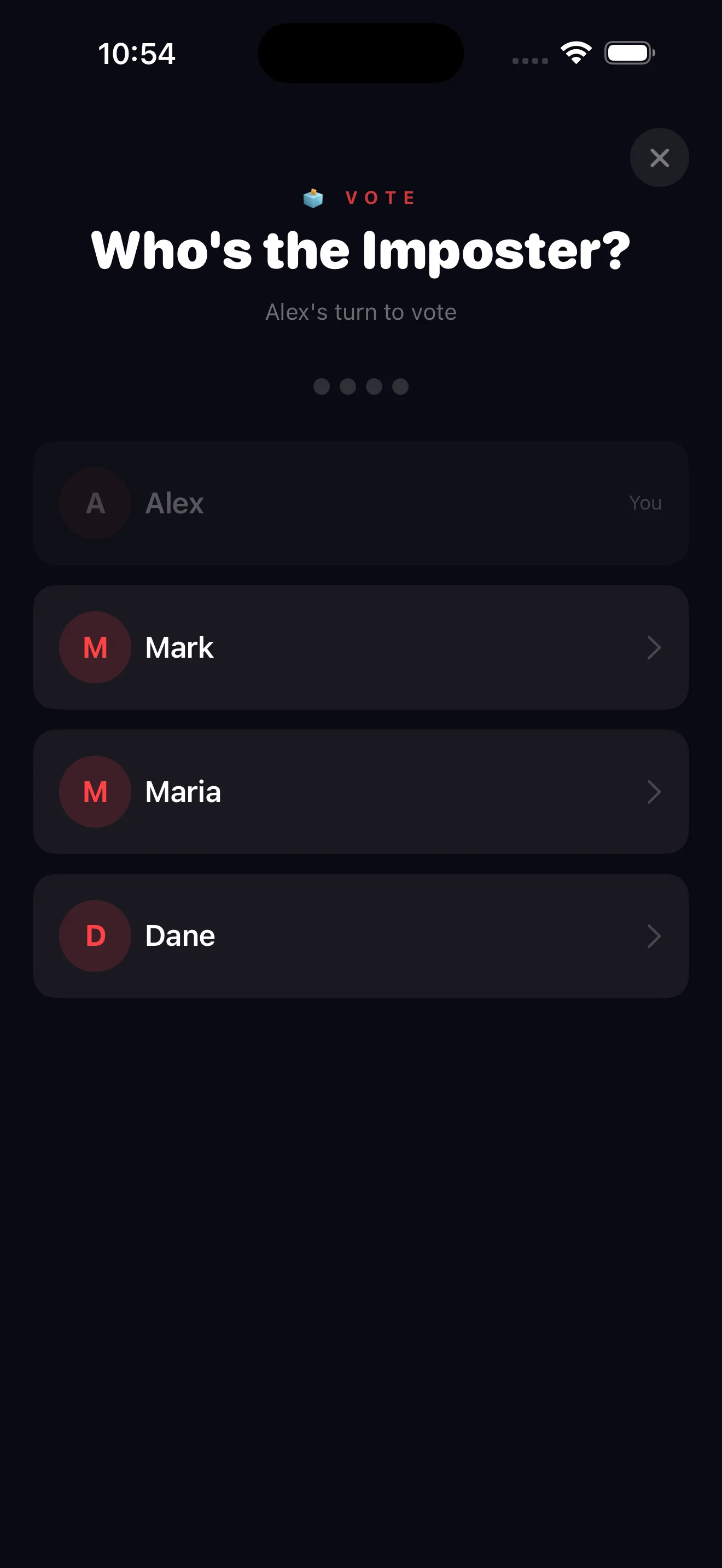
When everyone holds the same device in turn, something shifts. You can't scroll while waiting your turn. You can't check out mentally. The phone is a tangible object being passed—it creates natural rhythm and forces eye contact. For a game like Blend In!, which lives or dies on reading people and catching lies, this matters. When you're giving a clue, the group is watching your face. When you're voting, you're hearing arguments in real time. There's no buffer of individual screens softening the social stakes.
Internet and setup requirements
Multi-device games almost always need WiFi or a local network. Shared-screen games need a TV or projector. One-phone games can work completely offline. Blend In! requires neither internet nor extra equipment—just the device in your hand and the people around you. It's the lowest-friction setup for road trips, cottages, or anywhere you can't rely on a strong connection. You also don't need accounts, codes, or pre-planning. One tap to start, add names, and begin.
Want to dive deeper into strategy? Check out our guide on spotting fakers and winning at Blend In! Or read how one phone turns into party chaos when the roles flip and trust breaks down.
The verdict
There's no objectively "best" party game format—it depends on your setup, group size, and what you want from the night. But if you value simplicity, speed, and real human chaos over polished production, a one-phone game has a unique edge. It removes friction and forces connection. Blend In! takes that model and builds it around social deduction—a mechanic that's made games like Mafia and Werewolf endure for decades. The phone is just the medium. The game is the conversation.
This article was drafted with AI assistance and reviewed by a human editor before publishing.