
Mara had moved in with two roommates to save money, not to become the household's unofficial accountant. But three weeks in, she was the one tracking who paid for internet, whose turn it was to cover the water bill, and which streaming service nobody remembered signing up for. The group chat had become a low hum of anxiety — someone always felt like they were being asked for money, and someone always forgot to Venmo back.
The problem wasn't the money, it was the guessing
Mara freelances, so her income lands in uneven chunks. Some weeks she's flush, some weeks she's counting days until an invoice clears. Add two roommates, four shared bills, and a handful of subscriptions nobody had audited since move-in, and she was spending more energy guessing at numbers than actually managing them. Her bank app didn't help — it just showed a lump balance with no sense of what was already spoken for.
She'd tried a shared spreadsheet once. It lasted eleven days before someone stopped updating it. What she wanted wasn't more tracking. She wanted less dread about the tracking that already needed to happen.
Setting up without connecting a single bank account
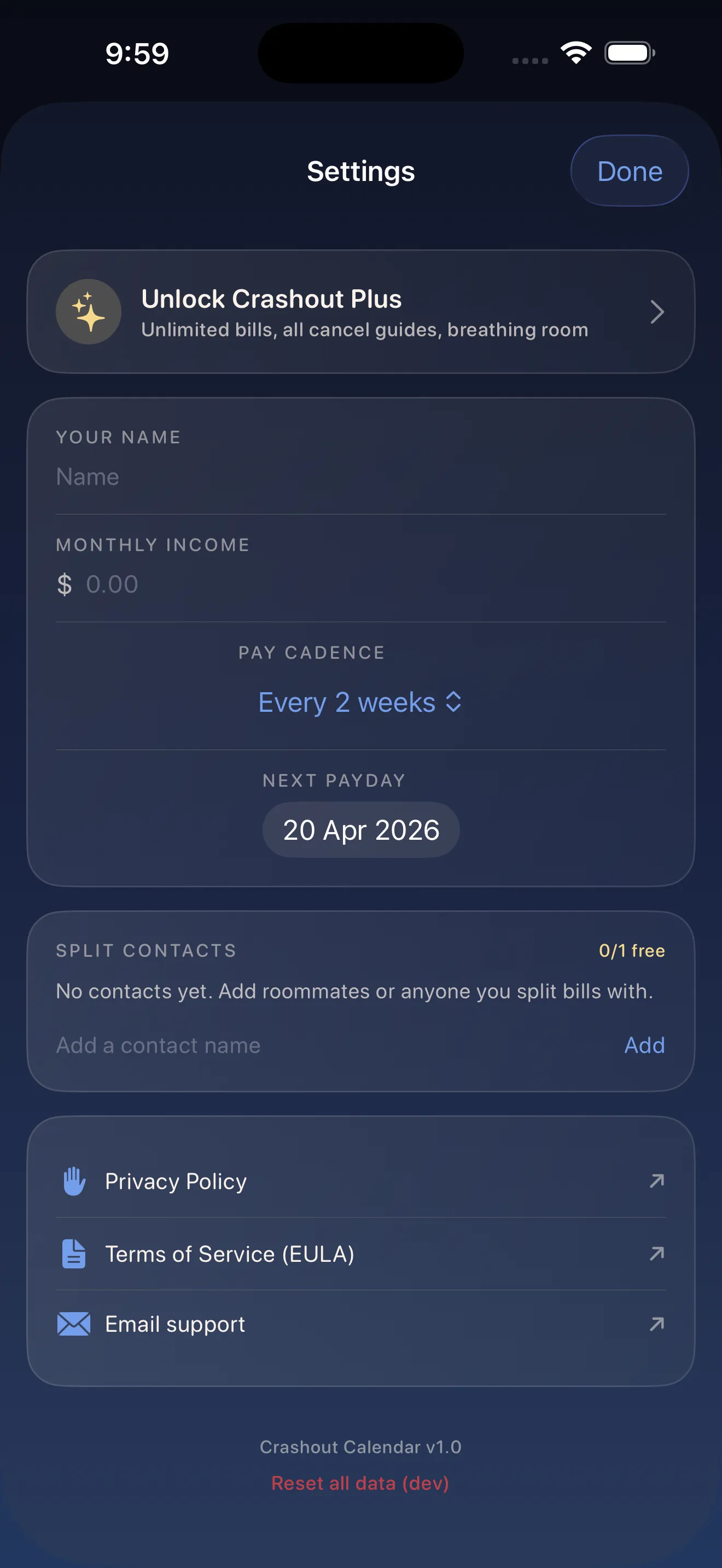
A friend sent her Crashout Calendar with a one-line pitch: no bank login, no red alerts, just a calendar. Mara was skeptical of anything financial that asked for less information than usual — but that was the point. Crashout never asks for banking credentials. Everything lives in local storage on her phone, which meant she wasn't handing a new app access to her entire financial life just to track four shared bills.
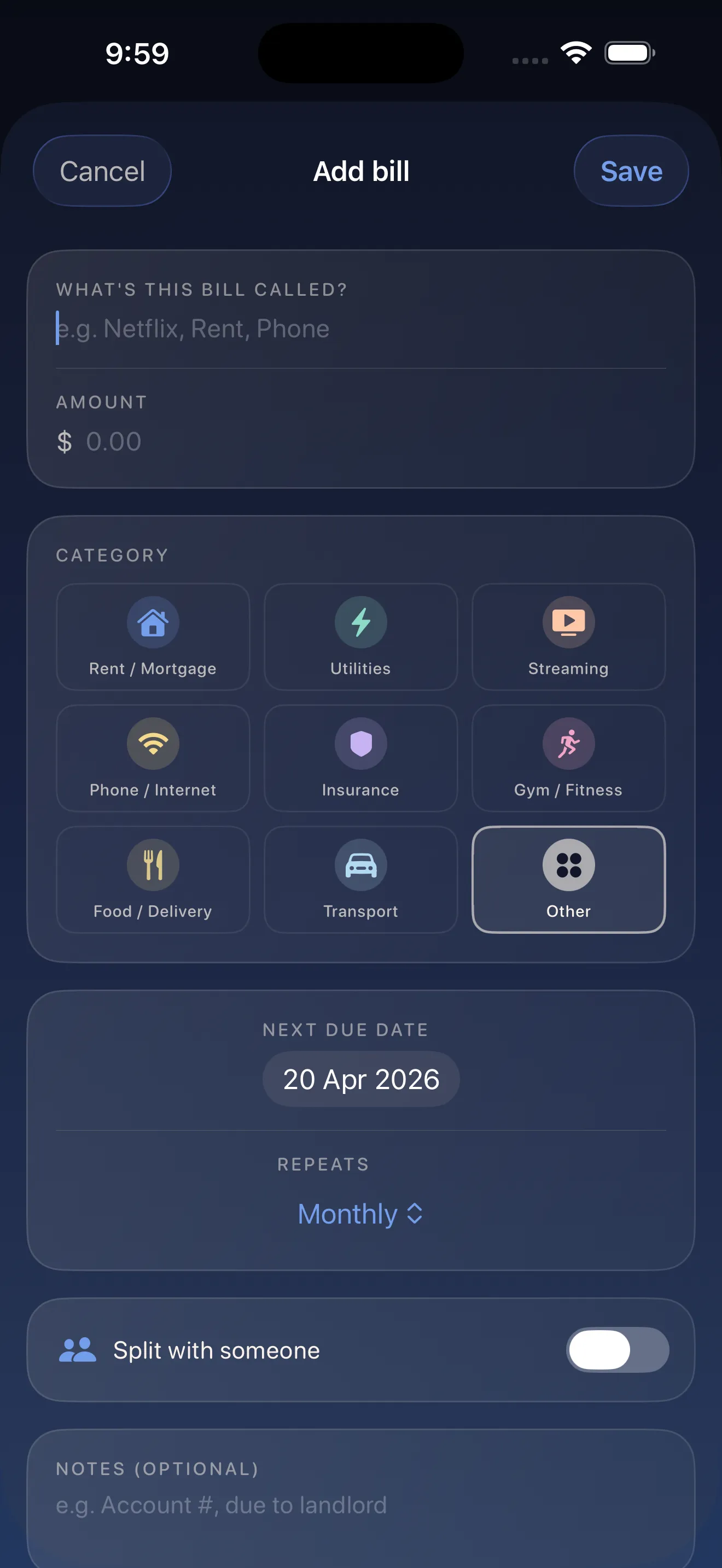
Setup took about three minutes. She added rent, internet, water, and the electric bill, and the app's smart categorisation guessed the recurrence pattern for each one without her typing much beyond the amount and due date.
Splitting bills without the awkward math
The feature that actually changed the household dynamic was splitting. Instead of Mara mentally dividing every bill by three and then chasing payments, Crashout let her mark shared bills as split from the start. Each roommate could see their own portion on their own calendar, on their own phone, without anyone needing shared logins or a joint account.
Nobody had to ask 'wait, how much do I owe again?' It was just already there, waiting quietly on the calendar.
The group chat didn't disappear, but the tone changed. It stopped being a place where money got mentioned defensively. If someone wanted to check what they owed, they opened the app instead of asking Mara — and Mara stopped feeling like the household's collections department.
Finding the subscriptions nobody remembered
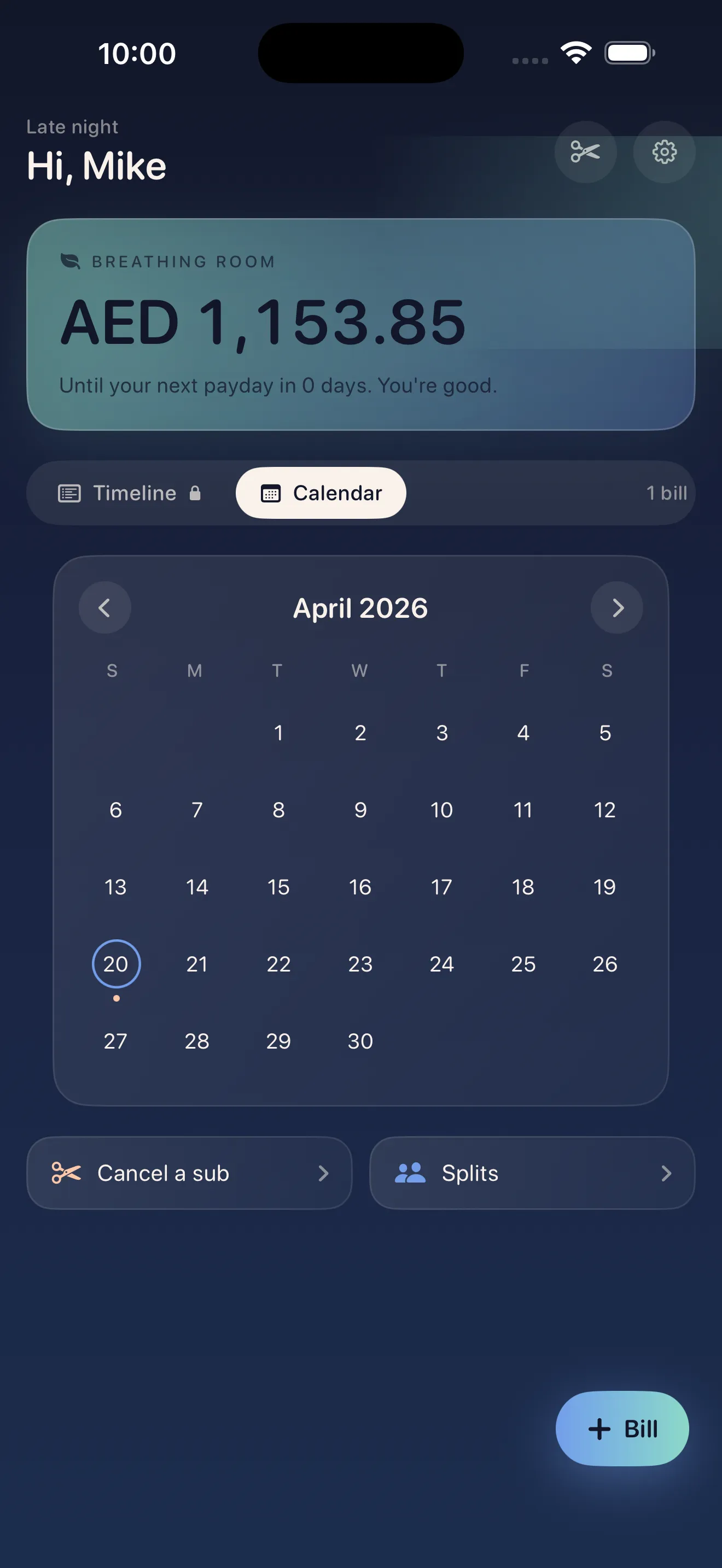
Once the shared bills were sorted, Mara turned to her own subscriptions — the smaller leaks that don't show up in a roommate split but quietly erode breathing room every month. She found a streaming service she hadn't opened in two months and a fitness app trial that had converted to a paid plan without anyone noticing.
Crashout's cancel guides walked her through canceling each one step by step, including the streaming service — one of more than twenty services the app has built-in guides for. No concierge fee, no searching a support forum for the right cancel link buried three menus deep. She reclaimed a small but real chunk of money before her next invoice even landed.
What breathing room actually looks like now
The biggest shift wasn't any single feature. It was that Mara stopped opening her banking app with a knot in her stomach. Crashout showed her, at a glance, how much room she had until her next expected payday and which bills were already accounted for in that gap. On weeks when freelance income was thin, she could see exactly how much slack she had instead of estimating and hoping.
For anyone curious about how the app's calm approach compares to a typical banking dashboard, the piece on kind bill trackers vs. traditional finance apps covers the difference in more detail. And if you're setting up for the first time, the 15-minute setup checklist mirrors almost exactly what Mara did in her first sitting.
Common questions
Can each roommate see the full shared bill amount or just their portion?
Does Crashout need access to a bank account to track split bills?
What if a roommate moves out or a bill amount changes?
This article was drafted with AI assistance and reviewed by a human editor before publishing.