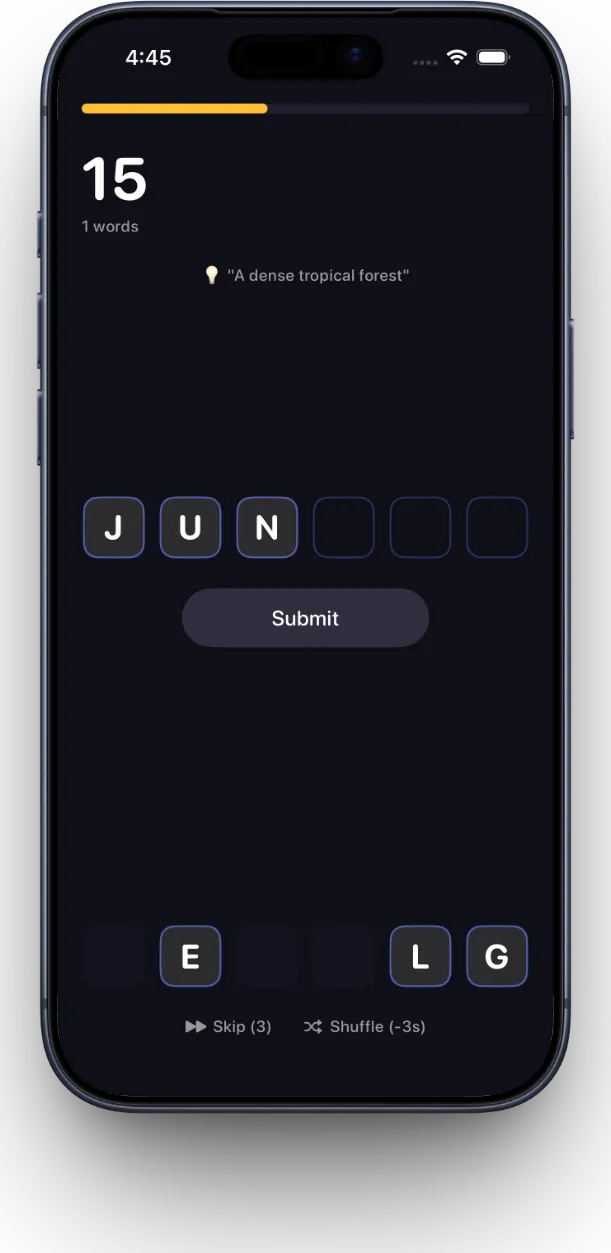
Most word games ask you to slow down, think strategically, plan ahead. Tiny Word Sprint asks the opposite: think faster, spell faster, and feel that rush when the clock ticks down and you nail three words in a row. There's no tutorial maze, no energy system, no account sign-up. Just tiles, a timer, and a dictionary deep enough to reward every creative word you've ever wanted to play. It's the kind of game that makes 2 a.m. feel like a good idea.
The Core Loop: Speed Meets Reward
At its heart, Tiny Word Sprint works because the feedback loop is instant and generous. You tap tiles to form a word, hit submit, and immediately know if you landed it—or if you're starting over. But here's where it gets interesting: get one word right, and your next word is worth a little more. Chain five correct words together, and you're multiplying your base score. Hit ten in a row and you unlock LEGENDARY status. The game is teaching you that momentum matters, and the closer you are to breaking your streak, the more you're willing to try one more run.
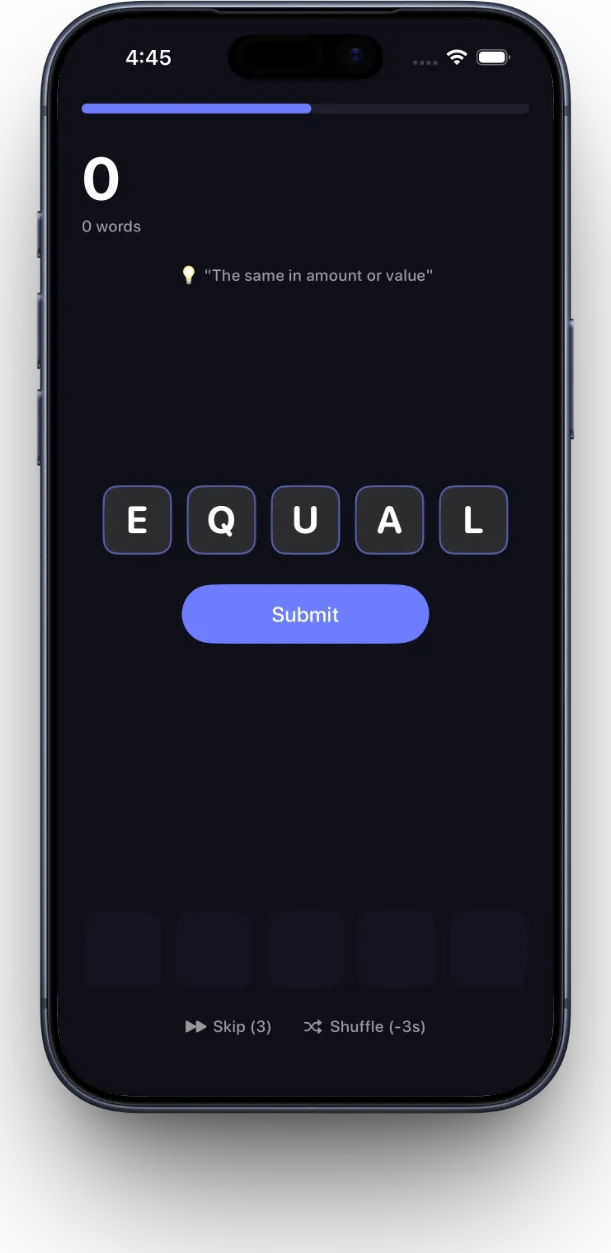
The higher your streak, the bigger the payoff. But that payoff only matters if you're willing to push harder on the next run.
A Dictionary That Stays Unpredictable
Tiny Word Sprint runs completely offline, which means every run can pull from a deep, curated dictionary without relying on a server or an internet connection. This is crucial. It means the game won't punish you for playing on a flight, in a subway, or at 3 a.m. when the WiFi is spotty. It also means the word pool stays fresh across hundreds of plays—you're not cycling through the same 50 combinations. The game rewards you for knowing words, but it also rewards you for *learning* new ones, because that seven-letter word you weren't sure about last week might be exactly the tile combo staring back at you today.
Why Friction Kills Games (And How Tiny Word Sprint Avoids It)
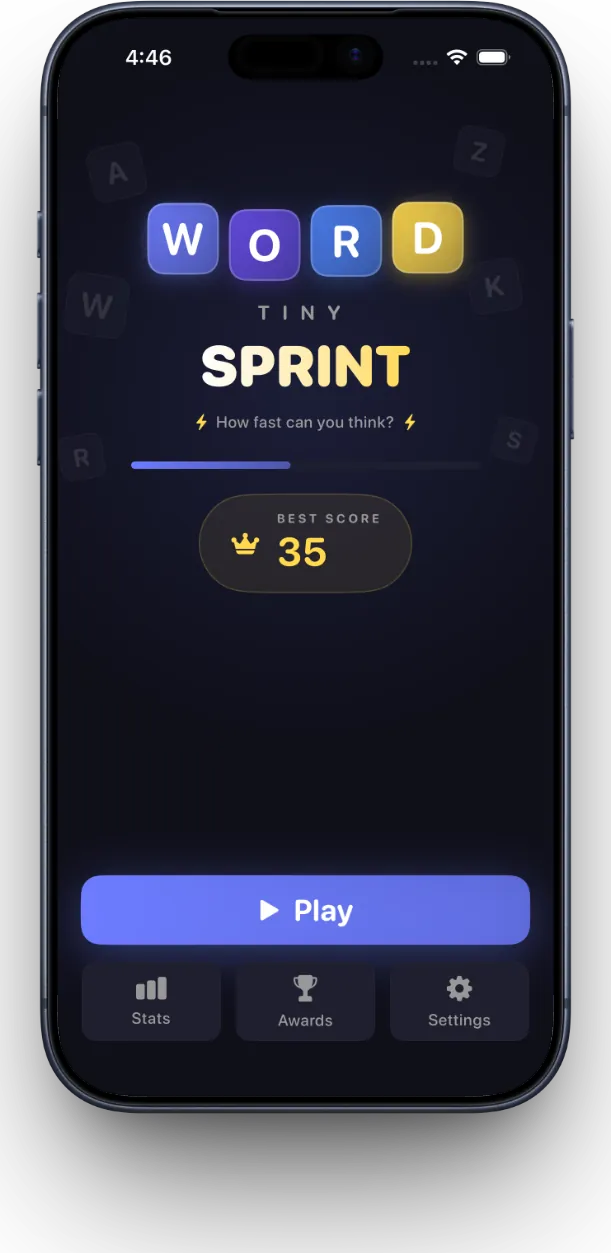
You know the pattern: you want to play a game, but first you have to create an account. Then you get a tutorial. Then notifications ask you to buy the premium pass. Then an ad plays. By the time you're actually playing, you've already lost interest. Tiny Word Sprint flips this. You open the app, and you're playing within seconds. No ads ever. No IAP menu hiding the best features. No battle pass you missed because you didn't play yesterday. The game trusts that if the core experience is good, you'll come back. If you want to see your lifetime stats or compare streaks, they're there in a simple dashboard. If you want to unlock achievements, you just play. The friction isn't artificial; it's nonexistent.
Themes and Achievements: Personality Without Bloat
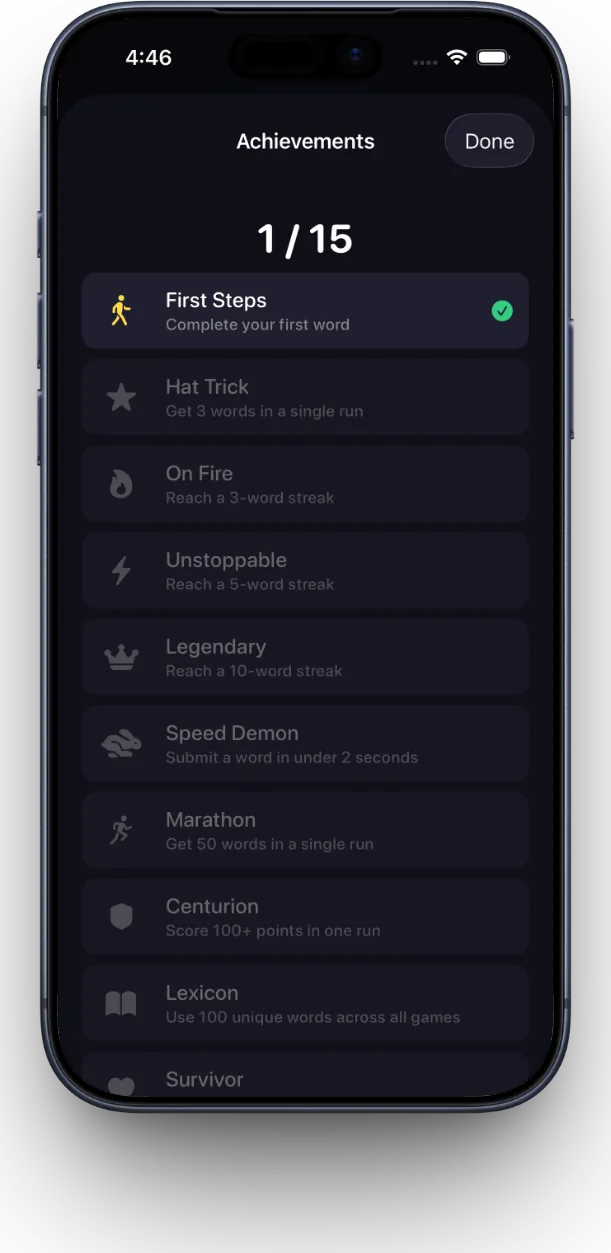
The game includes five themes and fifteen achievements. This might sound modest compared to other games, but that's the point. Each theme has a real visual identity—they're not reskins. Each achievement is attainable but not trivial. You're not chasing a hundred unlocks just to feel progress. You're chasing meaningful milestones that genuinely feel like skill improvements or creative vocabulary moments. And if you just want to play without thinking about achievements? They're there, but they don't nag.
The Daily Challenge: A Gentle Anchor
Tiny Word Sprint includes a daily challenge—one fresh puzzle reset at midnight—but it doesn't weaponize FOMO. You won't get a notification yelling at you to play it. It's just there if you want it, a gentle reason to open the app without pressure. This is how to do live service right: give people a reason to return without making them feel bad if they don't. To learn more about building a winning strategy, check out our guide on how to boost your score.
The Psychology of One More Run
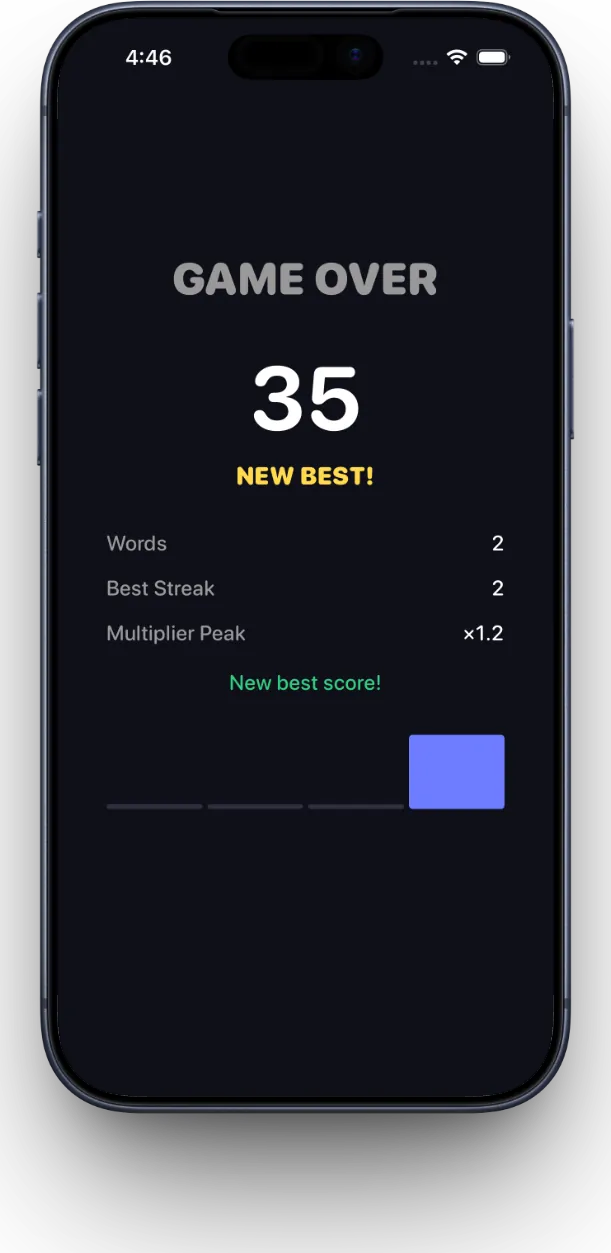
Game designers call it "the psychology of near-miss." You finish a run with a 7-word streak, and you think: I could've hit 10. I almost had LEGENDARY. One more run. The multiplier system amplifies this. Every word you get right is worth more than the last. Every perfect run is a new personal best. The timer keeps things tense without feeling punishing. And because the game respects your time—no ads, no forced breaks—the path from "I'm done" to "one more run" is frictionless. Learn more about why rapid-fire gameplay hits different.
One more run is the most powerful mechanic in games. Tiny Word Sprint is built to make that request feel inevitable.
Free Forever, Forever
This is worth calling out: there's no premium tier, no ads, no subscriptions. Tiny Word Sprint is free, and it will stay free. This isn't a marketing angle—it's a design choice. The game exists because word games are fun. You don't need to monetize fun to prove it works. When you remove the revenue pressure, you remove the temptation to add dark patterns, notifications, and friction. The game is better because it's not trying to be a business engine. It's just a game.
This article was drafted with AI assistance and reviewed by a human editor before publishing.